Pricing Archives - Art Biz Success https://dy-online.com/category/pricing/ Trusted Art Business Coaching and Consulting Mon, 12 Oct 2026 02:02:49 +0000 en-US hourly 1 https://wordpress.org/?v=7.1.4 https://dy-online.com/wp-content/uploads/2022/02/favicon-2-150x150.png Pricing Archives - Art Biz Success https://dy-online.com/category/pricing/ 32 32 Sincerely, someone who cares with Heidi Fahrenbacher (280) https://dy-online.com/sincerely-cares/ Thu, 08 Oct 2026 11:55:00 +0000 https://dy-online.com/?p=63059 An anonymous letter from “someone who cares” told Heidi Fahrenbacher she'd price herself out of business after doubling her prices. That’s not what happen. Instead, her income has grown 10-20% every year since 2021.

Her story is a case for making less and making what sells. It's also a reminder to pay attention to what's working before your business wears you out.

The post Sincerely, someone who cares with Heidi Fahrenbacher (280) appeared first on Art Biz Success.

]]>

In 2021, ceramic artist Heidi Fahrenbacher opened an anonymous letter delivered to her studio. It was typed, like a ransom note, and it said she was going to price herself out of business. It was signed, “Sincerely, someone who cares.”

And get this … the coward also added a heart for a final passive-agressive flourish.

In episode 280 of The Art Biz, Heidi tells me why she’d raised her prices, what she did next, and where she is now. Spoiler: She’s doing just fine, thank you.

She didn’t get there by working harder. She got there by paying attention to what was happening in her business and acting on it, even when it was uncomfortable.

Below are some of the lessons we share in this conversation.

Two handmade mugs in red and blue. The one on the left has a stylized sun and the one on the right has a stylized moon and stars.
A pair of mugs by Heidi Fahrenbacher. Stoneware clay with screen-printed imagery, 3.5 x 4 inches each.

She acted when something wasn't right

Heidi’s business was busy, but she was always tired and had no money. With the support of her business coach, she nearly doubled her prices.

At the same time, she discontinued her production line and introduced a simpler one at the new price. It felt like burning her business to the ground and rebuilding it. I think it’s a smart move to introduce completely different work, if possible, when you double your prices.

That’s when the first letter arrived. But then, two and a half years later, a postcard, presumably from the same troll with nothing better to do than to harass hard-working artists, arrived: “$92 for a mug. Really? No longer a customer.”

Now Heidi had gone from laughter to tears to anger and took her response to social media.

Lesson —> Don’t let the people buying your lowest-priced items determine your direction.

Listen

She followed her numbers

In 2023, Heidi noticed the wholesale market for her work was slowing down and started gearing her efforts toward direct sales to people who truly appreciate beautiful handmade objects.

Wholesale used to be 30 to 40% of her business. Now it’s 10 to 15%, which gives her more profit by selling direct to customers. She didn’t spend time bemoaning the way things used to be. She changed the way she does business.

In the fall of 2025, Heidi also learned to look at inventory like a retailer: if something sells, make more of it. It sounds simple but the monetary results, so far, have been worth it.

For years she had overproduced to prove her worth, and by the time she finished, she was too tired to sell it.

She chooses the work that gives her joy

Even though she’s asked, there’s certain work Heidi won’t wholesale. She knows it will suck the fun out of making it.

That thinking, to prioritize joy, reaches well beyond her product lines. It shapes what she says yes to and how she feels about what she’s built.

When I asked Heidi what helped her be more productive in the studio and make more money, her answer was two words: do less.

It’s one thing to say you’re going to do less. It’s harder to do it. Listen to find out how Heidi made it stick.

Heidi Fahrenbacher Quotes

“I felt like if I was going to double my price, I needed, like, a clean break to start over.”

“If you have the things people wanna buy, they buy them.”

“I think for a long time, I would make so many products because I felt like I wasn’t worth it in a way. Like, I had to prove my worth, so I was gonna do that by overproducing.”

“I’m finally at a point where I’m like, ‘I don’t have to prove myself.'”

“You can do it even if you don’t believe in yourself.”

Mentioned

Heidi’s business coach, Megan Auman, was featured on two episodes of The Art Biz: Our Stuff Matters (39) and Elitism in the Art World (90)

The Investing Artist with Mary Erickson (223)

Nest

Heidi’s Pinterest

Bella Joy Pottery on Etsy

Related Episodes

These are the other three posts in the series about paying attention so you can make changes in your art business.

About Heidi Fahrenbacher

Heidi Fahrenbacher is an artist and educator from Plainwell, Michigan.

She is the creative muscle behind Bella Joy Pottery. Her work is inspired by the contrasts that make colors really pop like neon lights on a dark rainy night, brightly colored flowers against all green foliage, and autumn leaves vibrant against a gray November sky.  Heidi  graduated in 2002 with a Bachelor of Arts in Fine Art and Art History from Kalamazoo College.

Follow Heidi on Instagram: @bellajoypottery 

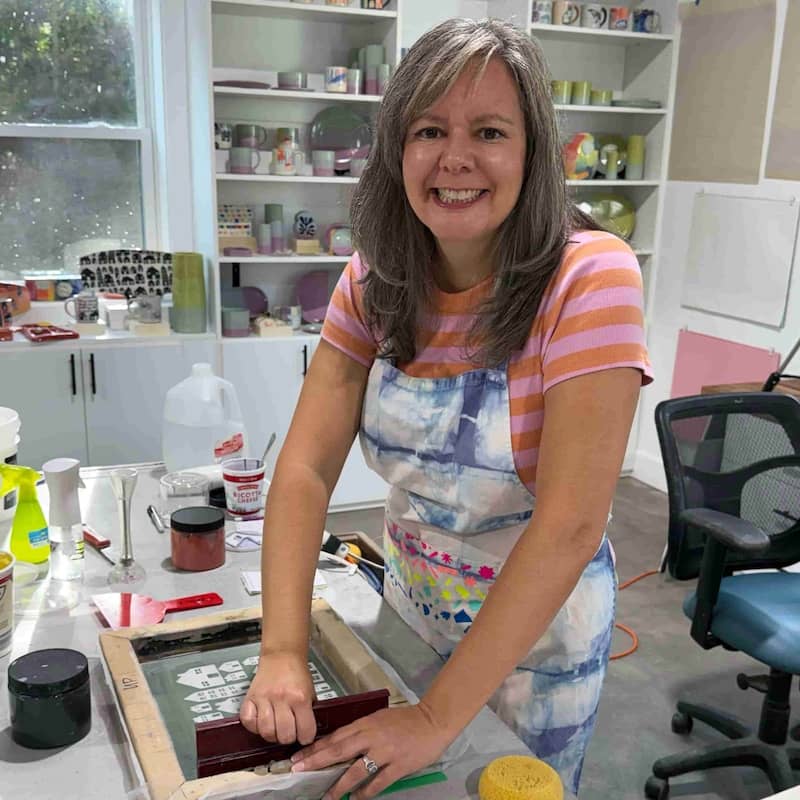
Woman with silver hair with pink and orange striped short-sleeve short and apron over a pottery bench.

The post Sincerely, someone who cares with Heidi Fahrenbacher (280) appeared first on Art Biz Success.

]]>
Why you should raise the prices of your art and how to do it (177) https://dy-online.com/raise-prices/ https://dy-online.com/raise-prices/#comments Thu, 08 Feb 2024 14:04:11 +0000 http://artbizsuccess.com/?p=23370 Two things are clear when it comes to pricing.

First, it’s a struggle for most artists. And, second, there’s a good chance that your prices are too low.

The difficulty with pricing art is legendary. You’re not the only one who doesn’t have it all figured out.

Fear not! In this post and podcast episode, I give you 5 reasons to raise your prices and then thoughts on how to do it.

The post Why you should raise the prices of your art and how to do it (177) appeared first on Art Biz Success.

]]>
There isn’t much certainty around how to price your art, but two things are clear when it comes to pricing.

First, it’s a struggle for most artists. And, second, there’s a good chance that your prices are too low.

The difficulty with pricing art is legendary. You’re not the only one who doesn’t have it all figured out.

Even if you’re confident in your prices today, it’s almost guaranteed that you will question them again within a few weeks or months.

You heard it here first. You are not the only artist who has doubts about pricing.

And these doubts are compounded when your art isn’t selling. I’ll save that topic for another post.

Listen to this on The Art Biz

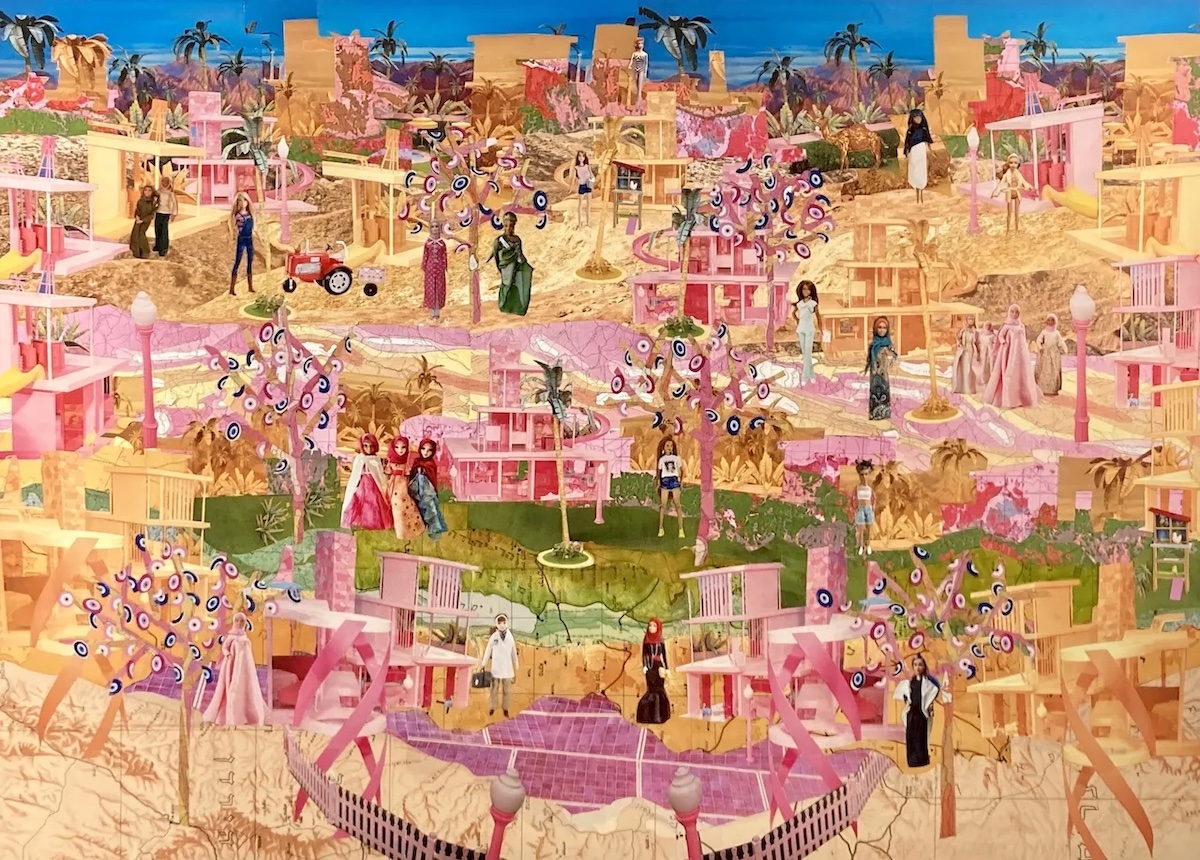
Anna Fine Foer collage
©Anna Fine Foer, Kibbutz Gan Barbie. Collage, 22 x 30 inches.

Your Prices Might Be Too Low

Knowing that the reservations about your pricing may always exist, let’s move on to that second thing. The probability that your pricing is too low.

Many artists—especially those who are just starting out—undervalue their art. Their work isn’t priced correctly to be able to split 50% of the sale with a gallerist, art consultant, or anyone else, let alone make a profit.

Artists who price their work too low are making things difficult for other artists who are pricing their work appropriately for the market and who need to make a living from sales.

It’s not good to be the “cheapest” artist.

I’m going to go out on a limb and assume that you would be happier getting higher prices for your art. But you don’t know if your art warrants it or if this is the right time. You’re scared to make the wrong move.

Fear not! Here are 5 reasons to raise your prices and how to do it.

5 reasons

to raise your prices.

1. The numbers reveal the depressing truth.

You’ve done the math and it’s depressing.

After taking into consideration everything that goes into making your art, you realize that you’re paying yourself next to zippo.

Nobody wins when you aren’t even covering your costs, let alone paying yourself. You must raise your prices.

©Marli Thibodeau, Passionate Symphony V. Acrylic on canvas, 20 x 20 x 2 inches.

2. Your pricing is uneven.

If you notice that there isn’t enough difference between two sizes or two disparate mediums, consider raising the prices on those that seem too low.

It’s hard to account for different mediums. Or for work that needs framing and work that is on canvas, especially given that works on canvas often have a higher perceived value. (Don’t shoot the messenger!)

Yet, it’s easy, over time, for pricing to become skewed. Time to make adjustments and raise prices where necessary.

3. The cost of your materials has increased.

This is a no-brainer. If it costs you more to make it, you should be charging more.

Back in 2011, I followed an artist who was increasing her prices due to the soaring cost of silver. She wrote an explanatory email to her list, in which she shared a detailed graph showing the price of silver’s dramatic incline.

The graph made it much easier to understand. We can comprehend the big difference from $4.50 an ounce to $30 an ounce, but it’s even more dramatic to see a sharply ascending red arrow off the right side of a graph.

Aha! We get it. Her material prices have gone up.

If it costs you more to make it, you should be charging more.

Donna Levreault print
©Donna Levreault, Not Forgotten. Gelatin silver print, 12 x 12 inches.

4. You can't keep up with the demand for your art.

If you can’t make enough work to fulfill commissions and orders and maintain inventory to show at galleries or art festivals, you need to raise your prices.

It’s the law of supply and demand. (I retained some knowledge from Econ 101.)

Being in high demand sounds like a good problem to have, but it’s still a problem—especially when your prices are too low. You are justified in raising your prices when there is more work than you can handle.

5. You start selling through galleries or another new market.

You might be selling well on your own and come to the conclusion that you want your work to be in galleries. Or to be handled by a consultant. You realize that you must split the sale with someone else.

But (Doink!) you didn’t factor a commission into your pricing.

Best business practices warrant that you include a possible (future) 50% commission in all of your pricing. If you haven’t done that, you need to face the music and increase your prices tout de suite.

And … Let’s hope you don’t have to raise them 50% at once because that’s a shock to the system if they’ve been selling well at the lower prices.

Now, here’s how to put your new prices out there.

Shannon Amidon encaustic
©Shannon Amidon, Occhiolism. Encaustic on wood, 24 x 36 inches.

HOW TO RAISE PRICES

Commit. Take action.

If you sell through galleries, other retail spaces, or consultants and want to raise your prices, schedule a conversation with those in charge. You need their input because they know their market and what it will bear.

You want to know that they believe they can sell the work at higher prices.

If they agree, it’s a win-win. You make more and they make more.

When You Only Sell Directly to Collectors

If you only sell directly to buyers, you can raise your prices after doing your homework and meeting one of the criteria above.

Upon opting to increase your prices, make sure you have a plan to put all of the pieces into place.

Keep in mind that higher prices are usually only on new work. Will you stick to that rule of thumb or be raising prices on work you already have in inventory?

Rip off the Band-aid and go forward with confidence.

Always announce your decision first to previous purchasers of your work—giving them an opportunity to buy at your current prices.

They will understand your situation so there is no reason to be afraid of telling them.

Diane Leifheit pastel
©Diane E. Leifheit, Adirondack Bounty. Pastel on wallis paper, 30 x 40 inches.

What to Say to Collectors

Your collectors are the people who have been supporting you. You want to do everything to keep them happy and in the loop. Consider wording similar to this.

Things have been going very well for me, which is good news. On the flip side, I can’t seem to keep up with demand, so I need to raise my prices.

Because you’ve been such a valuable supporter, I want to offer my work to you at current pricing for the next 30 days. After that, my prices will increase by x%.

Of course you must be specific about which work the price increase will apply to.

Contacting them in advance and giving them an opportunity to add to their collection before your prices go up makes them feel special. It also build trust. They’ll have confidence, based on this one interaction, that you’ll always do right by them.

Collectors should feel good about investing in your art early on in your career. They’ll be delighted to know that you’re successful enough to raise your prices.

This post was originally published October 27, 2016 and has been updated with the edition of a podcast episode. Original comments left intact.

The post Why you should raise the prices of your art and how to do it (177) appeared first on Art Biz Success.

]]>
https://dy-online.com/raise-prices/feed/ 23
The Problem With Lower Price Points For Your Art https://dy-online.com/low-prices-problem/ https://dy-online.com/low-prices-problem/#comments Mon, 25 Jan 2021 12:43:44 +0000 http://artbizsuccess.com/?p=22448 Have you ever created a body of work just so you could sell at lower prices? If so, you might have created a problem for yourself.

Do any of the following ring true for you?

  • You are afraid that people won’t buy your art if you charge what it’s worth.
  • You believe that the people in your geographical region buy only cheaper art.
  • You’ve started making smaller pieces because they’re less expensive.
  • You have signed up for a service like Fine Art America to begin offering multiples of your art, even though the originals aren’t selling.

If you have created lower-priced work for any of these reasons, you might be lowering the bar along with your prices.

Let’s face it: selling lower-priced art is safer. There are many more people in your pool of prospective buyers at the low end.

But I can’t believe that your goal is to appeal to the masses. You, like my clients, surely have big dreams, and that means selling big art at fair prices.

So I have to ask … Are you running to this safer place of inexpensive art because you’ve been inconsistent with your studio practice, marketing, exhibitions, and networking? In other words, are you producing "more affordable" art because you don’t want to do the work required to sell your best work?

Have you given up on selling at that higher price because you believe it’s too difficult? Maybe the cheaper stuff will be easier to sell, you might think.

I have no objections with making art in a variety of sizes or offering reproductions of your art, especially if you’re selling a lot of work and can’t keep up with demand.

What I object to is your playing small and safe.

The post The Problem With Lower Price Points For Your Art appeared first on Art Biz Success.

]]>

Have you ever created a body of work just so you could sell at lower prices? If so, you might have created a problem for yourself.

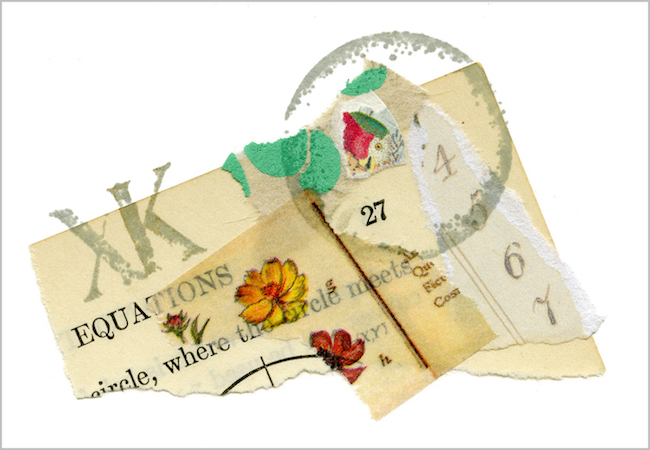
Collage by Kimberly McClintock
©Kimberly McClintock, XK. Digital print in various sizes, original assembled from handmade Nepalese paper, washi tape, ink, mathematics textbook circa 1927 and commercially reproduced ledger page.

Do any of the following ring true for you?

  • You are afraid that people won’t buy your art if you charge what it’s worth.
  • You believe that the people in your geographical region buy only cheaper art.
  • You’ve started making smaller pieces because they’re less expensive.
  • You have signed up for a service like Fine Art America to begin offering multiples of your art, even though the originals aren’t selling.

If you have created lower-priced work for any of these reasons, you might be lowering the bar along with your prices.

Let’s face it: selling lower-priced art is safer. There are many more people in your pool of prospective buyers at the low end.

But I can’t believe that your goal is to appeal to the masses. You, like my clients, surely have big dreams, and that means selling big art at fair prices.

So I have to ask … Are you running to this safer place of inexpensive art because you’ve been inconsistent with your studio practice, marketing, exhibitions, and networking? In other words, are you producing “more affordable” art because you don’t want to do the work required to sell your best work?

Have you given up on selling at that higher price because you believe it’s too difficult? Maybe the cheaper stuff will be easier to sell, you might think.

I have no objections with making art in a variety of sizes or offering reproductions of your art, especially if you’re selling a lot of work and can’t keep up with demand.

What I object to is your playing small and safe.

I object to your not taking risks because you have placed a limit on what you think you can achieve. I object to your not putting forth your best effort. I object to your giving up.

Painting by Lorraine Glessner
©Lorraine Glessner, The Sentient Magnolia & The Great Salt Lake 1. Encaustic, collage, mixed media on wood, 30 x 40 x 1.5 inches.

It’s safer to stay on the low end when you know you can sell less expensive items. But playing it small and safe rarely results in dreams fulfilled.

My objections aside, the big problem with lower price points for your art is, ironically, that you need to work much harder to reach your goals.

Do The Math

Selling a lot of low-priced work requires more effort than selling a single high-priced piece of art. It’s simple math.

Let’s say you have $50 reproductions on the low end and $2500 originals on the high end.

You would have to sell fifty $50 items to equal a single $2500 sale! That means that if you want to make $2500, you need to sell one piece to 50 different people rather than one piece to a single person.

A. Single. Person.

Unless you have an enormous list and can sell out of an edition with one email, common sense says that you have to do a lot more work to sell 50 pieces.

Now it’s time for you to object. I can hear it: I don’t know of anyone who will pay $2500 for my art.

Fine. Find a new audience. I mean it!

Just because you don’t know them now doesn’t mean they’re not out there. You can find them and nurture relationships with them.

Josephine Geiger's stained glass in neutrals
©Josephine A Geiger, Lunchtime Social. Leaded stained glass, bevels, copper, 8.75 x 16 x 5 inches. Used with permission.

Yes, this will take effort in the beginning, but the long-term payoffs are much greater, unless your goal is to sell a lot of low-end art. I have nothing against this as a goal, but you need to understand what it will take to achieve it.

Just because you sell higher-end art doesn’t mean you can’t also offer lower-priced work, but be cautious of where you put your effort. Otherwise, you have a problem.

The bulk of your effort should be in getting the higher-priced work in front of the right people: your ideal collectors. Be very clear on who they are and create a path to reach them.

I’ve Been There

Pin this: The Problem with Lower-Priced Art | Art Biz SuccessA number of years ago, you might have landed on this site and found any number (15? 20?) of low-priced audio interviews. You would have also come across low-priced online classes that I rotated throughout the year.

I was trying to appeal to everyone and ended up alienating my ideal clients. The sheer number of items offered on my site confused people.

When I got really clear on the value of what I had to offer, the type of artist I wanted to serve, and how I wanted to serve them, I was able to focus my offerings. Now I attract amazing and ambitious artists that I can support at the highest level.

You can do the same for your art.

Get very clear on what your goals are, and if your current practices are supporting those goals.

Wouldn’t you rather sell one $2500 piece than try to find 50 people to purchase a $50 piece? 


The post The Problem With Lower Price Points For Your Art appeared first on Art Biz Success.

]]>

https://dy-online.com/low-prices-problem/feed/ 131
Don't Confuse Price with Value https://dy-online.com/price-vs-value/ https://dy-online.com/price-vs-value/#comments Mon, 26 Mar 2012 11:00:40 +0000 http://artbizsuccess.com/?p=12399 Guest blogger: Debby L. Williams Have you noticed on Antiques Roadshow that the appraisers always start with: “Tell me about this piece” ? Appraisers are trying to find out the story and history of the object and how much it means to the owner. Before they give any valuation to the owner, they want to […]

The post Don't Confuse Price with Value appeared first on Art Biz Success.

]]>
Guest blogger: Debby L. Williams
Have you noticed on Antiques Roadshow that the appraisers always start with: “Tell me about this piece” ?
Appraisers are trying to find out the story and history of the object and how much it means to the owner. Before they give any valuation to the owner, they want to know what the emotional investment is.
Price Tag
This is the sentimental value and is different from the monetary value that the appraiser is going to hit them with at the end of the segment.
The value of a work of art is based on how a person feels about the object.
Your creativity, use of materials, technique, and the spirit you infuse into each piece make your art valuable to you.
These things are subjective and can change from time to time and from artwork to artwork.
How you value your art is different from how you price your art.
Art pricing is based on many factors – most notably, what the market will bear.
Don’t price your art based on what you think the value is. The price is not usually an emotional response. It is an amount arrived at after diligent research.

  • How much are your materials and overhead?
  • What is your career track record?
  • What are buyers willing to pay?


About our Guest Blogger
Debby L. Williams is an associate coach at Art Biz Coach, where she helps artists with their written marketing material. She’s been a curator, museum director, and arts administrator and she loves to laugh – but not about pricing. She’s dead serious about pricing art.

The post Don't Confuse Price with Value appeared first on Art Biz Success.

]]>

https://dy-online.com/price-vs-value/feed/ 12
Raising Your Prices: A Lesson for Breaking the News https://dy-online.com/raising-your-prices/ https://dy-online.com/raising-your-prices/#comments Fri, 11 Feb 2011 12:00:51 +0000 http://artbizsuccess.com/?p=9083 Wendy Edsall-Kerwin faithfully sends a tri-fold newsletter about her metalwork 8 times a year. Her Winter 2011 edition caught my eye because of this article, in which she shows collectors why she must raise her prices

The post Raising Your Prices: A Lesson for Breaking the News appeared first on Art Biz Success.

]]>
Wendy Edsall-Kerwin, Bursting Through
©2010 Wendy Edsall-Kerwin, Bursting Through. Oxidized and textured sterling silver with an 8mm faceted whisky quartz.

Wendy Edsall-Kerwin faithfully sends a tri-fold newsletter about her metalwork 8 times a year. I’ve been receiving them for some time now and have enjoyed watching them get better and better.

Her Winter 2011 edition caught my eye — not just for the gorgeous silver ring with “whiskey quartz” (who knew?!) on the front, but for this article.

Cost of Silver
The cost of silver – London PM Fix 1995-present (December 2010).

Don’t just tell them. Show them.

Wendy didn’t just tell her collectors that she needed to raise the prices on her metalwork, she showed them why in a very graphic way.

A quick glance at this graph shows that silver has gone from around $4.50 an ounce in December 2002 to $30 an ounce in December 2010!

Anyone can understand this.

Treating Your Collectors Well

Wendy didn’t just break the bad news about raising her prices. She offered a discount to her subscribers for a defined period.

The post Raising Your Prices: A Lesson for Breaking the News appeared first on Art Biz Success.

]]>

https://dy-online.com/raising-your-prices/feed/ 26
Guidelines for Pricing Your Art https://dy-online.com/pricing-your-art/ https://dy-online.com/pricing-your-art/#comments Mon, 13 Dec 2010 16:09:06 +0000 http://artbizsuccess.com/?p=8631 Here are a few general rules for pricing your art. Just a quick glimpse for those who are beginning to explore this difficult process.

    1. Your prices must be consistent. People shouldn't pay less at your open studio than they do at a gallery. You have one price and should never (never ever) undersell your representatives.
    2. Start on the low end, while paying yourself enough. You can always raise your prices. It’s nearly suicidal to lower your prices later and it won’t make your current buyers happy at all.
    3. Don’t forget to pay yourself a wage! The most common mistake artists make is forgetting to pay themselves. You have to cover overhead and materials, but you also need to be compensated for your time.
    4. Attach higher prices to originals and larger works. As a general rule, originals are priced higher than reproductions and larger works sell for more than smaller works.
    5. More expensive materials (bronze, precious gems) command higher prices.
    6. Click for 5 more tips.

      The post Guidelines for Pricing Your Art appeared first on Art Biz Success.

      ]]>
      Here are a few general rules for pricing your art. Just a quick glimpse for those who are beginning to explore this difficult process.

      1. Your prices must be consistent. People shouldn’t pay less at your open studio than they do at a gallery. You have one price and should never (never ever) undersell your representatives.
      2. Start on the low end, while paying yourself enough. You can always raise your prices. It’s nearly suicidal to lower your prices later and it won’t make your current buyers happy at all.
      3. Don’t forget to pay yourself a wage! The most common mistake artists make is forgetting to pay themselves. You have to cover overhead and materials, but you also need to be compensated for your time.
      4. Attach higher prices to originals and larger works. As a general rule, originals are priced higher than reproductions and larger works sell for more than smaller works.
      5. More expensive materials (bronze, precious gems) command higher prices.
      6. Know your market. Study the pricing of artists working in the same genre (abstract, local landscape, portraits), showing in the same venues, and who are at about the same place in their careers.
      7. The faster you work and more prolific you are, the lower your prices–in general!
      8. If you can’t produce enough work to keep up with the demand, it’s time to raise your prices.
      9. Instead of lowering your prices, you’re free to offer discounts for friends, family, and your best customers. Call it a secret discount and write the receipt in such a way that the buyers know the true value.
      10. When you draw up a contract with a gallery, retailer, or art consultant, make sure you list your prices as retail prices. If you list only wholesale prices, the other person could sell them for three times as much as you’re asking and you get only 1/3 of the sales price. Fair? Hardly. You need to know what your work is selling for. You need to control pricing. Having said that, I know a lot of artists are selling to art consultants at wholesale pricing. I don’t like this, but I’d love to hear your thoughts. I asked for them in this post.

      The post Guidelines for Pricing Your Art appeared first on Art Biz Success.

      ]]>
      https://dy-online.com/pricing-your-art/feed/ 35 Pricing for Art Consultants :: Deep Thought Thursday https://dy-online.com/pricing-artconsultants/ https://dy-online.com/pricing-artconsultants/#comments Thu, 12 Aug 2010 20:24:40 +0000 http://artbizsuccess.com/?p=7103 Most art consultants are asking artists to give them their wholesale pricing. Is that okay? What happens when you give the consultant--or even a gallery--leeway to choose their own pricing?

      The post Pricing for Art Consultants :: Deep Thought Thursday appeared first on Art Biz Success.

      ]]>
      Is it okay to sell your art to an art consultant at a wholesale price?
      Seems like that’s the way most are operating these days.

      The post Pricing for Art Consultants :: Deep Thought Thursday appeared first on Art Biz Success.

      ]]>
      https://dy-online.com/pricing-artconsultants/feed/ 50
      A Template Letter for Informing Collectors of Price Increases https://dy-online.com/hallett-priceincrease/ https://dy-online.com/hallett-priceincrease/#comments Fri, 09 Jul 2010 13:06:49 +0000 http://artbizsuccess.com/?p=6762 Artist Mckenna Hallett used her wordsmithing skills to create a template you can use to inform collectors about price increases. She says any contact you make with buyers is a marketing opportunity. Don't miss out!

      The post A Template Letter for Informing Collectors of Price Increases appeared first on Art Biz Success.

      ]]>
      Artist Mckenna Hallett used her wordsmithing skills to create a template you can use to inform collectors about price increases.
      She says:

      Any and all contact with purchasers, or potential purchasers, via email blasts, art cards, or blogs is a marketing activity.  . . . In the case of price increases this is a marvelous opportunity!  Nothing says “I am successful and collectible” like price increases.

      Then added this template as a starting point for you.

      Mckenna Hallett
      ©Mckenna Hallett, Very Random.

      Dear ______________,
      I have the honor of informing you of my continued growth as an artist and that my successful path has led to continued brisk sales of my work.
      High demands for my work have had a great and positive impact. I am very proud to announce that my work continues to command higher prices in the galleries that represent me.  If you have purchased work from me prior to (pick a date) I would sincerely recommend that you contact the gallery that you purchased my work from and get a current appraisal.
      For those of you who have collected work directly from my private collection or studio, I am happy to discuss values at any time.  I also encourage you to see the current body of work (link to photos) as I will be adjusting prices very soon.
      I am grateful for the small bit of notoriety acclaim and the large following my work continues to generate and thank each of you for your continued support and patronage.
      Best wishes,

      Mckenna finishes with the following thoughts:

      Obviously the above is very generic!  But the tone is quietly reflective and carefully suggesting that they have done a good thing by collecting this work and should consider adding to their collection.
      But back to my main point: every contact is “marketing activity.”  Don’t waste the opportunity to “sell through” in any connections you make.

      The post A Template Letter for Informing Collectors of Price Increases appeared first on Art Biz Success.

      ]]>
      https://dy-online.com/hallett-priceincrease/feed/ 11
      Putting Your Art on Sale https://dy-online.com/artonsale/ https://dy-online.com/artonsale/#comments Mon, 28 Jun 2010 13:30:28 +0000 http://artbizsuccess.com/?p=6650 All artwork must go! Select pieces up to 50% off! No reasonable offers will be refused! Sounds like the giant art sale at the airport hotel, huh? Loud sales proclamations just don’t work well when selling fine art. Mentioning SALE seems to cheapen the art. But we do know that even high-end galleries offer discounts […]

      The post Putting Your Art on Sale appeared first on Art Biz Success.

      ]]>
      All artwork must go!
      Select pieces up to 50% off!
      No reasonable offers will be refused!

      Sounds like the giant art sale at the airport hotel, huh? Loud sales proclamations just don’t work well when selling fine art. Mentioning SALE seems to cheapen the art.
      But we do know that even high-end galleries offer discounts to valued collectors as well as to museums. So why can’t artists have their own sales? You can with the right strategies in place.

      Michael Newberry, Himalayan Flight, oil on linen
      ©2010 Michael Newberry, Himalayan Flight. Oil on linen, 36 x 48 inches.

      First, consider any ramifications your sale would have on relationships with gallerists, collectors, or retailers. Plan accordingly with the following 8 tips in mind.
      1. Have a reason for the sale.
      It can be an anniversary, holiday, birthday, or moving sale, but it should be tied to a reason or event. For example, my sale starting today is a close-out on audio products I will no longer sell.
      2. Be very clear about what is on sale and what isn’t on sale.
      Will all of your work be on sale? All work prior to 2008? Anything smaller than a breadbox? All reproductions? Double- and triple-check the language you use in your sales message to ensure there is no room for misunderstanding.
      3. Be honest and sincere with the language you use.
      There is no need to hype the sale of your artwork. Remind people of the value they are getting during this one-time offer. The value in my audio sale is 29-38% off all audio products.
      4. Create a sense of urgency.
      If your sale doesn’t have an ending, there’s no reason for people to act quickly. A typical online sale is about 3-5 days. You’ll need a longer time period if it requires opening up your studio to guests.
      5. Extend your offer to your collectors first.
      Your collectors have already purchased similar works from you at a higher price. They might not be happy to learn that they could have gotten it at a lower price if they had waited. Make your collectors happy by sending them a personal letter well in advance of your starting sale date and offering them first choice (and maybe even a little extra discount). Perhaps you call it a Pre-Sale for Collectors Only.
      Rather than using email for your collectors’ announcement, opt for a distinctive letter sent through the postal system. This will make your collectors feel special.
      6. Set up a special sales page on your website or blog.
      This is critical! There are too many distractions on your website home page. By directing traffic to a special sales page on your site, you can better facilitate the next action. See my sales page at http://artbizcoach.com/sale
      7. Don’t hold too many sales.
      If you’re announcing sales frequently, buyers will know there’s probably another one coming up around the bend. They’ll wait for your next sale to purchase from you.
      8. Provide a call to action.
      Don’t assume people will know what to do. Tell them where to click, whom to call, or how to email you for more information. For instance, if you want to take advantage of my closeout audio sale, go to http://artbizcoach.com/sale.html
      Don’t forget that the sale ends at midnight ET on Friday, July 16. [outdated link]
      FINAL WORD: There’s no reason you can’t have a sale, but you want to make sure you’ve covered all of the details before it’s announced.

      The post Putting Your Art on Sale appeared first on Art Biz Success.

      ]]>
      https://dy-online.com/artonsale/feed/ 21
      Increase Prices for Your Art (Perhaps) https://dy-online.com/increaseprices/ https://dy-online.com/increaseprices/#comments Mon, 22 Feb 2010 15:38:09 +0000 http://artbizsuccess.com/?p=5474 It must be something in the air. Pricing art has been on the minds of a number of my clients in the last few weeks. Almost all are interested in raising their prices and almost all of them should raise their prices. Raising prices isn’t something I take lightly or recommend frequently. In fact, just […]

      The post Increase Prices for Your Art (Perhaps) appeared first on Art Biz Success.

      ]]>
      It must be something in the air. Pricing art has been on the minds of a number of my clients in the last few weeks. Almost all are interested in raising their prices and almost all of them should raise their prices.
      Raising prices isn’t something I take lightly or recommend frequently. In fact, just a few weeks ago I was at an exhibit and was aghast at the high prices on one emerging artist’s work. Increasing your prices happens only after you’ve taken into account a number of factors. Here are six to consider.
      Keith Bond
      Keith Bond, Oakley Winter. Oil on linen, 20 x 26 inches. ©The Artist

      1. You did the math and it just didn’t add up.
      You finally sat down with a pencil and paper and figured out that you’re paying yourself $1.50 an hour. Stop that!
      2. You compared apples to apples and yours is the rotten one.
      When you compare prices, look for similarities in style, sizes, and medium by artists who are at a comparable point in their careers. Also (and this is often overlooked), make sure their art is actually selling! Prices don’t mean a thing if the work hasn’t been selling. If you go through this exercise and find out that your art is the cheapest, consider it a wake-up call. Being the cheapest is not necessarily a good thing.
      3. You can’t keep up with the demand for your art.
      Helloooooooo. If you can’t make enough work to fulfill commissions and orders and maintain inventory to show at galleries or art festivals, you need to raise your prices. It’s the law of supply and demand. (Hey, I remember something from my econ classes!)
      4. You discover uneven pricing.
      If you look at one of your price sheets and notice that there isn’t enough difference between two sizes or two disparate media, consider raising the prices of those that seem too low.
      5. You have or have added work that requires more effort.
      Some artists have art that they consider easier. It’s faster to make and might even be formulaic. These are on the low end of your pricing scale. Then there might be another line that requires more research and attention to detail. You would charge more for this work. Ditto for commissions. Whenever a project requires that you create sketches, maquettes, or make a client happy, charge more!
      6. You’re dejected.
      You know you aren’t getting paid for what your art is worth. You’ve earned your stripes selling art over the years, and you’re tired of hearing how “affordable” the work is. It turns your stomach to sell your art so cheaply. When you no longer enjoy making or selling art, it’s time to make changes.
      FINAL WORD: Pricing is one of the most difficult decisions for artists to make. While raising prices in tough economic times seems counter intuitive, you always want to be sure you are being paid what you’re worth.

      Think you might like getting this in your inbox each week? Subscribe to the newsletter.
      podcast

      Enjoy this week’s podcast–an audio version of the above post.
      [powerpress url=”http://artbizsuccess.com/audio/increaseprices.mp3″]

      The post Increase Prices for Your Art (Perhaps) appeared first on Art Biz Success.

      ]]>
      https://dy-online.com/increaseprices/feed/ 12