Uncategorized Archives - Art Biz Success https://dy-online.com/category/uncategorized/ Trusted Art Business Coaching and Consulting Wed, 03 Jun 2026 14:59:56 +0000 en-US hourly 1 https://wordpress.org/?v=7.1.4 https://dy-online.com/wp-content/uploads/2022/02/favicon-2-150x150.png Uncategorized Archives - Art Biz Success https://dy-online.com/category/uncategorized/ 32 32 Making a living from your art (266) https://dy-online.com/making-a-living-as-an-artist/ https://dy-online.com/making-a-living-as-an-artist/#comments Thu, 21 May 2026 14:47:21 +0000 https://dy-online.com/?p=38113 Making a living from your art requires more than talent and desire. It demands financial clarity, the right mindset, and a community of artists who pull you forward. It means committing to your studio practice above all else, embracing structure, and showing up for marketing consistently.

If you're considering taking the leap, here's what that actually looks like.

The post Making a living from your art (266) appeared first on Art Biz Success.

]]>
Making a living from your art is not for everyone.

Something happens internally when you begin thinking of your art as a source of income rather than an enjoyable activity, and it isn’t always a good thing.

Just because you love making art doesn’t mean you should put your financial future on the line for it. It takes more than passion to become a full-time artist.

When you put your work out there and ask for money for it, you feel exposed. Vulnerable. Not everyone can handle that, and not everyone should have to.

I’m not here to talk anyone into the artist’s life. But if you’re committed to making this work, here’s what that actually requires.

Contents

Listen

Commit to your studio practice

Your studio practice is your number one priority. Always. If you’re not making art, you have nothing to share or sell that would help you make a living.

Then you’re faced with the fact that the old gatekeepers — galleries, juried shows, the art establishment — have lost much of their power. The floodgates are wide open.

Anyone can call themselves an artist. That’s largely a good thing, but it has a shadow side: there are more artists than ever trying to sell their work, and too many of them are doing it before the work is ready.

Don’t market prematurely. Do the hard work in the studio first.

Your first goal is a cohesive body of work, which looks different for every artist.

But for the emerging artist, it means quantity and quality. You need enough for a solid exhibition. You need enough that someone can look at your work and say, “That’s that artist’s work, not their teacher’s.”

Confidence is the result of hundreds of hours in the studio, and, boy, are you going to need that confidence. Confidence in yourself, confidence in the work, confidence that you’re headed in the right direction. It comes from showing up consistently.

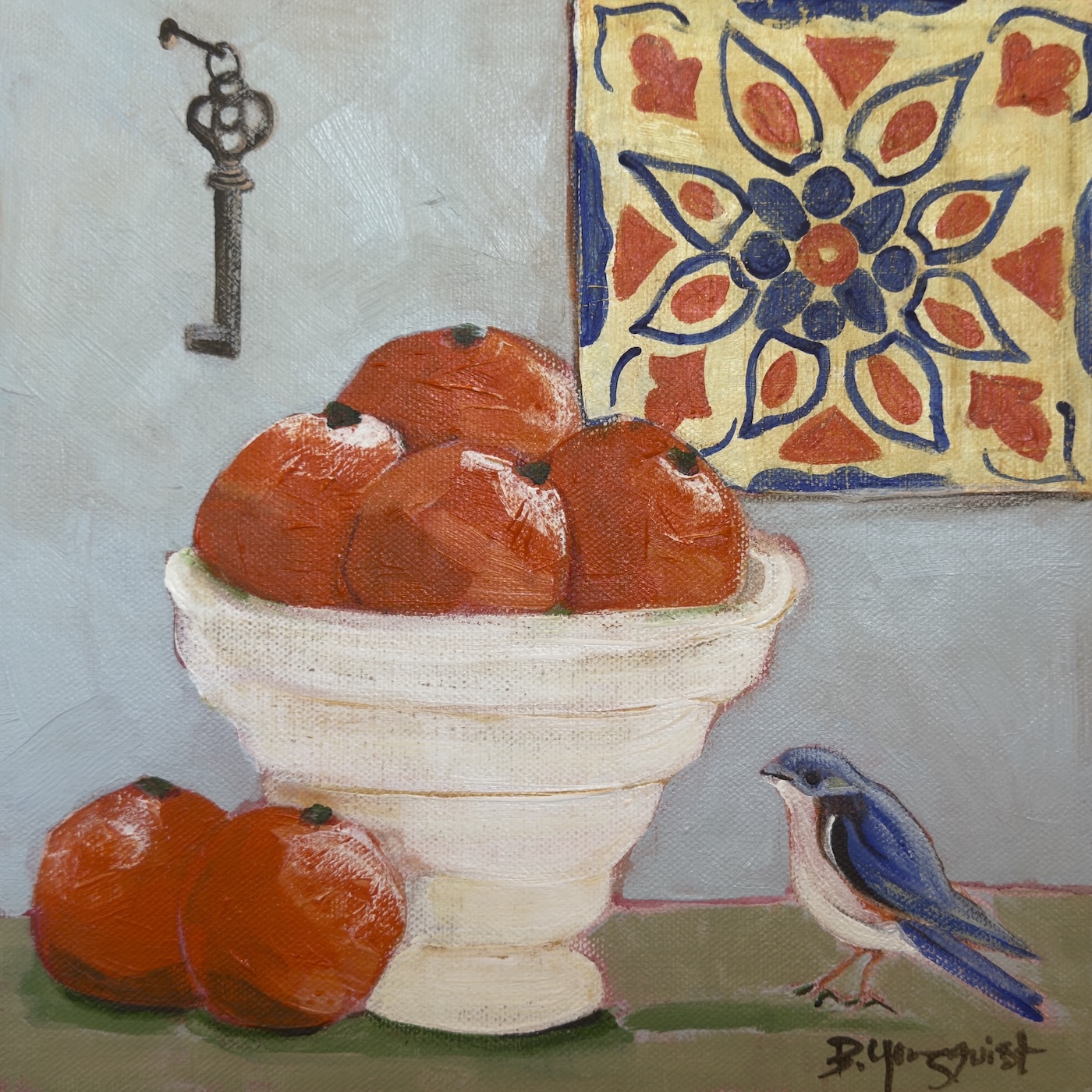
Still life painting of a bowl of vibrant oranges, a detailed Portuguese tile with a blue and orange pattern, a small blue and white bird, and a solitary skeleton key hanging on a nail
©B. Youngquist, Still Life Oranges with Skeleton Key. Acrylic on canvas, 10 x 10 inches.

Aim for profitability

Once you have a body of work you’re proud of, you have to face the financial reality head-on.

When you are trying to make a living from the work, you must think like an entrepreneur, not just an artist. You need to know where the money is going to come from.

What will you sell? What are your price points?

Can you produce and sell enough to actually reach your income goal?

A lot of artists have a financial target in mind, but their price points and output capacity can never add up to that number. You have to do the math. The numbers might surprise you, but they don’t lie.

It’s a fact that many artists who want to earn a living from their work need more than one income source, and there’s no shame in that. We need money to live!

Teaching, consulting, and products are common additions to original art sales. But you must be aware that each income source requires its own positioning.

The way you market yourself as a teacher is different from how you market yourself as a fine artist.

And if you’re going to sell lower-priced products alongside $1,500 or $3,000 originals, return to that math. Know this: it takes just as much marketing effort to sell a $150 reproduction as it does to sell a $1,500 original. Where are you going to spend your energy?

You are

not the same person you were before this decision

Let go of old stories

Facing those numbers can bring up a lot. What often surfaces are the old stories. The ones about who you’ve been and how you’ve defined yourself.

You are not the same person you were before you made this decision.

When you decide to make a living from your art, you’ve made a decision to change your professional life. Your identity shifts with it.

Old stories might sound like this: I was a teacher. I was an engineer. I was a stay-at-home mom. There is no room for “was” here. Only who you are now. You are an artist.

And baked into that, you are, as I said above, also an entrepreneur.

One of the most important traits of artists and entrepreneurs — if not the most important — is curiosity. You already have it in spades when it comes to your work.

How could this composition improve? How could I get these two materials to work together? How could I convey what I feel about this subject?

That same curiosity belongs on the business side of your practice. How can I make this work? What do I need to learn? What haven’t I tried?

You are not the same person you were before you made this decision. Free yourself from the old stories.

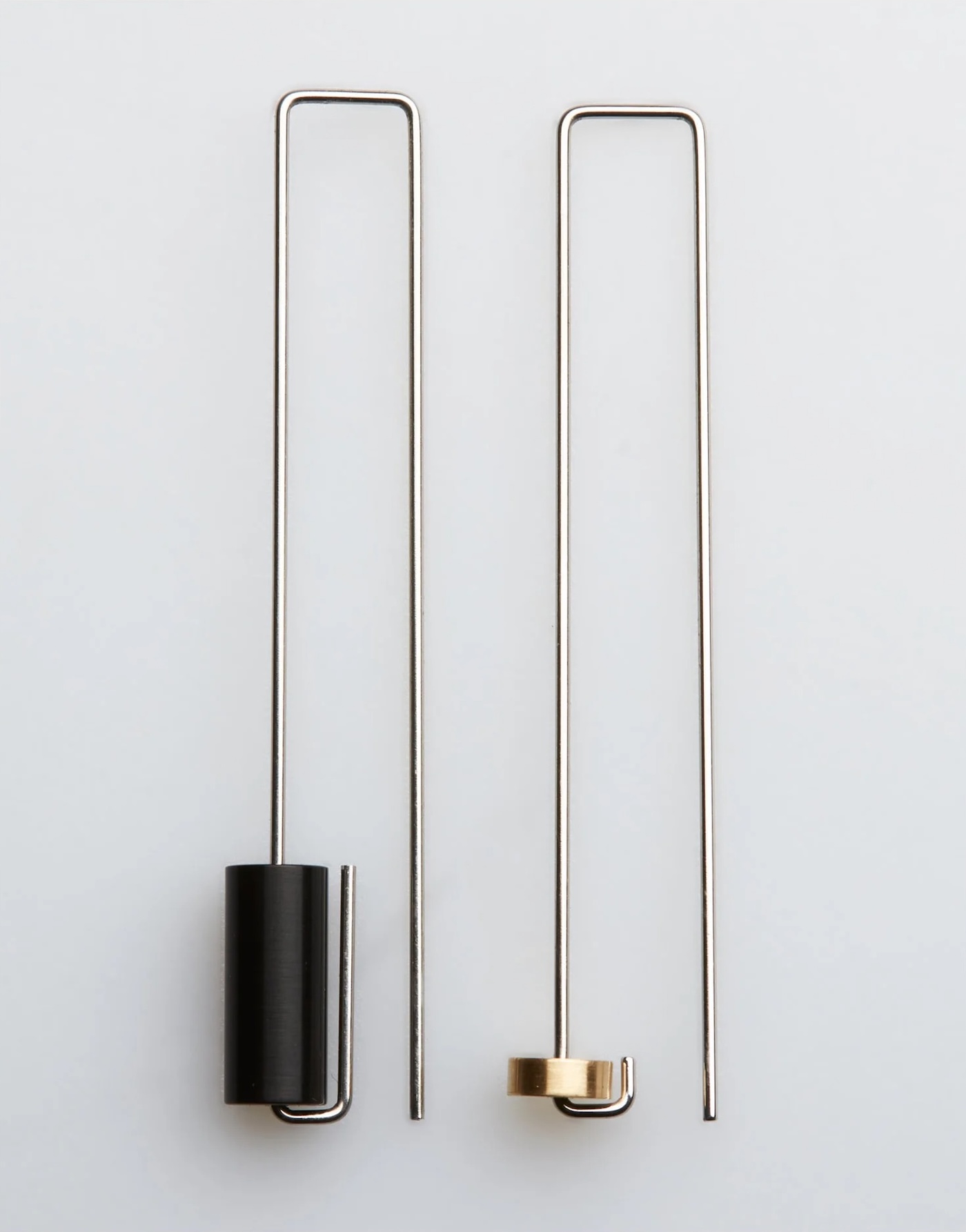
Minimalist black aluminum tube and copper tube on stainless steel hooks
©Phoebe Porter, One Gram earrings. Aluminum, 18ct yellow gold, stainless steel, 60 millimeters long.

Engage with your artist community

A fast way to rewrite those old stories is to surround yourself with artists who are already living the artist’s life.

Finding your people is among the most impactful steps you can take, and it’s one of the first things I recommend when an artist is building a business. History backs this up: artists in vibrant communities advance further and take their careers farther than those who try to go it alone.

In the right community, you find inspiration. You hear about opportunities that would never land in your inbox on their own. You learn skills. You gain confidence as a businessperson.

And there’s something else that comes with it: a kind of accountability, or maybe a healthy aspiration to be doing what the people around you are doing.

You’re looking for like-minded artists. Other artists don’t need to share your goals, but they do need to share a growth mindset — a genuine orientation toward improvement and forward motion.

It’s easy to get stuck in the wrong group. Beware of a single person with a poisonous attitude who can cast a pall over an entire group. Hanging out with the wrong people wastes time and almost always ends in frustration.

Be discerning. Find a group that pulls you forward.

Your people

will sustain you

Get your art in front of people

Your community will open doors you didn’t know existed. Some of those doors lead to physical places where your work can be seen in real life.

Exhibiting in person is critical for professional growth. No amount of pixels replaces someone’s experience of seeing art with their own eyes. And nothing replaces what you experience when you’re in the room with them, seeing their faces, having those conversations, discovering the effect your work has on people.

You might start by exhibiting in a borrowed space or a local café, but your career is a journey with phases. Over time, you seek increasingly prestigious venues. That progression is the point.

Gallery representation is something many artists want, and that’s completely understandable. But educate yourself before pursuing that path. Make sure galleries are right for you and that you’re ready for a gallery. They are not going to accept your work simply because you make it.

And commercial galleries are not your only option. As I said, the grip of the gatekeepers continues to loosen.

A very small percentage of artists will be represented by their dream art gallery. Don’t wait. Take control and get the work out now so you can have those conversations, so you can see how people respond, so you can progress.

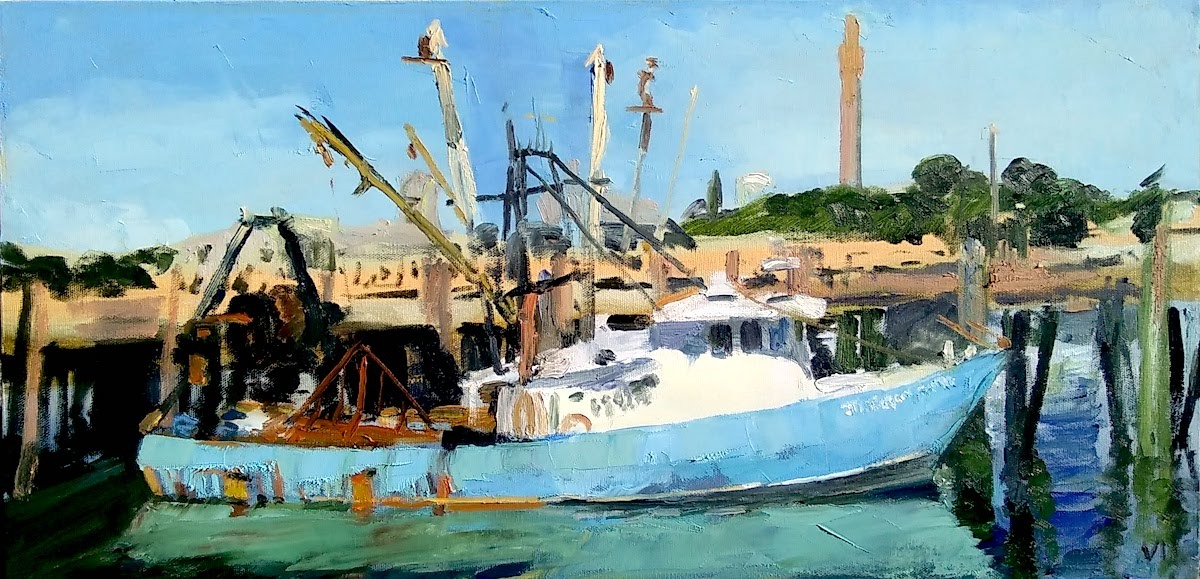
Light blue fishing vessel docked at a wooden pier. A prominent tower is visible on the coastline in the background.
©2022, Valerie Isaacs, F/V Jessica Heather. Oil on canvas, 12 x 24 inches.

Embrace structure

Pursuing venues — applying for shows, sending proposals, following up, meeting deadlines — requires that you show up reliably for your art.

That means structure.

I’ll be direct: I will not work with an artist who avoids structure. Not because I don’t understand the appeal of freedom. I do. You didn’t decide to make a living from your art because you love spreadsheets and calendars.

The freedom of creative life is real and worth protecting. But trying to run a profitable business with that same level of freedom is a different matter entirely.

Guidelines, frameworks, and boundaries are the containers that make freedom possible. They are what allow you to be free in the studio, because outside of it, people are depending on you.

Collectors expect their commissions when you said they’d be ready. Curators need your artist statement, your delivery, your follow-through. Art consultants are passing your deadlines on to their clients. Journalists are on deadline too. That’s a lot of people depending on you to do what you said you’d do.

Impose limits on yourself and adhere to them. If you don’t respect your own boundaries, nobody else will.

Here’s the part that surprises artists when they get to a certain point: the more successful you are, the more demands there will be on your time. Success does not come with more free hours. It comes with more complications. Put these foundational structures in place now, before you need them.

You can’t manage time. You can only manage yourself. Protecting your time and energy is non-negotiable.

Learn to say no without guilt. The first few refusals are genuinely hard. No, I can’t have lunch, I’m on deadline; no, I can’t watch your kids; no I can’t head up that committee.

You’ll learn quickly that saying yes to everything means saying no to yourself and to what matters most.

Frameworks & boundaries

make freedom possible

Move forward with intention

Structure keeps you from dropping the ball on other people and on yourself. It starts with intention.

It is remarkably easy to spend an entire day on email, social media, and random clicking. Being reactive rather than deliberate, responding to what other people have put in front of you rather than leading with what you want to accomplish. And before you know it, the day is gone.

Being busy is not productive. I’ll go further: being busy is boring. Everyone is busy. Nobody wants to hear how busy you are. What matters is that you are productive. That you are doing the right work, not just more work.

Work on your business, not just in it.

This means getting your ideas out of your head and into a plan before they disappear. Plans for your day, your week, your month, your year — all anchored to the vision you have for yourself and your art.

This kind of intentional planning is not about rigidity. It’s about being the one who decides how your time is spent, rather than letting other people’s priorities fill the space.

In my Essentials community, I ask members to commit to their priorities for the coming week and then celebrate what they accomplished. That rhythm, intention followed by reflection, is what moves an art business forward.

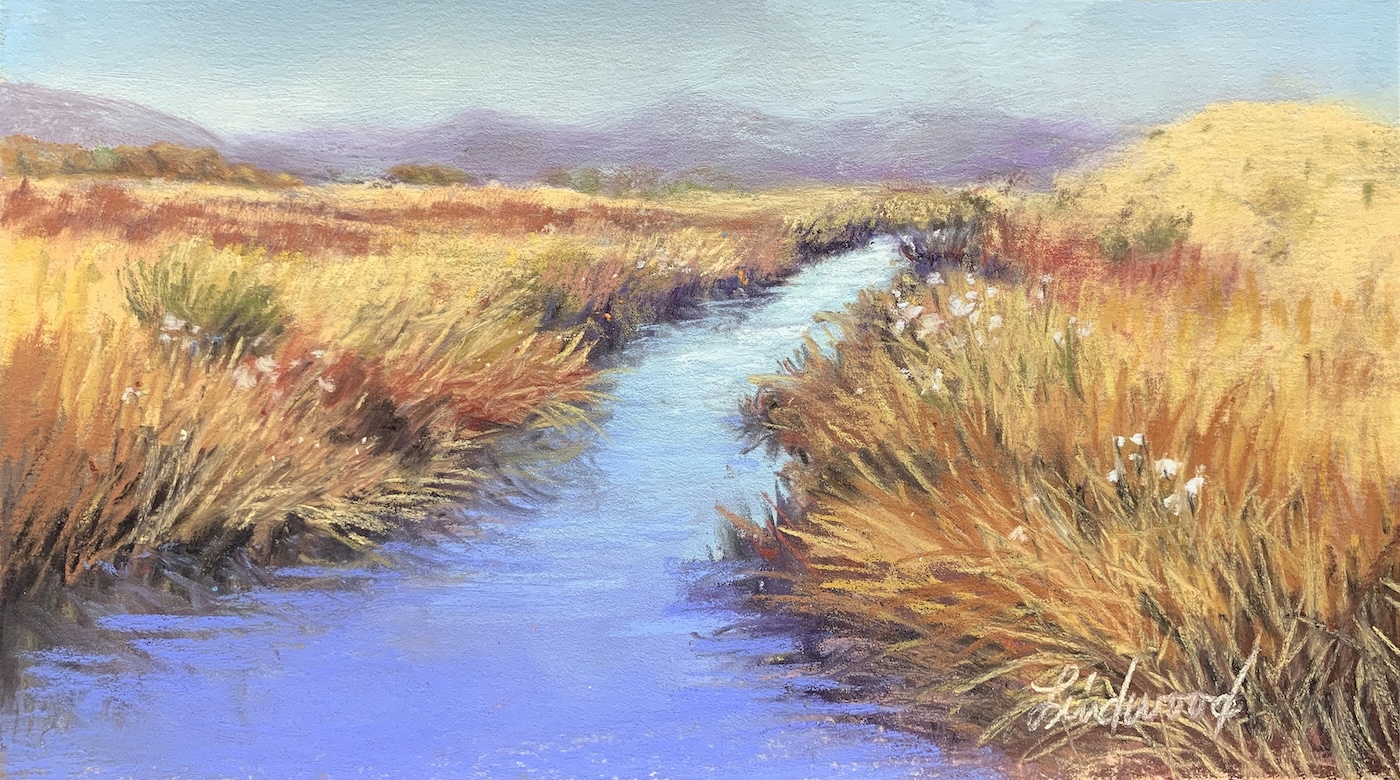
soft pastel landscape painting of a wetland marsh scene with a blue water stream winding through golden, sunlit grasses and brush under a soft sky
©Gretha Lindwood, Gentle Flow. Pastel on paper, 4.75 x 8.25 inches.

Make friends with marketing

When you are clear on your priorities and protecting your time, you can show up for marketing consistently. And consistent marketing is non-negotiable when you are trying to earn a living from your art.

Here is my advice: make friends with marketing.

Marketing is how your art reaches the people it was meant for. I think of it as sharing rather than self-promotion. Self-promotion is part of marketing, but it’s not the frame I want you to carry.

Marketing is everything you do to gain recognition for your art and to sell it. It is not a campaign with a beginning and an end. It is ongoing.

Earlier I said you need to let go of old stories. Now I’m going to tell you to watch out for new ones that might emerge when you start marketing. I hear these constantly: I am not a salesperson. I am not outgoing. I am terrible at marketing.

When you say any of these, you are defining yourself in the negative — and they become self-fulfilling prophecies. You cannot say “I’m terrible at marketing” without being terrible at marketing.

What you can say instead: I am getting better at this. I am learning. That is the growth mindset at work.

Aim for consistency. An artist who has neglected their list for months and then suddenly needs to announce a new body of work will find that list has gone cold. The people have moved on or forgotten. You cannot nurture relationships only when you feel like it.

Consider a weekly marketing routine: writing, posting, photographing, making videos, sending emails, following up. All of this on top of your consistent studio practice.

And if you want a truly fulfilled art business and career, you have to leave the studio. Marketing is not just sending a newsletter or posting to Instagram. It means showing up for your galleries and for other artists in your community. It means being seen as someone who contributes to the culture, not just someone who sells work.

Marketing is

your opportunity to share your art

Commitment

Everything I’ve covered — the work, the money, the old stories, the community, the venues, the structure, the intention, the marketing — it’s a lot. But it all comes back to one thing.

Commitment.

Commitment to your work will see you through everything else. Commitment to yourself and the vision you have for your life is your compass. When the commitment is there, you can figure out the rest.

Artists move through the world through their art. It’s how they communicate, how they find meaning in this one precious life. Keeping your art to yourself does it a disservice — and leaves you unfulfilled.

You don’t have to make a living from your art. Many people shouldn’t. But if you take that leap, do it with your whole heart and your best effort.

Ask for help when you need it. [Private consulting] is one way we can work together if you’re ready to commit and want support figuring out the rest.

You can do this when you are devoted to your work. And you don’t have to do it alone.

The post Making a living from your art (266) appeared first on Art Biz Success.

]]>
https://dy-online.com/making-a-living-as-an-artist/feed/ 3
5 Timelines to help you plan https://dy-online.com/timelines/ https://dy-online.com/timelines/#comments Wed, 02 Apr 2025 16:52:48 +0000 http://artbizsuccess.com/?p=15748 Planning ahead can make all the difference in your art business.

In this post, I share 5 essential timelines to help you stay organized and reduce last-minute stress. From publishing a blog post to promoting a solo show, updating your website, and following up with contacts—these timelines give you structure so you can focus more on your art. Use them as-is or adapt them to fit your unique workflow.

The post 5 Timelines to help you plan appeared first on Art Biz Success.

]]>
If you’ve ever found yourself scrambling at the last minute to meet a deadline—or worse, completely forgetting something important—timelines might be your new best friend.

They provide structure and clarity so you don’t have to reinvent the wheel every time you plan a show, write a newsletter, or update your website.

I use timelines extensively in my Artist Planning Workshops, and today I’m sharing five of my go-to versions to help you sleep better at night, knowing your bases are covered:

  1. Timeline for Publishing a Blog Post or Artist Newsletter
  2. Timeline for Designing Your Artist Website
  3. Lead Times for an Art Show
  4. Timeline for Promoting Your Solo Show
  5. Schedules for Following Up with People
Sarah Jane Brown oil painting
©Sarah Jane Brown, Balanced. Oil on canvas, 13 x 18 centimeters.

1. Timeline for Publishing a Blog Post or Artist Newsletter

Publishing is a process. Nobody writes a publishable article on the first draft.

Even seasoned writers need plenty of time and space, so give yourself a break and acknowledge the amount of time you need.

Schedule your writing and editing time wisely.

  • Ongoing :: Gather content ideas. Don your journalist cap and be on the lookout for things to write about.
  • 1 Week out :: Write your first draft.
  • 2 Days before publishing :: Edit your draft.
  • 1 Day before publishing :: Do your final edit. Schedule your post or email for delivery.
  • Publishing day :: Share on social media.

2. Timeline for Designing Your Artist Website

While sites like SquareSpace and FASO make it easy to build a functional, attractive artist DIY website, you might decide your time is better spent elsewhere. If so, your first step to a new website is interviewing (then hiring) a designer.

Designers have lots of other clients and need to squeeze you into their calendars.  Simultaneously, begin researching sites so that you know what you want and like.

The schedule below is an example. You will need to  agree with your designer on deadlines and adhere to them. Once you miss a deadline, the designer will move on to another client and put you at the back of the queue. 

  • 2-3 Months from launch :: Finalize design, navigation, and page content. Everything you add after this point will be an additional charge if working with a designer.

    [ See Presenting Yourself Professionally on Your Artist Website with Jessica Burko ]
  • 7 Weeks from launch :: Rewrite or update text.
  • 5 Weeks from launch :: Give final text and images to the designer.
  • 2 Weeks from launch :: Review draft pages that designer has created. Make any suggestions for improvements.
  • 1 Week from launch :: Review final pages, read all of the text, and test all links. Your designer is responsible for the design. You are responsible for making sure it works as you would like.
Cynthia Mosser gouache painting
©Cynthia Mosser, Muffy I. Gouache on museum board, 12 x 9.5 inches.

3. Lead Times for an Art Show

This is more of a list for various venues, than a timeline as there are too many variables at play. There are some venues that might allow you to schedule and install a show next month. Others have more rigorous schedules and require advanced planning. 

  • Alternative venue :: This might include a coffee shop, restaurant, hospital, library, or other public space. Your lead time for these venues varies based on how organized the person in charge is.
  • Art venues :: Co-op galleries, nonprofit spaces, smaller galleries, and public spaces with a defined art program may schedule their shows at least 1 year in advance.
  • Top tier galleries :: The most in-demand galleries will likely have their shows scheduled out for 2-3 years so that their artists have plenty of time to create a new body of work.
  • Museums :: Smaller museums may schedule shows 18-24 months out, but larger ones will look at 3 years or longer. Museums need time to write grants and raise funds, which contributes to the longer lead time.

How curators work.

Art center curator Collin Parson talks about how he plans exhibitions and works with artists.

The Art Biz episode 116

3. Timeline for Promoting Your Solo Show

Most artists don’t promote their shows enough.

They send one announcement and trust that it registers with all recipients. You have to be more vigilant than this, but it doesn’t mean that you treat all shows equally.

This timeline is for a solo show, which deserves much more attention than group shows.

  • ASAP :: Segment your list. This is a key module in my ESSENTIALS program, and is needed so you can target those most likely to attend.
  • 1-2 Months out :: Announce it in your newsletter (your entire list).
  • 1 Month out :: Send a save-the-date postcard or email to those most likely to attend and VIPs who need to know about it. Post the same info to social media.
  • 2 Weeks out :: Email the official invitation to your local segment. Reach out with a personal email, text, or DM to those you’d really like to attend or at least know about it. (Everything from this point on is to only those who are most likely to show up.)
  • A few days before the opening :: Send an email that “it’s this week.”
  • 1 Day before opening :: Send “it’s tomorrow” email.
  • Ongoing :: Post to social media. Here are 22 ideas for sharing news about your show.
  • 1 Week before closing :: Send email that there’s 1 week remaining to see the show.
Cheryl Berech oil painting
©Cheryl Berech, Keisha I. Oil on canvas, 12 x 9 inches.

5. Schedules for Following Up with People

This is a different type of timeline—a list of various people you will come across and the attention they should be given. You can’t neglect follow-up when you are trying to make a living.

  • New acquaintances :: Send an email or handwritten note within 3 days of meeting, with the message “it was nice to meet you.”
  • Potential buyers :: Anyone who expresses interested in your work should command your prompt attention. Respond immediately.
  • Interested media people or writers :: Ditto above. Anyone who wants to share your art in an article, video, or podcast needs swift follow-through.
  • New email subscribers :: Send 2 warm “here’s what I’m all about” emails within the first week as this is when they are most excited to hear from you. After that, a  monthly newsletter is good.
  • Buyers :: Send a thank-you note within a week and make a plan to stay in touch on a regular basis if they aren’t on your email list.

Listen to this to improve your follow-up.

I hope these timelines help you feel more grounded and prepared as you plan your next steps. They’re meant to take the guesswork out of your process and free up more energy for your creative work.

I walk artists through creating their own timelines in my Artist Planning Workshops, which I offer three times a year. If you need extra support and structure, I’d love for you to join us.

And I’d love to hear from you—how are you using timelines in your art business? Share your thoughts in a comment below.

This article was originally posted on June 26, 2013, was updated on July 25, 2019, and has been updated again with original comments intact.

The post 5 Timelines to help you plan appeared first on Art Biz Success.

]]>
https://dy-online.com/timelines/feed/ 11
My Favorite Things in 2024 https://dy-online.com/2024-fav-things/ https://dy-online.com/2024-fav-things/#comments Mon, 09 Dec 2024 05:58:23 +0000 https://dy-online.com/?p=52310 I haven't done a favorite things post in so long that I feel compelled to catch you up on all of my favorite things since ... mmm ... 2018. But I'm not going to do that to you.

These are some things that make my work easier, life more joyful, give my brain a workout, help me destress or defrizz, and fill my tummy with yumminess. 

The post My Favorite Things in 2024 appeared first on Art Biz Success.

]]>
I haven’t done this in so long that I feel compelled to catch you up on all of my favorite things since … mmm … 2018. But I’m not going to do that to you. 

These are some things that make my work easier, life more joyful, give my brain a workout, help me destress or defrizz, and fill my tummy with yumminess. 

This article contains affiliate links. Should you buy from them, I will earn a (very) small referral fee.

Categories

Watching

I watched Ellsworth Kelly: Fragments a few years back and rewatched it this year before going on my art pilgrimage to Kelly’s Austin.

I am not unbiased—a true Kelly fanatic here. But … I recommend this film, more than any other because it shows how an artist sees the world and how abstract art evolves from life.  

You can stream it on Kanopy with your library card. 

Kanopy is one of my go-to channels for art documentaries. The others are Art21 and Louisiana Channel.

Top-tier art galleries like David Zwirner also have great videos on contemporary artists.

Speaking of Louisiana Channel … These are two favorite videos discussed in my Accelerator salon in 2024.

Reading

I read some good books this year, but there are two that stick with me. 

All the Beauty in the World: The Metropolitan Museum of Art and Me by Patrick Bringley.

I loved this because it was a personal journey of the discovery of art by a museum guard. It wasn’t by a critic or art historian or someone writing about the market value of art. It was about ART itself, and it was a gift to see the art through his eyes.

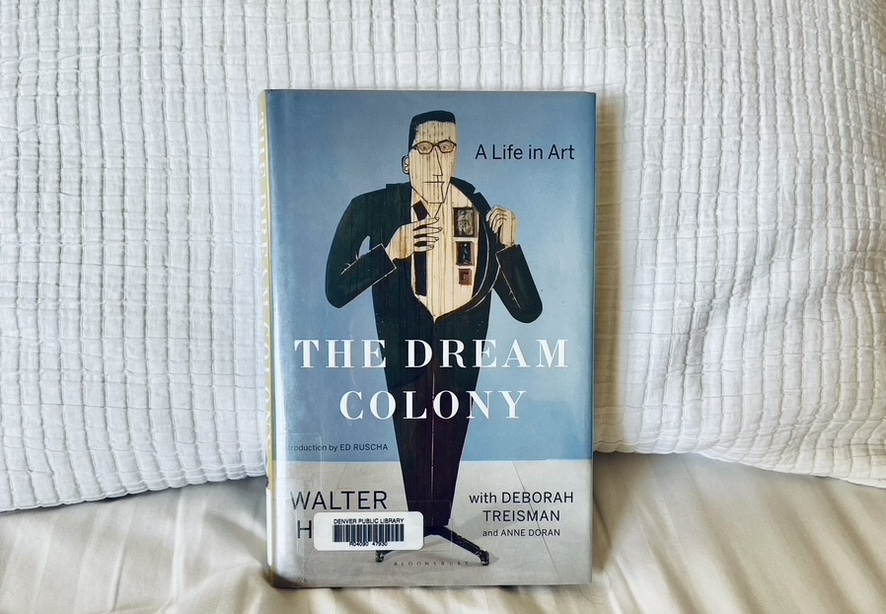
The Dream Colony by Walter Hopps. Photo ©Alyson Stanfield.

The Dream Colony: A Life in Art by Walter Hopps, Deborah Treisman, and Anne Doran.

Walter Hopps grew out of the West Coast to become one of the most important curators of the 20th century, so I was thrilled to find this memoir written shortly before his passing in 2005. It reads as if he was telling an unpolished story and that’s because he was—preferring to tell those stories than to write them.

After a chapter or so into it I was beginning to doubt that it would be any good, but my hesitation quickly disappeared. The pages were full of adventure and proof of what a curator would go through to fulfill their vision and get their art.

Drugs, CIA operatives, overnight installations, a Turkish strong man, and some of the best stories I have read about Robert Rauschenberg. I didn’t want it to end.

Honorable mention: Get The Picture by Bianca Bosker. Really … So so good. It just hasn’t stuck with me like the other two.

Writing

Readwise App

Do you take notes when you read things? Write in books? Me, too!

But then I don’t do anything with those notes. I have index cards, journals, pencil scratches on pages, and more. They’re all separate in hopes that I’ll one day find them and make them useful.

This year I discovered the Readwise app.

Readwise app

It syncs your highlights from Kindle, Instapaper, Pocket, iBooks, and more. And you can highlight Web pages using the associated app, Reader—especially useful for saving items you want to read later.

And … get this! All of the notes are imported into my Notion. 

I still haven’t quite grasped what it all means to my workflow, but I’m sticking with it.

AI

This was the year that I started paying for ChatGPT and its AI became a much-valued member of my team. (Though nothing in this article was written with its help.)

I have also experimented quite a bit with Google’s NotebookLM, which is great if you have a lot of content and want help only with what you have already created (and not referencing any outside sources.) Steven Johnson is the one to explain it to you.

Zen Art Supplies Journal

I’m so grateful to Cynthia Morris for introducing me to this Zen Art Supplies journal  a number of years ago.

I have a preference for lined pages, but I have grown to love the dotted grid and am especially fond that the pages are numbered. And they have great color choices!

Use the Index in the front to keep track of important pages.

Zen Art Supplies Journal

Typing Shortcuts

I love TypeIt4Me text expander for typing shortcut keys on Apple devices to automatically fill in text wherever I am typing (MacBook, iPhone, or iPad ) I only installed it once on my MacBook, and it works across my devices 😳.

If you want to explore other options or don’t use Apple products, search for “text expander app reviews” or some such thing. I really don’t know what I did without this! As soon as you start using it, you’ll find all kinds of ways to use it.

My stored text includes calendar appointment links, zoom links, repeated email content, podcast intro, promo, and outro starting points, emoji sequences, and all kinds of other URLs.

If you use Apple, you can type something into your computer, copy, and then paste it into your nearby phone or other Apple device. So much easier than typing on a phone.

Pro Tip: From Jenny Blake (I think!) I learned to start my shortcuts with a semicolon because (1) I rarely, if ever, use that punctuation anywhere and (2) it allows me to continue using abbreviations without confusing them with the text expander.

Malcolm Gladwell's Revisionist History

My go-to podcast for masterful storytelling about things I had no idea I was interested in  is Malcolm Gladwell’s Revisionist History. 

These are some that stand out to me:

  • The Season 8 series on guns (2023)
  • The season 5 episode about the would-be biography of Howard Hughes (2020)
  • A Good Walk Spoiled from season 2 about why he hates golf (2017) —It will also have you questioning your admiration of Bob Hope

De-stressing and Coiffing

4-7-8 Breath

For the last couple of years I have used a rented vagus nerve stimulator to help with mind-gut health. 

I have only recently discovered the practice of 4-7-8 breathing to do similar. It’s much more affordable!

I use the Insight Timer app, but I thought it might be helpful to hear it first from the inventor of it himself, Dr. Andrew Weil.

Curls

I realize how lucky I am to have a full head of hair, but there are many days when I wish the goddesses had been a little less generous with the curls. 

I have fought them my whole life, and now I’m just resigned to them.

I’m so happy that I clicked on that Instagram ad from TreLuxe. I love most everything I’ve tried of theirs, especially the Untie The Knot (leave-in conditioner) and the High-Definition Styling Gel. 

This looks like a good starting kit. But I also like the hydrating cream in this bundle.

Speaking of curls, I also went down a rabbit hole in Geena Marie’s YouTube channel.

My silver hair is much more unpredictable and frizzy than those gorgeous locks she has, but I really love what I learned from her.

Eating

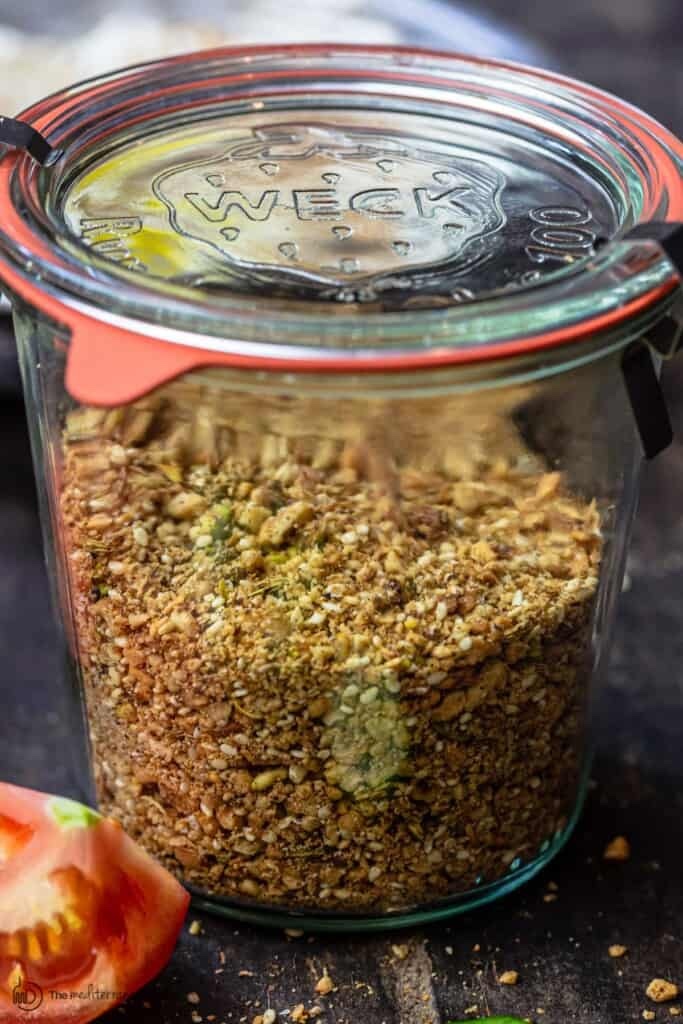
Duqqa (Dukkah) is a Middle Eastern blend of nuts, seeds, and spices that originated in Egypt. 

I started making it from a much more complicated recipe, but have switched to this much easier version from The Mediterranean Dish. 

You should definitely check out her recipes while you’re there. Another favorite of mine is her Quick Roasted Tomatoes with Garlic and Thyme.

You can put duqqa on anything—like sprinkling it on a bowl of hummus—but my favorite way to have it is on buttered toast (here’s my gluten-free bread of choice) or avocado toast. 

Photo ©The Mediterranean Dish

Dukkah. Photo ©The Mediterranean Dish

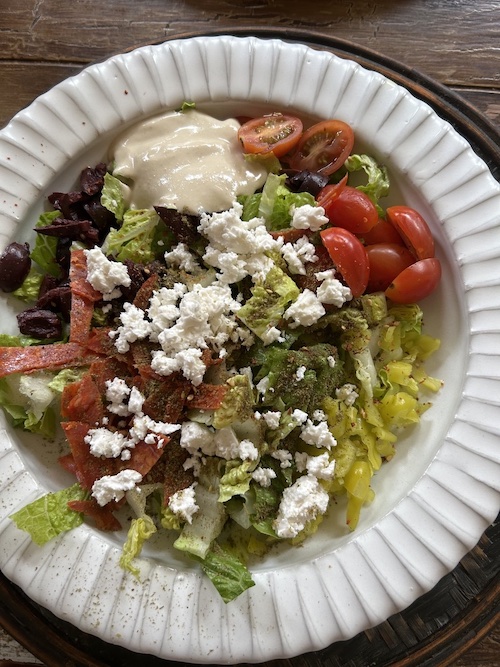
Then there is Tahini Dressing, a recipe I make at least once a month and comes together in a jiff.

It’s great on salads and on Mediterranean bowls with a rice or quinoa base.

I adapted my version slightly from Cooking Light and have a PDF for you (no optin required).

Here it is!

Tahini Salad. Photo ©Alyson Stanfield

Drinking

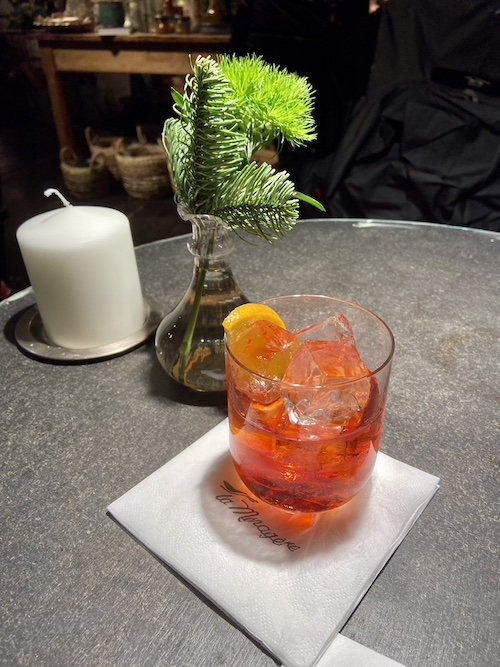
Ever since I had one on my last night in Florence 2 years ago, I’ve become slightly obsessed with sbagliatos, a word meaning “mistake” or “broken” in Italian, as in “it was a mistake to use prosecco instead of gin in this negroni.”

Um … No. Nothing about this should be considered a mistake. 

It’s a gorgeous color and absolutely delicious.

This photo is my first sbagliato at La Ménagère in Florence. Here’s the recipe I follow.

Sbagliato negroni. Photo ©Alyson Stanfield

And, of course ..

The.
Famous.
Eggnog.
Recipe.

You didn’t think I was going to leave it off the list just because I share it every year?

It’s not for you if: you are sober (stay that way!), you are okay with eggnog in a carton, or you’d rather not hassle.

This is a hassle that is worth every drop and calorie.

Download now (no optin required).

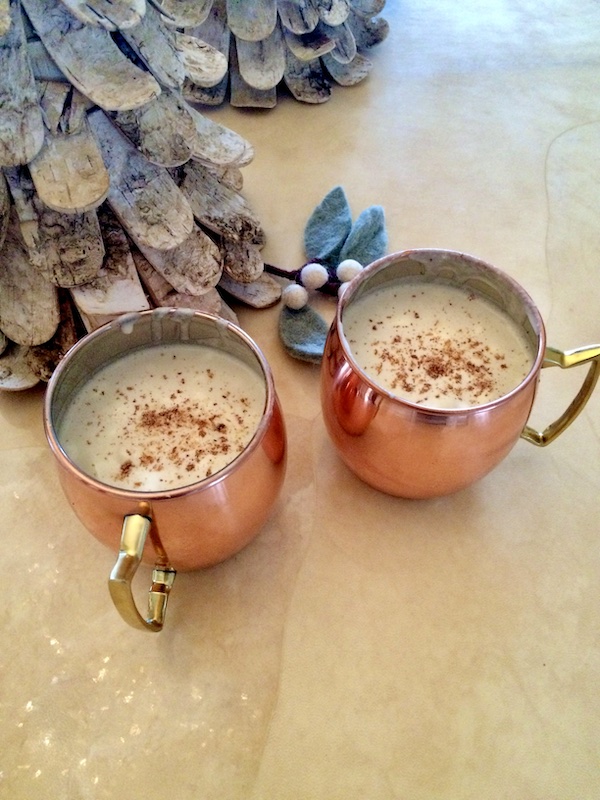
Eggnog. Photo ©Alyson Stanfield

The post My Favorite Things in 2024 appeared first on Art Biz Success.

]]>
https://dy-online.com/2024-fav-things/feed/ 4
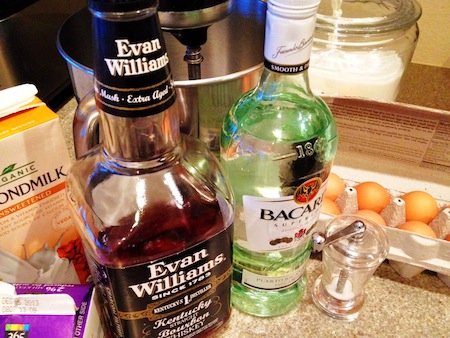
My Famous Eggnog Recipe https://dy-online.com/eggnog-recipe/ https://dy-online.com/eggnog-recipe/#comments Fri, 03 Dec 2021 12:00:21 +0000 https://dy-online.com/eggnog-recipe-2/ This recipe has been keeping my family warm on Christmas morning for decades—even though it's very cold.

Loaded with bourbon (and a tiny bit of rum) and everything not good for you, it's a once-a-year treat. A lot of work goes into it, but I promise your efforts will be rewarded.

If you like the stuff in the carton, you need read no further. This is nothing like that.

The post My Famous Eggnog Recipe appeared first on Art Biz Success.

]]>
Cheers to those who look forward my recipe for Bert’s Eggnog each year!

I’m a little like Susan Stamberg who annually recites her cranberry relish recipe on NPR and, despite its ghastly Pepto-Bismol coloring, swears it’s delicious. (I’ve had it and beg to differ! I promise I won’t do you that way.)

Not for the Feint of Heart

Anyhoo . . . I PROMISE my eggnog recipe is the nectar of the gods and goddesses.

I have converted many a declared eggnog-hater with this sweet concoction. Just read some of the comments from over the years. (There are even more on social media.)

Still, loaded with the good stuff, it’s not for the feint of heart. 

Eggnog Ingredients

My brother called a few years back to say that he had been wondering if he could find our Bert’s Eggnog recipe online. Of course, this blog post was the first thing that came up!

He had no idea I had been sharing this treasure with my readers for all of these years.

My brother-in-law used to call every year to ask where he can find the eggnog recipe. Every year, we gave him this blog URL. I think he’s figured it out now.

Do Not Put Sugar on the Rim

I share the top photo reluctantly. I have never been able to get a great photo of my eggnog because we don’t use fancy cups with What is that? Sugar on the rim? Don’t do that. I can’t believe it’s even a thing.

We use mugs like my IRL photo here because our eggnog is barely pourable. It’s thick, almost like softened ice cream. 

If yours pours too easily, put it back in the freezer to thicken it up, as the recipe says.

And, lest you try to fool yourself by focusing on the health “benefits” of the nog, I suppose I should do the responsible thing and share this note of caution with you in advance. Don’t say you weren’t warned.

Eggnog. Photo ©Alyson Stanfield

The Story of Bert's Eggnog

This recipe is for neither the faint of heart nor those who aren’t willing to make the effort. It’s a lot of work, but you’ll be rewarded in the end. Even people who think they don’t like eggnog fall in love with this sinfully delicious concoction.

My mother first made Bert’s Eggnog in 1959, the year she and Dad were married. But my Uncle Charlie had been making it for years.

No one knows who Bert is! Mom looked up the original recipe in Aunt Susan’s How-To Cookbook (1951) and it doesn’t give a clue.

This recipe has been a part of my Christmases for at least 35 years. We started making it in Crested Butte, Colorado and always on Christmas Eve.

After the batch was whipped up, we put it out in the snow overnight. The icy snow makes the nog thicken and the flavors are just that much better in the morning. If you don’t have snow or cold weather, I might suggest a few hours in the freezer.

Our fingers are crossed for a snow bank for this year’s batch.

Christmas morning just isn’t Christmas without Bert’s Eggnog. It’s a nice excuse for an afternoon nap, too!

If You Make This Recipe

Are you a part of the Bert’s Eggnog fan club? Have you made this recipe since I first posted it in 2005?

Please leave your name and your story in a comment.

Say a word of gratitude to Bert—whoever she/he is.

Download the Recipe for Bert’s Eggnog Here 

No opt-in required. It includes the story of how it came to be in my life and how we imbibe

First published December 21, 2012. Updated with original comments intact.

Alyson's Eggnog Recipe

The post My Famous Eggnog Recipe appeared first on Art Biz Success.

]]>
https://dy-online.com/eggnog-recipe/feed/ 32
Married Names and Difficult Names https://dy-online.com/the-name-game-continues/ https://dy-online.com/the-name-game-continues/#comments Thu, 18 Jul 2019 11:33:22 +0000 http://artbizsuccess.com/2008/06/the-name-game-continues.html Yesterday’s Deep Thought was inspired by two different emails I have received this week. The first was from Jill Rumoshosky Werner, who wrote: I know that I don’t have an easy name, but it’s my name and the one I choose to use professionally. However, the majority of the shows in which I’m exhibited seem […]

The post Married Names and Difficult Names appeared first on Art Biz Success.

]]>
Yesterday’s Deep Thought was inspired by two different emails I have received this week.

Werner
©Jill Rumoshosky Werner, Knitted

The first was from Jill Rumoshosky Werner, who wrote:

I know that I don’t have an easy name, but it’s my name and the one I choose to use professionally. However, the majority of the shows in which I’m exhibited seem to think it’s all right to change it. To me, my name is my professional reputation and all my paperwork is submitted with the name the way I want it to be. This situation happens so frequently that when I get into a show, I always send them a note requesting that all three names be used on anything printed (signs, press releases, webites, etc.). This note is often ignored, even when I ask them (very sweetly) multiple times in different ways.

I can’t possibly be the only person who encounters this problem. What more can I do to change this situation and am I being overly sensitive about this? How important is it to maintain a consistent name presence in the art world?

The second was from Beth Jasnoch Turner, who is going through a divorce. She cautions:

For about the first 7-10 years I continued to use my maiden name when I signed my artwork and then I got to the point where I thought that was kinda silly for an artist, so I went to just my married name.  Now, after 38 years I’m going  back to my maiden name professionally and will not change it again!  I wish I’d had the foresight, I would not have changed it.  Keeping an individual and consistent professional identity for an artist is important.

By the way, for all of those years, Beth was known only as Beth Turner. When this post was first published, she  had started adding her maiden name to her professional name (Beth Jasnoch Turner). She is now known as Beth R. Jasnoch.

This post was originally published on June 13, 2008 and has been updated with comments intact.

The post Married Names and Difficult Names appeared first on Art Biz Success.

]]>

https://dy-online.com/the-name-game-continues/feed/ 12
Happy Birthday to This Blog https://dy-online.com/9th-birthday/ https://dy-online.com/9th-birthday/#comments Sat, 30 Nov 2013 13:18:00 +0000 http://artbizsuccess.com/?p=16697 The Art Biz Blog is 9 years old today!
To date there have been 2,400 posts and 24,000 comments. Thank you for being a reader. And a special thanks if you participate in the discussion here.

The post Happy Birthday to This Blog appeared first on Art Biz Success.

]]>
9 birthday candlesThe Art Biz Blog is 9 years old today!

To date there have been 2,400 posts and 24,000 comments.
What’s my secret for longevity? Commitment.
When I start anything, I am pretty darned good about finishing it. Every time I think about skipping a post, I think of you.
This blog is an important connection between you and me. If I skip a post, I miss an opportunity to connect with you.
Thank you for being a reader. And a special thanks if you participate in the discussion here.
signature-aly-150


The post Happy Birthday to This Blog appeared first on Art Biz Success.

]]>

https://dy-online.com/9th-birthday/feed/ 42
Most Active Posts on the Art Biz Blog in 2012 https://dy-online.com/top-posts-2012/ https://dy-online.com/top-posts-2012/#comments Mon, 31 Dec 2012 12:00:00 +0000 http://artbizsuccess.com/?p=14457 If I counted correctly, this is my 210th (and final) post of 2012. I share here the most commented-on posts on the Art Biz Blog from the past year, along with the number of comments. Many of these are my Deep Thought posts, which always attract lots of comments. Just in case you missed the previously . . .

The post Most Active Posts on the Art Biz Blog in 2012 appeared first on Art Biz Success.

]]>
If I counted correctly, this is my 210th (and final) post of 2012.
I share here the most commented-on posts on the Art Biz Blog from the past year, along with the number of comments. Many of these are my Deep Thought posts, which always attract lots of comments.
Just in case you missed the previously . . .
Is the Artist’s Life Selfish? – 57
The Fears That Haunt You – 59
What Did You Learn From Your Art Teachers – 70
Is Your Art A Product? – 52
Beware of “I Am Not” – 46
Follow Your Passion? – 50
Peek Inside a Catalog of Your Art – 47
Why Working In Coffee Shops Works – 50
Why Does One Artist Sell Better Than Another? – 63
What Do You Call Yourself? – 70
What is your opinion of co-op galleries? – 81
Why Most Artist Newsletters Stink (and What to Do About It) – 73
5 Painless Fixes for a More Potent Artist Statement – 46
Philosophizing About Artwork Titles – 65
Why You Need to Write About Art – 94 < The 2nd most commented-on post
5 Face-to-Face Networking Essentials – 51
Bias and Prejudice in the Art World – 51
Celebrating My 10 Year Anniversary – 63
4 Reasons to Cherish Unsubscribes – 84
4 Starter Moves for Your New Facebook Timeline – 50
Is the Pinterest Problem Really a Problem – 117  < THE most commented-on post!
Warning: Exhibiting Your Art Is Good for You – 53
19 Art Documentaries You Shouldn’t Miss – 68
15 Steps to Take After Completing Your Artwork – 60
HAPPY NEW YEAR! Celebrate safely and always with a designated driver.
 

The post Most Active Posts on the Art Biz Blog in 2012 appeared first on Art Biz Success.

]]>
https://dy-online.com/top-posts-2012/feed/ 6
Merry Christmas https://dy-online.com/merry-christmas-5/ https://dy-online.com/merry-christmas-5/#comments Tue, 25 Dec 2012 12:00:57 +0000 http://artbizsuccess.com/?p=14423 I hope your day is filled with peace, love, and joy. Thank you for your gifts and for being here. Merry Christmas!

The post Merry Christmas appeared first on Art Biz Success.

]]>
I hope your day is filled with peace, love, and joy.
Tofu with wreath
Tofu is especially happy when the Christmas decorations come out.

Thank you for your gifts and for being here.
Merry Christmas!
Alyson signature

The post Merry Christmas appeared first on Art Biz Success.

]]>
https://dy-online.com/merry-christmas-5/feed/ 7
Sale: My Book + 5 Bonus Goodies https://dy-online.com/santa-sale/ Fri, 26 Nov 2010 22:44:56 +0000 http://artbizsuccess.com/?p=8403 The holiday book and gift sale is November 26 through December 18, 2011. Shop now to guarantee Christmas delivery.

The post Sale: My Book + 5 Bonus Goodies appeared first on Art Biz Success.

]]>
I’ve put together a selection of products and bonuses for those of you shopping the holiday sales.
Holiday Sale at Art Biz Coach
All include the purchase of my book, I’d Rather Be in the Studio! The Artist’s No-Excuse Guide to Self-Promotion.

Bonus Goodies

  • NEW from Art Biz Coach! Special report: After The Sale (What to do next)
  • NEW from Art Biz Coach! Special report: A Checklist for Promoting Your Exhibit or Event
  • NEW from Art Biz Coach! Audio program: Unbelievably Dumb Mistakes Artists Make When Presenting Themselves
  • From Cynthia Morris! Special report: Receive Feedback Gracefully to Be a Better Artist
  • From Ariane Goodwin! Special report: Artist Statements (What’s the big deal about something so small?)

4 Options

  1. Book + Goodies
  2. Book + Pre-Order of Revised Edition + Goodies
  3. Book + Blast Off Class + Goodies
  4. E-Book + Goodies

Shop now! Sale ends December 18th.


The post Sale: My Book + 5 Bonus Goodies appeared first on Art Biz Success.

]]>
Greatest Hits (Posts) of 2009 https://dy-online.com/greatesthits/ https://dy-online.com/greatesthits/#comments Tue, 29 Dec 2009 11:00:49 +0000 http://artbizsuccess.com/?p=5140 In case you missed any posts during the last 12 months, I've selected one from each month to call your attention to. Here they are: The Greatest Hits from the Art Biz Blog from 2009.

The post Greatest Hits (Posts) of 2009 appeared first on Art Biz Success.

]]>
In case you missed any posts during the last 12 months, I’ve selected one from each month to call your attention to. Here they are: The Greatest Hits from the Art Biz Blog from 2009.

Offer an Upgrade
Upgrades not only bring you more money, they also provide your fans with another level of service.

Dating Your Art: How Important is It?
Dating your artwork is critical if you’re interested in high-end galleries and museums.

How long did it take you to make your art?
Artists love to hate this question they hear from buyers and customers. And, yet, you continue to hear it over and over again. Read this post and the 80 comments (perhaps the most ever!) it received at the time. Then read the winning responses to the question.

Leah Virsik
Leah Virsik, Genesis, 2009. Acrylic, paper, beeswax, 11 x 11 inches. ©The Artist


Return to Your Art

Never neglect the studio. Always return to your art. The disciplined practice of making art is mandatory.

Recycle Your Blog Posts into Exhibit Labels
Guest Blogger Val Littlewood shows you how (and why!) she did it.

Identify (only) the Next Action
Clearly define your tasks and identify only the next action for your task list.

Ask for Sponsorship
This post didn’t receive any comments, but it’s crucial if you ever need to ask anyone to contribute services or goods for an opening or event.

Using Other Artists’ Images on Your Blog
How to use others’ images the right way and gain friends at the same time.

Escape the PMWP (Poor Me Whining Phenomenon)
Nobody is responsible for your success–or lack thereof–except you. Of course, there will always be bumps along the road that are not your fault. Get a good set of shocks and ride out the potholes.

Artist Salons: 6 Elements for a Thriving Group (Part 1)
Any artist can start a group, but how can you ensure it will thrive? How can you make it worth the members’ time? Also read: Part 2.

Crediting Your Artwork
Every artist needs to read this! Whether you post your images on a blog, a website, or on a social media site like Facebook, you need to give yourself credit for your artwork.

Finish Off the Sale and Follow Up
Give your art buyers only what they need at the time of the sales transaction and save the rest for following up at a future date.

When You’re Not Getting Paid after the Sale of Your Art
If you’re not being paid by a gallery you know is making sales, your reaction should depend on the answers you give for the five questions in this article.

The post Greatest Hits (Posts) of 2009 appeared first on Art Biz Success.

]]>
https://dy-online.com/greatesthits/feed/ 7