Art Biz Success https://dy-online.com/ Trusted Art Business Coaching and Consulting Thu, 25 Jun 2026 14:43:50 +0000 en-US hourly 1 https://wordpress.org/?v=7.0 https://dy-online.com/wp-content/uploads/2022/02/favicon-2-150x150.png Art Biz Success https://dy-online.com/ 32 32 The obvious salespeople you’re not using (270) https://dy-online.com/collectors-sales-force/ https://dy-online.com/collectors-sales-force/#comments Thu, 25 Jun 2026 14:43:43 +0000 http://artbizsuccess.com/?p=23170 You spend a lot of energy chasing new buyers and collectors. But some of your best advocates are already in your life, and they're ready to help.

In this episode, find out who they are, why they genuinely want to help sell your art, and how to make it easy for them to do it — physically and digitally — without feeling like you're begging.

The post The obvious salespeople you’re not using (270) appeared first on Art Biz Success.

]]>
You probably spend a lot of energy trying to reach new people. More collectors, more buyers, more followers.

That’s not wrong, but it means you might be overlooking the people who are already in your corner, who already love your work, and who would genuinely help you sell it if you gave them the opening.

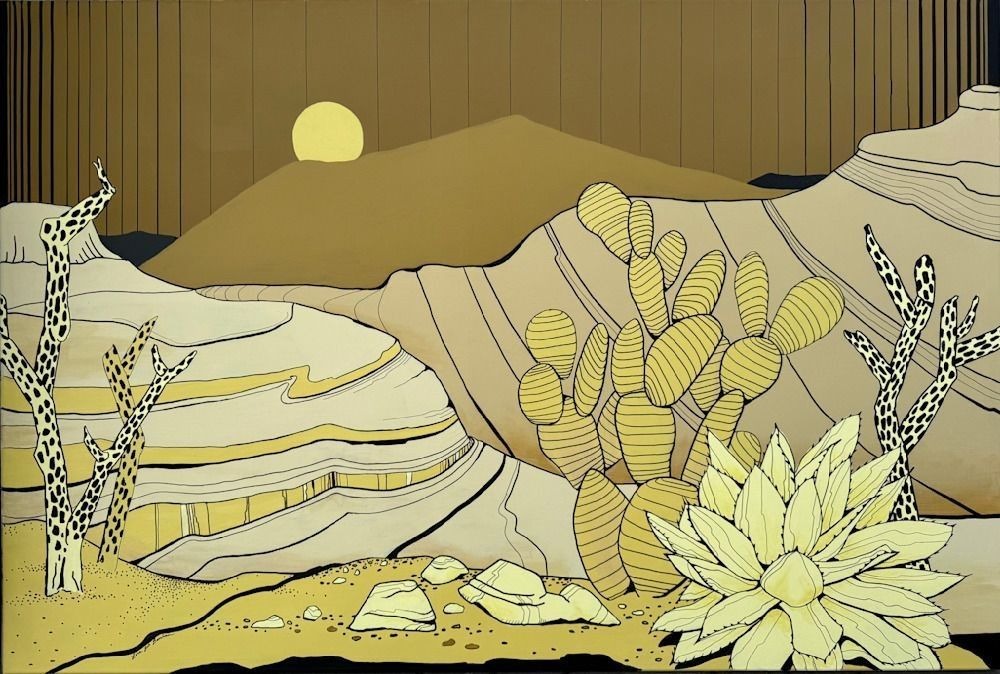
Clean-line, stylized, illustrated Southwestern desert landscape in yellow and brown featuring cacti and rock formations in the foreground of a large mountain peak under a sun or moon
©Lora Lee Barnhiser, Meet Me Under the Lemon Moon. Acrylic on rescued canvas, 35 x 55 inches.

Word of mouth is one of the most effective ways to sell art. And the people most likely to spread that word aren’t strangers. They’re your buyers, your regulars, your biggest fans.

[ See Followers to Collectors ]

They’re the ones who DM you, show up at your openings, and brag about knowing you to their friends.

This post is about how to activate them. I’ll cover who they are, why they want to help, and how to make it easy — with both physical tools and digital ones — so that the ask doesn’t feel awkward.

Who your obvious salespeople are

This isn’t just for artists who have collectors. If anyone has ever responded enthusiastically to your work, this applies to you.

Think about the people who regularly show up at your events and actually engage, not just for the free wine and cheese. The followers who comment, share, or DM you. The friends and family members who brag about knowing you. Anyone who has ever said “I showed your work to a friend” or “I just love what you do.”

Honestly, anyone who loves you and wants the best for you.

It doesn’t matter whether they’ve bought from you. What matters is whether they believe in you.

They already want to help, they just haven't been asked

Here’s what 25 years of working with artists has taught me: people think it is genuinely cool to know an artist. They can’t imagine living your life.

And the ones who love your work? They enjoy being the person who introduces it to someone else.

It’s a gift to them. They get to be the person with great taste, the one who’s on the inside. Don’t discount this. I’ve seen it repeatedly with my own non-artist friends.

The reframe is this. You’re not asking for a favor. You’re inviting them to be part of what you’re building, to do something they probably already want to do but didn’t know how.

The relationship has to come first

None of this works if you’ve aren’t showing up as THE ARTIST in their lives.

People notice if they only hear from you when you want something. Stay in touch through your newsletter, personal notes, postcards, DMs. Show up for them too.

The relationship can’t be transactional.

So many people avoid the follow-up. Not because they don’t care, but because it doesn’t feel urgent and gets kicked down the road. That’s a mistake.

Consistent follow-up, with those who already know and support you, is the most direct route to reliable sales and real opportunities. I hear this repeatedly from my artist-clients.

Assuming you’re already staying in touch, here’s how you make it easy for people to spread the word.

Make it easy: the tangible

Ask those you have identified if they could help spread the word by sharing postcards with your art (and name!) on the front. Suggest they could leave some at a coffee shop, a little library in their neighborhood, the office break room.

A postcard with your art and your name is reinforcing name and image recognition every time someone sees it.

I shared a variety of artist postcards and gave some tips in this Instagram video.

Similarly, you could have note cards printed with the original work owned by a collector. They’re proud of what they own and would surely be delighted to send correspondence with their art on it. Every note card introduces your work to someone new.

Turn it into a party by suggesting an unveiling. Collectors love to show off a new acquisition, and an intimate gathering of friends is a natural setting for you to say a few words about the piece. You aren’t selling anything. You’re just making connections.

And if someone has deep community ties and loves to host, a home show is worth considering. One of my clients sold 14 paintings at her sister’s home in another city, with 75 people in attendance. Don’t underestimate it.

Make it easy: the digital

The fan who shares your post or forwards your email is doing the same thing as the one leaving postcards around town. Pay attention to them.

DMs especially. Someone who messages you privately is more invested than someone who likes a post or leaves a generic comment. That’s a relationship worth tending.

Of course, you mustn’t assume that all of your content is worth sharing. The most-shared content is inspiring, educational, or entertaining. I don’t want you to make content only with this purpose in mind, but pay attention to what is being shared of yours and what you are sharing.

You can take this a step further by creating ready-to-share graphics. An announcement that says “Join me at opening on Friday” with your art and the event details makes it almost effortless for someone to share it in their stories.

Remove the friction. People will help if you make it easy.

How to ask without it feeling awkward

If you’ve done all of the above, the ask is not that hard.

The best moment to ask is right after a genuine exchange. They just bought something, expressed enthusiasm at an opening, or responded warmly to something you sent. You are fresh on their mind.

Whenever possible, ask in person or on the phone so they can hear the warmth in your voice.

Make it one specific request. Don’t give them a menu of options that require a decision.

  • Could you bring a friend to my opening?
  • Would you share this on your stories?
  • Do you know anyone who might want an invitation?

Then hand them exactly what they need to follow through: the link, the postcard, the graphic.

This is personal, specific, and relational. It is not posting to your feed and asking people to like your posts or vote for your work in a competition. That’s broadcasting. This is something else entirely.

You don’t need a big audience or a long collector list. You need a few people who genuinely believe in what you’re making and the willingness to let them help.

This post was originally published September 15, 2016 and updated on March 15, 2020. It has been updated again with the original comments intact.

The post The obvious salespeople you’re not using (270) appeared first on Art Biz Success.

]]>
https://dy-online.com/collectors-sales-force/feed/ 19
Do you have too many income sources in your art business? (269) https://dy-online.com/juggling-income-streams/ https://dy-online.com/juggling-income-streams/#comments Thu, 18 Jun 2026 15:44:48 +0000 http://artbizsuccess.com/?p=19561 There are many ways to make money as an artist, but adding more income sources doesn’t necessarily lead to more income. Each one requires time, energy, research, marketing, and systems.

In this episode, I clarify the difference between an income source and an income stream, examine the real cost of diversification, and offer questions to help you decide whether a source deserves a place in your art business—or needs to go.

The post Do you have too many income sources in your art business? (269) appeared first on Art Biz Success.

]]>
I love for artists to have multiple streams of income when it makes sense.

For most artists, relying only on sales of original art doesn’t always pay the bills. Sales can be seasonal. Galleries can close. The economy can tank.

But having more income sources doesn’t automatically make your business more profitable or more resilient. Each source requires time, energy, marketing, systems, and attention.

The real question is: Are your income sources helping you build the art business you want?

What is the difference between an income source and an income stream?

Let’s start with some nomenclature. Don’t tune this out. It will help you think around this topic.

[ Important: These are how I define them with my artist-clients, which likely wouldn’t align with what you find in a business book. ]

An income source is the category name for the creative asset. It’s what someone is paying you for. Think in terms of nouns and bookkeeping categories.

An income stream is how the money comes in from that source. Think: How it moves from one place into your bank account.

Here are some examples.

INCOME SOURCES FOR ARTISTS

We’ll use nouns for these.

  • Original artwork
  • Reproductions
  • Products from artwork
  • Licensed artwork
  • Granting agencies
  • Speaking expertise
  • Teaching expertise

INCOME STREAMS FOR ARTISTS

We’ll use verbs here, indicating the flow.

  • Selling from your website
  • Hosting an open studio
  • Participating in an art festival
  • Being represented by a gallery
  • Landing grants
  • Speaking
  • Licensing
  • Teaching in person or online
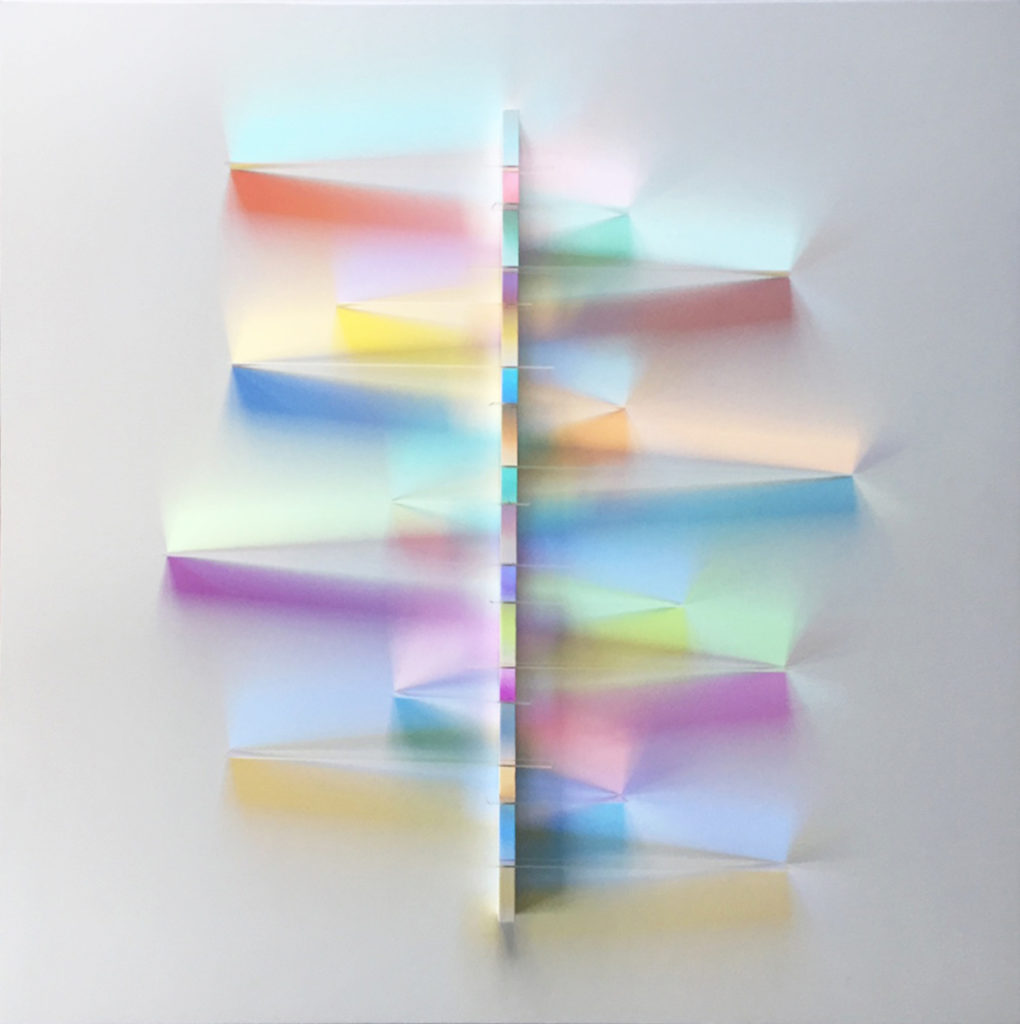
Glass art by Hildegard Pax
©Hildegard Pax, Colour Construct XII. Dichroic glass, 24 x 24 inches.

Can an artist have too many income sources?

You bet.

Too many artists add income sources because they saw another artist doing it. Or a one-time opportunity appeared in their inbox. Or they want their work to be affordable to more people.

Diversifying income sources is tempting. You might think:

More stuff = More money

More stuff = More potential buyers

Watch it. This logic is faulty.

Some sources make sense together because they are marketed to the same audience. You might promote products and reproductions to the same people in much the same way.

Other sources can become completely separate businesses.

Licensed art is one example. The audience for licensed art is different from the audience for original fine art. You’re working with licensing companies rather than exhibition and sales venues, so the research, relationships, and marketing are different.

You may essentially be running two businesses.

Oil painting by Beverly Endsley
©Beverly Endsley, Open Air Market at Versailles. Oil on canvas, 10 x 8 inches.

Why is a new income source riskier than a new income stream?

New income streams are usually fine. New income sources are riskier.

Before adding something new to sell, look for another way to sell what you already make.

You might not need a new product line. You might need stronger website sales, more studio visits, another gallery, or a well-chosen art festival.

A new income source can require a different audience, marketing plan, sales process, set of venues, and fulfillment system. That doesn’t mean you shouldn’t add one. Just know what you’re getting into.

Too many artists spend too much time on things that have too little return.

You won’t know whether a new source will take off, but you must do your research.

Before committing:

  • Read all you can about the source.
  • Talk with artists who are already doing it.
  • Learn the industry standards and trends.
  • Ask what has changed and what is working now.

Anything that takes you away from the work you do in the studio should be vetted with a vengeance.

And don’t fool yourself with promises of passive income. Very little income for artists (or anyone else) is truly passive. Every source requires setup, promotion, administration, maintenance, or fulfillment.

How do you know if an income source is profitable?

If you want clarity, do the math.

Wouldn’t you rather sell one original artwork for $1,000 than 100 sets of note cards that retail for $10 each?

Consider the work required to sell those note cards. You have to market them, process payments, record sales, pack, ship, update inventory, and track what’s left. That’s after paying for printing and packaging.

The math changes again if you wholesale them because you might make only 50 percent of the retail price. Then you need numerous wholesale accounts because it is unlikely that one venue will sell all 100 sets.

If you’re in the note card business, you really have to be in the note card business.

If you’re in the art licensing business, you really have to be in the art licensing business.

And if you’re in the original art sales business, you really have to be in the original art sales business.

Revenue is not the same as profit. And profit is not always your ultimate goal.

When you do the math, include production, packaging, fees, shipping supplies, unsold inventory, marketing, administrative time, and the value of your labor.

Also consider opportunity cost. What are you not making, marketing, or selling while you attend to this source?

Watercolor by Janine Ibbotson
©Janine Ibbotson, Rare and Precious Gift. Watercolor on skihishi board, 10.75 x 9.5 inches.

Which income sources belong in your art business?

If you already have multiple income sources, figure out which ones are helping you accomplish your business goals.

Ask yourself:

  • Which ones are making money?
  • Which have bigger potential?
  • Which are sources of frustration or consistent decline?
  • Which require more attention than they deserve?
  • Which support the work I really want to be doing?
  • Which might need to go?

An open studio, for example, may not produce many sales that day. But it might grow your list, lead to future sales, and help you make valuable connections.

You have to take all of this into account before adding an income source, keeping it, or ditching it altogether.

I’m all for artists having multiple income sources. Just be aware that you may be juggling separate businesses, and those businesses may be taking you away from the work you really want to be doing.

The goal isn’t to have as many income sources as possible.

The goal is to understand what each one requires and decide whether it deserves a place in your art business.

This was originally published October 24, 2019 and has been updated significantly with the addition of the podcast.

The post Do you have too many income sources in your art business? (269) appeared first on Art Biz Success.

]]>
https://dy-online.com/juggling-income-streams/feed/ 41
How curiosity and research deepen your studio practice (268) https://dy-online.com/curiosity-research/ https://dy-online.com/curiosity-research/#comments Thu, 11 Jun 2026 12:04:00 +0000 https://dy-online.com/?p=61034 Research isn't only an academic exercise — it's a commitment to following your curiosity, and it's inseparable from making strong work.

In this episode of The Art Biz, I make the case that the artists who build enduring careers are the ones who keep asking questions: about their subjects, their materials, and anything else that attracts them. Here's what that looks like in practice, and why it matters even beyond the studio.

The post How curiosity and research deepen your studio practice (268) appeared first on Art Biz Success.

]]>
Before we get into it, I want you to sit with a few questions:

Why this subject?

Why this material?

Why now?

Not the polished version you’d put in an artist statement, but your initial gut response.

If you can get past “I’ve always been drawn to it” and find something more specific, more alive, more curious to say, you probably already have a research practice. You may just have never called it that.

Let’s name it and embrace it. This episode of The Art Biz is about going deeper by leading with curiosity.

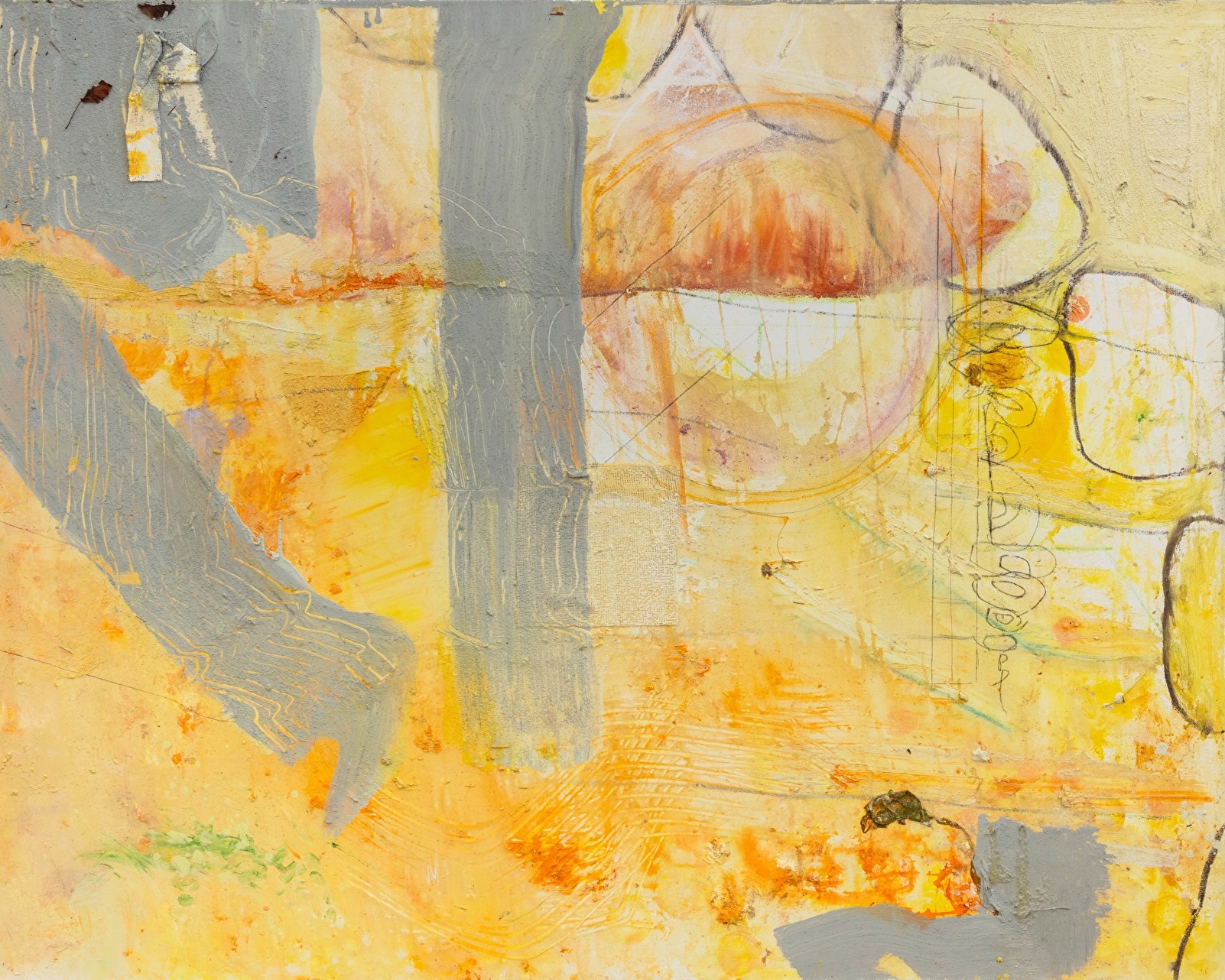
Textural contemporary abstract painting in shades of yellow, gold, and silver.
©Jenny Hope Antes, Series 7 #4, Ancient Firepit Series. Powdered tempera, found charcoal, acrylic, plaster, and tempera on canvas, 48 x 60 x 2.5 inches

I’m not talking about reference images. I’m not talking about scrolling through other artists’ work for inspiration. That’s surface-level inspiration at best.

Research, as I’m defining it, is any sustained act of curiosity about your subject: what it is, where it comes from, what it means, how it behaves, who has cared about it before you and why.

It can look like visiting a place, reading about a historical period, interviewing someone, observing something over time, or working with a material you don’t yet fully understand.

For artists, inquiry and making are distinct activities but inseparable. Each feeds the other.

The question to keep returning to: What don’t I know about this that I should?

Listen

How I lead with curiosity

Quick example of how this has shown up for me.

I’ve been drawn to timelines ever since my days as an art history student. They helped me memorize dates and visualize progression. I used them again when planning shows at the art museum, and I teach their usage in my planning workshop.

I wondered how they might show up in my own art so I began investigating them. I started with web searches and found all kinds of crazy timelines, eventually coming across a definitive book: Cartographies of Time: A History of the Timeline by Daniel Rosenberg and Anthony Grafton.

I have no idea where it’s going. That’s the point. I’m allowing myself to be curious about this interest.

What it does to the work

I want to be very clear about something: you are not researching to find the right answer.

This is a real problem in our lives and how we move through the world right now. We’ve been trained to google the answer, to resolve the question as quickly as possible rather than sit in the unknown. But that’s not what this is.

Research for artists is about being open to more questions. It’s a process of self-discovery — of finding out what you notice, what you think, what only you see because you’re paying attention.

That means no AI, no Google searches looking for conclusions. Use those tools to find a book, to locate an archive, to find where records are held so you can go visit. But the inquiry itself has to be yours.

A word about how to research

Research produces specificity, and specificity is what allows a viewer to connect with work rather than scroll or stroll past it.

The difference between a painting of a barn and a painting of this barn is something we can feel even if we don’t know the backstory: this geography, this history, this light at this time of year. The layers of meaning don’t have to be visible to be present. We feel the weight of them, the sophistication behind them.

Work that comes from genuine inquiry isn’t fully resolved on the surface. It holds something back. It pulls you deeper as the artist, and it pulls the viewer in.

Decorative work is beautiful, and there’s nothing wrong with it, but you see it, register it, and move on. Work that came from real investigation takes us on a ride.

How it shows up in your career

Beyond the studio, a research practice changes things in concrete ways.

  • It creates a body of work with a through-line. You aren’t making a bunch of random, unrelated pieces (however strong individually) but work that’s going somewhere.
  • It transforms your artist statement, which is important because this is the basis for how you define your work to your audience. There’s a significant difference between a statement that summarizes your subject and one that articulates your relationship to it. Research makes the second possible. The personal is universal. Specificity pulls people in.
  • It makes your conversations with collectors and gallerists more substantive. When you can talk about your work with genuine curiosity and depth, you become someone worth knowing, worth showing, worth collecting. People want to be around that. They want to be in dialogue with you.
  • It builds confidence, which is a key asset for an art business since there’s no shortage of things and people that will try to erode it. When you know where the work is grounded, that confidence is earned.

The career-level effect: depth of practice becomes depth of reputation over time.

Depth of practice

becomes depth of reputation

Making curiosity a practice

Research isn’t a phase you move through before a project begins. It’s ongoing. Something you’re always feeding, especially when you’re not in the studio.

Keep a notebook. Take audio notes on walks. Write on your sketches and preparation drawings rather than keeping them separate from your thinking.

When something catches your attention — a color, a story, a texture, a fact — stay with it long enough to ask why. Then ask why again.

That habit of asking is what distinguishes artists who make a lot of good individual pieces from those who build a meaningful body of work.

The post How curiosity and research deepen your studio practice (268) appeared first on Art Biz Success.

]]>
https://dy-online.com/curiosity-research/feed/ 4
How much time will your art career take? (267) https://dy-online.com/time-for-art-career/ https://dy-online.com/time-for-art-career/#comments Thu, 04 Jun 2026 12:49:40 +0000 http://artbizsuccess.com/?p=19735 The artists who ask me "how much time?" are usually the ones still deciding whether they're in. How much time should you spend on business versus making art, and how long before any of it pays off?

In this episode of The Art Biz I answer both truthfully — including a number you might not want to hear — and offer a better question to ask yourself instead, one that has less to do with hours and everything to do with commitment.

The post How much time will your art career take? (267) appeared first on Art Biz Success.

]]>
One of the top questions I get from artists is some version of “how much time?”

How much time will the lessons take?
How much time should I spend on marketing versus making my art?
How much time before any of this pays off?

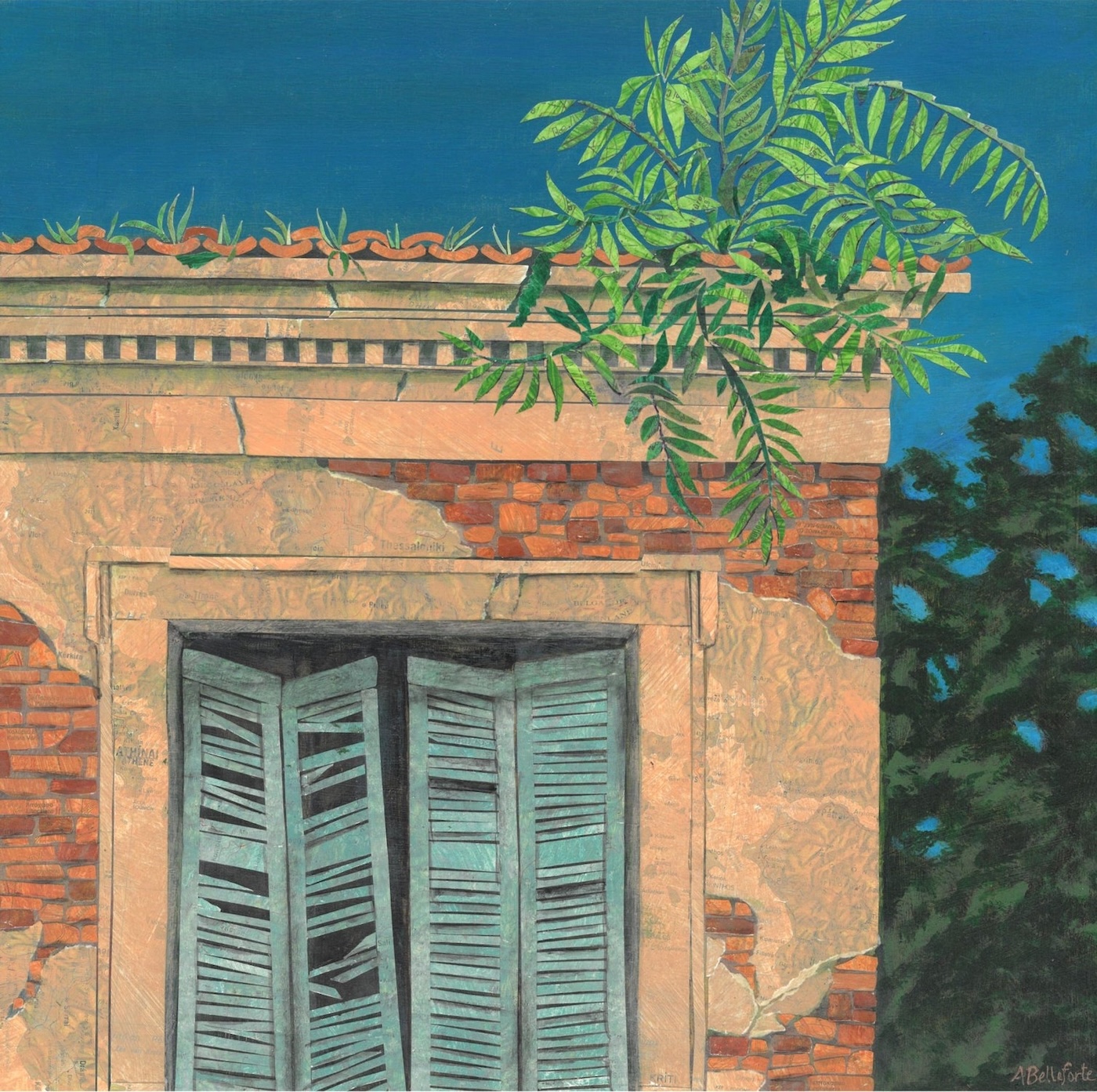
Collage-style painting of a tan and red dilapidated brick building with weathered green shutters and a palm-like plant growing from the roof.
©Anna Belleforte, Break free. Acrylic-painted maps (Greece) on panel, 31 x 31 centimeters.

I understand why these questions are asked.

Time is sacred and finite, and the older we get the more precious it becomes. You should be choosy about how you spend it.

But it’s worth it to pause and consider the phrase spending time. We usually attach spending to money, turning over cash or charging a card in return for something.

When you spend time, you’re paying with your attention. You have a limited budget, and you’re (mostly) in control of how it passes.

You can’t manage time. You can only manage yourself and decide how to spend the time you have.

So rather than asking “how much time?” the better question is “how much time and effort am I willing to spend on this?”

The key word is willing.

When you’re committed to something, you stop counting the hours. You find the time and a way to make it happen because it has become a priority. You become focused on the goal, not how many hours are ticking by.

That’s true whether we’re talking about your daily routine or the longer stretch it takes to build a career.

There are two separate questions implied by the title of this post, and they both deserve answers.

Listen

Time to devote to your art business each day

The first question is about your routine.

If you’re serious about earning a living from your art — aiming for profit and increased income — you’ll spend an average of at least half your time on business and marketing.

In a 40-hour week, that’s 20 hours on everything outside making the work itself: updating your database, writing a newsletter, sharing on social, packing and shipping. If you only have 10 hours for your art business every week, 5 will go to the business and 5 to the studio.

And contrary to what you might expect, success doesn’t shrink that number. The more your career grows, the more demands arrive from galleries, museums, collectors, and the team helping you manage it all.

More success means more business, not less.

That figure might be lower when you’re heads-down focused on a new body of work and higher when you’re busily promoting your upcoming show. You have to account for your schedule and obligations and, again, know what you’re willing to spend on your goals.

If you want a rewarding art business, meaning you’re aiming for profit, you have to be realistic about what it asks of you when you make the commitment.

Time it takes for your art career to gain traction

The second question is the harder one: how long before it pays off?

In general, you’re looking at years rather than months.

Years of honing the work, meeting new people, nurturing those relationships, and growing your audience. Nothing here is a single action or a single transaction. It’s one thing at a time, showing up repeatedly for yourself and the work.

Yes, some artists catch a break.

A post goes viral, a critic raves, a curator seems to pull their name out of thin air. Those are the exceptions. Most of the time we put in the hours for years without much visible reward, because we’re committed.

And I know how frustrating it is to work and work and see so little in return. But you are making progress even when it feels like you’re standing still. Even when it feels like nobody is watching or nobody gets you.

Remember that you’re not doing it for them. For accolades. You’re doing it because you have something to say, and the only way to build an audience is to keep showing up in the studio and the office.

So before you ask how long any of this will take, check that the commitment is there. When you’re committed to the journey, you’ll make the time.

The post How much time will your art career take? (267) appeared first on Art Biz Success.

]]>
https://dy-online.com/time-for-art-career/feed/ 24
Making a living from your art (266) https://dy-online.com/making-a-living-as-an-artist/ https://dy-online.com/making-a-living-as-an-artist/#comments Thu, 21 May 2026 14:47:21 +0000 https://dy-online.com/?p=38113 Making a living from your art requires more than talent and desire. It demands financial clarity, the right mindset, and a community of artists who pull you forward. It means committing to your studio practice above all else, embracing structure, and showing up for marketing consistently.

If you're considering taking the leap, here's what that actually looks like.

The post Making a living from your art (266) appeared first on Art Biz Success.

]]>
Making a living from your art is not for everyone.

Something happens internally when you begin thinking of your art as a source of income rather than an enjoyable activity, and it isn’t always a good thing.

Just because you love making art doesn’t mean you should put your financial future on the line for it. It takes more than passion to become a full-time artist.

When you put your work out there and ask for money for it, you feel exposed. Vulnerable. Not everyone can handle that, and not everyone should have to.

I’m not here to talk anyone into the artist’s life. But if you’re committed to making this work, here’s what that actually requires.

Contents

Listen

Commit to your studio practice

Your studio practice is your number one priority. Always. If you’re not making art, you have nothing to share or sell that would help you make a living.

Then you’re faced with the fact that the old gatekeepers — galleries, juried shows, the art establishment — have lost much of their power. The floodgates are wide open.

Anyone can call themselves an artist. That’s largely a good thing, but it has a shadow side: there are more artists than ever trying to sell their work, and too many of them are doing it before the work is ready.

Don’t market prematurely. Do the hard work in the studio first.

Your first goal is a cohesive body of work, which looks different for every artist.

But for the emerging artist, it means quantity and quality. You need enough for a solid exhibition. You need enough that someone can look at your work and say, “That’s that artist’s work, not their teacher’s.”

Confidence is the result of hundreds of hours in the studio, and, boy, are you going to need that confidence. Confidence in yourself, confidence in the work, confidence that you’re headed in the right direction. It comes from showing up consistently.

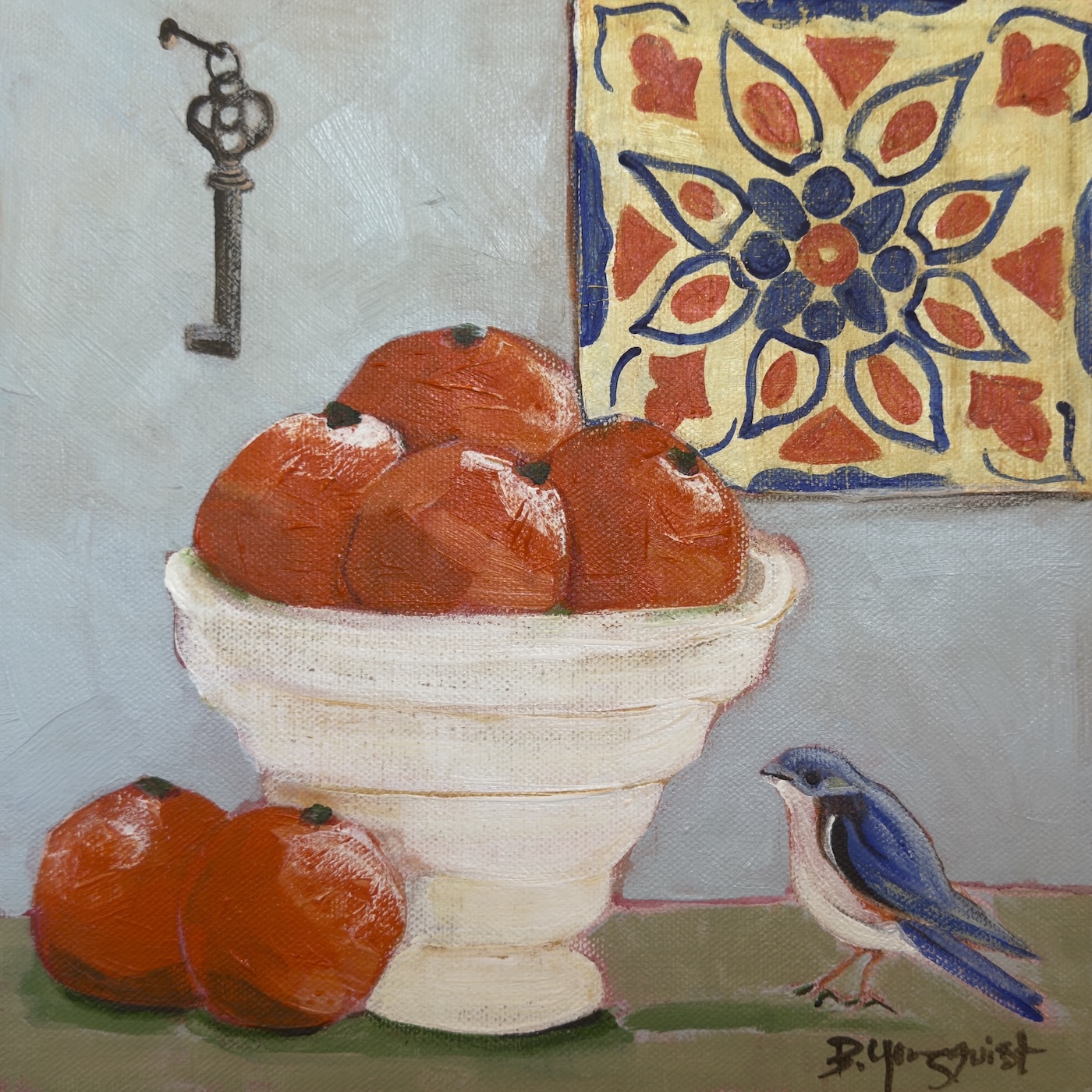
Still life painting of a bowl of vibrant oranges, a detailed Portuguese tile with a blue and orange pattern, a small blue and white bird, and a solitary skeleton key hanging on a nail
©B. Youngquist, Still Life Oranges with Skeleton Key. Acrylic on canvas, 10 x 10 inches.

Aim for profitability

Once you have a body of work you’re proud of, you have to face the financial reality head-on.

When you are trying to make a living from the work, you must think like an entrepreneur, not just an artist. You need to know where the money is going to come from.

What will you sell? What are your price points?

Can you produce and sell enough to actually reach your income goal?

A lot of artists have a financial target in mind, but their price points and output capacity can never add up to that number. You have to do the math. The numbers might surprise you, but they don’t lie.

It’s a fact that many artists who want to earn a living from their work need more than one income source, and there’s no shame in that. We need money to live!

Teaching, consulting, and products are common additions to original art sales. But you must be aware that each income source requires its own positioning.

The way you market yourself as a teacher is different from how you market yourself as a fine artist.

And if you’re going to sell lower-priced products alongside $1,500 or $3,000 originals, return to that math. Know this: it takes just as much marketing effort to sell a $150 reproduction as it does to sell a $1,500 original. Where are you going to spend your energy?

You are

not the same person you were before this decision

Let go of old stories

Facing those numbers can bring up a lot. What often surfaces are the old stories. The ones about who you’ve been and how you’ve defined yourself.

You are not the same person you were before you made this decision.

When you decide to make a living from your art, you’ve made a decision to change your professional life. Your identity shifts with it.

Old stories might sound like this: I was a teacher. I was an engineer. I was a stay-at-home mom. There is no room for “was” here. Only who you are now. You are an artist.

And baked into that, you are, as I said above, also an entrepreneur.

One of the most important traits of artists and entrepreneurs — if not the most important — is curiosity. You already have it in spades when it comes to your work.

How could this composition improve? How could I get these two materials to work together? How could I convey what I feel about this subject?

That same curiosity belongs on the business side of your practice. How can I make this work? What do I need to learn? What haven’t I tried?

You are not the same person you were before you made this decision. Free yourself from the old stories.

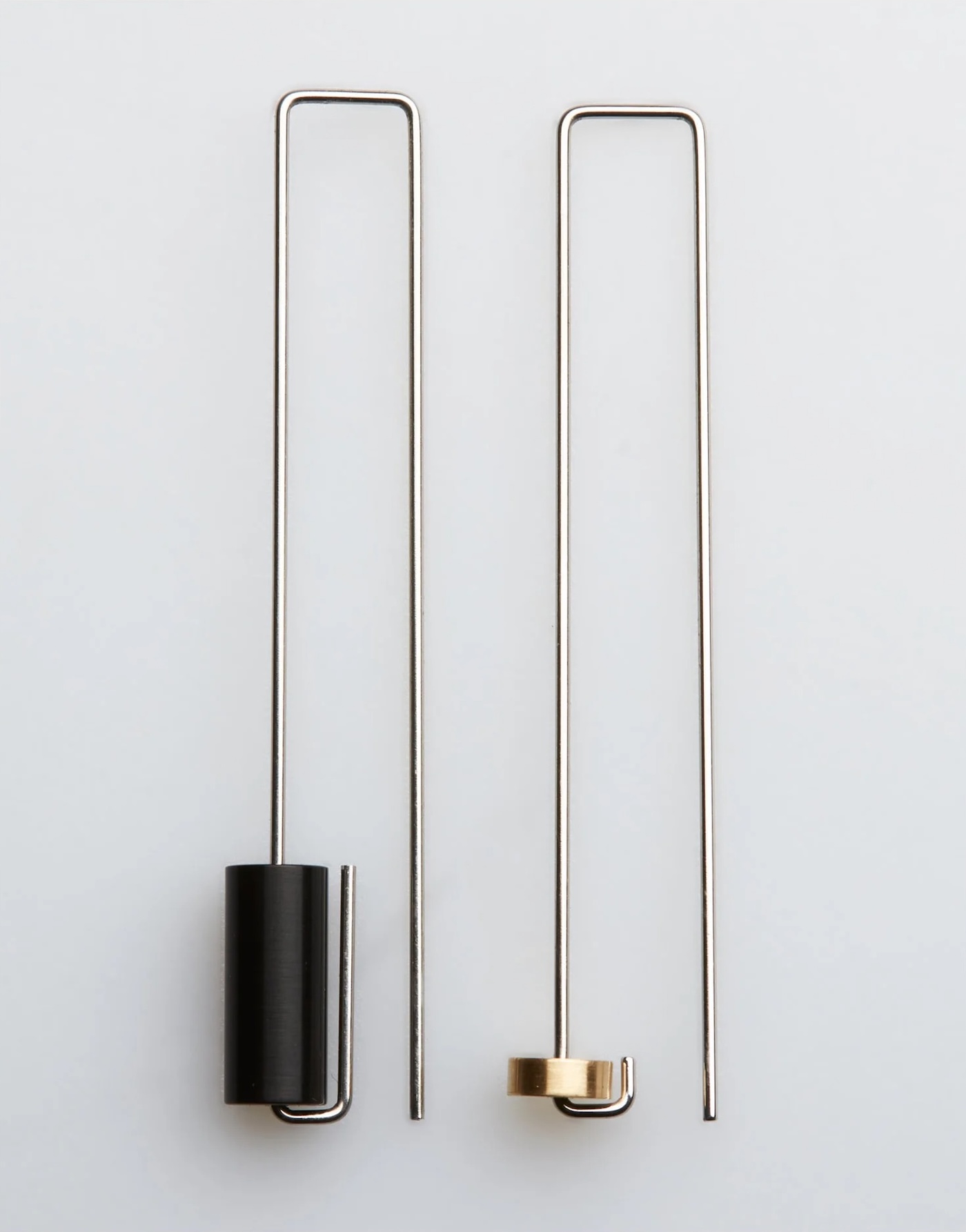
Minimalist black aluminum tube and copper tube on stainless steel hooks
©Phoebe Porter, One Gram earrings. Aluminum, 18ct yellow gold, stainless steel, 60 millimeters long.

Engage with your artist community

A fast way to rewrite those old stories is to surround yourself with artists who are already living the artist’s life.

Finding your people is among the most impactful steps you can take, and it’s one of the first things I recommend when an artist is building a business. History backs this up: artists in vibrant communities advance further and take their careers farther than those who try to go it alone.

In the right community, you find inspiration. You hear about opportunities that would never land in your inbox on their own. You learn skills. You gain confidence as a businessperson.

And there’s something else that comes with it: a kind of accountability, or maybe a healthy aspiration to be doing what the people around you are doing.

You’re looking for like-minded artists. Other artists don’t need to share your goals, but they do need to share a growth mindset — a genuine orientation toward improvement and forward motion.

It’s easy to get stuck in the wrong group. Beware of a single person with a poisonous attitude who can cast a pall over an entire group. Hanging out with the wrong people wastes time and almost always ends in frustration.

Be discerning. Find a group that pulls you forward.

Your people

will sustain you

Get your art in front of people

Your community will open doors you didn’t know existed. Some of those doors lead to physical places where your work can be seen in real life.

Exhibiting in person is critical for professional growth. No amount of pixels replaces someone’s experience of seeing art with their own eyes. And nothing replaces what you experience when you’re in the room with them, seeing their faces, having those conversations, discovering the effect your work has on people.

You might start by exhibiting in a borrowed space or a local café, but your career is a journey with phases. Over time, you seek increasingly prestigious venues. That progression is the point.

Gallery representation is something many artists want, and that’s completely understandable. But educate yourself before pursuing that path. Make sure galleries are right for you and that you’re ready for a gallery. They are not going to accept your work simply because you make it.

And commercial galleries are not your only option. As I said, the grip of the gatekeepers continues to loosen.

A very small percentage of artists will be represented by their dream art gallery. Don’t wait. Take control and get the work out now so you can have those conversations, so you can see how people respond, so you can progress.

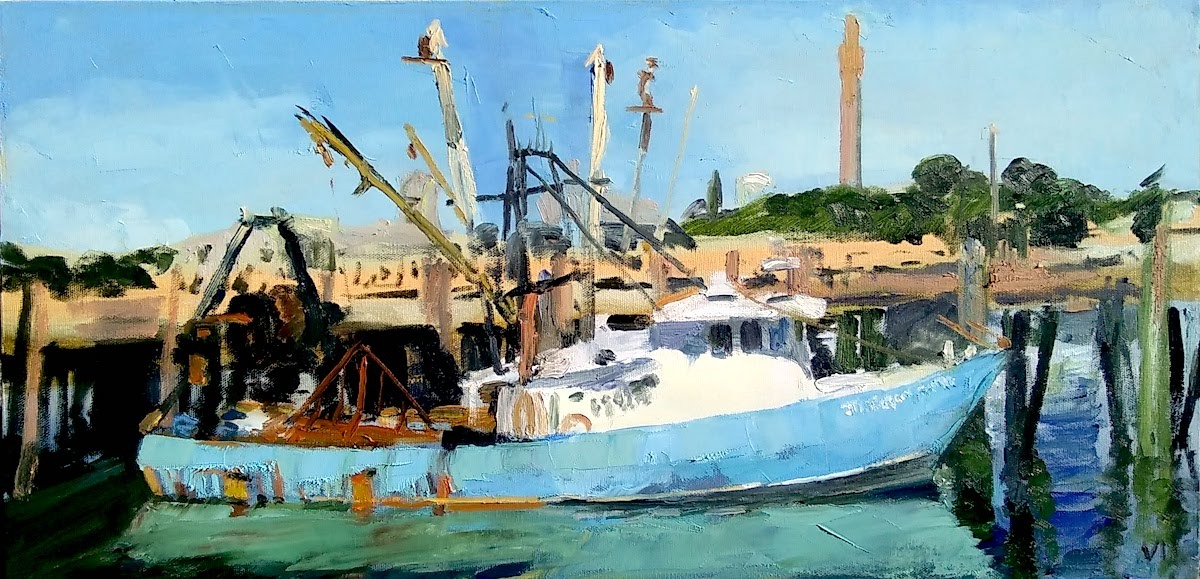
Light blue fishing vessel docked at a wooden pier. A prominent tower is visible on the coastline in the background.
©2022, Valerie Isaacs, F/V Jessica Heather. Oil on canvas, 12 x 24 inches.

Embrace structure

Pursuing venues — applying for shows, sending proposals, following up, meeting deadlines — requires that you show up reliably for your art.

That means structure.

I’ll be direct: I will not work with an artist who avoids structure. Not because I don’t understand the appeal of freedom. I do. You didn’t decide to make a living from your art because you love spreadsheets and calendars.

The freedom of creative life is real and worth protecting. But trying to run a profitable business with that same level of freedom is a different matter entirely.

Guidelines, frameworks, and boundaries are the containers that make freedom possible. They are what allow you to be free in the studio, because outside of it, people are depending on you.

Collectors expect their commissions when you said they’d be ready. Curators need your artist statement, your delivery, your follow-through. Art consultants are passing your deadlines on to their clients. Journalists are on deadline too. That’s a lot of people depending on you to do what you said you’d do.

Impose limits on yourself and adhere to them. If you don’t respect your own boundaries, nobody else will.

Here’s the part that surprises artists when they get to a certain point: the more successful you are, the more demands there will be on your time. Success does not come with more free hours. It comes with more complications. Put these foundational structures in place now, before you need them.

You can’t manage time. You can only manage yourself. Protecting your time and energy is non-negotiable.

Learn to say no without guilt. The first few refusals are genuinely hard. No, I can’t have lunch, I’m on deadline; no, I can’t watch your kids; no I can’t head up that committee.

You’ll learn quickly that saying yes to everything means saying no to yourself and to what matters most.

Frameworks & boundaries

make freedom possible

Move forward with intention

Structure keeps you from dropping the ball on other people and on yourself. It starts with intention.

It is remarkably easy to spend an entire day on email, social media, and random clicking. Being reactive rather than deliberate, responding to what other people have put in front of you rather than leading with what you want to accomplish. And before you know it, the day is gone.

Being busy is not productive. I’ll go further: being busy is boring. Everyone is busy. Nobody wants to hear how busy you are. What matters is that you are productive. That you are doing the right work, not just more work.

Work on your business, not just in it.

This means getting your ideas out of your head and into a plan before they disappear. Plans for your day, your week, your month, your year — all anchored to the vision you have for yourself and your art.

This kind of intentional planning is not about rigidity. It’s about being the one who decides how your time is spent, rather than letting other people’s priorities fill the space.

In my Essentials community, I ask members to commit to their priorities for the coming week and then celebrate what they accomplished. That rhythm, intention followed by reflection, is what moves an art business forward.

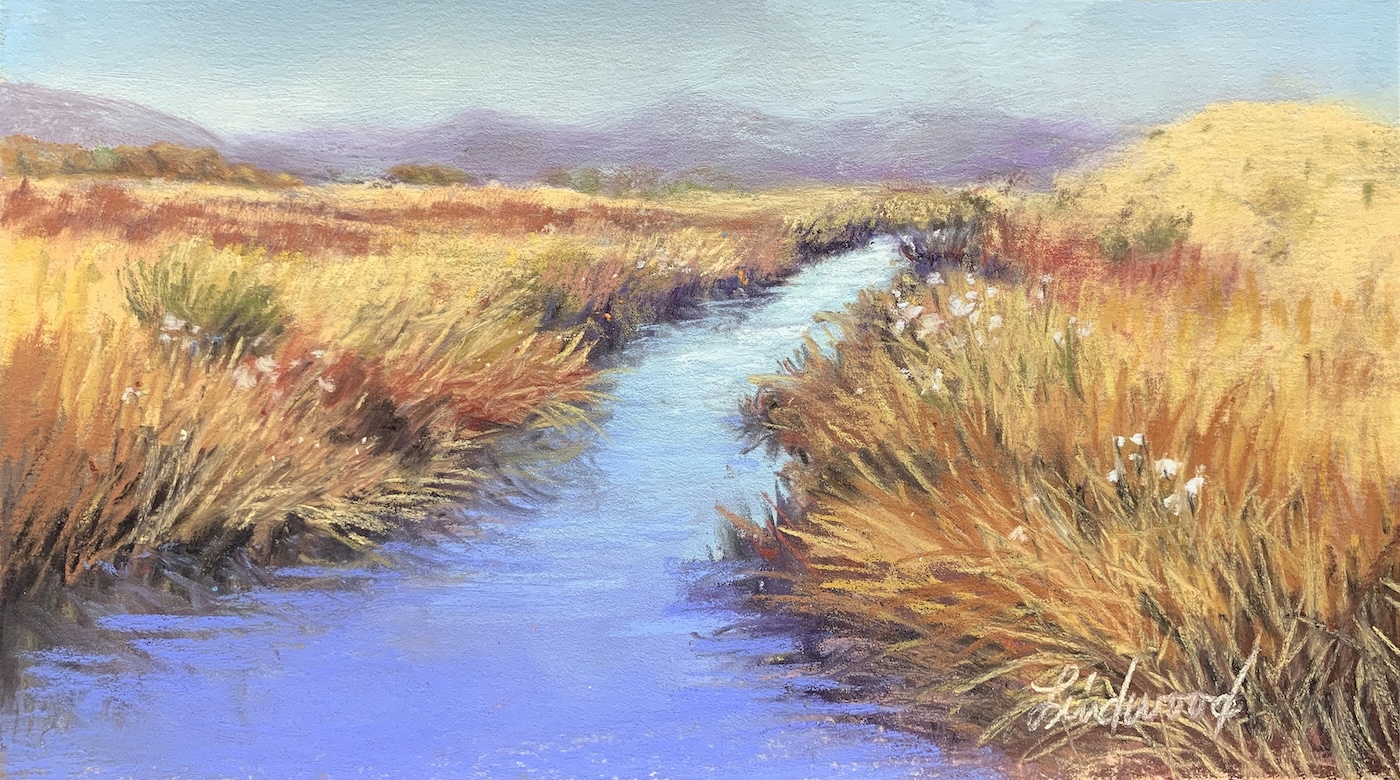
soft pastel landscape painting of a wetland marsh scene with a blue water stream winding through golden, sunlit grasses and brush under a soft sky
©Gretha Lindwood, Gentle Flow. Pastel on paper, 4.75 x 8.25 inches.

Make friends with marketing

When you are clear on your priorities and protecting your time, you can show up for marketing consistently. And consistent marketing is non-negotiable when you are trying to earn a living from your art.

Here is my advice: make friends with marketing.

Marketing is how your art reaches the people it was meant for. I think of it as sharing rather than self-promotion. Self-promotion is part of marketing, but it’s not the frame I want you to carry.

Marketing is everything you do to gain recognition for your art and to sell it. It is not a campaign with a beginning and an end. It is ongoing.

Earlier I said you need to let go of old stories. Now I’m going to tell you to watch out for new ones that might emerge when you start marketing. I hear these constantly: I am not a salesperson. I am not outgoing. I am terrible at marketing.

When you say any of these, you are defining yourself in the negative — and they become self-fulfilling prophecies. You cannot say “I’m terrible at marketing” without being terrible at marketing.

What you can say instead: I am getting better at this. I am learning. That is the growth mindset at work.

Aim for consistency. An artist who has neglected their list for months and then suddenly needs to announce a new body of work will find that list has gone cold. The people have moved on or forgotten. You cannot nurture relationships only when you feel like it.

Consider a weekly marketing routine: writing, posting, photographing, making videos, sending emails, following up. All of this on top of your consistent studio practice.

And if you want a truly fulfilled art business and career, you have to leave the studio. Marketing is not just sending a newsletter or posting to Instagram. It means showing up for your galleries and for other artists in your community. It means being seen as someone who contributes to the culture, not just someone who sells work.

Marketing is

your opportunity to share your art

Commitment

Everything I’ve covered — the work, the money, the old stories, the community, the venues, the structure, the intention, the marketing — it’s a lot. But it all comes back to one thing.

Commitment.

Commitment to your work will see you through everything else. Commitment to yourself and the vision you have for your life is your compass. When the commitment is there, you can figure out the rest.

Artists move through the world through their art. It’s how they communicate, how they find meaning in this one precious life. Keeping your art to yourself does it a disservice — and leaves you unfulfilled.

You don’t have to make a living from your art. Many people shouldn’t. But if you take that leap, do it with your whole heart and your best effort.

Ask for help when you need it. [Private consulting] is one way we can work together if you’re ready to commit and want support figuring out the rest.

You can do this when you are devoted to your work. And you don’t have to do it alone.

The post Making a living from your art (266) appeared first on Art Biz Success.

]]>
https://dy-online.com/making-a-living-as-an-artist/feed/ 3
Use the attraction method for art venues before you make the ask (265) https://dy-online.com/attraction-method/ Thu, 30 Apr 2026 13:04:00 +0000 https://dy-online.com/?p=59170 So many artists reach out to venues too soon — before the relationship exists and before the venue has any reason to say yes.

Introducing the attraction method for building visibility with a space manager/director/curator long before you make an ask. It removes the awkwardness and allows you time to ensure a good fit. When the time comes to ask for a show, you're not a stranger.

The post Use the attraction method for art venues before you make the ask (265) appeared first on Art Biz Success.

]]>
There’s a version of reaching out to a venue that feels like a cold sales call: awkward, transactional, easy to ignore on the other end. And then there’s a version that flows like a natural next conversation with someone who already knows you’re serious.

The difference isn’t luck or connections. It’s preparation and timing.

I call it the attraction method: a way of showing up for a venue long before you ask for anything. The core idea is simple. Venues aren’t looking for artists who need them. They’re looking for artists who are ready for them.

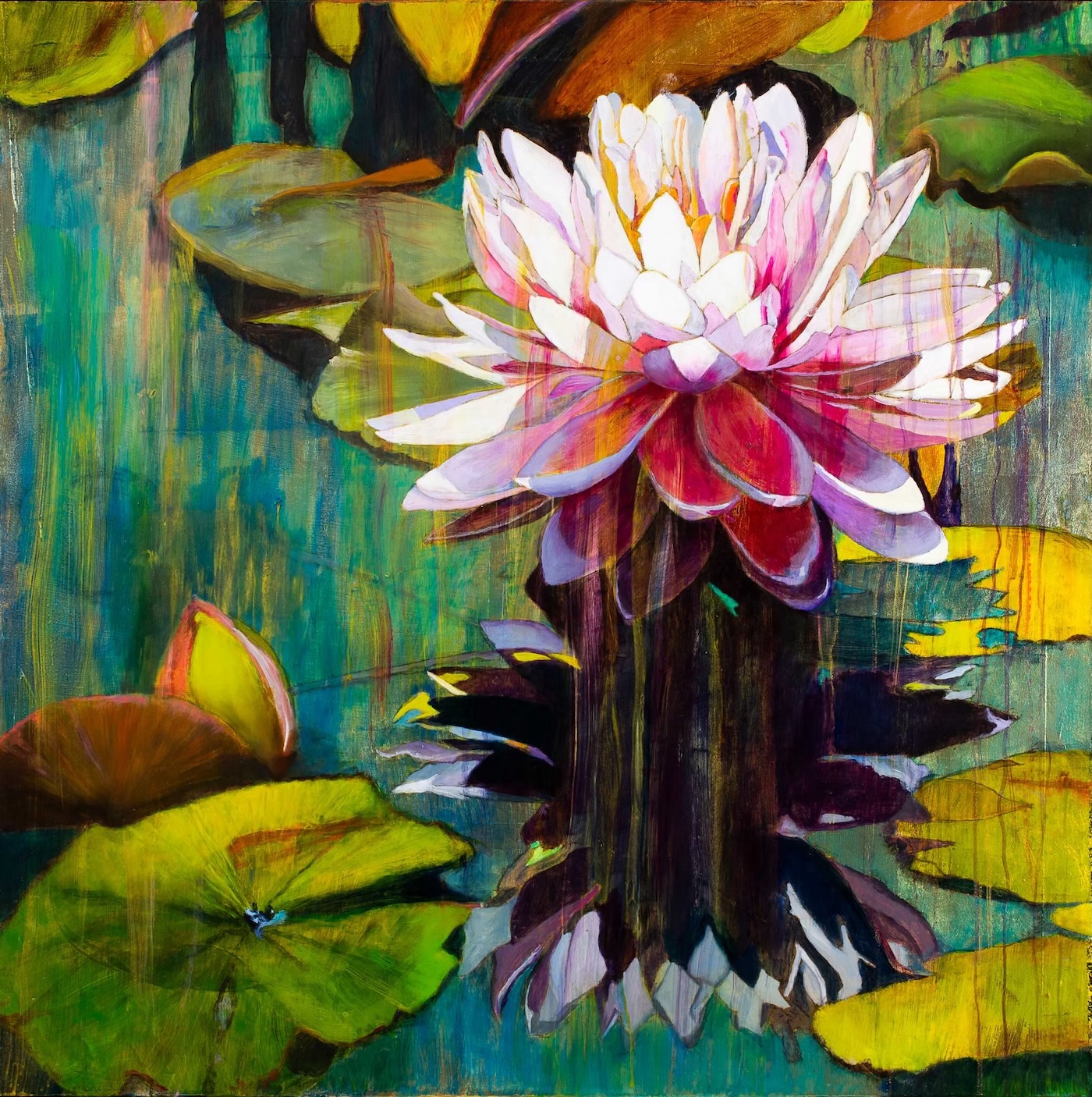
Christie Marks oil and acrylic painting of a large pink and white lotus flower with dramatic, dripping rich colors like magenta, turquoise, and yellow in the water’s reflection
©Christie Marks, Lilies #3. Oil and acrylic paint over composite gold leaf, 36 x 36 inches.

What it means to be ready

Readiness isn’t just having finished work. A venue decision-maker, whether it’s a gallerist or a coffee shop owner, is assessing you quickly (we all form quick opinions these days).

What they see has to signal that you’re a serious professional worth their time and wall space.

That means:

  • Your work is professionally framed and properly prepared for installation.
  • Your online presence reflects an active career.
  • You can talk about your work, and present a case for it, with confidence.

Let’s pause to emphasize that last one. The ability to have a real conversation (not a pitch, a conversation) is what separates an artist worth knowing from someone who just needs a wall.

[ Start with spending time on your artist statement. ]

Of course, venues specific to the art world will put more weight on these than alternative venues, but you might as well practice for the big show. 

The timeline for galleries versus alternative venues

Before I get to the details, it’s important to know that I originally developed the attraction method with galleries and museums in mind. Here’s why.

Getting into a serious gallery can take years of groundwork: researching and visiting multiple times, connecting on social media with substance, sending postcards consistently, attending openings, getting to know artists in the gallery’s stable, building familiarity before inquiring.

Museum exhibitions operate on even longer timelines because of the bureaucracy involved and funding needed.

At the heart of these long runways lies a truth that is critical to understand: those in charge of art world institutions prefer to do the choosing rather than responding to inquiries.

Alternative venues work differently. A boutique hotel, a winery, a coffee shop. These spaces typically have one decision maker who is far more accessible than a museum curator. The path from first contact to a yes can be weeks. Sometimes mere days. Not as much relationship building is needed.

I want to be clear that while galleries can be fantastic for your art career, their white-walled spaces shouldn’t be the only ones on your radar. They definitely shouldn’t be the bottleneck.

[ See The artists who don’t wait to be chosen (264) ] 

How to apply the attraction method to alternative venues

Even with a shorter timeline, the fundamentals still apply.

Do your homework before you visit. 

Look at the venue’s website, all of it. Check their social media. See if they have media coverage. Get a sense of their aesthetic, their audience, their programming.

Find other artists who have shown there before and ask about their experience.

Visit in person before you announce yourself. 

Go as a customer first. Assess the lighting, the wall surfaces, the hanging options, the traffic patterns, anything distracting patterns that might compete with your work.

Go when it’s busy, then when it’s quiet. Take notes. Add everything to what I call an Opportunities Tracker, a database for spaces where you see real possibility.

When you do reach out, make it clear you’ve been paying attention. 

There’s a significant difference between “Can I show my art here?” and “I’ve been coming in for a few months and I think my work would really resonate with your clientele.” One is a pitch. The other is the start of a real conversation.

If you’ve become a genuine part of the space’s community (going to their events, buying something, bringing a friend) you shouldn’t be surprised if they’re the ones who ask about your availability to show there.

The result of doing this consistently

When you build relationships before you ask, two things shift. You stop waiting to be discovered, and you stop the premature inquiries.

You become someone worth noticing. And the ask, when it comes, doesn’t feel like a pitch to either party. It feels like the obvious next step.

Listen

The post Use the attraction method for art venues before you make the ask (265) appeared first on Art Biz Success.

]]>
The artists who don’t wait to be chosen (264) https://dy-online.com/not-waiting-to-be-chosen/ Wed, 22 Apr 2026 17:22:22 +0000 https://dy-online.com/?p=59112 Waiting for gallery representation or other opportunities to cross your path is a common theme I see among artists, but it’s not a good strategy.

In this episode, I make the case for taking control of where and how your work is seen, with real examples of artists who showed up in unexpected places and made it work. If you've been cycling through juried shows or hoping a gallery will find you, this one is worth your time.

The post The artists who don’t wait to be chosen (264) appeared first on Art Biz Success.

]]>
We all know that the only opportunities available to you aren’t the ones other people initiate.

Yet it’s a bad habit that so many artists need to break: waiting for gallery representation, hoping to be discovered, or cycling through the same juried shows year after year because the application crossed their desk and it felt like an opportunity they should take.

I understand the appeal. A gallery taking over your sales sounds divine. But for most artists, it stays a fantasy because galleries will never notice them in the confines of that juried show.

The waiting keeps you from creating your own opportunities. And makes you beholden to the art world gatekeepers.

[ See: Art World Gatekeeping Forces Artists to Compete with Damien Davis (254) ]

In episode 264 of The Art Biz, I make the case for thinking differently about where and how your work gets seen.

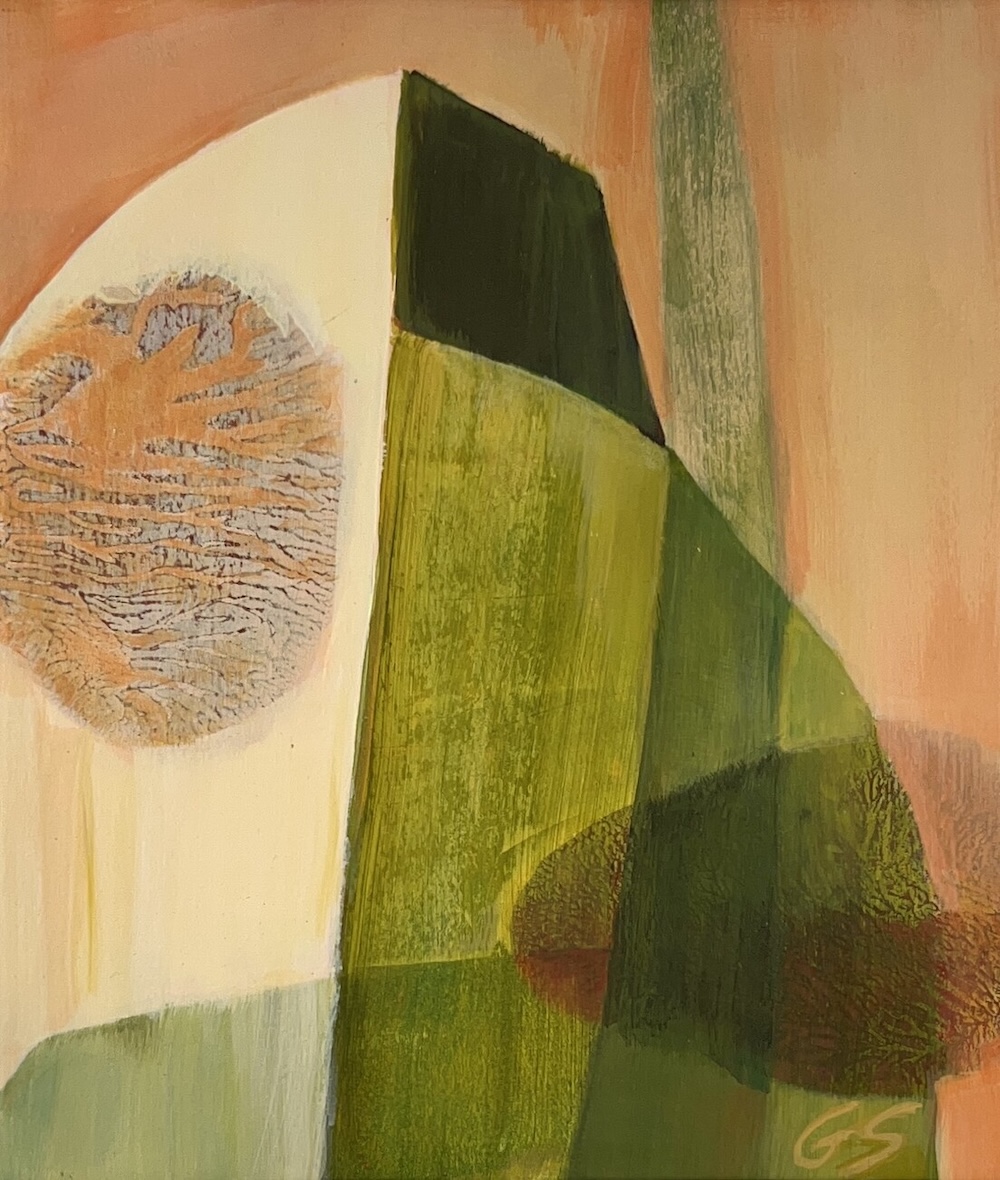
Abstract acrylic painting by Gail Salzman of a combination of large geometric blocks and curved, organic elements in earth tones of olive green and ochre contrasted with softer tones of peaches and tans.
©2024 Gail Salzman, Dwelling 2. Acrylic and paper on board, 7.5 x 6.25 inches.

What "white walls" really means

I love a pristine gallery wall as much as anyone. Clean, neutral, the perfect backdrop for original work. But white walls have also become a metaphor for an ideal situation. Perfect conditions or the right venue.

Juried shows are the other version of this trap. You pay entry fees, get selected, compete with fifty or a hundred other artists also chosen, and hope your work stands out in a crowd. It rarely does.

There’s nothing about that format that puts your work in the spotlight. You are one of many, and the show was never designed to feature you.

What I want for you is different. I want you taking control by curating your own opportunities, choosing venues that actually serve the work, and getting in front of the people most likely to connect with it.

This is most critical when you are trying to make a living from your art.

Three shows I'll never forget

I want to give you some real examples, because abstract encouragement only goes so far. The first is the most extreme version of outside-the-box thinking.

A plumbing junkyard

I was in far north Boulder, Colorado on a hot July day in 2007, and pulled into a parking lot for a plumbing junkyard. The attendant (for a plumbing junkyard!) asked: “Are you here for the plumbing or the art?” I am fairly certain that question has never been asked before or since.

Artist Lori Wahl had installed her thesis exhibition throughout the junkyard: video, sound sculptures tucked inside pipes, sinks, and toilets, work you had to seek out and interact with.

Not every artist makes work appropriate for showing in a junkyard, but it showed what imagination looks like when it’s fully unleashed.

A borrowed home

The second example was a home show by artist Kathleen O’Brien. She lived in Kentucky but knew people in Colorado, so she arranged to borrow a home and invited people in to see and purchase her work.

It was a thoughtful installation of original pieces on the walls, small prints beautifully displayed on tables, artist books, and cards. It worked because the host believed in her work and brought the right people. A borrowed home can be one of the most intimate and effective exhibition spaces available to you, and it costs far less than renting a gallery.

A rented hotel conference room

The third example is a group of four artists who rented a hotel space for one night only. They set up separate booths with wall panels, lighting, and smaller items on tables, and it was well attended.

But here’s the lesson that stung a little: I nearly missed it entirely. I knew two of the artists personally. I live in the same town. And they never reached out to me directly. They posted on Facebook and assumed I’d see it. I almost didn’t.

Getting the venue is only half the work. Once you have a space, you need people to actually show up — and that comes down to how you communicate. I’ve written about the difference between announcing, commanding, and inviting, and it’s worth reading before you start promoting any exhibition.

[ How to write an art show invitation: announcing, commanding, or inviting? ]

The opportunities you create yourself

The possibilities for showing and selling your work are limited only by your imagination — and sometimes, honestly, your ego. The ego that insists the only worthy venues are the ones with four white walls and a director who chose you.

We wouldn’t know Impressionism as a capitalized -ism if these artists hadn’t set up their work in a photographer’s studio and invited the critic who, fortuitously, gave it its name. 

What buzz could you create if you look beyond the gatekeepers?

Listen

The post The artists who don’t wait to be chosen (264) appeared first on Art Biz Success.

]]>
How to write an art show invitation: announcing, commanding, or inviting? https://dy-online.com/are-you-inviting/ https://dy-online.com/are-you-inviting/#comments Sun, 19 Apr 2026 18:49:14 +0000 http://artbizsuccess.com/?p=16743 An art show invitation has two jobs: give people everything they need to know about the event, and use a tone that makes them actually want to come.

Here's how to decide between announcing, commanding, and inviting, what to include when space is tight versus when it isn't, and the common mistakes artists make on their announcements and invitations.

The post How to write an art show invitation: announcing, commanding, or inviting? appeared first on Art Biz Success.

]]>
A good art show invitation does two things. It communicates the full who, what, where, when, why, and how of the event, and it does so in a tone that makes people actually want to come. 

Here’s how to get both right.

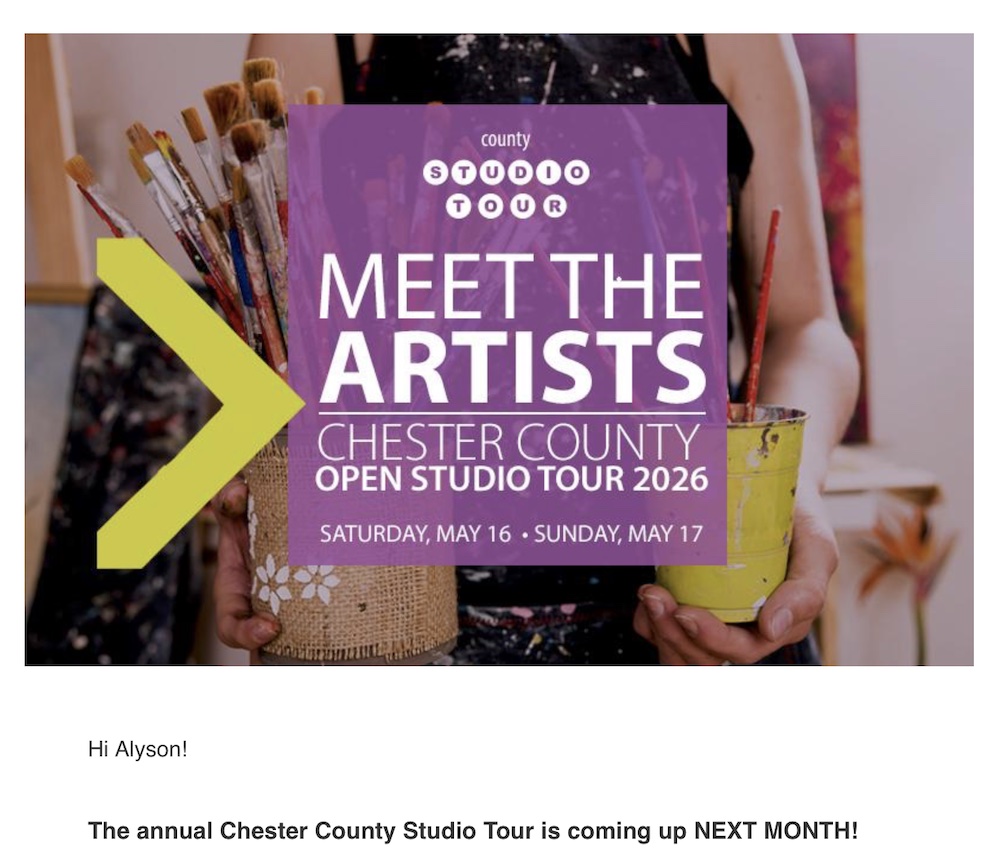
Save the date announcement from Chester County, Pennsylvania Studio Tour.
A save-the-date announcement from Chester County, PA studio tour.

Announcing, commanding, and inviting: what's the difference?

Whether you’re opening a show at a gallery, hosting an open studio, unveiling new work at a pop-up, or inviting collectors over for a private preview, your wording sets the tone for how people will respond. 

Announcing

An announcement is a presentation of the facts.

I’m having an exhibition. Here’s the opening date and time. Here’s how you can see the work.

Announcements work earlier in your marketing, especially paired with a “Save the Date.” They’re useful for press releases, social media captions, and anywhere you need to convey information efficiently.

Commanding

A commandment sounds like this:

Come to…, Drop by…, Mark your calendar…, Sign up…, or Don’t miss….

Calling this a commandment sounds harsh, but’s not usually perceived that way.

We’ve been trained by years of marketing to read commands as invitations and understand the spirit behind them. They get the job done on postcards and posters where space is tight.

They can also go ugly fast in the wrong hands. Too pushy, too salesy, too many exclamation points.

Email text from an artist requesting people to save the date for visiting her studio.
Open studio save-the-date announcement from Eve Jacobs-Carnahan.

Inviting

An invitation is a request for someone’s attendance. It’s warmer, more personal, and closer to how you’d actually talk to a friend.

I hope you can come.
It would be lovely to see you at…
Please drop by if you can.
I’d love for you to be there.
You’re invited.

When I write invitations, I picture the person at the other end. Real names, real faces. I’m talking to them as individuals, not as a list.

“Come to my show” asks someone to show up. “I hope you can come” tells them they’ll be welcomed when they do.

When should you announce, command, or invite?

The closer you get to the event, and the warmer your relationship with the recipient, the more your message should lean toward invitation.

  • Save-the-date postcards, emails, and early buzz: announcement or light commandment.
  • Printed show invitations where space is tight: mostly announcement with clear details, but find room for a warm phrase (“You are invited…” or “I hope you’ll come”).
  • Email to your list: invite. You have the room, and email feels personal. Just remember that they are receiving as individuals, not as a collective. None of this “You’re all invited.”
  • Individual messages to collectors, VIPs, close contacts: invite, and make it specific to them.
  • Social media: mix. Announce early, invite closer in.


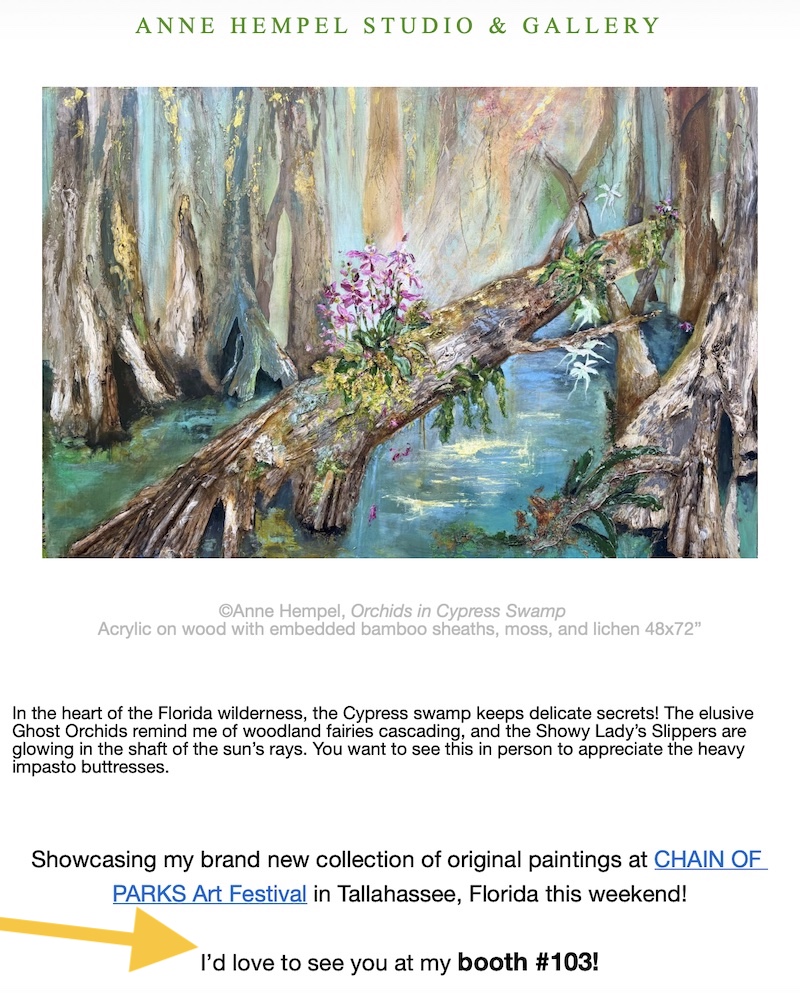
Email invitation for Chain of Parks art festival in Tallahassee, FL from Anne Hempel.
Email invitation from Anne Hempel.

What should an art show invitation include?

Every version (announcement, commandment, or invitation) should consider these questions. Of course, not every invitation can include all of this information. A postcard has room for the essentials. An email or a personal letter has room for all of it (or at least a link to more detailed information on your website).

Questions in bold must be answered.

As for the rest, use your best judgment for various platforms and purposes.

Who

  • Who are you? Full name.
  • Who is the host?
  • Who are the other participating artists, if any?
  • Who is it benefiting, if it’s a charity event?

What

  • What is this? (Opening reception, open studio, artist talk, sale, preview.)
  • What will we see?
  • What will we do?
  • What should we bring, if anything?
  • What’s the phone number to call or text if someone can’t find the place?

Where

  • Where is it? City AND state. If the invitation might travel internationally, include the country.
  • Where do we park?
  • Where can I see more of your art or find more information in advance?

When

  • Date and start time.
  • End time.
  • Exhibition open and close dates, if it’s not a one-night event.

Why

  • Why should I come?
  • Why are you doing this show?

How

  • How do we get there? Any tricky directions, elevator issues, or accessibility notes?
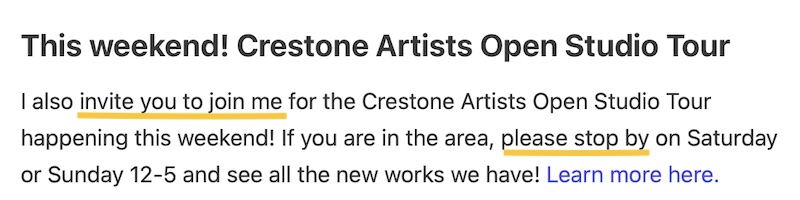
Open studio invitation for Crestone Artists Open Studios.
Open studio inviation sent by Kim Roberts.

Common mistakes artists make with show invitations

  • Forgetting the state. You know you’re in your town. The internet does not. (This is especially true if you aren’t segmenting your list and careful to send it only to local people.)
  • Assuming people know they’re invited. You learn this the hard way. You hand someone a detailed postcard and they ask, “Is this a business card?” Not everyone recognizes an art show invitation when they see one. Say “You are invited” explicitly, especially for anyone outside your core art community.
  • Assuming people know what an open studio is. Many don’t. Spell it out: “My studio will be open so you can take a peek behind the scenes. Come see new work, have a glass of wine, and say hello.”
  • Leaving out the dress code when the event is new to recipients. If it’s casual at your studio, say that. People hesitate when they don’t know what they’re walking into.
  • Designing a postcard without following postal service specs. USPS (and most international postal services) apply a barcode to the bottom portion of the address side during sorting. Any text or artwork in that zone gets covered. Use a mail-approved postcard template for your country so your event details don’t disappear under a sticker.
  • Not naming the host venue. If the event is hosted somewhere other than where people expect you to be, make that crystal clear.
  • Sending an email invitation with no images or cramming too many images onto a postcard. If people can’t see the work, they have no reason to come see the work. On the other hand, single images on postcards are bigger and more impactful than including a bunch of smaller images.
  • Treating every recipient the same. A stranger on your mailing list and your top collector should not receive identical copy. The collector gets a personal note. The stranger gets the warmest version of the public invitation.

One last thing

An invitation’s job is to bring specific people into your world so they can experience your work in person. Write as if you’re writing to one person at a time, and your invitations will do their job.

The post How to write an art show invitation: announcing, commanding, or inviting? appeared first on Art Biz Success.

]]>
https://dy-online.com/are-you-inviting/feed/ 7
Why the lone artist mindset keeps you small (263) https://dy-online.com/lone-artist/ https://dy-online.com/lone-artist/#comments Thu, 16 Apr 2026 15:57:13 +0000 https://dy-online.com/?p=58881 Going it alone feels easier. No coordination, no compromise, no communication overhead. But the artists building the careers you admire are rarely doing it alone.

In this solo episode, I make the case for collaboration as a strategic habit, not a one-time favor. I shares real-world examples, explain what makes them work, and offer a question to ask the next time you're planning a show or a new body of work.

The post Why the lone artist mindset keeps you small (263) appeared first on Art Biz Success.

]]>
Going it alone is easier. There’s less coordination, fewer decisions to negotiate, and no one else’s timeline to work around.

That’s exactly why it’s our default.

But in this episode, I make a clear case: the lone-artist habit keeps you small. 

After decades of studying artists who are making a living from their art, whose reach keeps growing, and whose work accumulates meaning over time, I’ve noticed a pattern. These artists almost never go it alone. They don’t just accept collaboration when it falls into their lap, they seek it out. They look at a project and ask: Who else belongs in this story?

Who else

belongs in this story?

That question is a habit you can start building. And it’s one that changes the scale of what’s possible.

Why collaboration is worth the effort

The practical reasons alone are compelling. When you collaborate, you’re not carrying everything alone. You have real people to brainstorm with. There’s built-in accountability, because others are depending on you to follow through.

Every collaborator also brings an existing audience. Cross-pollination of mailing lists, networks, and attention is something you can’t manufacture on your own — no matter how large your following already is.

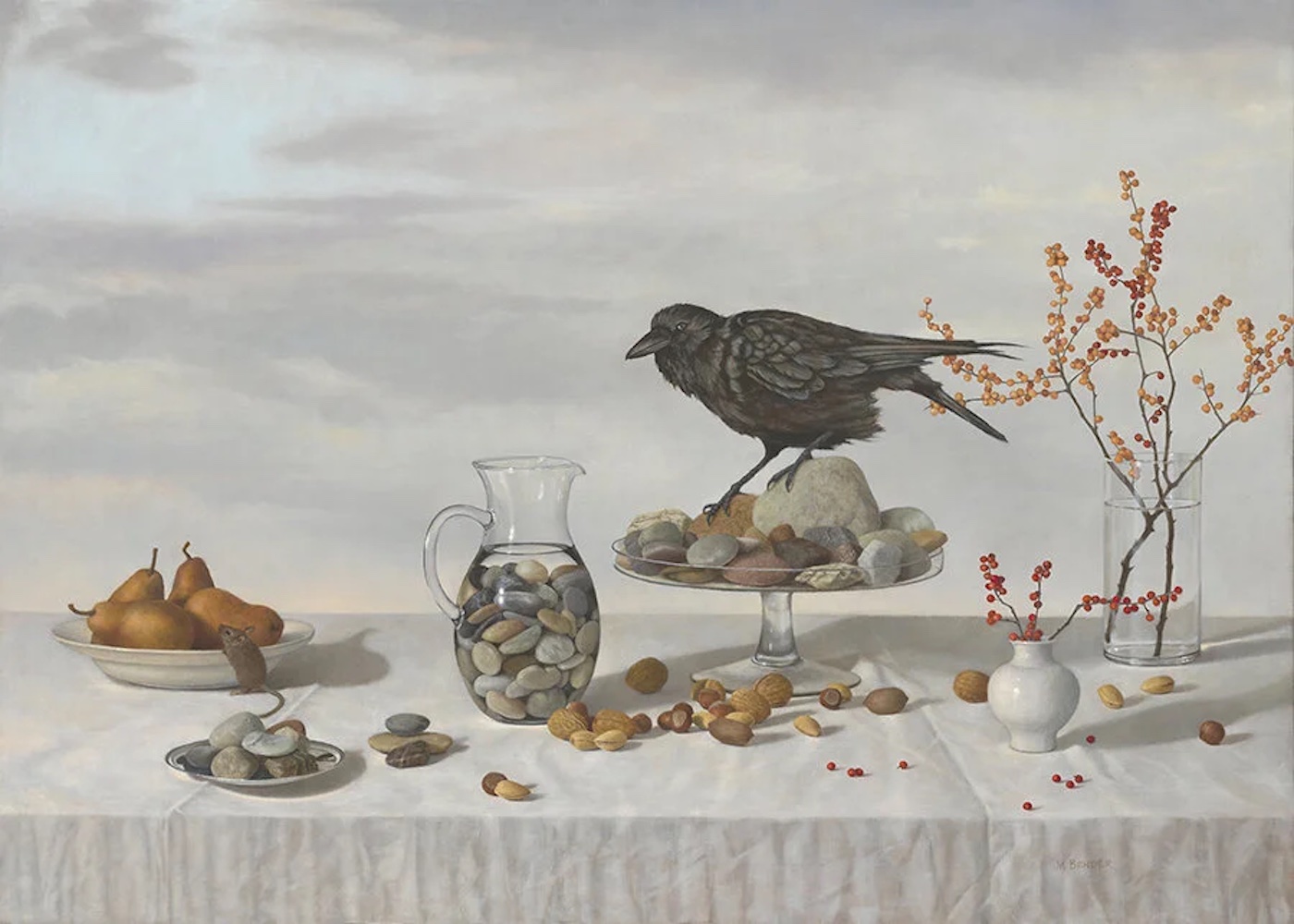
Marie Bender Still life painting of a black crow perched on a dish surrounded by rocks, a pitcher of rocks, nuts, pears and floral elements
©Marie R. Bender, The Crow and the Pitcher. Oil on canvas, 30 x 42 inches.

But perhaps the most important reason goes beyond logistics.

When you’re seen working with other artists, you become part of a larger dialogue. Curators, gallerists, and collectors find it easier to place your work in context. Their shows capture what’s happening at a given moment in time. Work that speaks to other work gets noticed.

What it actually looks like

Here are two examples from the archives that show how far this thinking can go.

Both artists prove that when you open your process, your art stops being just an object. It becomes a living experience.

Sculptor and installation artist Jill Powers (episode 27) builds entire collaborative ecosystems around her environmental themes.

For a show on ocean ecology in landlocked Colorado, she partnered with chefs and mixologists to create seaweed menus and signature cocktails, ultimately raising money for a youth-led marine conservation group and landing major coverage in the Denver Post.

She also brought in a university geologist who led 60 people on a hike to find ancient seashells embedded in Colorado rocks.

Jill’s work and approach to sharing it blur the line between art and the rest of the world.

Listen to the episode

Colorado artist Jill Powers with some of her art.

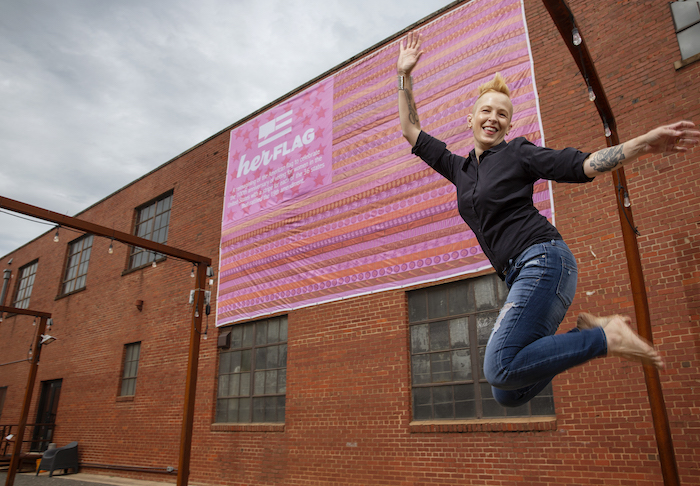
Marilyn Artus (episode 30) created a nationwide collaboration titled Her Flag to mark the 100th anniversary of women earning the right to vote.

Oklahoma artist Marilyn Artus in front of Her Flag. Celebrating the 100th anniversary of the 19th Amendment.

She partnered with 36 women artists — one from each state that originally ratified the 19th Amendment — intentionally mixing book illustrators, graphic designers, and fine artists. She insisted on paying every collaborator.

She turned the assembly itself into a live public event, sewing each state’s stripe of the enormous 18-by-26-foot flag alongside local poets, musicians, and historians.

Listen to the episode

What makes a collaboration work

The key is clarity before you start. And I mean real clarity, put in writing, even with friends. Especially with friends. Ambiguity and misguided expectations kill collaborations faster than almost anything.

Beyond that:

  • Define roles and leadership upfront. Who is responsible for what.
  • Make sure everyone is genuinely committed before you proceed. Don’t try to talk anyone into it.
  • All sides have to see the benefit clearly.
  • Acknowledge everyone who contributes, generously and repeatedly.

None of this means collaboration is easy. You won’t always get your way, miscommunication is real, and the pressure of knowing others are depending on you takes some getting used to. But that pressure is worth it with the right people and clarity in place. The creative, professional, and relational growth on the other side is real.

The reason you probably aren’t collaborating more is probably because you’re too busy going it alone. Being busy. Consider this your nudge.

Listen

Take a moment to think about your current work or an upcoming project.

Who could bring a new perspective, audience, or energy to it? Sit with that question before you decide your next step.

Alyson Stanfield Quotes

  • “It’s key that your art drives what you do, who you collaborate with, where you show it.”
  • “Working alone is just easier. There’s less mess, there’s less coordination, less communication, less negotiating.”
  • “They look at their projects and ask, who else could be part of this? Who else belongs in this story?”
  • “If you think about it, every time you show your art in public, you’re collaborating.”
  • “When you are seen working with other artists, you become seen as part of a larger community of artists. You become part of the dialogue.”
  • “The artists who stay small often aren’t making conscious decisions to stay small. You’re just defaulting to what’s easiest.”
  • “Ambiguity kills collaborations and friendships faster than almost anything.”
  • “Credit is not a finite resource. Share it generously and publicly acknowledge everyone who contributes.”

The post Why the lone artist mindset keeps you small (263) appeared first on Art Biz Success.

]]>
https://dy-online.com/lone-artist/feed/ 1
This artist turned 5 partnerships into a sold-put gallery show with Meredith Nemirov (262) https://dy-online.com/sold-out-nemirov/ Thu, 09 Apr 2026 12:22:00 +0000 https://dy-online.com/?p=58668 Getting buy-in for an ambitious exhibition idea means giving people a reason to say yes before you walk in the door.

In this episode, Colorado artist Meredith Nemirov shares how she built a sold-out show by approaching a national nonprofit before she called her gallery, giving collaborators options rather than demands, and activating the show across multiple events. The result was six invested partners and a show that sold out by the end of the summer.

The post This artist turned 5 partnerships into a sold-put gallery show with Meredith Nemirov (262) appeared first on Art Biz Success.

]]>
Getting people to say yes to a big idea is a skill that involves plenty of clarity around your goals. Meredith Nemirov has it.

In episode 262 of The Art Biz, she walks through how she built a sold-out show at Milk Moon Gallery in Telluride, Colorado with five collaborators, raising nearly $10,000 for a national nonprofit. The decisions she made along the way are worth studying.

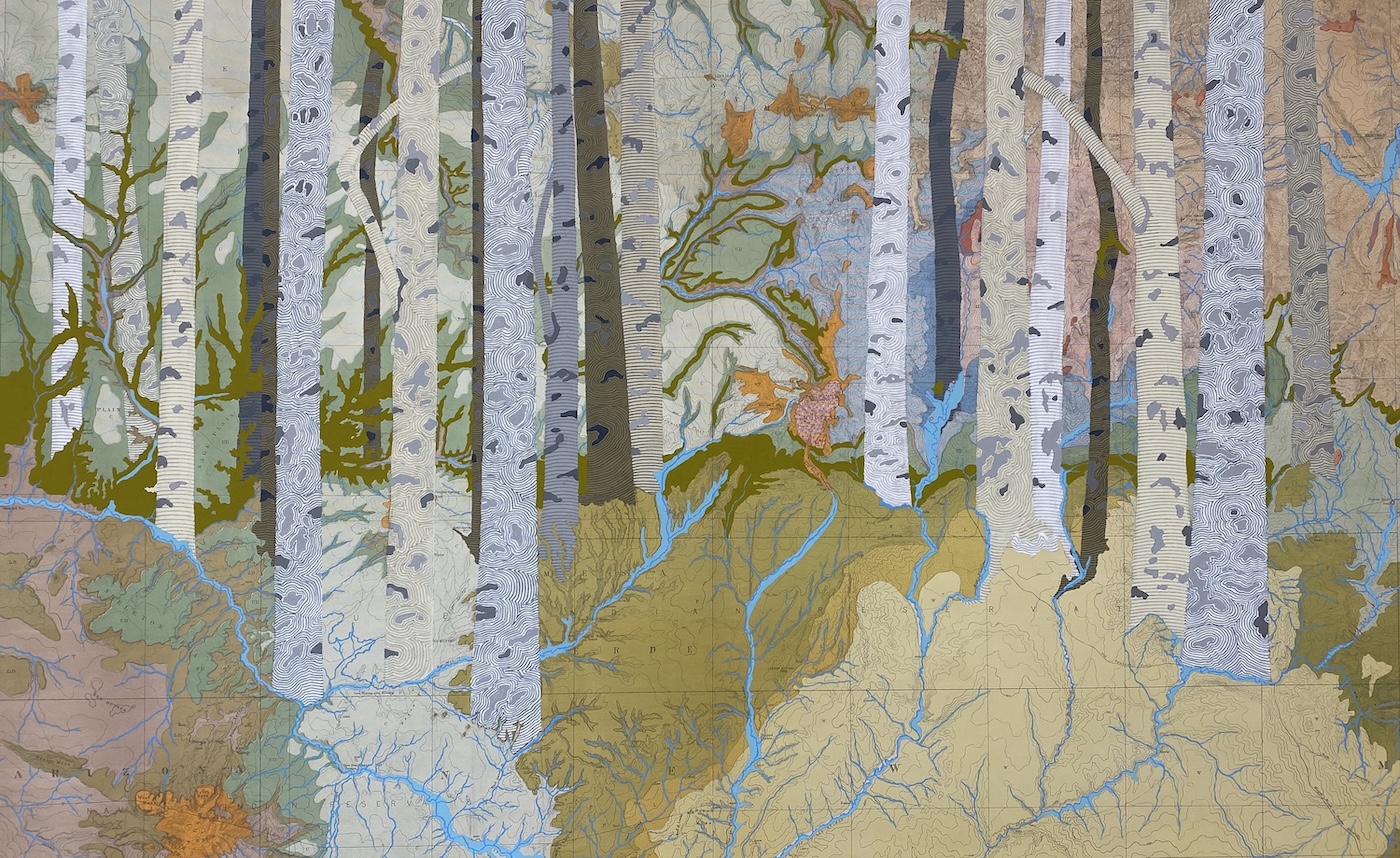
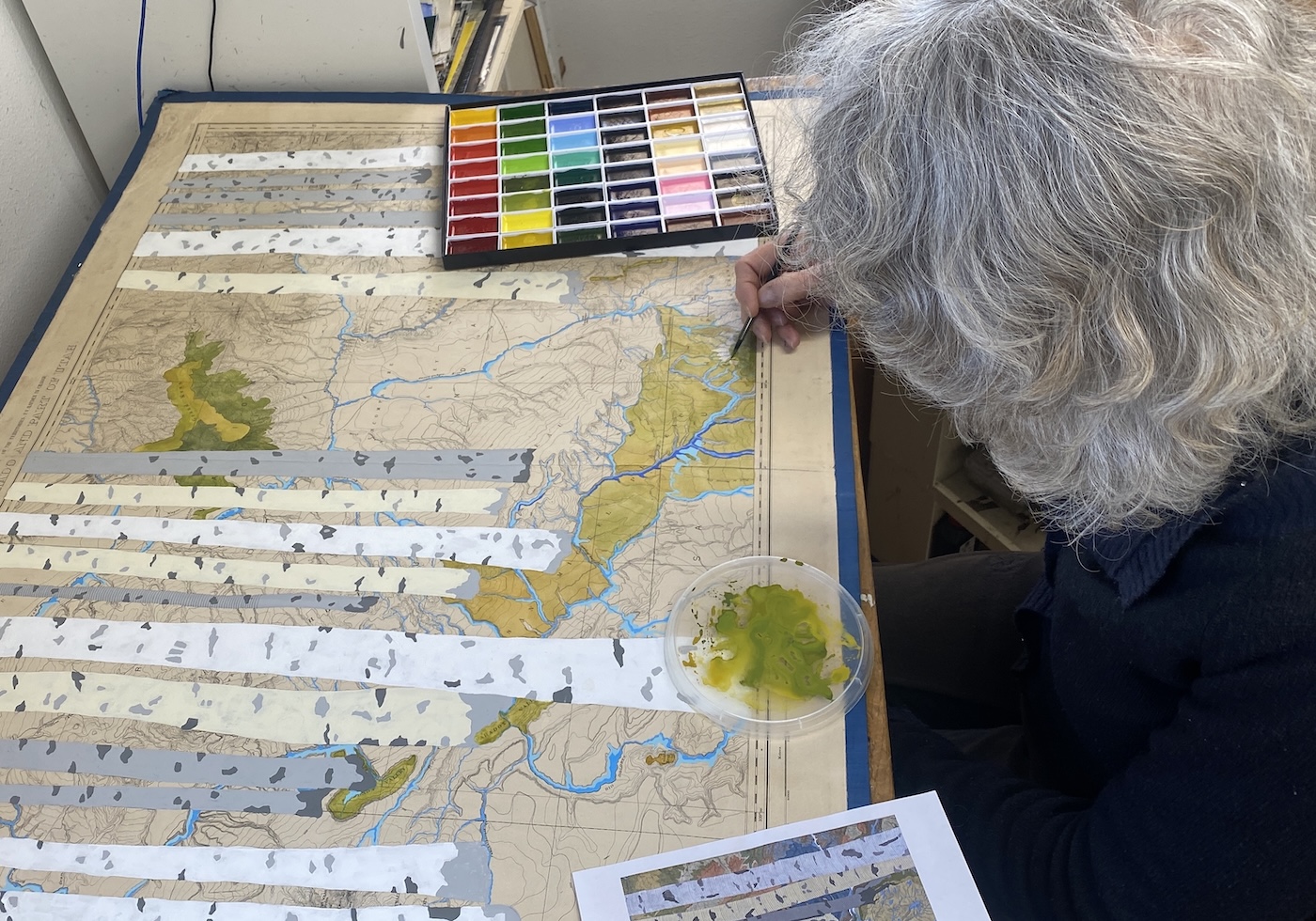
Meredith Nemirov aspen trees painted on top of a vintage topographical map of Colorado with repainted blue waterways
©Meredith Nemirov, S.W. COLORADO AND PARTS OF AZ, NM & UT. Acrylagouache and ink on historic topo map, 22 x 34 inches.

It started with the work.

Meredith had been painting aspen trees onto antique topographical maps for years, filling every waterway with blue to visually rewater (her word) a drought-stricken landscape. The work had a natural connection to environmental advocacy, and that alignment is what made everything else possible. The collaboration didn’t need to be forced because the work already made the case.

She wrote a proposal before she called her gallery.

Meredith approached American Rivers, a national nonprofit, before she brought the idea to Milk Moon Gallery. She wanted to know whether the collaboration was viable before she asked her gallery to commit to it.

The proposal was a page and a half with images. Simple, visual, easy to say yes to.

Give people options, not demands

Rather than presenting one plan and asking for approval, Meredith gave American Rivers three options.

  1. Donate twelve small works for them to use however they wanted.
  2. A show she would bring to their fundraiser.
  3. A full collaborative exhibition in Telluride during Mountainfilm festival.

They chose the third option, which happened to be what she hoped for. But because they chose it, they were invested in it. That distinction matters. When collaborators choose their level of involvement, they become stakeholders in your idea.

Build on existing relationships.

The other collaborators were people Meredith already knew. She didn’t build the collaboration from scratch. She looked at who was already in her orbit and asked whether their work connected to hers. In most cases, the ask was simple because the relationship was already there.

Activate the show more than once.

One opening night is one opportunity. Meredith and her gallery structured the show around two opening events — one during Mountainfilm and another on a First Thursday art walk — plus a separate poetry reading. Each event brought a different audience into the gallery and gave people multiple reasons to come.

Meredith gratefully acknowledges that the gallery staff did a lot of heavy lifting. They visited her studio as a group, spent an evening understanding the full story behind the work, and built their social media strategy from that foundation. 

Any artist would kill for their gallery to feature them so prominently —>

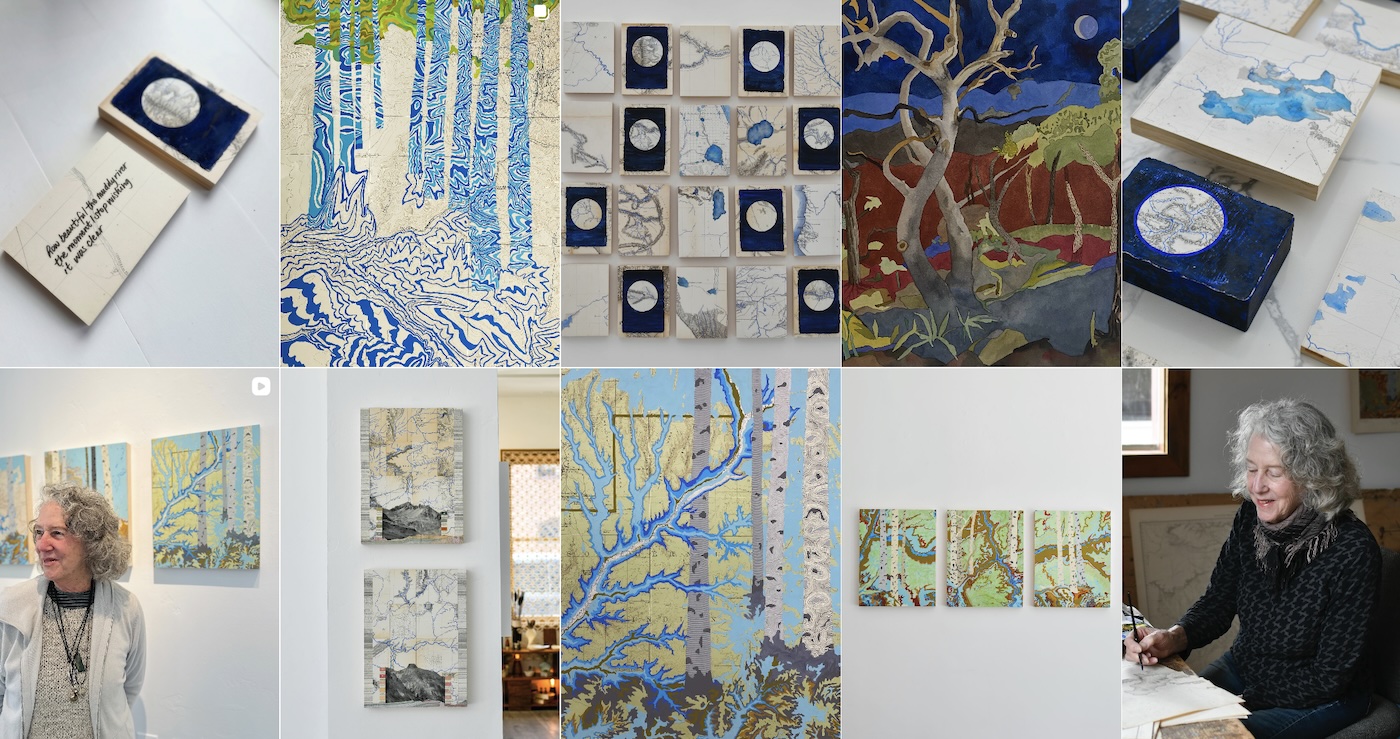
Gallery of images of the gallery during Meredith's show
Highlights from Milk Moon Gallery’s Instagram feed during Meredith's show.

American Rivers promoted the show to their audience as well. By the time people arrived, they already understood what they were walking into.

What she would do differently.

One missed opportunity: a representative from American Rivers was at the opening and never addressed the crowd. Meredith expected a brief talk about the organization’s mission, which didn’t happen. She’d plan for it explicitly next time — not assume it was going to happen.

Busy events move fast, and unplanned moments tend to stay unplanned.

[ Meredith’s show was featured in a beautiful article with photos on the A La Luz blog, a showcase for environmentally engaged artistic practices across disciplines. ]

Listen

Meredith Nemirov working in her studio
Meredith working in her studio.

Think about your next exhibition and who else belongs in it. Not just who might say yes, but whose mission or work genuinely connects to yours.

The strongest collaborations require noticing what’s already aligned.

Meredith Nemirov Quotes

  • “I felt that I was a vehicle for these [artworks]. I really did.”
  • “I learned that people are approachable.”
  • “It was win, win, win, win, win.”
  • “The four women that work at the gallery did the most amazing social media posts for the show…. They just put their all into it.” (See photo above for evidence.)
  • “I gave them three options to think about. I didn’t just say, I wanna do this.”
  • “I felt a purpose for the pieces.”
  • “All these people were involved and expecting something. That kept my momentum going in the studio. It was something to work towards.”

About Meredith Nemirov

Meredith Nemirov was born in NYC where she studied at The Art Student’s League and received a BFA from Parson’s School of Design. After working as a freelance illustrator for 11 years she moved to a small town in SW Colorado.

Together with her husband they opened the Ridgway Gallery specializing in antique prints, maps and books of the exploration of the American West. After the gallery closed in 1999 Nemirov has been painting and exhibiting her work, and teaching, in the US and Spain. 

Follow Meredith on Instagram: @meredith.nemirov

Photo by JT Thomas

The post This artist turned 5 partnerships into a sold-put gallery show with Meredith Nemirov (262) appeared first on Art Biz Success.

]]>