artist statement Archives - Art Biz Success https://dy-online.com/tag/artist-statement/ Trusted Art Business Coaching and Consulting Thu, 13 Aug 2026 14:14:50 +0000 en-US hourly 1 https://wordpress.org/?v=7.1.4 https://dy-online.com/wp-content/uploads/2022/02/favicon-2-150x150.png artist statement Archives - Art Biz Success https://dy-online.com/tag/artist-statement/ 32 32 Comprehensive guide for writing an effective artist statement (221) https://dy-online.com/writing-your-artist-statement/ Thu, 27 Mar 2025 14:59:56 +0000 https://dy-online.com/writing-your-artist-statement/ Writing your artist statement can feel like a big task, but it doesn’t have to be. In this guide, I’ll walk you through simple steps to help you figure out what to say and how to say it.

You’ll get writing prompts, editing advice, and ideas for how to actually use your artist statement once it’s done. Let’s make it easier—and way less intimidating.

The post Comprehensive guide for writing an effective artist statement (221) appeared first on Art Biz Success.

]]>
If you think your art speaks for itself, think again. In today’s art world, where attention is fleeting and first impressions matter, your artist statement remains one of the most powerful tools you have to communicate your vision.

Many artists wonder if artist statements are still necessary. With social media and visual-driven platforms, some believe words are secondary to images.

But words matter. A well-crafted artist statement ensures that the right people—collectors, curators, and art writers—understand your work the way you want it to be understood. It gives your art a voice when you’re not in the room. And the process of writing it makes you more articulate whenever you have to speak about your art.

Writing an artist statement isn’t just about fulfilling a requirement—it’s a strategic part of your art career. This guide will help you craft a statement that is clear, compelling, and authentic to your work.

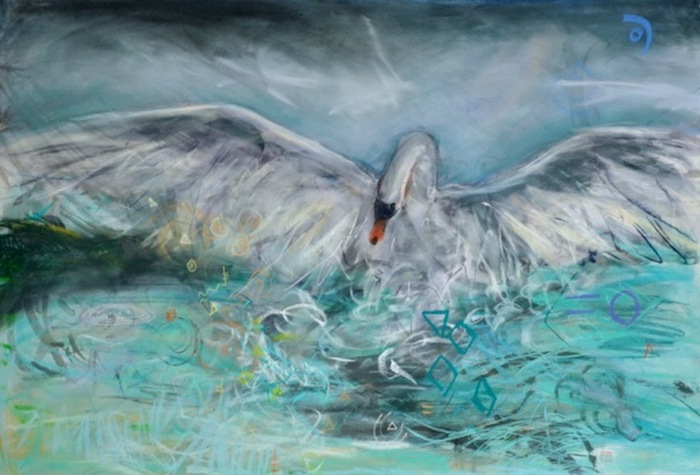
Pastel painting by Pat Dolan
©2016 Pat Dolan, Danu, Celtic Goddess. Pastel and sumi ink on Rives BFK paper.

Listen

What is an Artist Statement?

An artist statement is a bridge between your art and your audience. It helps viewers, collectors, curators, and the media understand the work in front of them—and, more importantly, experience it on a deeper level.

There’s no single correct way to write an artist statement. Some are poetic, others direct. Some are deeply personal, while others focus more on process or technique. The right artist statement is the one that best serves your work and your goals while inspiring others to engage more fully with your art.

You might even create different versions for different purposes: a formal version for exhibitions, a conversational one for your website, or a single-sentence version for quick introductions. That kind of flexibility is not only allowed—it’s encouraged.

For as long as art has existed, people have written about it—analyzing, interpreting, and categorizing. And if you’re not shaping the story around your art, someone else will do it for you. Your statement allows you to take control of that narrative, ensuring that your work is seen, understood, and remembered the way you intend.

Communicating effectively about your art begins with your statement.

You have to understand what your art is about before you can share your message in other formats or through social media channels. This is accomplished through the process of writing your artist statement. And it is a process, which I’ll help you begin.

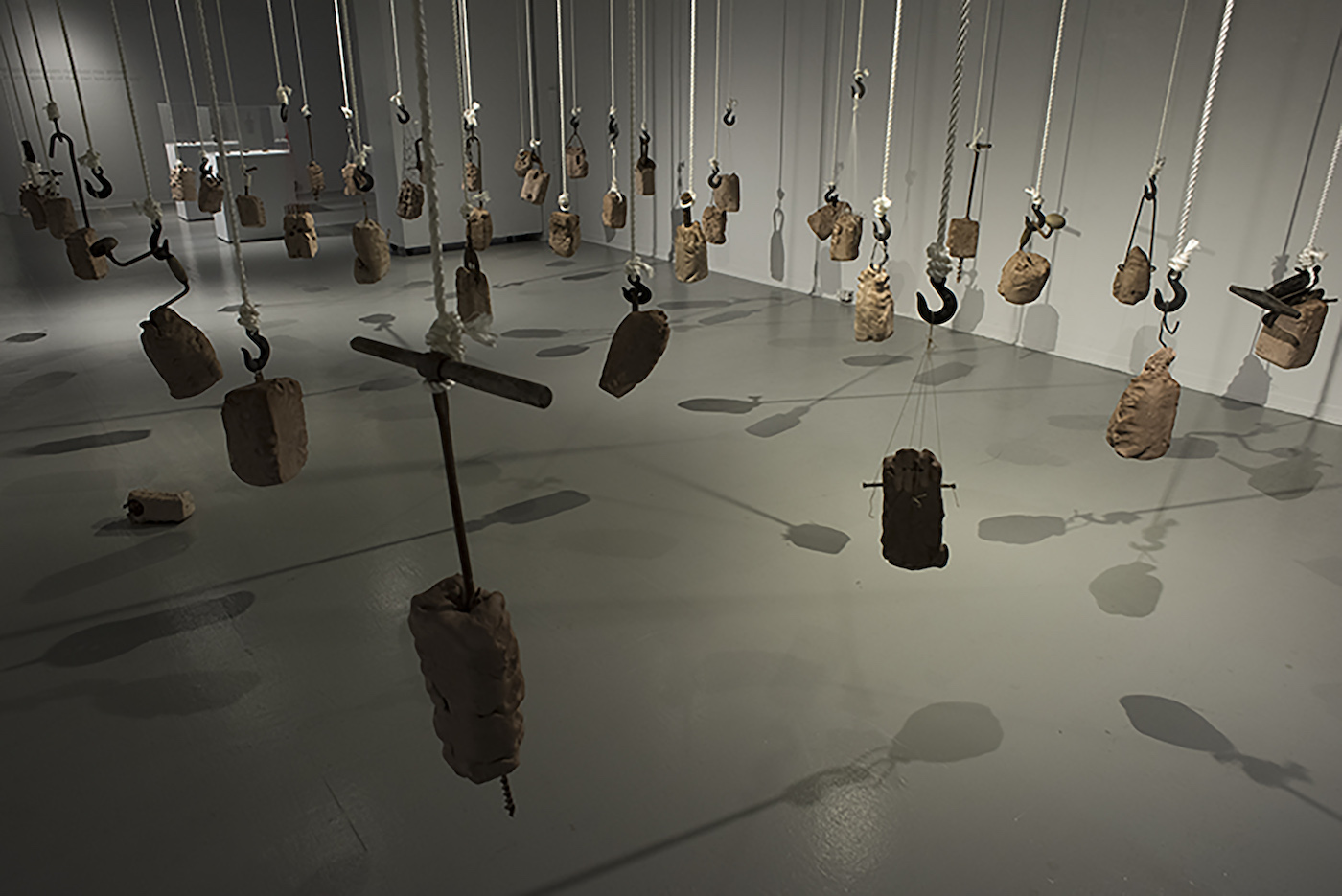
Erratic Installation found object sculpture rope and clay vessels hangin | on Art Biz Success
©Kate Ward, Erratic Installation. Found objects, rope and unfired clay, variable dimensions.

The Process is the Point

If you struggle to put words to your work, you’re not alone. We must acknowledge that writing about your art is hard.

Many artists feel that their art speaks for itself, resisting the idea of having to explain it. Others worry that writing an artist statement will strip the mystery from their work. And then there’s the simple fact that finding the right words to describe something visual is challenging—even for experienced writers.

But here’s the thing. It’s precisely because writing your artist statement feels difficult that you need to do it.

The process of articulating your ideas in writing is even more important than the final statement itself. Through the process:

  • You are forced to clarify your thinking. You might believe you know exactly what your art is about—until someone asks you to talk or write about it. The process of getting those thoughts out of your head makes you more aware of your choices, themes, and intentions.
  • You become a better communicator. Whether you’re talking to a curator, a collector, or a journalist, being able to describe your work clearly makes you sound more confident and professional.
  • You strengthen your connection to your audience. Viewers engage more deeply when they have a way in—when they understand the broader ideas behind your work.
  • You accumulate language for everything else. Once you’ve written your artist statement, you’ll see how that language can be repurposed across your website, social media posts, grant applications, and interviews.

This won’t be easy, but neither is making art. Just like your studio practice, writing about your work takes effort, revision, and patience. The first draft won’t be perfect. It shouldn’t be.

You’re too close to your own work to get it right immediately, but the more you write and refine, the clearer your message becomes.

Stick with me—I’ll help you through it. 

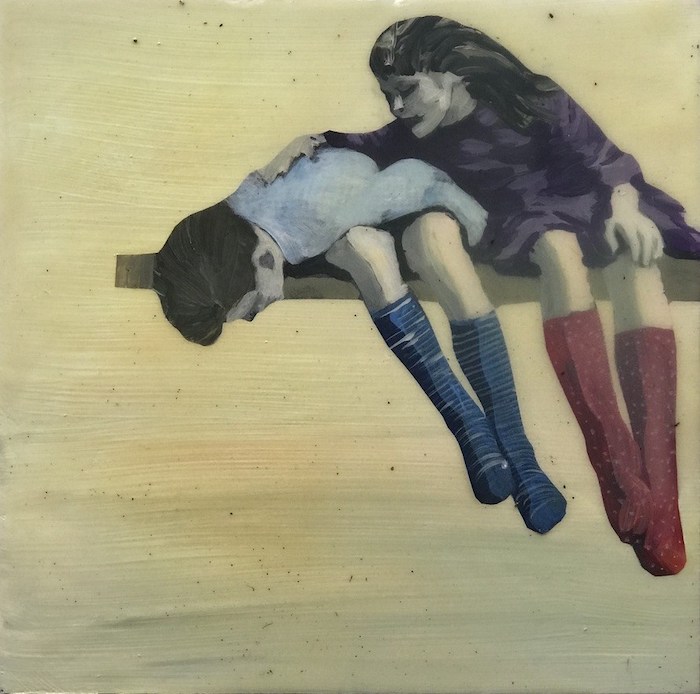
©2020 Before Falling. Acrylic on wood glazed with a thick layer of Dammar Resin one person leaned over another holding back
©2020 Hélène Lindqvist, Before Falling. Acrylic on wood, glazed with dammar resin, 26 x 26 centimeters.

Prompts for Writing Your Artist Statement

Before you can write your artist statement, you need to spend time getting to know your work from a fresh perspective.

That begins by journaling about your art.

I highly recommend doing this the old-fashioned way—with pen and paper. When you type into a computer, there’s a temptation to edit yourself and try to make it perfect. That’s not what we’re after right now.

This is no time for perfection. Allow the words to flow freely. Your goal is to get as many thoughts down as possible without judging them. You’re collecting raw material you’ll refine later.

Start with these three prompts. Write in depth. Don’t rush the process.

1. What do you most want people to see in your art?

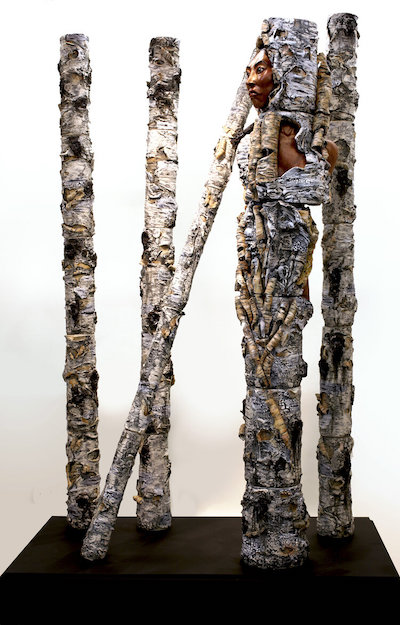
Sculpture by Georgina Lohan tree branches in porcelain | on Art Biz Success
©Georgina Lohan, The Return. Porcelain and steel rod, 96 x 60 x 36 inches.

What’s important to you? What do you want viewers to get about your art?

Is it …

  • your labor?
  • a special material?
  • an emotion?
  • color? line? texture?

Once you pinpoint the answer, write about how you handle this aspect of your work. 

Think about what you emphasize, why it matters, and what, specifically, you do to bring this out. 

The words you choose for your statement should serve as clues that lead viewers to these discoveries.

For example, saying “I love color” is weak—who doesn’t love color? Instead, describe how you respond to color and how you use it to transfer meaning from your head and heart to the viewer. 

2. What is a distinguishing characteristic of your art?

This might be something from the list above or something entirely different.

What makes your art different from others working in a similar vein? What can you emphasize through words that sets your work apart?

Part of your job—if you haven’t already figured this out—is to educate people on how to look at your art. Most people haven’t had a visual education. They need to be gently directed to what to notice and what to appreciate.

3. What do other people find delightful or surprising about your art?

If one person comments on it, chances are good that others will notice it, too.

Listen to what people say about your art. Their discoveries might surprise or even confuse you, but understanding how others interpret your work is part of the communication process.

Think back on previous conversations you’ve had about your art. You might uncover new language just by reflecting on the insights of others.

After you’ve responded to these prompts, step away. Give it a day or two. Then come back and write more.

Your goal is to gather more words—enough to mine for meaning and clarity. Keep writing, even if it doesn’t make sense yet. You’re not writing your statement just yet. You’re doing the necessary work to get there.

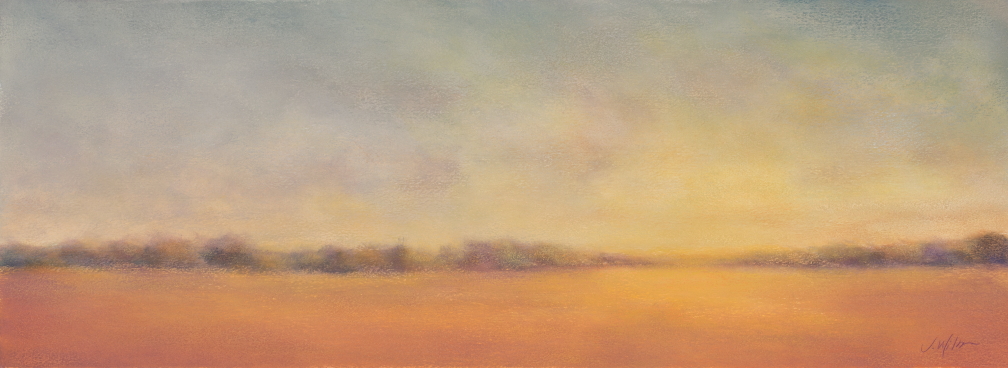
red and orange sunset landscape painting by Colorado artist Jenny Wilson | on Art Biz Success
©Jenny Wilson, Golden Days. Acrylic on paper, 11 x 29 inches.

7 Rules Every Artist Statement Should Follow

Now that you’ve gathered your thoughts through journaling, it’s time to start shaping them into a statement.

But before you dive into writing a draft, keep these guidelines in mind. They’ll help you focus your message and avoid common pitfalls.

1. Write in the first person.

It’s a statement, after all—something only you can say.

But be mindful of overusing personal pronouns (I, me, my). You’ll trim many of them during editing.

2. Stick to the body of work you’re trying to define.

Focus your statement on a single, cohesive body of work. (And, yes, you have the flexibility to write multiple statements.)

If you try to describe different styles or directions in one statement, your language will become too general—and you’ll lose the specificity that makes a statement effective.

If you work in distinct series or have more than one visual direction, write a separate statement for each. It’s more work, yes—but it honors the integrity of each body of work and gives your viewers a clearer experience.

3. Avoid discussing influences.

Don’t include teachers or historical figures who influenced you.

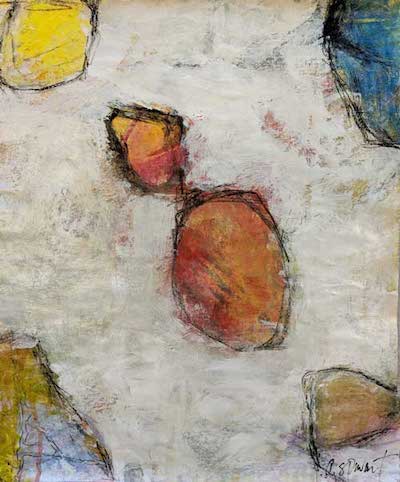
mixed media red orange yellow organic shapes | on Art Biz Success
©Lesley Spowart, Tangier. Mixed media, acrylic on Vellum. 30.5 x 24 inches.

As soon as you name someone else, readers start comparing. You want them to stay focused on your art.

4. Don’t use quotes from other sources.

We’re not in English class anymore.

You may have been taught to begin an essay with a quote, but your artist statement should rely on your own voice. Quoting others distracts from your message.

5. Keep your biography separate.

Your bio is written in the third person.

Your artist statement is in the first person and about the art—not about you. These are two distinct documents.

6. Let your statement evolve.

This document isn’t your life’s treatise. You won’t be defined by the words you choose forever.

It should grow and mature alongside your work. Don’t cast it in bronze and consider it done.

Avoid treating it like a finished product you never revisit. A good statement can—and should—change over time.

7. Keep it short. Really short.

Most artist statements don’t need to be longer than a paragraph or two, although I understand that there is a place for longer statements that enlighten.

Always aim for brevity. If you go longer, be sure every word adds to your message. If not, cut it. (We’ll get to that.)

These guidelines will keep you grounded as you begin shaping your raw thoughts into a meaningful artist statement.

But how will you know if what you’ve written is working?

There’s one simple test your statement needs to pass—and it has nothing to do with perfect grammar or flowery language. I want to make sure you understand this before you begin writing.  

The Ultimate Test

Think of your artist statement as a bridge—something that connects the viewer’s experience to your work.

It’s not just a piece of writing to check off a to-do list. It should deepen curiosity and draw people back to your art.

That’s the ultimate test:

After someone reads your statement, do they feel compelled to look back at your art?

The ultimate test:

Does your artist statement compel people to look at your art?

If they move on without taking another glance, your statement hasn’t done its job.

This doesn’t mean you should be didactic. In fact, you don’t want to tell people exactly what to look for. That takes away the magic of discovery.

Your job is to guide, not instruct. To open a door, not to walk them through it.

Now that you understand the role your statement plays and how it connects with your viewer, let’s talk about how to shape the raw material you’ve gathered into a compelling draft. 

Listen

Writing a Draft of Your Artist Statement

You’ve done the deep thinking. You’ve journaled, reflected, and collected a pile of words. Now it’s time to begin shaping those thoughts into a first draft.

This next step isn’t about perfection—it’s about clarity and intention.

Remember: You are not obligated to use everything you’ve written. In fact, you shouldn’t. That initial writing process was for you—to help you get thoughts out of your head and onto paper.

Now you’re writing for a reader.

It’s time to start selecting the most relevant, insightful pieces and begin molding them into a statement that is true to your art and clear to others.

Don’t be so in love with your first round of writing that you can’t cut or reshape it. You haven’t wasted a word—scraps that don’t make it into the final version can still be used for social media captions, website copy, or grant applications.

And please don’t try to write a perfect version on the first try. What you’re writing now is what author Anne Lamott famously calls a “shitty first draft.” You need to let the ugly version exist before you can turn it into something meaningful that you’re proud of.

You’ll write and rewrite the same ideas. You’ll move words around. You’ll find better ways to express something you thought was already finished.

This is normal.

Welcome

to the wonderful world of writing!

This is part of the process—a process not unlike what you go through when you’re making art: erasing, adding, removing, reorganizing, and so forth.

Give yourself time and space between writing sessions. When you return to your draft, you’ll see your words with fresh eyes—and that’s when things start to click.

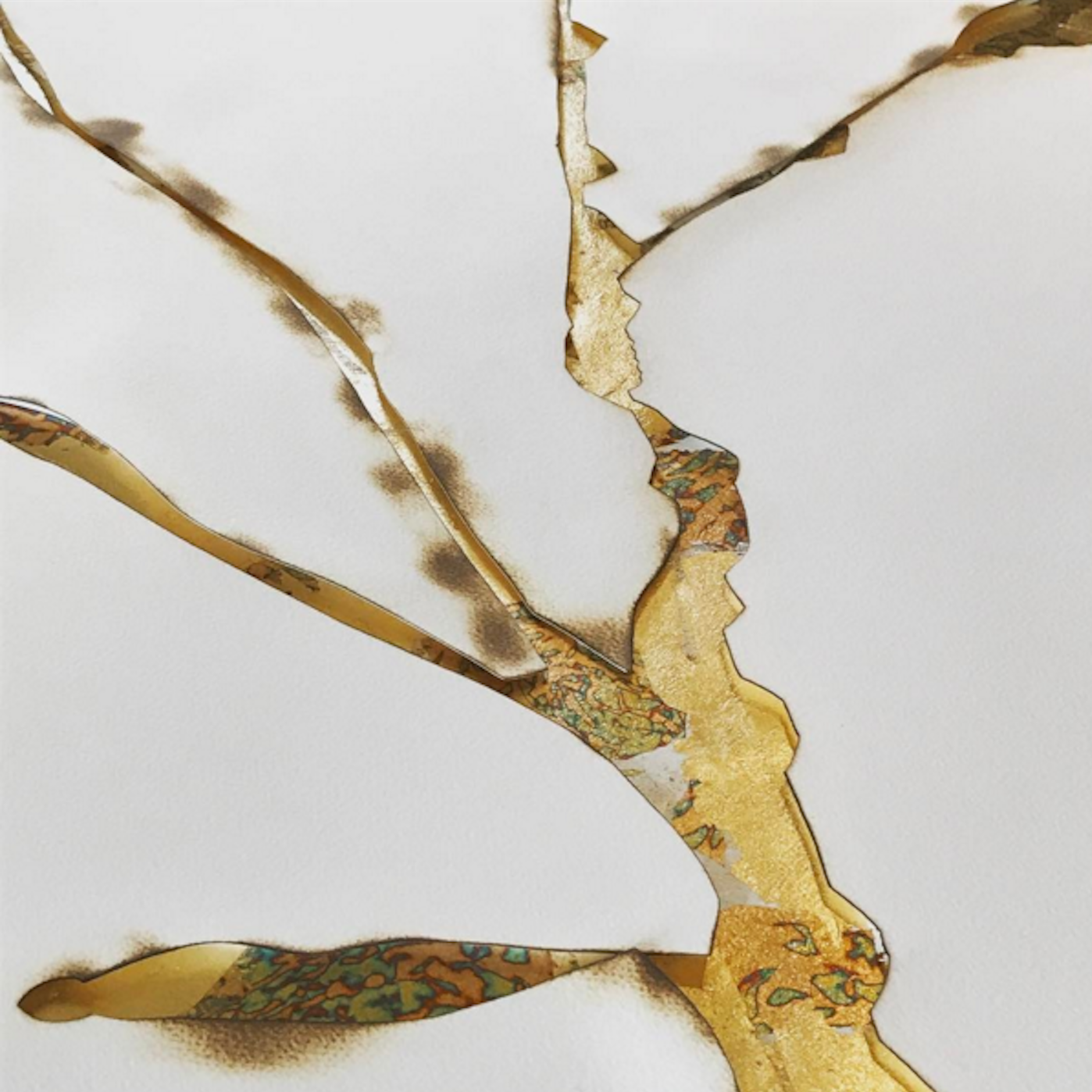
Kelly M. O'Brien work on paper gold tree form | on Art Biz Success
©2017 Kelly M. O'Brien, Playing With Fire No. 60 (Nature 4), detail. Paper, gold leaf, flame, 72 x 48 x .65 inches.

Sharpen Your Artist Statement by Removing These 5 Offenders

Once you’ve written a draft, don’t hit publish or send just yet.

Take a break. Give yourself a little distance from your words—at least a day or two. When you come back, you’ll be better equipped to spot what needs refining. This is where the editing begins.

In particular, watch out for these five common offenders that weaken artist statements. Cutting them will instantly sharpen your message and make your writing more effective.

1. The word “unique”

Just … don’t.

The word “unique” has been so overused that it’s become meaningless. And let’s be honest—your work probably isn’t unique in the truest sense of the word. All art is informed by what came before.

Instead of claiming uniqueness, describe your work in a way that makes the reader feel it’s one-of-a-kind. Focus on your distinguishing characteristics. Let your specificity speak for itself.

2. Cliché phrases

You’ve seen these (and maybe even used them):

  • I am excited by …
  • I’ve always been an artist …
  • I have to make art …
  • My work is about the human condition …

These clichés flatten your voice. The phrases that follow them are usually vague and unmemorable. Dig deeper and say something only you would say.

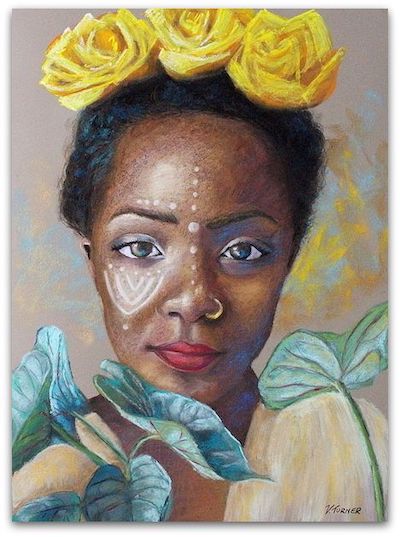
pastel woman with yellow flower headress | on Art Biz Success
©Vanessa Turner, Honey. Pastel on paper, 16 x 12 inches.

3. Redundant sentences, adjectives, or thoughts

Say it once. Say it clearly. And then move on.

If you find yourself repeating ideas using slightly different words, you’re not adding meaning—you’re adding clutter. Tighten it up so each sentence earns its place.

This brings me to …

4. Adjective overload

A string of descriptive words separated by commas doesn’t make your work sound more interesting—it makes your reader have to do extra work.

If your statement has more than three or four commas in a single sentence, take a closer look. Trim the excess. Choose one or two carefully selected adjectives that actually add value.

Then read through your entire statement and check for what I call “strings of three adjectives.” You’re allowed one per statement.

5. Excessive personal pronouns

Yes, your statement is written in the first person, but that doesn’t mean every sentence needs “I,” “me,” or “my.”

Try removing them in the editing phase. You’ll be surprised how much more concise and powerful your writing becomes.

How to Put Your Artist Statement to Work for You

Once you’ve written a strong artist statement, don’t just tuck it away. Put it to work.

A well-written statement becomes the foundation for how you communicate about your art across many platforms. You’ll find yourself reusing and repurposing your words in a variety of situations:

Add it to your website.

This is the obvious one. But here’s something to consider:
Can viewers see your art while they’re reading your statement?

If possible, place your artist statement near your artwork—on the same page or right next to the images. It’s more impactful when viewers can look at the art while absorbing your words. I know some templates make this tricky, so think of it as a preference, not a rule.

Include it in exhibitions and gallery materials.

Your artist statement can become:

  • A label or wall text introducing your show
  • Copy for a brochure or handout
  • The foundation for your artist talk at an opening or event
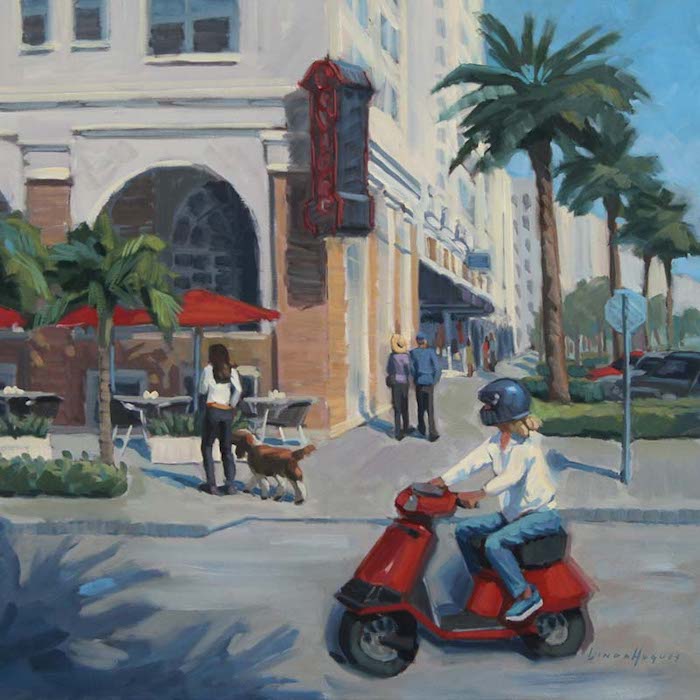
Painting by central Florida artist Linda Hugues
©Linda Hugues, Ceviche Corner. Oil, 36 x 36 inches.

For wall text and printed materials, feel free to leave off the words “Artist Statement.” Most people outside the art world don’t know what that means. Instead, let it simply read as engaging, informative text about your work.

Use it in applications.

Pull from your statement when applying for grants, residencies, shows, or proposals.

You can also adapt it into a teaching or project statement when needed.

Drop it in conversations and content.

A few sentences from your artist statement can form the backbone of:

  • Your artist talk or video introduction
  • Your email signature block (use your best sentence and include a website link)
  • Social media captions, newsletter blurbs, and blog posts


Once you’ve written a compelling statement, you’ll have go-to language you can reuse with confidence.

Your artist statement is a living document.

It evolves along with your art.

Don’t use old words for new work.

The post Comprehensive guide for writing an effective artist statement (221) appeared first on Art Biz Success.

]]>
Artist Bio vs. Artist Statement vs. About Page https://dy-online.com/bio-statement-about/ https://dy-online.com/bio-statement-about/#comments Sun, 05 Jan 2020 15:30:00 +0000 http://artbizsuccess.com/?p=8016 Are you confused about the difference between your artist biography and artist statement? I'm here to help!

See if these explanations give you a better picture of these two documents.

Artist Biography

Your professional artist bio is kind of like your résumé in paragraph form (but less boring). It highlights your top accomplishments—usually with the most recent and most important at top.

Your bio gets to the point. It's not a place for you to share everything you've ever done or get into your personal life.

Your bio is written in 3rd person unless it's an autobiography, in which case you'd use the 1st person.

Formula for a 3-Paragraph Artist Bio

Artist Statement

Your artist statement is about your art, not about you. More to the point, it's about the current direction of your work, not a history of how you got to where you are now.

Your artist statement is written in the 1st person.

The post Artist Bio vs. Artist Statement vs. About Page appeared first on Art Biz Success.

]]>
If you are confused about the difference between your artist biography and artist statement, I’m here to help!

See if these explanations give you a better picture of these two documents.

Artist Biography

Your professional artist bio is kind of like your résumé in paragraph form (but less boring). It highlights your top accomplishments—usually with the most recent and most important at top.

Your bio gets to the point. It’s not a place for you to share everything you’ve ever done or get into your personal life.

Your bio is written in 3rd person unless it’s an autobiography, in which case you’d use the 1st person.

Formula for a 3-Paragraph Artist Bio.

Theresa Beckemeyer, Chautauqua
©Theresa Beckemeyer, Chautauqua. Oil on canvas, 40 x 30 inches.

Artist Statement

Your artist statement is about your art, not about you. More to the point, it’s about the current direction of your work, not a history of how you got to where you are now.

Your artist statement is written in the 1st person. After all, it is a statement.

For good measure, let me throw in one more piece of writing.

About Page

About pages are the page on your website where your artist bio and statement come together. They should be less formal than the proper bio you would use to share with a museum or gallery.

How you approach your About page depends on your goals as an artist, but there should be text about both you and your art on this page.

I’m fond of About pages that use humor combined with an interesting twist on serious facts. I tried to do that on the Art Biz Success About page.

This post was first published on November 8, 2010 and has been updated with original comments intact.

The post Artist Bio vs. Artist Statement vs. About Page appeared first on Art Biz Success.

]]>
https://dy-online.com/bio-statement-about/feed/ 14
How Your Artist Statement Can Engage More Eyeballs https://dy-online.com/statement-engage/ https://dy-online.com/statement-engage/#comments Fri, 03 May 2013 11:25:28 +0000 http://artbizsuccess.com/?p=15402 In I'd Rather Be in the Studio I lay out guidelines for your artist statement, where I say that my ultimate test for an effective artist statement is that it compels people to look at your art.

Think about it: What good is your statement if people only read it and then move on to the next label, the next statement, the next page, or the next artist?

You want more eyeballs on the art!

If you're not using your statement as a way to engage viewers with the art, you're missing an opportunity.

Most people do not have a visual education. They are not taught how to look at and appreciate art. Your statement can do this job without being too elementary or condescending.

Every time you teach people how to look at your art, you empower them. You give them confidence to spend more time with the work and to go to a deeper level.

Artist Statement Examples

These are excerpts from artist statements that can be found on their sites. See how they direct you back to the work.

The post How Your Artist Statement Can Engage More Eyeballs appeared first on Art Biz Success.

]]>

In this post, I lay out guidelines for writing your artist statement and a process for doing so.

I contend that my ultimate test for an effective artist statement is that it compels people to look at your art.

Think about it: What good is your statement if people only read it and then move on to the next label, the next statement, the next page, or the next artist?

Reading about the artist, but did they look at the work after this photo was taken? Photo credit unknown.
Gallery-goers reading about the artist, but did they look at the work after they finished reading the wall label?

You want more eyeballs on the art!

If you’re not using your statement as a way to engage viewers with the art, you’re missing an opportunity.

Most people do not have a visual education. They are not taught how to look at and appreciate art. Your statement can do this job without being too elementary or condescending.

Every time you teach people how to look at your art, you empower them. You give them confidence to spend more time with the work and to go to a deeper level.

Artist Statement Examples

These are excerpts from artist statements that can be found on their sites. See how they direct you back to the work.

I incorporate the art of blacksmithing in my pieces to give them eye appealing embellishments: the handmade scrolls on the bodice of a dress, the butterflies on a hat, or the crossed fingers of hand behind a woman’s back. – Victoria Ross Patti

  • Look for scrolls, butterflies, and other details.

Every painting starts with a grid. The vertical and horizontal lines calm my active brain and provide a structure on which to work. – Dora Ficher

  • Look for the structure of the grid.

I fabricate with steel from old tin cans, toys and signs and also use them as a source for color, images, and text.  These utilitarian objects have their own histories that speak to the passage of time seen through fading paint, scratches and rust. – Marlene True

  • Look for recognizable tin and worn surfaces.

Ready to dive in deep to find the right language and strategies to promote your art?

Check out Essentials for Artist Success!

The post How Your Artist Statement Can Engage More Eyeballs appeared first on Art Biz Success.

]]>
https://dy-online.com/statement-engage/feed/ 20
Your Artist Statement Is Like A Coconut https://dy-online.com/coconut/ https://dy-online.com/coconut/#comments Tue, 23 Apr 2013 12:04:25 +0000 http://artbizsuccess.com/?p=15292 Friends and I were reminiscing about Gilligan's Island when I revealed too much about my TV-watching habits as a child.

Remember how the castaways on that series made everything from coconuts?

The Professor fashioned a radio and battery charger from coconuts. Why, oh why, couldn't he make coconut glue and repair a boat to get them off the island???

Maryann was famous for her coconut cream pie.

Everyone drank out of coconut shells, which also became vessels for almost anything imaginable.

Coconuts sustained all of the survivors of the S.S. Minnow. Though they grew weary of coconut-this and coconut-that, they wouldn't have survived without this fruit.

Your Artist Statement Will Sustain You

Your artist statement is like a coconut. Bear with me here.

The deliberate process of articulating your work will sustain you just as the coconuts sustained Gilligan and crew.

The post Your Artist Statement Is Like A Coconut appeared first on Art Biz Success.

]]>
Friends and I were reminiscing about Gilligan’s Island when I revealed too much about my TV-watching habits as a child.

Remember how the castaways on that series made everything from coconuts?
professor-coconut
The Professor fashioned a radio and battery charger from coconuts. Why, oh why, couldn’t he make coconut glue and repair a boat to get them off the island???

Maryann was famous for her coconut cream pie.

Everyone drank out of coconut shells, which also became vessels for almost anything imaginable.

Coconuts sustained all of the survivors of the S.S. Minnow. Though they grew weary of coconut-this and coconut-that, they wouldn’t have survived without this fruit.

Your Artist Statement Will Sustain You

Your artist statement is like a coconut. Bear with me here.

The deliberate process of articulating your work will sustain you just as the coconuts sustained Gilligan and crew.

You don’t write an artist statement just because someone asked for you to submit one.

You write an artist statement because you are in charge of your art career.

You know that if you don’t talk about your art, someone else will and perhaps not in a way you appreciate.

Once you have a statement you’re proud of, it will sustain you. You will use it for everything.

Artist Statement Uses

Of course you can’t use it to make tropical drinks, but you will use your artist statement in the following situations.

  • On your website.
    I prefer statements next to the art, where they make sense, and not on a separate page by themselves.
  • In a brochure.
    There’s no need to put the headline “Artist Statement” in a marketing piece intended for the general public because most people have no idea what that means. They will read it as more information about your art, which is just what you want them to do.
  • As the skeleton for a section of your grant application.
  • As the outline for your artist talk.
    You only need a few sentences to build an entire talk around. The talk could be at an exhibition opening, for a private group, or on a video you post to YouTube.
  • Pull out your best sentence to use in your signature block and on your business card.

The post Your Artist Statement Is Like A Coconut appeared first on Art Biz Success.

]]>
https://dy-online.com/coconut/feed/ 12
Finish Your Writing Project Using These Secrets https://dy-online.com/finish-writing/ https://dy-online.com/finish-writing/#comments Mon, 18 Mar 2013 11:43:54 +0000 http://artbizsuccess.com/?p=15077 Want help finishing your newsletter, catalog, blog post, book, or even your artist statement? Listen up. My friend and writing coach, Cynthia Morris, shared a secret with me. Print It Out. Really? That's it? "Print it out" is all you have for me? Yep, it's that simple. Or at least it's a good first step.

The post Finish Your Writing Project Using These Secrets appeared first on Art Biz Success.

]]>
Want help finishing your newsletter, catalog, blog post, book, or even your artist statement? Listen up.

My friend and writing coach, Cynthia Morris, shared a secret with me.

Print It Out

Really? That’s it? “Print it out” is all you have for me?
Yep, it’s that simple. Or at least it’s a good first step.

Organizing Your Writing
How I organized on my office floor one of the lessons for the No-Excuse Art Biz Bootcamp.

You see (and the rest of this is me talking, not Cynthia), we get so caught up filling the screen that we lose the heart of what we’re doing. We forget the value of seeing the text in a different format.

Touching the words on paper gives us a fresh perspective.

Here’s what I do:

  1. Write as much as I can on the computer before stuck-ness sets in.
  2. Print out the text.
  3. Use scissors to cut sections that seem misplaced.
  4. Lay the various sections on the floor and organize them until they make sense.
  5. Number the pieces in order so that I can rearrange them in the computer document.

Bonus Writing Secret

Here’s another secret: Read your writing out loud.

Aha! Yet another sense. We’ve now added sound to sight and touch.

Before my book went to press, I read the entire thing out loud, including the credit pages.

In a similar vein, I love recording my class lessons because the process forces me to read the text out loud. I always find necessary changes during this process.

That’s it: Type it, print it, rearrange it, and speak it.

Oh, and one more thing . . . Finish it!

The post Finish Your Writing Project Using These Secrets appeared first on Art Biz Success.

]]>
https://dy-online.com/finish-writing/feed/ 12