But before I encourage any of my clients to blog, I first need to know that they're okay with writing. Blogging is only for you if you want writing to be part of your practice.
The post Why artists should (and shouldn’t) blog appeared first on Art Biz Success.
]]>Thinking of giving up on your artist blog? Already given up on your blog?
First, let’s assume that you’re okay with writing. You have no problem collecting words and sharing them with others. With that as a starting point, I hope you’ll revisit your blog because there are four major benefits to blogging.
1. You will uncover things about your art when you blog about it.

The more you write about your art, the more you will discover about its meaning and your purpose and the better you will be able to articulate your work to collectors, curators, and writers.
This is the #1 reason to blog.
Blogging encourages you to write consistently about your art. There’s a little pressure to “keep it up” once you’ve started a blog, which is good for maintaining momentum.
If you are a working artist seeking a larger audience, your blog should be about your art and your life as an artist.
Write “how-to” posts if you teach, but only if you want to attract students. If your audience isn’t students, leave the how-tos or problem solving posts to service-based businesses, like Art Biz Success.
Don’t believe me? Listen to artist Lisa Call discuss this benefit with me on The Art Biz (ep. 66).
2. More content attracts more eyeballs for your art.
It’s tempting to forego a blog for social media. Who needs a blog when I have Facebook and Instagram?
The danger in building up all of your content on social media is that you have zero control over these sites. They’ll do whatever earns their shareholders the most money.
But you can control a blog. Blogging allows you to build content on your own site, which attracts traffic. You’ll benefit from posting on a blog and then sharing to social media, rather than posting only on social media.
3. Blogging can help establish you as an expert in your field.
You’ll be seen as knowledgeable and generous when you share frequent nuggets of information, which is especially valuable if you teach or plan to write a book.
I don’t know about you, but I want to be sure my teachers know what they’re talking about before I lay out money for a class. Ditto for the author who wants to sell me advice.
It’s increasingly rare to sweep a publisher off his or her feet with a manuscript alone. These days, publishers want to make sure you have a platform. You can build that platform (a list of followers) through blogging.
4. Blogging differentiates you.
Again, assuming that you’re okay with writing, blogging is a real opportunity for you when most other artists are giving up on the process.

You don’t need to blog every day or even multiple times a week. Weekly or even monthly is sufficient as long as you’re creating a habit.
Then again, maybe blogging isn’t all right for you. You shouldn’t be blogging if you have a bad attitude or think about it as “just one more thing I have to do,” it will be a waste of your time. (Ditto for any other marketing you have a bad ‘tude about.)
Nor should you be blogging if you aren’t aligned with the above four reasons to blog.
The commitment to blogging is key to your blog’s success. Without it, your blog might end up six feet under in the ever-expanding graveyard of artists’ blogs.
This post was first published in 2015 and updated in 2018 and again in 2026 with original comments intact.
The post Why artists should (and shouldn’t) blog appeared first on Art Biz Success.
]]>Lisa dove headfirst into the blogging world back in 2005 and created such an excellent blog that I have referenced it many times both on this site and in the first three editions of my book. Unfortunately, her blog went up in flames before I could mention it in my fourth edition.
That major set back hasn’t stopped Lisa from continuing to create what I consider one of the best examples of a good artist blog.
Lisa makes textile-based art and uses hand dyed fabric to create large abstract compositions. She uses her blog not for marketing her work but as a place where she can share her opinions about art and learn more about herself and her work. In fact, Lisa credits her blog as the single greatest factor in her success as an artist. (Turns out it had been an unintended marketing tool all along.)
In our conversation, she shares the benefits of blogging and why she decided to revive her blog after all those posts disappeared. We also go over some of the steps she’s taking to republish old posts and how her blog has led her to opportunities that she otherwise never would have imagined. Of course, blogging isn’t for everyone, but if you enjoy writing and sharing insights about your life as an artist, this is an episode you are going to want to listen to.
The post The Benefits of Blogging About Your Art with Lisa Call (66) appeared first on Art Biz Success.
]]>Lisa dove headfirst into the blogging world back in 2005 and created such an excellent blog that I have referenced it many times both on this site and in the first three editions of my book. Unfortunately, her blog went up in flames before I could mention it in my fourth edition.
That major set back hasn’t stopped Lisa from continuing to create what I consider one of the best examples of a good artist blog.

Lisa makes textile-based art and uses hand dyed fabric to create large abstract compositions. She uses her blog not for marketing her work but as a place where she can share her opinions about art and learn more about herself and her work. In fact, Lisa credits her blog as the single greatest factor in her success as an artist. (Turns out it had been an unintended marketing tool all along.)
In our conversation, she shares the benefits of blogging and why she decided to revive her blog after all those posts disappeared. We also go over some of the steps she’s taking to republish old posts and how her blog has led her to opportunities that she otherwise never would have imagined. Of course, blogging isn’t for everyone, but if you enjoy writing and sharing insights about your life as an artist, this is an episode you are going to want to listen to.
Music by Wildermiss
Highlights
- Lisa shares the evolution of her textile-based abstract compositions. (2:21)
- Why blog? Lisa offers insights into the value of blogging as a way to unite the artist community, share opinions, and market her work (the latter being only incidental). (4:08)
- Structuring blog posts in a meaningful way. (8:40)
- Recovering a broken website, republishing missing posts, and discovering yourself along the way. (10:10)
- Lisa’s method for categorizing her current blog posts. (19:00)
- Defining your purpose in blogging and setting boundaries within your posts. (24:53)
- Details of the Make Big Art blog and juggling the ins and outs of SEO for two blogs. (27:25)
- The benefits and accountability that come with blogging about art. (33:50)
- How to find the balance between blogging, Facebook posts, and email lists. (35:30)
- Lisa’s advice for successfully blogging about your art. (40:06)
- A glimpse inside Lisa’s current project. (44:32)

Mentioned
- Lisa’s Blog
- Make Big Art Blog
- Lisa Call on Instagram
- Lisa’s Online Workshops
- Bandelier National Monument
Quotes
- “I have a fascination with making fabric do things that it doesn’t want to do.”
- “I didn’t want to sell stuff. I just wanted to post pictures of things I was working on and create a community of artists.”
- “Blogging creates an opportunity to step back from fitting in and being able to have an opinion.”
- “When I blog I always learn something about myself, and it’s never what I thought it was going to be.”
- “Blogging creates an amazing way to learn about myself and what I think about my artwork.”
- “I can honestly attribute my entire career to my blog.”
About My Guest
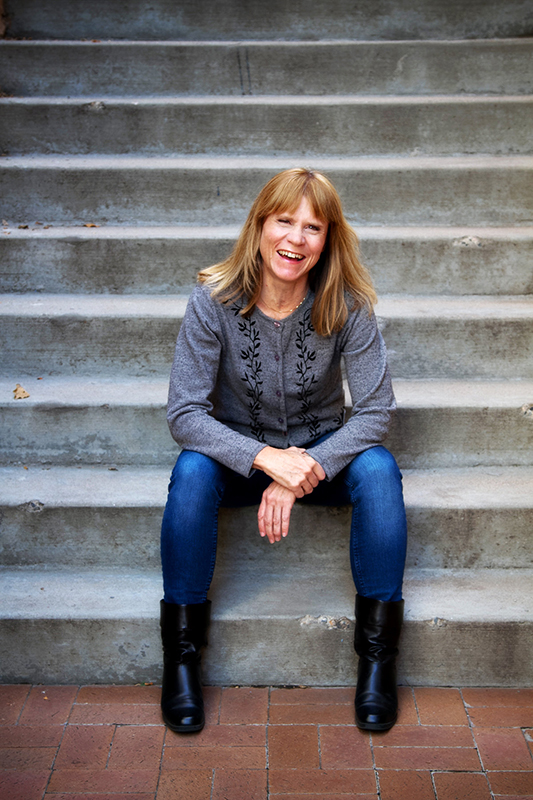
Lisa Call is a visual artist that makes abstract contemporary textile paintings composed of her richly colored hand-dyed fabric. An American ex-pat living in New Zealand, her work is informed by the surrounding landscape and also her fascination with repetition.
Lisa works in series, exploring themes of interest in great depth. She manipulates sections of pre-constructed color, versus applying pigment in small brush strokes, to create each composition. Individual elements are cut freehand and placed onto a flannel-covered studio wall, where she works improvisationally—designing, constructing, and refining the lines and shapes in the piece. Extensive stitching on the surface adds rich texture to the finished work.
Music by Wildermiss
The post The Benefits of Blogging About Your Art with Lisa Call (66) appeared first on Art Biz Success.
]]>Guest posts broaden your audience instantly. You not only receive recognition on the other blog, but you'll hopefully get a bit of traffic to your own. It's free advertising and it's more effective than paid advertising.
Think about it. If you paid for an ad, you'd get a small bit of space. With a guest blog post, you get about 500 words--a much larger virtual space + your images and credit. With a guest blog post, you're being helpful to a community and generating good karma. Not so with an ad.
Write For This Blog
Please note: I no longer publish guest posts on this blog, but I've kept this here for 3 reasons:
- It might help you pitch your story to other blogs.
- I might write your story myself if it meets the criteria below.
- I might want to interview you on the Art Biz Podcast.
From time to time, I feature guest bloggers who share their stories of success (or utter failure). Do you have one to share?
The post Writing A Guest Post for Someone Else’s Blog appeared first on Art Biz Success.
]]>Guest posts broaden your audience instantly. You not only receive recognition on the other blog, but you’ll hopefully get a bit of traffic to your own. It’s free advertising and it’s more effective than paid advertising.
Think about it. If you paid for an ad, you’d get a small bit of space. With a guest blog post, you get about 500 words–a much larger virtual space + your images and credit. With a guest blog post, you’re being helpful to a community and generating good karma. Not so with an ad.
Write For This Blog
Please note: I no longer publish guest posts on this blog, but I’ve kept this here for 3 reasons:
- It might help you pitch your story to other blogs.
- I might write your story myself if it meets the criteria below.
- I might want to interview you on the Art Biz Podcast.
From time to time, I feature guest bloggers who share their stories of success (or utter failure). Do you have one to share?

What has worked for you?
Since this is the Art Biz Blog, I’d like to hear your successful business tips and stories – but only one at a time please.
What–exactly–did you do to get 150 people to your art opening?
How–exactly–did you go from selling $1000 worth of art in your booth to averaging $5000 in sales?
How–exactly–did you get 1,000 people to sign up for your newsletter?
How–exactly–did you get 100 new Facebook likes in one week?
How–exactly–did you sell 25 pieces of art through Twitter in 3 months?
What is your favorite piece of software that you haven’t heard other artists using and how does it help you?
What hasn’t worked?
I’d also be interested in hearing about your failures. They say we learn more from failures.
Where did you waste some money, how did you learn from it and what will you do differently next time?
Why did no one show up at your open studio and what would you do differently next time?
Steps For Guest-Blogging Here
FIRST, pitch me your story.
You must be an authority on the subject, which means that you experienced/lived it or studied it in detail. I do not accept guest posts from professional guest bloggers who are unrelated to the art world.
Tell me what you want to write about in 2 sentence. You have to sell me on the idea.
Email me and tell me what you want to write about and why it would be good for my readers. Don’t start writing until you pitch your idea.
** Publishing etiquette: pitch your idea to only one blog at a time. **
Send me a very clear thought that is straight to the point. I don’t have time to help you formulate your post. I’m looking for a very (very!) specific story. It should be one thing you have done that has worked (or not worked) for you. There should be a clearly articulated lesson in it for my readers. We shouldn’t have to figure out the lesson for ourselves.
Your story must be original. You might have been formulating the content in other posts or articles, but the entire article must not appear anywhere else online.
Your story should not be media specific. It needs to be applicable to most artists. My readership varies from jewelers to painters to sculptors to photographers and beyond.
Your first assignment is to do the above – following directions. If I like your story and want to use it, I’ll ask for the following. Again, please follow directions.
- If you have a story, write it up! I’m looking for 400-800ish words. If you don’t think you can write, don’t fret too much. I serve as your editor and will run any major changes by you at your request. Write your story to my readers. If it contains too many personal pronouns (I, me, my, mine, myself), I can’t publish it. You’re writing for someone else, not for yourself.
- A 1-2 sentence bio that includes what you want to link to.
- A headshot no wider than 125-150 pixels.
- At least 3 outbound links for your article to other sites (not just your own).
- A link to an image of yours to use. Neither it nor the images on your side should have watermarks across the center of the image. I need complete credit line as follows: ©Date, Artist name, Title of work. Media, dimensions (HxWxD). Please send it in this format.
Note: It could take up to 8 weeks or longer to publish accepted posts.
In Return
In return for your guest post, I will:
- Credit you by name and link to your name at the top of the post.
- Credit you again with your headshot and über-brief bio at the bottom of the post, with another link.
- Link wherever you like (within reason!). Your links can go to your blog or website, but they could also go to any offer or promotion you have. Links to specific pages (funneling traffic) are more effective than entire sites.
- Feature your art on the blog post.
- Share it on social media.
- Be eternally grateful that you have helped my readers build their art businesses.
Sample Guest Blogger posts: Maren Bargreen, Lisa McShane, Michael Lynn Adams, Liz Crain
This post was originally published July 5, 2013, and has been updated with original comments intact.
The post Writing A Guest Post for Someone Else’s Blog appeared first on Art Biz Success.
]]>There is plenty of room in the blogosphere for meaningful artist blogs.
With this article, I’m calling on all artists who have it in them to revive their blogs - to recommit to the practice of blogging and the art of improving what you write and share.
Why Blog?
1. Blogging adds fresh content to your site.
Your content is built on a virtual space you own - not Facebook, not Instagram, not whatever-the-next-great-social-media-site-is. It powers up your site rather than turning over the traffic to one that you have no control over.
You can always share your blog posts to the social media channels, but the traffic will then point back to your site.
2. Blogging helps you grow as an artist.
You learn a lot about your art and your goals as an artist when you blog and interact with people.
Almost every artist I know who blogs regularly has shared with me that
The post Revive Your Blog appeared first on Art Biz Success.
]]>I have also, sadly, watched even more artists’ blogs flounder.
There is plenty of room in the blogosphere for meaningful artist blogs.
With this article, I’m calling on all artists who have it in them to revive their blogs – to recommit to the practice of blogging and the art of improving what you write and share.
Why Blog?
1. Blogging adds fresh content to your site.
Your content is built on a virtual space you own – not Facebook, not Instagram, not whatever-the-next-great-social-media-site-is. It powers up your site rather than turning over the traffic to one that you have no control over.

You can always share your blog posts to the social media channels, but the traffic will then point back to your site.
2. Blogging helps you grow as an artist.
You learn a lot about your art and your goals as an artist when you blog and interact with people.
Almost every artist I know who blogs regularly has shared with me that this is their #1 reason for blogging. It may not have been their most important reason for starting a blog, but it’s a strong incentive to maintain it.
3. Blogging can make you an expert.
When you share how-to content, demonstrations, and videos, you can quickly become an expert in your field. This is particularly valuable when want to lead workshops, teach online classes, or write a book.
4. Blogging provides content that you can repurpose.
Think about those times when you had to sit down and write an artist statement, grant or residency application, or complete a submission form. And your mind went blank. Nothing! The struggle was unbearable.

When you regularly write about your art, you build a vocabulary for your art career and business.
Above all, you must write for yourself.
Blog for Yourself
Sounds silly, doesn’t it? That you would spend a lot of time writing without anyone else reading it?
What I mean is that your blog will be more meaningful (to you and to others) if you write to discover more about your art and process.
Write for the sense of accomplishment.
Write because it gives you pleasure to understand your art on a deeper level.
Write because you might connect with someone, somewhere that makes it all worthwhile.
Writing whatever it is you think collectors want to read is often a mistake because the most sophisticated collectors want to get inside your head. They want to know about you, your work, and your life as an artist.
Give them this joy! And make it a joyful process for yourself too.
Patience, Grasshopper
The first hiccup on the road to blogging stardom happens when you realize your blog isn’t a smash hit immediately.
There’s no instant gratification at a blog’s birth. No showering of thumbs-up signs or insightful comments.

The lack of comments, readers, and feedback could leave you despondent if you let it. But you won’t, because you remember that you’re writing for yourself. You’re going to keep it up regardless of who else shows up.
You didn’t become a skilled artist overnight and you shouldn’t expect to be an expert blogger out of the gate.
Be patient, grasshopper. Go easy on yourself and embrace the learning process.
This commitment to a practice is the reason that blogging isn’t for everyone. If you can’t maintain it, your blog will start looking unloved and won’t do you much good.
I advise you to keep your renewed enthusiasm for your blog to yourself until after you’re certain that your commitment will stick.
Are you ready to revive your blog? I’d love to hear your thoughts about blogging and see your blog – just leave a comment and a link below.
The post Revive Your Blog appeared first on Art Biz Success.
]]>How can you design your content so that people keep reading and look forward to hearing from you?
You’re creating a composition not only with your art, but also with words and design elements.
It’s an empty wall on which you showcase your work. Let me emphasize that: The focus should be on your art, not on a decorative font, logo, or the colors you choose.
Every decision you make when creating online content should be about elevating the art.
Having said that, you can elevate the art and retain readers’ interest with these tips.
Images Make An Impact
You are so lucky. You sell something that is visually interesting to look at. This is a big plus in today’s world of online marketing because images have become paramount.
Exploit this advantage!
The post Improve the Visual Impact of Your Email, Blog, and Website appeared first on Art Biz Success.
]]>How can you design your content so that people keep reading and look forward to hearing from you?
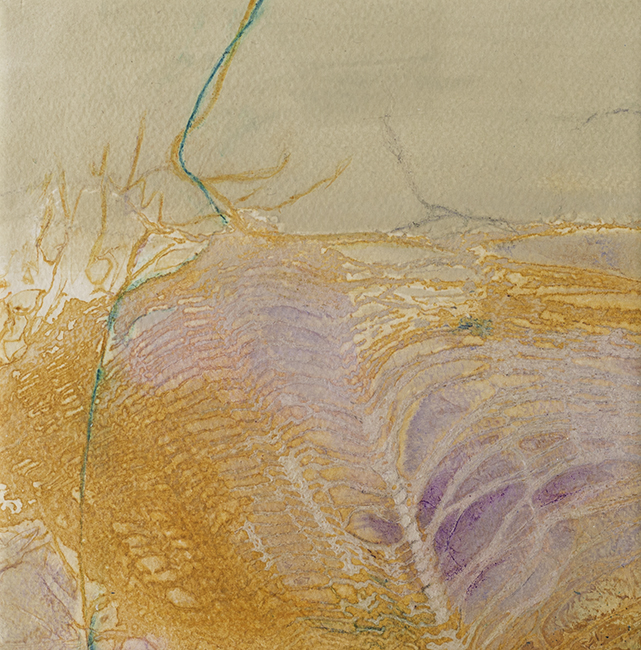
You’re creating a composition not only with your art, but also with words and design elements.
It’s an empty wall on which you showcase your work. Let me emphasize that: The focus should be on your art, not on a decorative font, logo, or the colors you choose.
Every decision you make when creating online content should be about elevating the art.
Having said that, you can elevate the art and retain readers’ interest with these tips.
Images Make An Impact
You are so lucky. You sell something that is visually interesting to look at. This is a big plus in today’s world of online marketing because images have become paramount.
Exploit this advantage!
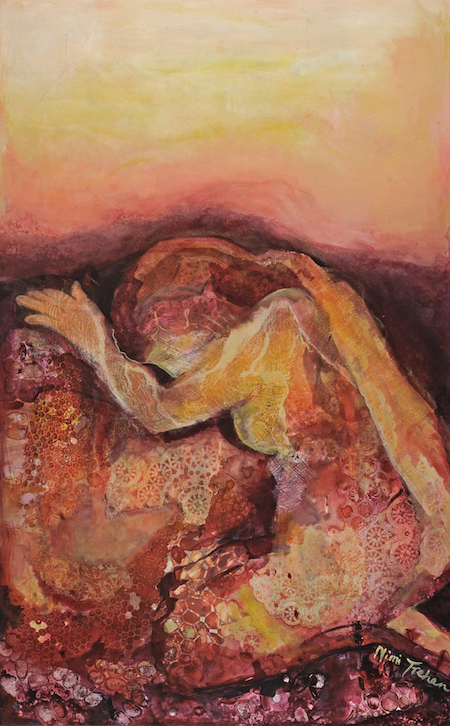
Use big, beautiful images of your art in your emails, blog posts, and Web pages. Notice I used the word “big.” Tiny images rarely make an impact or encourage interest.
Take up at least 75% of the width of your column with your images unless the image is extremely vertical. Vertical images can be narrower.
Readers will be compelled to scroll when they see glimpses of more images.
Note: Image captions are often read before or instead of other text. Don’t forget the credit lines and perhaps an opportunity to add colorful descriptions to image captions.
Subheadings Divide Your Text
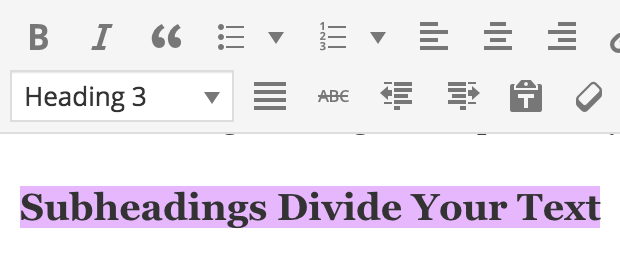
H2 or H3 heading tags (used to code the purple underlined words above) divide up your text on a website or blog post. Think of them as section headings in an outline.
Subheadings tell search engines what’s important on a Web page.
In an email, subheadings differentiate one piece of content from the next.
Once you customize the formatting for H3 (Heading 3) tags on a WordPress site, it’s easy to add subheadings to your text.
All you have to do is highlight the text and assign the formatting:
Short Paragraphs Rule
Forget about the rules for your high-school English papers and embrace the white space on your screen!
Short paragraphs break up dense text, making it easier for people to digest each thought and skip to what is of interest to them.
Aim for paragraphs that are only one or two sentences. Really! It may seem strange to write such short paragraphs if you’ve never done it before, but it’s a whole new world online.
Lists Categorize Your Thoughts
Vertical lists with numbers or bullet points:
- Group major points together.
- Make your text easy to scan.
It’s hard to pick out important points that are separated only by commas within a crowded paragraph.
Bold Attracts Attention
Use bold text to emphasize what you don’t want people to miss.
And … use it sparingly. If everything looks important, then nothing looks important.
Indented text in a different font, color, or background color also adds variety to the monotony of text.
Your Turn
What have I forgotten?
Feel free to share a blog post link from you or anyone else that you think has especially strong visual appeal. And tell us why.
The post Improve the Visual Impact of Your Email, Blog, and Website appeared first on Art Biz Success.
]]>My calendar says "Writing Time." Every Friday at this time is blocked out to write. I like going into my weekend knowing that I have written something that will contribute to next week's newsletter and blog post.
I wish I could say it's as easy as marking off to write, and it will happen.
It doesn't always work that way for me. Actually, it rarely works that way for me.
Today I don’t feel like writing. I don’t feel like doing much of anything.
Everything seems to distract me. Do you know this feeling?
The post Seeking Inspiration While Topic Hopping appeared first on Art Biz Success.
]]>My calendar says “Writing Time.” Every Friday at this time is blocked out to write. I like going into my weekend knowing that I have written something that will contribute to next week’s newsletter and blog post.
I wish I could say it’s as easy as marking off time on your schedule to write, and it will happen.
It doesn’t always work that way for me. Actually, it rarely works that way for me.
Today I don’t feel like writing. I don’t feel like doing much of anything.
Everything seems to distract me. Do you know this feeling?
For some reason I keep writing because I have so many deadlines: this newsletter, content for a workshop, the upcoming Creative Content Camp, and the next lesson for the Art Career Success System.
I sift through the notes I’ve created in Evernote.
I have an editorial calendar, but I’m not inspired by the topic I’ve chosen for this week. Surely there’s something that’s more interesting.
Nope. Not this week.
What is this about?
Nothing catches my eye. Absolutely nothing.
I go through old blog posts. Sidetracked! But I find gold – not just in my articles but also in the comments. My readers share loads of valuable comments.
I decide that the blog posts are interesting and that I should work a little on my new book. (Oops! I probably wasn’t supposed to say that. Now the cat’s out of the bag.)
This is fun! I’m capturing all kinds of ideas as I stroll down memory lane in the comments of my blog.
I keep plugging along.
Hopping from topic to topic to topic.
I recall the post I wrote about doing the work even when you don’t feel like it because that’s what professionals do. They don’t wait for inspiration to strike. They do the work because that’s just what they do. [Tweet “Professionals don’t wait for inspiration to strike. They do the work.”]
So I think, Hey! This is an article in itself. The struggle to write a weekly article.

And I start a new note in Evernote with the temporary title, “How This Article Happened.” I know that won’t be the title, but at least it has a placeholder that I can find.
I don’t attach a date to it because I don’t know when I will publish it.
I type type type in order to capture what has transpired to this point. I don’t want to lose my thoughts.
Don’t you hate it when you are struck by a really good idea and then forget what it was?
Through this process – on this Friday alone – I have:
- Created a new article
- Added content to an upcoming module for my students
- Updated the outline for my new book (Yikes! There I go again!)
Now I’m ready to tackle that article idea from my editorial calendar that didn’t seem so interesting a couple of hours ago. This is the post that was the result.
Two Mondays Later
Apparently I missed (again) my Friday writing-for-the-blog schedule, and I’m writing on a Monday. It’s closer to my deadline than I’m comfortable with, and it’s now or never.
I dive headfirst into two topics and crank out about 1,000 words on each of them.
I am uninspired to finish either for this week’s article, as if I needed more proof that satisfaction with one’s work is hard won.
I return to Evernote to add more to this article that I started 10 days ago.
Then, out of nowhere, Boom!

I remember a personal experience that could be turned into a valuable piece of content. I am inspired and, almost effortlessly, this article is birthed.
Today I’ve worked on at least 5 articles.
One Month Later and The Big Lesson
Here I am – finally ready to share this. Here’s what I want you to get out of it: Content, at least for me, doesn’t come quickly and easily. I have to let it simmer.
MOST people have to let it simmer, especially if they want it to be worthy.
Creating content for your blog, newsletter, and social media is a process, and artists who think strategically will honor this process instead of having a let’s-just-get-this-over-with attitude.
Your Turn
Is writing difficult for you? Do you get distracted?
What are your biggest struggles around creating content (writing or otherwise) for your newsletter, blog, or social media?
The post Seeking Inspiration While Topic Hopping appeared first on Art Biz Success.
]]>The post Searching for Content for Your Artist Blog appeared first on Art Biz Success.
]]>What I didn’t say is that it’s only a gold mine if you are consistently committed to blogging and to improving with each post. You can only fulfill this commitment with rich content.
But what do you write about and where do you find it? It’s probably not under the wood boards of the deck, but you never know.

On pages 143-44 of I’d Rather Be in the Studio, I lay out 32 specific ideas for newsletter or blog post content. But before you can make that list useful to you, you must know your purpose.
Who Are You Writing For?
What you write about will depend on your goals as an artist.
How do you want to position yourself? Who do you want to read your blog?
The answers to these questions are necessary before you trust the resources for content that I share below.
Listening to Find Content
The most important tip I can give for finding good content is to listen up. Listen – depending on your goals – to what the following people are saying in conversation:
- Your collectors
- Your students
- Your artist-friends
- People commenting on your blog
- Your Facebook friends and fans
- People you follow on Twitter
How could you help them solve their problems with a blog post?
How could you piggyback on a trending topic?
How could you enlighten them about your work?
Out-of-Network Sources
While you always want to be responsive to your community, you also want to be part of a bigger dialogue around art.
Think like a journalist looking for her next assignment. Be present for conversations and capture everything you think has potential.
You’ll uncover infinite possibilities in the following situations:
- Artist talks and art lectures
- Art films and documentaries
- Lectures, films, and books related to your niche market
- Books about art and artists
- Newspapers
- RSS feeds from other blogs
Not to spoil the party, but don’t be alarmed if you later toss out 95% of your potential ideas. It’s part of the process.
What’s most crucial is that you don’t let the 5% of ideas disappear into the ethers.
My Favorite Places for Finding Content
Most of my blog posts and social media updates come from these sources:
- Your comments on my blog posts
- Your questions
- Conversations with artists at openings and studios or over coffee
- Zite or Flipboard (personal “magazine” apps for my iPad)
- Artist talks and lectures
If you’re soaking up the potential around you, you’ll collect content that will keep your blog well fed for years.
The post Searching for Content for Your Artist Blog appeared first on Art Biz Success.
]]>The post The Gold Mine in Your Artist Blog appeared first on Art Biz Success.
]]>It’s tempting to just jump to another social media site. Google+ anyone?. I would encourage you, as I always have, to build up content on your site first.
As this Facebook brouhaha has reminded us, we don’t own social media sites. Their stockholders do. We will never be in control of what they do with their platforms or how they make money.
But we do own and can control our own sites. We can build up beautiful content, links, and Google juice on a blog.
Wouldn’t you rather have the traffic than sending it all to Facebook?
It’s time to rediscover the gold mine in your blog.

Where’s the Gold?
Here are four reasons why your blog is a gold mine.
1. Blogging helps you become a content juggernaut.
When you commit to blogging, you commit to creating content. This means publishing articles and images on a regular basis.
After a period of time, you might begin to leverage that content by repurposing it for guest posts, magazine articles, brochures, exhibition labels, grant applications, and more.
With a horde of content under your belt, it’s much easier to say Yes to opportunities because you are confident you can follow through.
How do you think I’d Rather Be in the Studio was written?
2. Blogs help you build an audience by connecting with readers on a personal level.
Facebook does this, too, but we’ve already been over that.
It’s easier to build relationships with people after you’ve proven they can trust you. You create a supportive community by listening and responding to blog comments.
Since your mailing list is your #1 asset, it’s critical to do what you can to add more people to it.
3. Blogging makes you an expert.
If you want to be a leader in, for example, the collage or metalsmithing world, you’d better be blogging.
Building content shows potential students, workshop venues, and publishers that you know what you’re talking about. And you can take it to the bank that other artists interested in the same status will also be blogging.
4. Blogging leads to self-discovery.
You can’t help but learn more about your art, yourself, and your dreams when you blog and interact with people.
Almost every artist who blogs regularly has shared the above benefit as their #1 reason for blogging.
Start Mining
How are you going to turn your blog into a gold mine?
The post The Gold Mine in Your Artist Blog appeared first on Art Biz Success.
]]>Deep Thoughts received most of the comments, but there were also some surprises - including the most commented-on post of the year.
The Hot Winners >> Exploring lower-priced work to increase your income. Affordable Art as an Option . . .
The post Hottest Art Biz Blog Posts of 2013 appeared first on Art Biz Success.
]]> As is custom, Deep Thoughts received most of the comments, but there were also some surprises – including the most commented-on post of the year.
The Hot Winners
Exploring lower-priced work to increase your income. Affordable Art as an Option
What do you do after being rejected? Rejection Rituals
Some connections can be detrimental to your art, your emotional well-being, and your growth. Beware of Poisonous Relationships
There are a lot of “organizations” around that are disorganized and, therefore, dysfunctional. 10 Reasons to Burn Your Art Group Membership Card
You teach people how to treat you and your art. 16 Ways to Demonstrate Your Art Has Value
New to the gallery scene? What Artists Should Expect from Galleries at Openings
Not surprisingly, What Galleries Should Expect from Artists at Openings had much less engagement.
The upside of working with galleries. Why Artists Should Embrace Galleries
Whittling down your portfolio into a cohesive exhibition can be daunting. The First Step to Curating Your Art
How do deal with failure? Or is there such a thing? The Role of Failure in Your Art Practice
When 1 domain name isn’t enough. Why You Might Need Additional Domain Names for Your Art
I have witnessed too many artists deal with illness – temporary, chronic, and fatal. Artists and Illness
THE Most Commented-On Post of 2013
I am tired of watching artists and arts organizations live on leftover scraps. Are You Too Frugal?
What did you share in 2013 that was most engaging? Leave a link to it in a comment below.
The post Hottest Art Biz Blog Posts of 2013 appeared first on Art Biz Success.
]]>The post Mind Mapping Your Ideas and Events appeared first on Art Biz Success.
]]>A mind map is a tool for brainstorming or organizing your ideas.
Mind maps are perfect for creatives and artists because they put words and ideas in a visual format.
In contrast to the way we write (linear, left-to-right, up to down), mind maps explode from the center. Related thoughts branch out from the core. It’s easier to explain with an image.

When to Use a Mind Map
Mind maps can be used to generate ideas for anything. Consider creating mind maps for:
- Your next piece of art
- A class you’re teaching
- A marketing campaign
- A talk you need to give
- A blog post
- Your newsletter
But mind maps can also be used to organize something you’ve already created in order to help you understand it better. I mind-mapped the content on ArtBizCoach.com when I wanted to revamp the site.

I used to use a program called My Thoughts for Mac to create mind maps on the computer. It’s good to start with pen and paper, but I find that I like to move things around quickly, which this program allows me to do. (Sadly, they no longer make this program and I haven’t found a good replacement.)
I’m sure you can find similar programs for PCs, but I would caution anyone who wants to use the computer for mind mapping to look for the simplest program available. There are many out there that are too complicated.
Mind mapping should be EASY. You should be able to do it quickly to keep the brainstorming process fluid.
The resulting map might look complicated, but it shouldn’t be difficult to get to that point.
To Mind Map an Idea
Follow these steps to use mind-mapping in your brainstorming session.
1. Draw a circle in the center of the page. Inside the circle, write the topic under consideration.
2. Start your branches from the center. Your first branches will be the main subtopics of your idea.
3. Add additional thoughts to the ends of these branches until you’re out of juice.
You can see that this could go on forever!
Use your mind map to create detailed outlines for your writing or plans for your events.
The post Mind Mapping Your Ideas and Events appeared first on Art Biz Success.
]]>