beyond white walls Archives - Art Biz Success https://dy-online.com/tag/bww/ Trusted Art Business Coaching and Consulting Sun, 09 Aug 2026 16:21:25 +0000 en-US hourly 1 https://wordpress.org/?v=7.1.4 https://dy-online.com/wp-content/uploads/2022/02/favicon-2-150x150.png beyond white walls Archives - Art Biz Success https://dy-online.com/tag/bww/ 32 32 Use the attraction method for art venues before you make the ask (265) https://dy-online.com/attraction-method/ Thu, 30 Apr 2026 13:04:00 +0000 https://dy-online.com/?p=59170 So many artists reach out to venues too soon — before the relationship exists and before the venue has any reason to say yes.

Introducing the attraction method for building visibility with a space manager/director/curator long before you make an ask. It removes the awkwardness and allows you time to ensure a good fit. When the time comes to ask for a show, you're not a stranger.

The post Use the attraction method for art venues before you make the ask (265) appeared first on Art Biz Success.

]]>

There’s a version of reaching out to a venue that feels like a cold sales call: awkward, transactional, easy to ignore on the other end. And then there’s a version that flows like a natural next conversation with someone who already knows you’re serious.

The difference isn’t luck or connections. It’s preparation and timing.

I call it the attraction method: a way of showing up for a venue long before you ask for anything. The core idea is simple. Venues aren’t looking for artists who need them. They’re looking for artists who are ready for them.

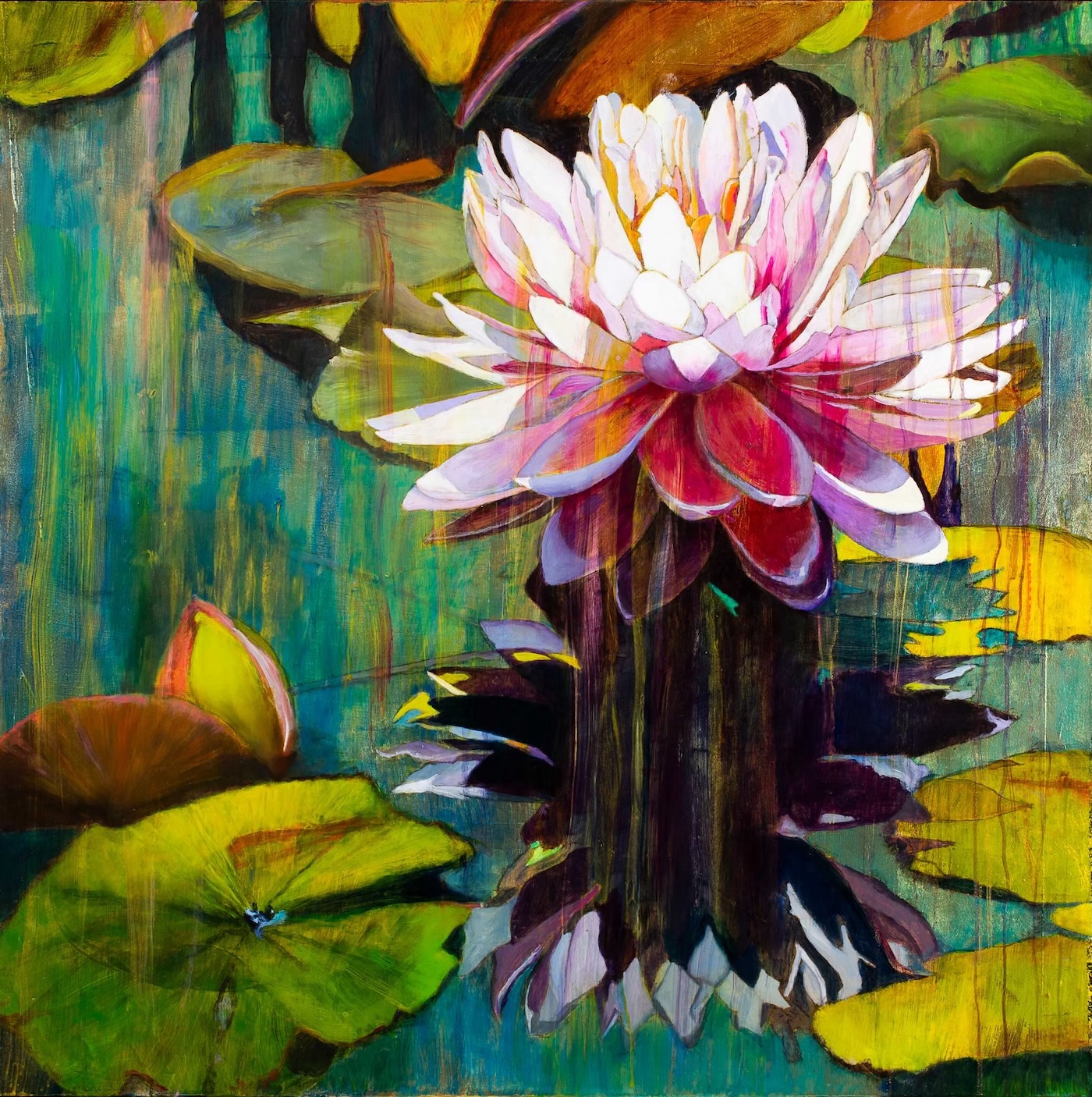
Christie Marks oil and acrylic painting of a large pink and white lotus flower with dramatic, dripping rich colors like magenta, turquoise, and yellow in the water’s reflection
©Christie Marks, Lilies #3. Oil and acrylic paint over composite gold leaf, 36 x 36 inches.

What it means to be ready

Readiness isn’t just having finished work. A venue decision-maker, whether it’s a gallerist or a coffee shop owner, is assessing you quickly (we all form quick opinions these days).

What they see has to signal that you’re a serious professional worth their time and wall space.

That means:

  • Your work is professionally framed and properly prepared for installation.
  • Your online presence reflects an active career.
  • You can talk about your work, and present a case for it, with confidence.

Let’s pause to emphasize that last one. The ability to have a real conversation (not a pitch, a conversation) is what separates an artist worth knowing from someone who just needs a wall.

[ Start with spending time on your artist statement. ]

Of course, venues specific to the art world will put more weight on these than alternative venues, but you might as well practice for the big show. 

The timeline for galleries versus alternative venues

Before I get to the details, it’s important to know that I originally developed the attraction method with galleries and museums in mind. Here’s why.

Getting into a serious gallery can take years of groundwork: researching and visiting multiple times, connecting on social media with substance, sending postcards consistently, attending openings, getting to know artists in the gallery’s stable, building familiarity before inquiring.

Museum exhibitions operate on even longer timelines because of the bureaucracy involved and funding needed.

At the heart of these long runways lies a truth that is critical to understand: those in charge of art world institutions prefer to do the choosing rather than responding to inquiries.

Alternative venues work differently. A boutique hotel, a winery, a coffee shop. These spaces typically have one decision maker who is far more accessible than a museum curator. The path from first contact to a yes can be weeks. Sometimes mere days. Not as much relationship building is needed.

I want to be clear that while galleries can be fantastic for your art career, their white-walled spaces shouldn’t be the only ones on your radar. They definitely shouldn’t be the bottleneck.

[ See The artists who don’t wait to be chosen (264) ] 

How to apply the attraction method to alternative venues

Even with a shorter timeline, the fundamentals still apply.

Do your homework before you visit. 

Look at the venue’s website, all of it. Check their social media. See if they have media coverage. Get a sense of their aesthetic, their audience, their programming.

Find other artists who have shown there before and ask about their experience.

Visit in person before you announce yourself. 

Go as a customer first. Assess the lighting, the wall surfaces, the hanging options, the traffic patterns, anything distracting patterns that might compete with your work.

Go when it’s busy, then when it’s quiet. Take notes. Add everything to what I call an Opportunities Tracker, a database for spaces where you see real possibility.

When you do reach out, make it clear you’ve been paying attention. 

There’s a significant difference between “Can I show my art here?” and “I’ve been coming in for a few months and I think my work would really resonate with your clientele.” One is a pitch. The other is the start of a real conversation.

If you’ve become a genuine part of the space’s community (going to their events, buying something, bringing a friend) you shouldn’t be surprised if they’re the ones who ask about your availability to show there.

The result of doing this consistently

When you build relationships before you ask, two things shift. You stop waiting to be discovered, and you stop the premature inquiries.

You become someone worth noticing. And the ask, when it comes, doesn’t feel like a pitch to either party. It feels like the obvious next step.

Listen

The post Use the attraction method for art venues before you make the ask (265) appeared first on Art Biz Success.

]]>
The artists who don’t wait to be chosen (264) https://dy-online.com/not-waiting-to-be-chosen/ Wed, 22 Apr 2026 17:22:22 +0000 https://dy-online.com/?p=59112 Waiting for gallery representation or other opportunities to cross your path is a common theme I see among artists, but it’s not a good strategy.

In this episode, I make the case for taking control of where and how your work is seen, with real examples of artists who showed up in unexpected places and made it work. If you've been cycling through juried shows or hoping a gallery will find you, this one is worth your time.

The post The artists who don’t wait to be chosen (264) appeared first on Art Biz Success.

]]>
We all know that the only opportunities available to you aren’t the ones other people initiate.

Yet it’s a bad habit that so many artists need to break: waiting for gallery representation, hoping to be discovered, or cycling through the same juried shows year after year because the application crossed their desk and it felt like an opportunity they should take.

I understand the appeal. A gallery taking over your sales sounds divine. But for most artists, it stays a fantasy because galleries will never notice them in the confines of that juried show.

The waiting keeps you from creating your own opportunities. And makes you beholden to the art world gatekeepers.

[ See: Art World Gatekeeping Forces Artists to Compete with Damien Davis (254) ]

In episode 264 of The Art Biz, I make the case for thinking differently about where and how your work gets seen.

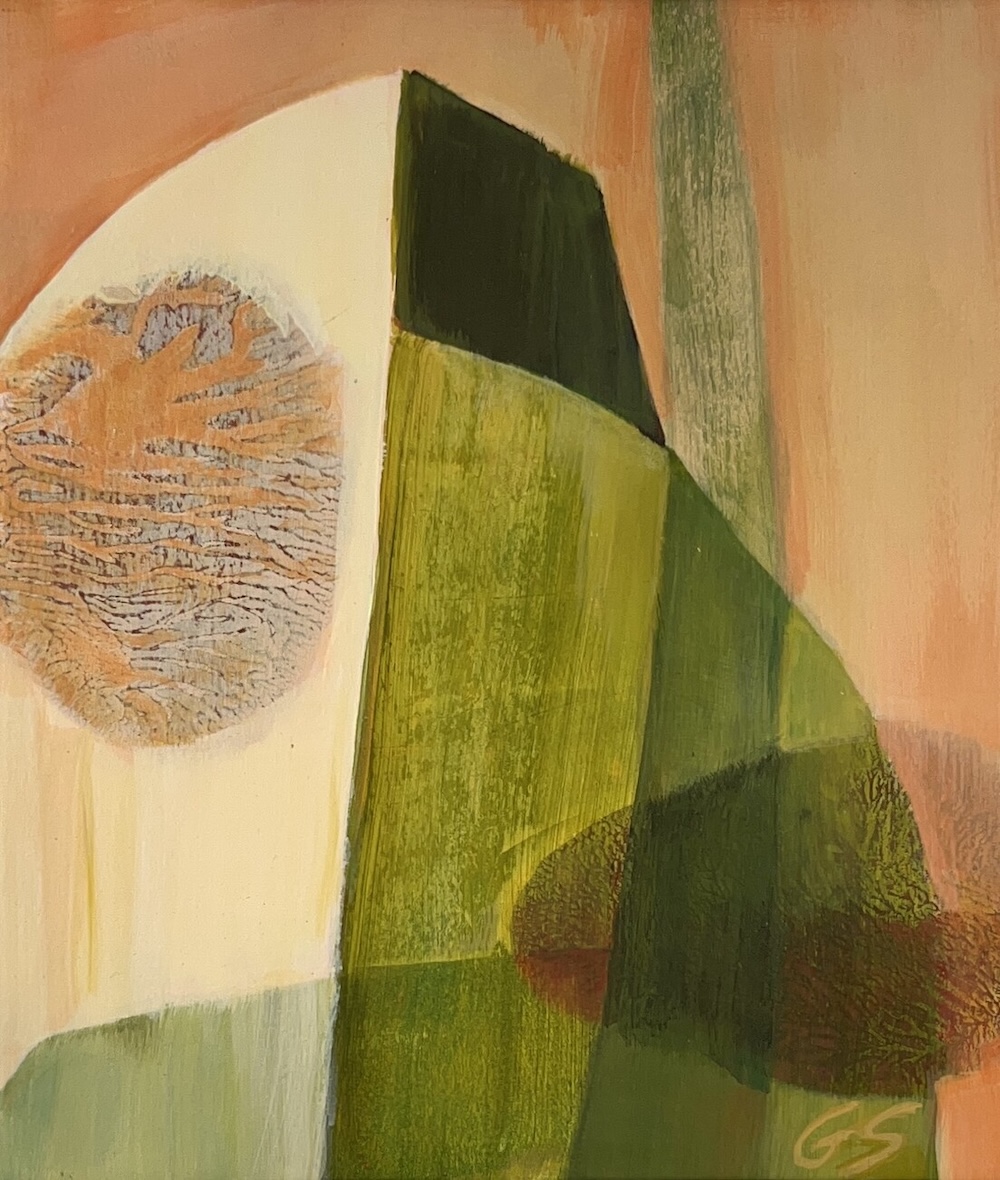
Abstract acrylic painting by Gail Salzman of a combination of large geometric blocks and curved, organic elements in earth tones of olive green and ochre contrasted with softer tones of peaches and tans.
©2024 Gail Salzman, Dwelling 2. Acrylic and paper on board, 7.5 x 6.25 inches.

What "white walls" really means

I love a pristine gallery wall as much as anyone. Clean, neutral, the perfect backdrop for original work. But white walls have also become a metaphor for an ideal situation. Perfect conditions or the right venue.

Juried shows are the other version of this trap. You pay entry fees, get selected, compete with fifty or a hundred other artists also chosen, and hope your work stands out in a crowd. It rarely does.

There’s nothing about that format that puts your work in the spotlight. You are one of many, and the show was never designed to feature you.

What I want for you is different. I want you taking control by curating your own opportunities, choosing venues that actually serve the work, and getting in front of the people most likely to connect with it.

This is most critical when you are trying to make a living from your art.

Three shows I'll never forget

I want to give you some real examples, because abstract encouragement only goes so far. The first is the most extreme version of outside-the-box thinking.

A plumbing junkyard

I was in far north Boulder, Colorado on a hot July day in 2007, and pulled into a parking lot for a plumbing junkyard. The attendant (for a plumbing junkyard!) asked: “Are you here for the plumbing or the art?” I am fairly certain that question has never been asked before or since.

Artist Lori Wahl had installed her thesis exhibition throughout the junkyard: video, sound sculptures tucked inside pipes, sinks, and toilets, work you had to seek out and interact with.

Not every artist makes work appropriate for showing in a junkyard, but it showed what imagination looks like when it’s fully unleashed.

A borrowed home

The second example was a home show by artist Kathleen O’Brien. She lived in Kentucky but knew people in Colorado, so she arranged to borrow a home and invited people in to see and purchase her work.

It was a thoughtful installation of original pieces on the walls, small prints beautifully displayed on tables, artist books, and cards. It worked because the host believed in her work and brought the right people. A borrowed home can be one of the most intimate and effective exhibition spaces available to you, and it costs far less than renting a gallery.

A rented hotel conference room

The third example is a group of four artists who rented a hotel space for one night only. They set up separate booths with wall panels, lighting, and smaller items on tables, and it was well attended.

But here’s the lesson that stung a little: I nearly missed it entirely. I knew two of the artists personally. I live in the same town. And they never reached out to me directly. They posted on Facebook and assumed I’d see it. I almost didn’t.

Getting the venue is only half the work. Once you have a space, you need people to actually show up — and that comes down to how you communicate. I’ve written about the difference between announcing, commanding, and inviting, and it’s worth reading before you start promoting any exhibition.

[ How to write an art show invitation: announcing, commanding, or inviting? ]

The opportunities you create yourself

The possibilities for showing and selling your work are limited only by your imagination — and sometimes, honestly, your ego. The ego that insists the only worthy venues are the ones with four white walls and a director who chose you.

We wouldn’t know Impressionism as a capitalized -ism if these artists hadn’t set up their work in a photographer’s studio and invited the critic who, fortuitously, gave it its name. 

What buzz could you create if you look beyond the gatekeepers?

Listen

The post The artists who don’t wait to be chosen (264) appeared first on Art Biz Success.

]]>
Why the lone artist mindset keeps you small (263) https://dy-online.com/lone-artist/ https://dy-online.com/lone-artist/#comments Thu, 16 Apr 2026 15:57:13 +0000 https://dy-online.com/?p=58881 Going it alone feels easier. No coordination, no compromise, no communication overhead. But the artists building the careers you admire are rarely doing it alone.

In this solo episode, I make the case for collaboration as a strategic habit, not a one-time favor. I shares real-world examples, explain what makes them work, and offer a question to ask the next time you're planning a show or a new body of work.

The post Why the lone artist mindset keeps you small (263) appeared first on Art Biz Success.

]]>
Going it alone is easier. There’s less coordination, fewer decisions to negotiate, and no one else’s timeline to work around.

That’s exactly why it’s our default.

But in this episode, I make a clear case: the lone-artist habit keeps you small. 

After decades of studying artists who are making a living from their art, whose reach keeps growing, and whose work accumulates meaning over time, I’ve noticed a pattern. These artists almost never go it alone. They don’t just accept collaboration when it falls into their lap, they seek it out. They look at a project and ask: Who else belongs in this story?

Who else

belongs in this story?

That question is a habit you can start building. And it’s one that changes the scale of what’s possible.

Why collaboration is worth the effort

The practical reasons alone are compelling. When you collaborate, you’re not carrying everything alone. You have real people to brainstorm with. There’s built-in accountability, because others are depending on you to follow through.

Every collaborator also brings an existing audience. Cross-pollination of mailing lists, networks, and attention is something you can’t manufacture on your own — no matter how large your following already is.

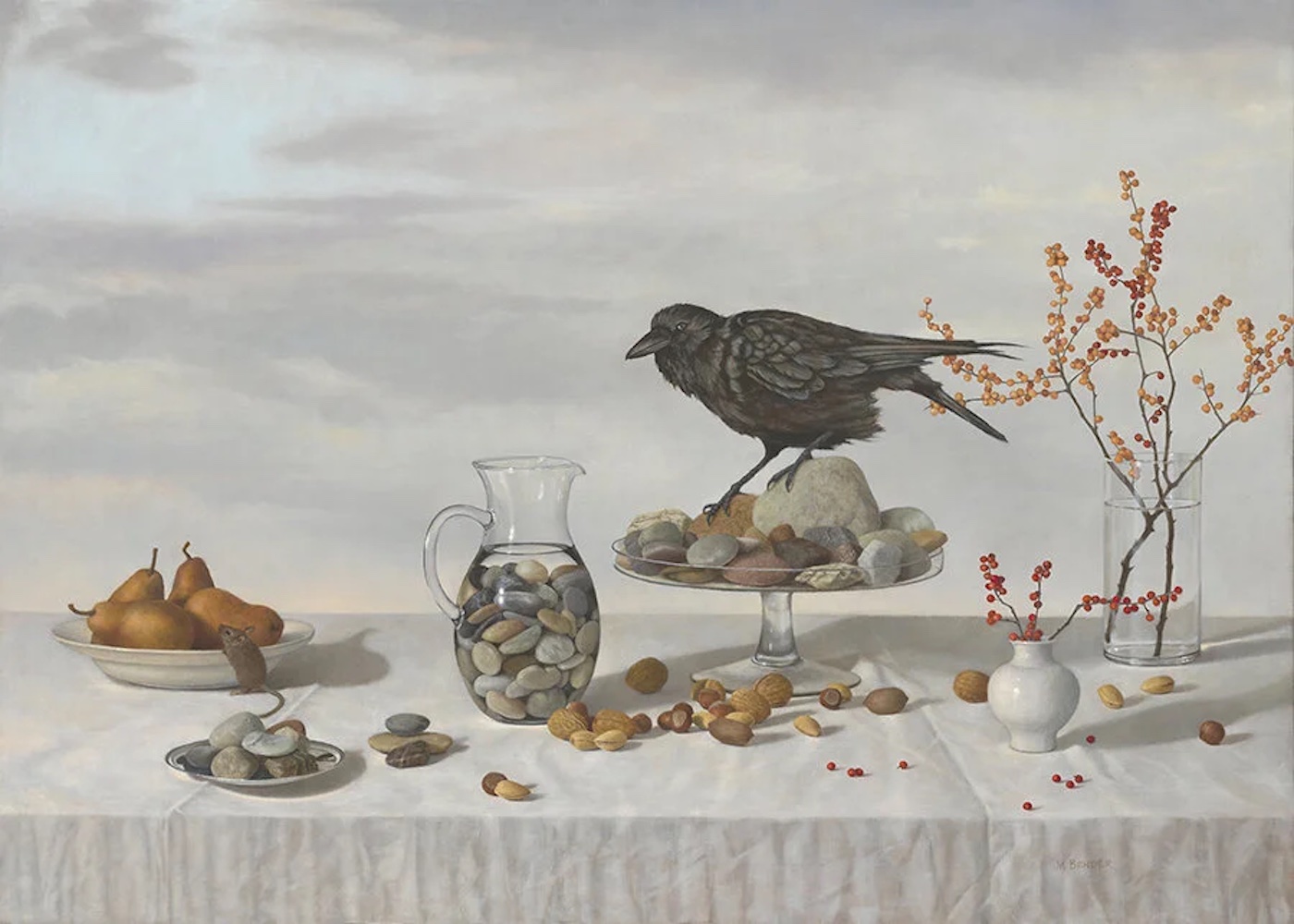
Marie Bender Still life painting of a black crow perched on a dish surrounded by rocks, a pitcher of rocks, nuts, pears and floral elements
©Marie R. Bender, The Crow and the Pitcher. Oil on canvas, 30 x 42 inches.

But perhaps the most important reason goes beyond logistics.

When you’re seen working with other artists, you become part of a larger dialogue. Curators, gallerists, and collectors find it easier to place your work in context. Their shows capture what’s happening at a given moment in time. Work that speaks to other work gets noticed.

What it actually looks like

Here are two examples from the archives that show how far this thinking can go.

Both artists prove that when you open your process, your art stops being just an object. It becomes a living experience.

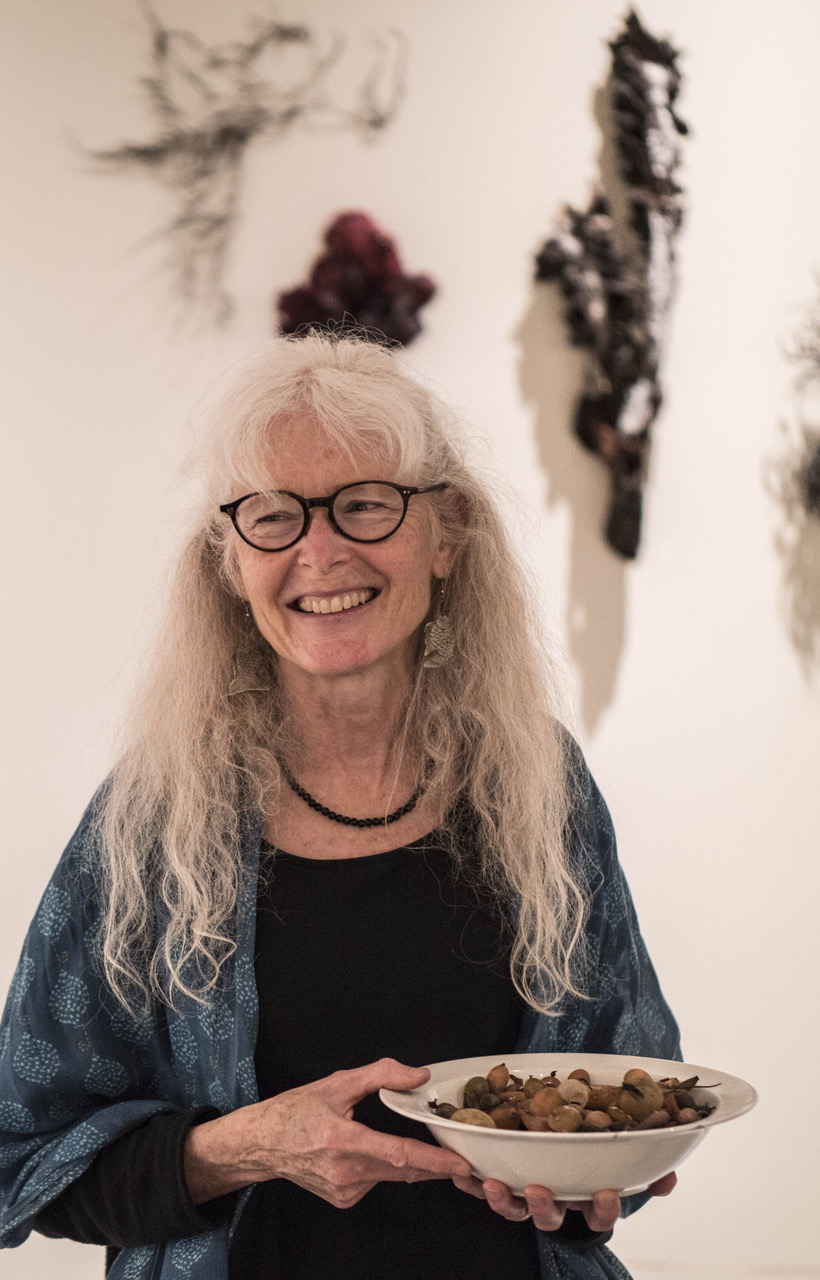
Sculptor and installation artist Jill Powers (episode 27) builds entire collaborative ecosystems around her environmental themes.

For a show on ocean ecology in landlocked Colorado, she partnered with chefs and mixologists to create seaweed menus and signature cocktails, ultimately raising money for a youth-led marine conservation group and landing major coverage in the Denver Post.

She also brought in a university geologist who led 60 people on a hike to find ancient seashells embedded in Colorado rocks.

Jill’s work and approach to sharing it blur the line between art and the rest of the world.

Listen to the episode

Colorado artist Jill Powers with some of her art.

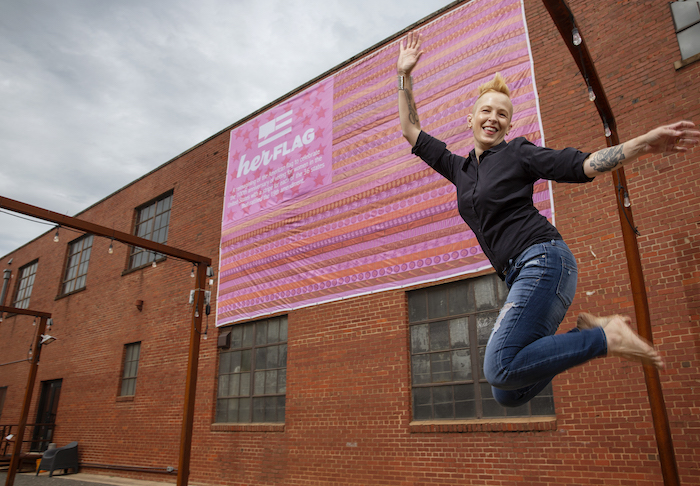
Marilyn Artus (episode 30) created a nationwide collaboration titled Her Flag to mark the 100th anniversary of women earning the right to vote.

Oklahoma artist Marilyn Artus in front of Her Flag. Celebrating the 100th anniversary of the 19th Amendment.

She partnered with 36 women artists — one from each state that originally ratified the 19th Amendment — intentionally mixing book illustrators, graphic designers, and fine artists. She insisted on paying every collaborator.

She turned the assembly itself into a live public event, sewing each state’s stripe of the enormous 18-by-26-foot flag alongside local poets, musicians, and historians.

Listen to the episode

What makes a collaboration work

The key is clarity before you start. And I mean real clarity, put in writing, even with friends. Especially with friends. Ambiguity and misguided expectations kill collaborations faster than almost anything.

Beyond that:

  • Define roles and leadership upfront. Who is responsible for what.
  • Make sure everyone is genuinely committed before you proceed. Don’t try to talk anyone into it.
  • All sides have to see the benefit clearly.
  • Acknowledge everyone who contributes, generously and repeatedly.

None of this means collaboration is easy. You won’t always get your way, miscommunication is real, and the pressure of knowing others are depending on you takes some getting used to. But that pressure is worth it with the right people and clarity in place. The creative, professional, and relational growth on the other side is real.

The reason you probably aren’t collaborating more is probably because you’re too busy going it alone. Being busy. Consider this your nudge.

Listen

Take a moment to think about your current work or an upcoming project.

Who could bring a new perspective, audience, or energy to it? Sit with that question before you decide your next step.

Alyson Stanfield Quotes

  • “It’s key that your art drives what you do, who you collaborate with, where you show it.”
  • “Working alone is just easier. There’s less mess, there’s less coordination, less communication, less negotiating.”
  • “They look at their projects and ask, who else could be part of this? Who else belongs in this story?”
  • “If you think about it, every time you show your art in public, you’re collaborating.”
  • “When you are seen working with other artists, you become seen as part of a larger community of artists. You become part of the dialogue.”
  • “The artists who stay small often aren’t making conscious decisions to stay small. You’re just defaulting to what’s easiest.”
  • “Ambiguity kills collaborations and friendships faster than almost anything.”
  • “Credit is not a finite resource. Share it generously and publicly acknowledge everyone who contributes.”

The post Why the lone artist mindset keeps you small (263) appeared first on Art Biz Success.

]]>
https://dy-online.com/lone-artist/feed/ 1
This artist turned 5 partnerships into a sold-put gallery show with Meredith Nemirov (262) https://dy-online.com/sold-out-nemirov/ Thu, 09 Apr 2026 12:22:00 +0000 https://dy-online.com/?p=58668 Getting buy-in for an ambitious exhibition idea means giving people a reason to say yes before you walk in the door.

In this episode, Colorado artist Meredith Nemirov shares how she built a sold-out show by approaching a national nonprofit before she called her gallery, giving collaborators options rather than demands, and activating the show across multiple events. The result was six invested partners and a show that sold out by the end of the summer.

The post This artist turned 5 partnerships into a sold-put gallery show with Meredith Nemirov (262) appeared first on Art Biz Success.

]]>
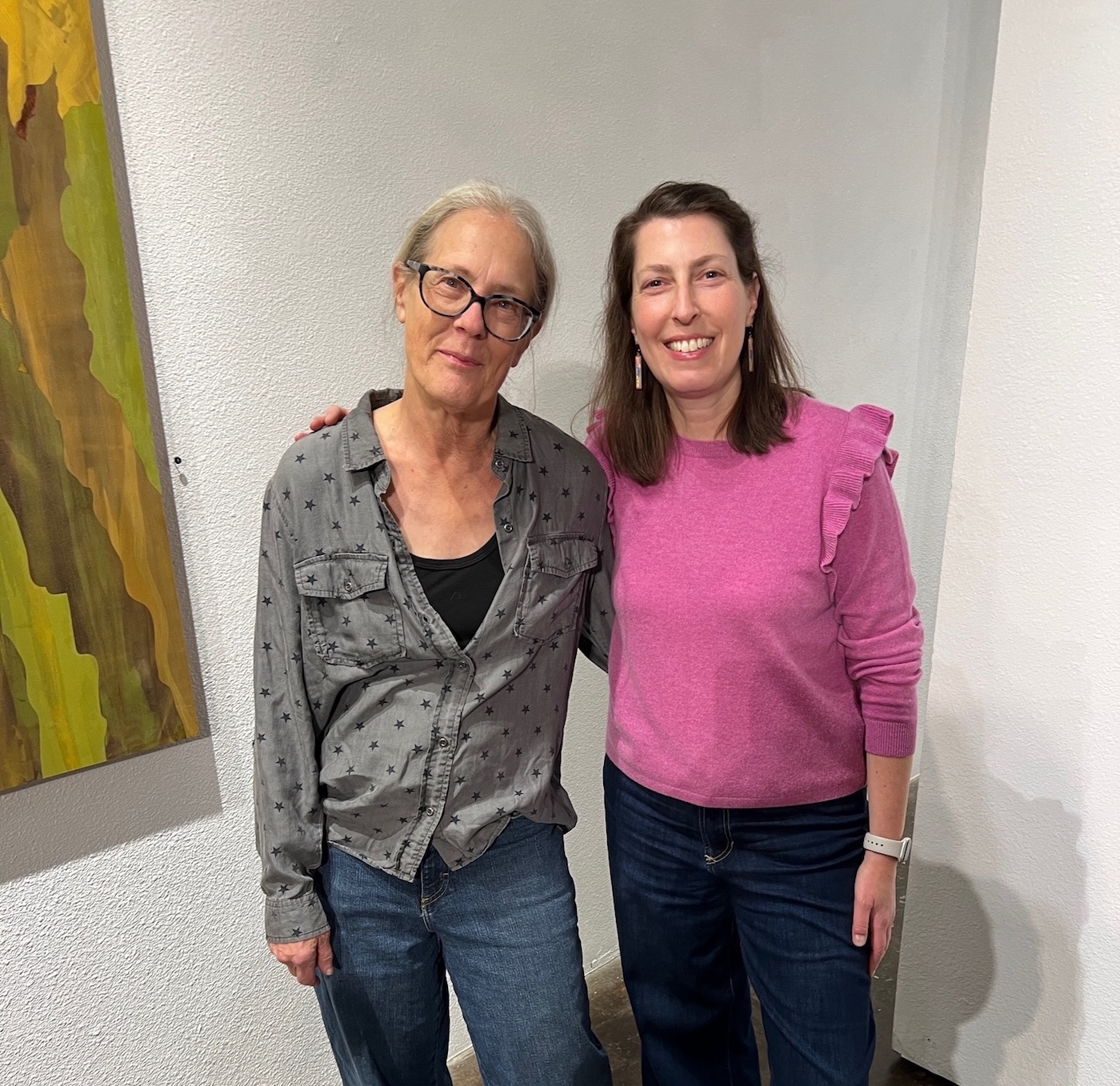
Getting people to say yes to a big idea is a skill that involves plenty of clarity around your goals. Meredith Nemirov has it.

In episode 262 of The Art Biz, she walks through how she built a sold-out show at Milk Moon Gallery in Telluride, Colorado with five collaborators, raising nearly $10,000 for a national nonprofit. The decisions she made along the way are worth studying.

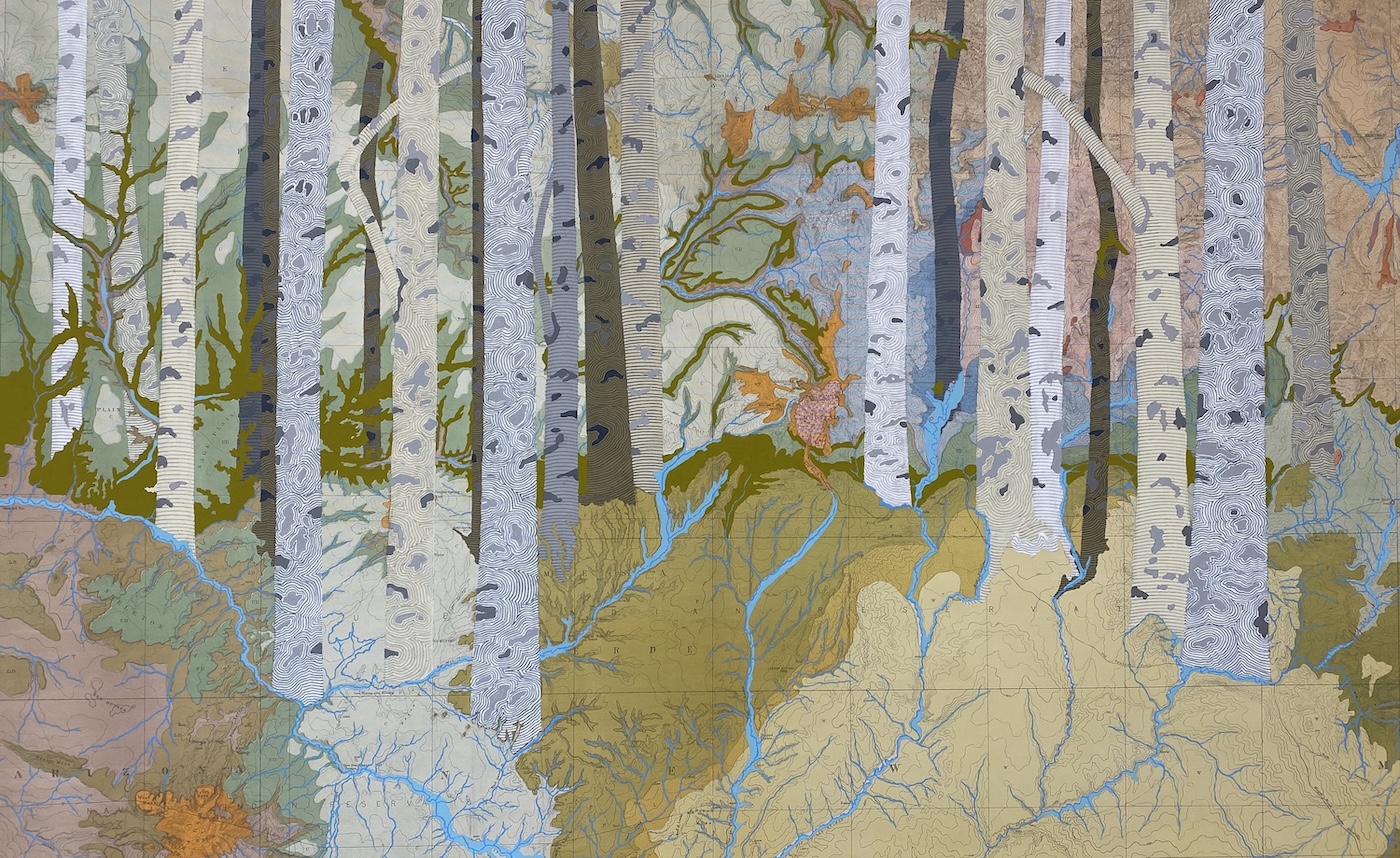
Meredith Nemirov aspen trees painted on top of a vintage topographical map of Colorado with repainted blue waterways
©Meredith Nemirov, S.W. COLORADO AND PARTS OF AZ, NM & UT. Acrylagouache and ink on historic topo map, 22 x 34 inches.

It started with the work.

Meredith had been painting aspen trees onto antique topographical maps for years, filling every waterway with blue to visually rewater (her word) a drought-stricken landscape. The work had a natural connection to environmental advocacy, and that alignment is what made everything else possible. The collaboration didn’t need to be forced because the work already made the case.

She wrote a proposal before she called her gallery.

Meredith approached American Rivers, a national nonprofit, before she brought the idea to Milk Moon Gallery. She wanted to know whether the collaboration was viable before she asked her gallery to commit to it.

The proposal was a page and a half with images. Simple, visual, easy to say yes to.

Give people options, not demands

Rather than presenting one plan and asking for approval, Meredith gave American Rivers three options.

  1. Donate twelve small works for them to use however they wanted.
  2. A show she would bring to their fundraiser.
  3. A full collaborative exhibition in Telluride during Mountainfilm festival.

They chose the third option, which happened to be what she hoped for. But because they chose it, they were invested in it. That distinction matters. When collaborators choose their level of involvement, they become stakeholders in your idea.

Build on existing relationships.

The other collaborators were people Meredith already knew. She didn’t build the collaboration from scratch. She looked at who was already in her orbit and asked whether their work connected to hers. In most cases, the ask was simple because the relationship was already there.

Activate the show more than once.

One opening night is one opportunity. Meredith and her gallery structured the show around two opening events — one during Mountainfilm and another on a First Thursday art walk — plus a separate poetry reading. Each event brought a different audience into the gallery and gave people multiple reasons to come.

Meredith gratefully acknowledges that the gallery staff did a lot of heavy lifting. They visited her studio as a group, spent an evening understanding the full story behind the work, and built their social media strategy from that foundation. 

Any artist would kill for their gallery to feature them so prominently —>

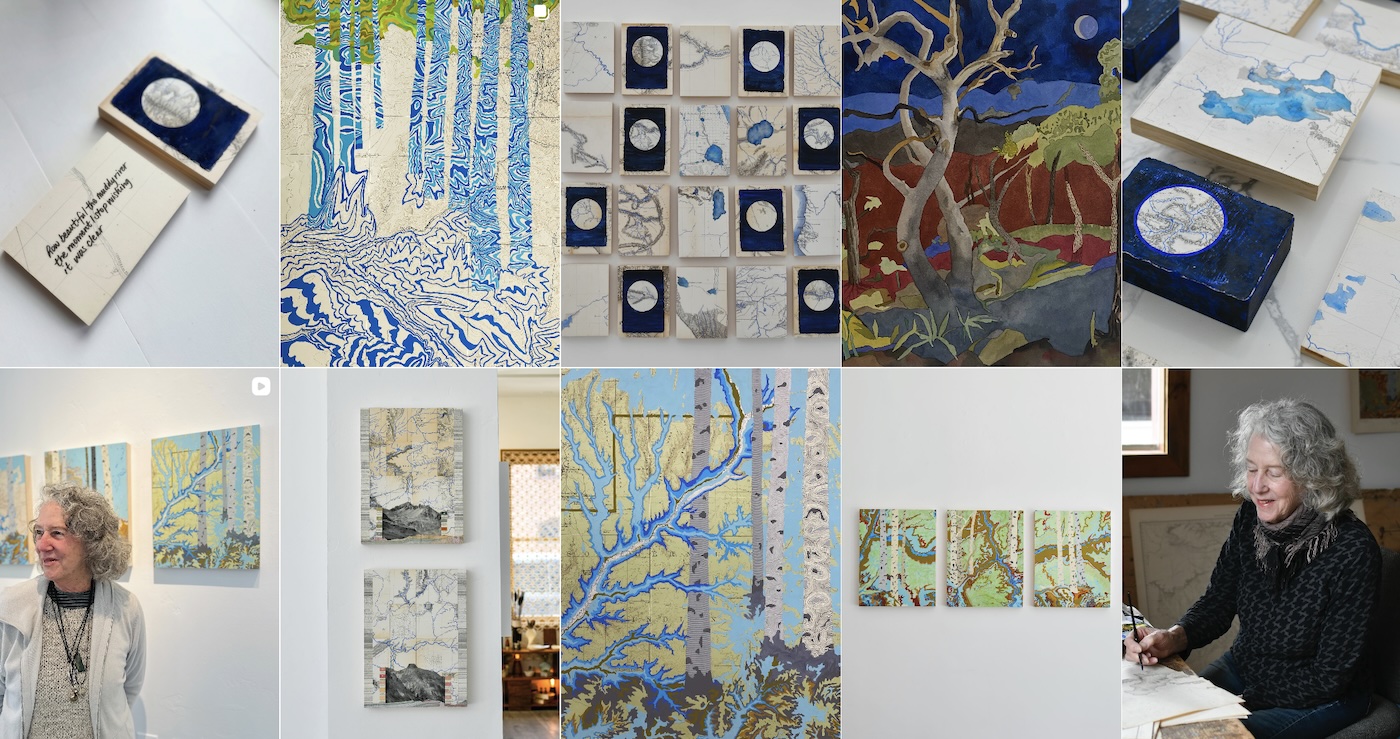
Gallery of images of the gallery during Meredith's show
Highlights from Milk Moon Gallery’s Instagram feed during Meredith's show.

American Rivers promoted the show to their audience as well. By the time people arrived, they already understood what they were walking into.

What she would do differently.

One missed opportunity: a representative from American Rivers was at the opening and never addressed the crowd. Meredith expected a brief talk about the organization’s mission, which didn’t happen. She’d plan for it explicitly next time — not assume it was going to happen.

Busy events move fast, and unplanned moments tend to stay unplanned.

[ Meredith’s show was featured in a beautiful article with photos on the A La Luz blog, a showcase for environmentally engaged artistic practices across disciplines. ]

Listen

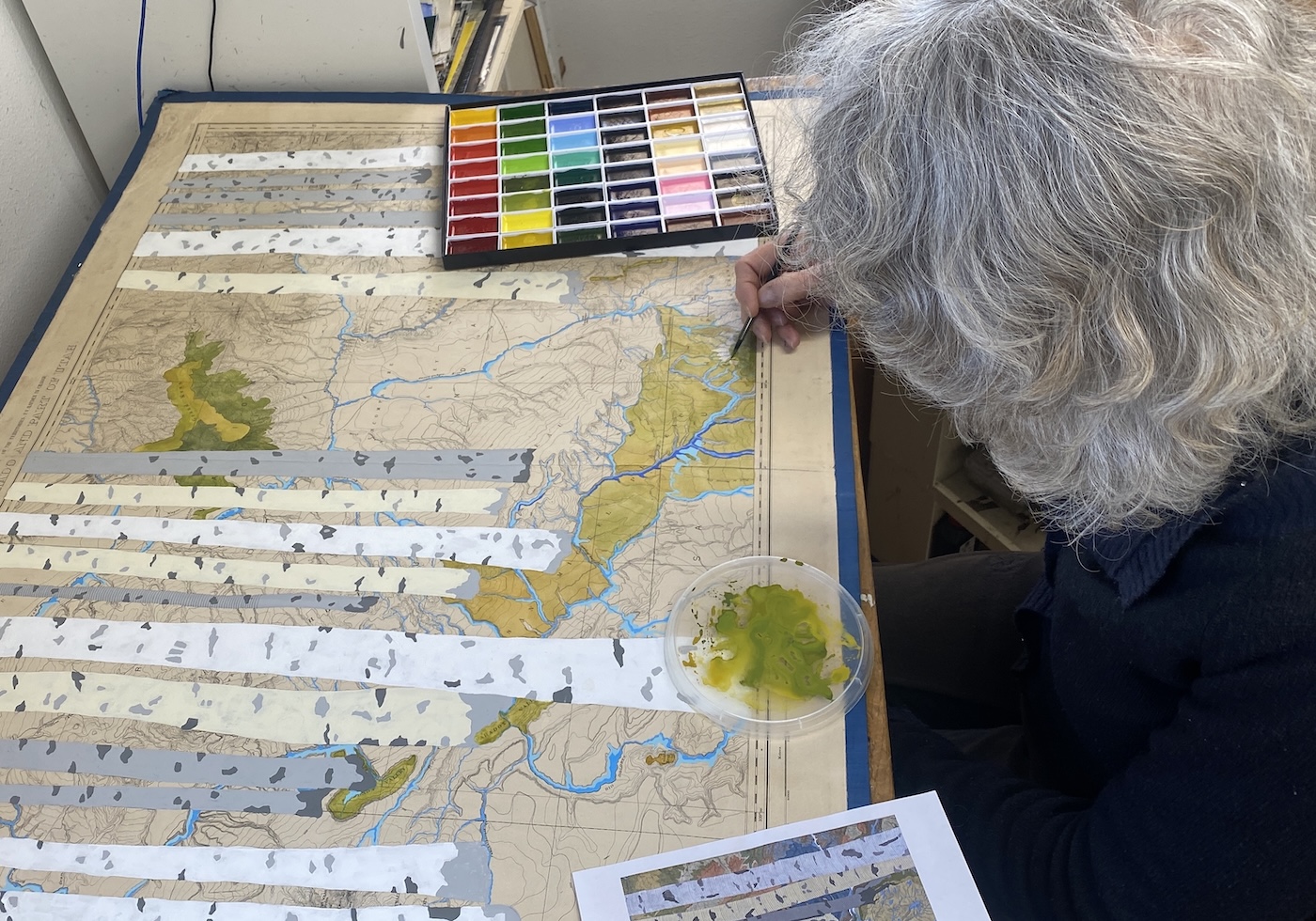
Meredith Nemirov working in her studio
Meredith working in her studio.

Think about your next exhibition and who else belongs in it. Not just who might say yes, but whose mission or work genuinely connects to yours.

The strongest collaborations require noticing what’s already aligned.

Meredith Nemirov Quotes

  • “I felt that I was a vehicle for these [artworks]. I really did.”
  • “I learned that people are approachable.”
  • “It was win, win, win, win, win.”
  • “The four women that work at the gallery did the most amazing social media posts for the show…. They just put their all into it.” (See photo above for evidence.)
  • “I gave them three options to think about. I didn’t just say, I wanna do this.”
  • “I felt a purpose for the pieces.”
  • “All these people were involved and expecting something. That kept my momentum going in the studio. It was something to work towards.”

About Meredith Nemirov

Meredith Nemirov was born in NYC where she studied at The Art Student’s League and received a BFA from Parson’s School of Design. After working as a freelance illustrator for 11 years she moved to a small town in SW Colorado.

Together with her husband they opened the Ridgway Gallery specializing in antique prints, maps and books of the exploration of the American West. After the gallery closed in 1999 Nemirov has been painting and exhibiting her work, and teaching, in the US and Spain. 

Follow Meredith on Instagram: @meredith.nemirov

Photo by JT Thomas

The post This artist turned 5 partnerships into a sold-put gallery show with Meredith Nemirov (262) appeared first on Art Biz Success.

]]>