catalogs Archives - Art Biz Success https://dy-online.com/tag/catalogs/ Trusted Art Business Coaching and Consulting Tue, 25 Mar 2025 18:01:10 +0000 en-US hourly 1 https://wordpress.org/?v=7.1.4 https://dy-online.com/wp-content/uploads/2022/02/favicon-2-150x150.png catalogs Archives - Art Biz Success https://dy-online.com/tag/catalogs/ 32 32 The Art Biz ep. 176: Series, Catalogs, and Museum Shows with Susan Abbott https://dy-online.com/series-abbott/ https://dy-online.com/series-abbott/#comments Thu, 01 Feb 2024 15:00:54 +0000 https://dy-online.com/?p=47466 Susan Abbott recognizes the importance of getting her work out of the studio and in front of people. We cover a lot of ground in our conversation, but there are 3 themes:

1. Why it’s important to give yourself limitations as an artist in order to grow.
2. Creating a catalog of your art and what it can do for you.
3. Getting a museum solo exhibition and why that’s important to her.

The post The Art Biz ep. 176: Series, Catalogs, and Museum Shows with Susan Abbott appeared first on Art Biz Success.

]]>

You will often hear me say that your art isn’t complete until someone else experiences it. Until you’re standing in front of it and talking about it with people who are interested.

In real life. Digital-only viewing doesn’t count.

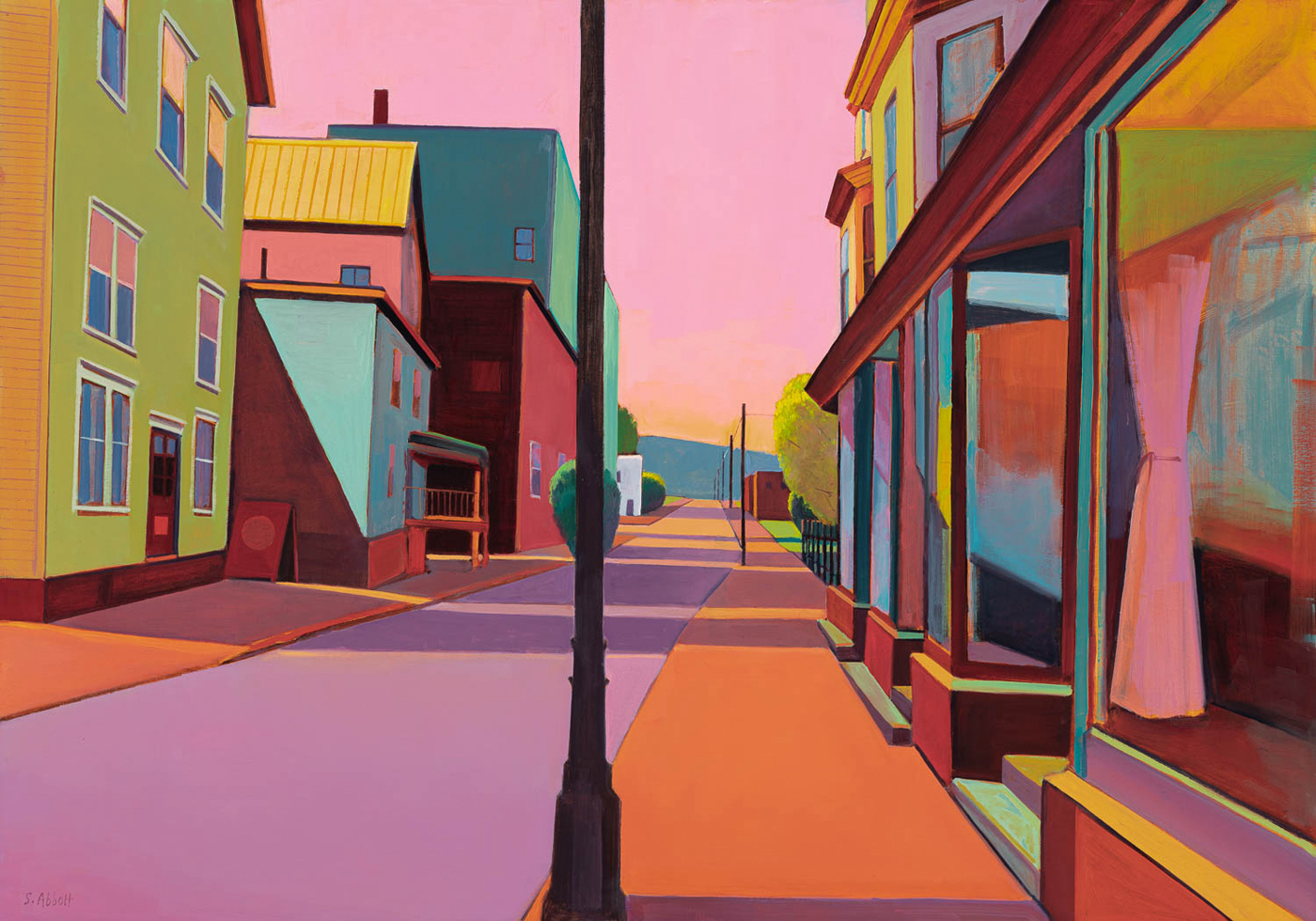
Susan Abbott painting
©Susan Abbott, Early Morning, April. Oil on linen panel, 28 x 40 inches. Photo by Paul Rogers.

Every person who sees your work brings themselves and their background to your work—adding new layers of meaning to your original intention.

My guest for this episode is Susan Abbott, and she recognizes the importance of getting her work out of the studio and in front of people.

We cover a lot of ground in our conversation, but there are 3 themes:

  1. The value of working in series, and why it’s important to give yourself limitations as an artist—with special attention given to the series of paintings that came from her pilgrimage on the Camino de Santiago.
  2. Creating a catalog of your art and what it can do for you.
  3. Getting a museum solo exhibition and why that’s important to her.

[ Artist Catalogs: Why You Need Them, What to Include, and How to Use ]

We discuss the practical reason she started in watercolor and the complexities of the relationship with your galleries when you want to move on to a new medium and body of work.

And we talk about how Susan lost 14,000 instagram followers and rebuilt her account to where it is today (~46,000 at the time of publication).

See if you can pick up on why it pays to dress nicely when visiting gallery.

Listen

Cover of Susan Abbott catalog
Cover of Susan's 80-page monograph of paintings and text about her walk on the Camino de Santiago.

Susan Abbott Quotes

“And what I realized over time as much, uh, to preserve my own sanity as for commercial reasons, is I had to focus more and really pursue what I was interested in, in more depth.”

“[I realized] that I was going to learn more as a painter and grow more by limiting myself.”

“With that kind of a long walk, there’s a spaciousness that you enter that’s so hard to get in the midst of our you know normal daily life.”

“It’s about a specific image that [galleries] think they can sell for you.”

“The vulnerability was a gift.”

“Any time you put your work in printed form—and remove it from yourself, by having maybe somebody else write that essay—or just having it out in the world, it really adds credibility to your work.”

“I’m not a writer, you know. I’m not a poet. I make a distinction. That -er on the end of the verb is really an important thing. To be a painter is a real commitment, you know, and to be a writer or a poet is a whole kind of knowledge and experience that I don’t have.”

“I go back and forth on my blog. I love doing it. I feel like it made me a better writer.”

“I did everything you’re not supposed to do and I tell my students not to do.”

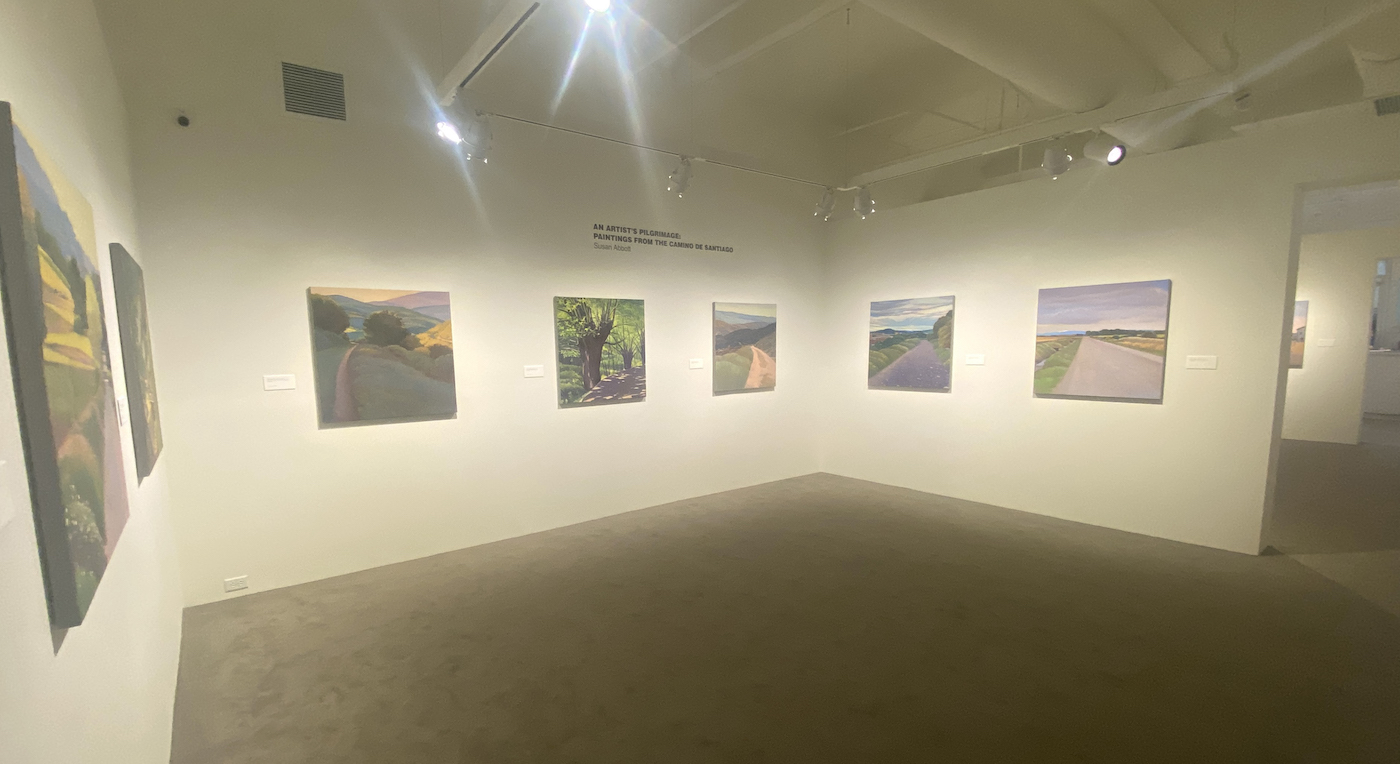
Susan Abbott exhibition
Installation view for the Susan Abbott exhibition An Artist’s Pilgrimage at the Zillman Museum of Art, Bangor, Maine, 2023.

About My Guest

Susan Abbott graduated from the Maryland Institute, College of Art with a BFA and MFA, and has worked as a professional artist exhibiting in galleries and museums since that time. Her paintings are represented in corporate and individual collections and featured in media including the Oprah Winfrey Show.

The art critic for The Washington Post commented, “What makes her painting so interesting is the tension between the dazzling display of skill and underlying idea.” Abbott writes about painting on her blog “Painting Notes” and for publications such as “Artist’s Magazine.” She teaches in the U.S. and internationally and lives in Vermont.

Follow her on Instagram @susanabbott

Susan Abbott

The post The Art Biz ep. 176: Series, Catalogs, and Museum Shows with Susan Abbott appeared first on Art Biz Success.

]]>
https://dy-online.com/series-abbott/feed/ 4
Artist Catalogs: Why You Need Them, What to Include, and How to Use https://dy-online.com/catalog-of-your-art/ https://dy-online.com/catalog-of-your-art/#comments Mon, 30 Oct 2023 19:51:21 +0000 http://artbizsuccess.com/?p=24278 A catalog of your art can be a snapshot of your career at a moment in time or a retrospective documenting your entire life’s work.

With the advent of on-demand, inexpensive publishing, every artist should be using catalogs to promote their art.

And, yes, I recommend print catalogs before electronic versions.

The post Artist Catalogs: Why You Need Them, What to Include, and How to Use appeared first on Art Biz Success.

]]>

A catalog of your art can be a snapshot of your career at a moment in time or a retrospective documenting your entire life’s work.

With the advent of on-demand, inexpensive publishing, every artist should be using catalogs to promote their art. Read why you need one and what to include in it.

11.4.24 – Hid this section because the IG live is gone and I can’t find it! (Kristyn)

Here’s a video on Instagram that gives you an overview of artist catalogs and real examples from artists.

Please ignore the outdated info at the beginning.

A printed artist catalog is tactile. It can be placed in a gallery setting and held in one’s hands. It can be sent through the mail with a handwritten note as a gift to a VIP.

I also recommend a physical catalog because there’s nothing like seeing your art in print.

Printed catalogs can also be sold. However, catalogs of your art are rarely money-making ventures. I encourage you to think of them as marketing pieces and documentation rather than products you might sell for profit.

Use the checklist below to ensure that your catalog has all of the components to make it a lasting document of your art—one that you are proud of.

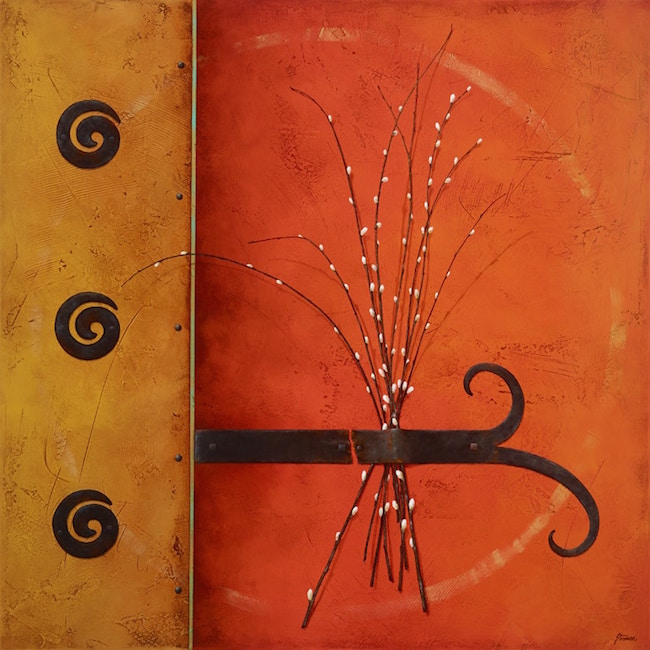
©Brad Stroman, Curly Ques and Whiskers. Acrylic, 40 x 40 inches.

Pre-Project Checklist for Your Artist Catalog

Focus

Before you begin, you must determine the focus of your catalog. Just as you curate an exhibition of your art, you curate the content of your catalog.

Unless your catalog is a retrospective, you won’t be served by putting everything you’ve made into a catalog. Instead, tighten it up and focus on a single solo show or body of work.

High-Quality Images

Don’t even think about a catalog until you have professional photos taken. Excellent print quality demands high-resolution images that show off your work in great detail.

Now that you have the focus and the images, you can begin to think about the inside.

Contents of Your Catalog

Cover

Your name
Featured image
Title of exhibition or body of work

Title Page

Title of publication
Your name
Website address

Flipside of Title Page

Copyright notice and date
Credits: Designer, Editor, Proofreader, Essayist, Photographer, etc.
ISBN number (if you use one)
Instructions for ordering copies
Your contact information and social media sites

Pamela Atkinson painting
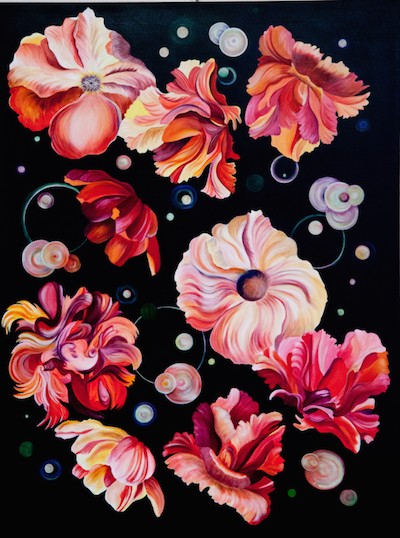
©Pamela Atkinson, Floating. Acrylic, 40 x 30 inches.

Image Formatting and Placement

Images placed next to one another in the catalog should look good together. Remember that you’re curating your art and want to show it in the best light.

Don’t forget the credit lines! You don’t need your name with every image unless the catalog includes work other than your own, but every image should include:

Title, medium, HxWxD, and date (if you use dates).

You might also include © notice and photography credit.

Text

The written portion of your catalog is an opportunity to tell people about you and make deeper connections.

“About ” can be placed at the front or back of the catalog. It might be written in the form of a bio or have the following subheadings:

  • Exhibitions
  • Public Collections
  • Bibliography
  • Education

Your artist statement can be on or near your About page or placed next to the images.

If you have representation, include a Galleries section to tell readers where to find your work.

An essay by someone else (a curator, critic, or art historian) can contextualize your art and would be placed at or near the beginning of the artist catalog. This will also elevate the prestige of your work.

Add stories about individual pieces next to the images.

Prices

Rather than printing prices in your catalog, insert a separate piece of paper with a price list. This allows you more flexibility with pricing.

Take advantage of your new catalog as soon as it’s published. If you’re hard at work in the studio, it will soon be out of date.

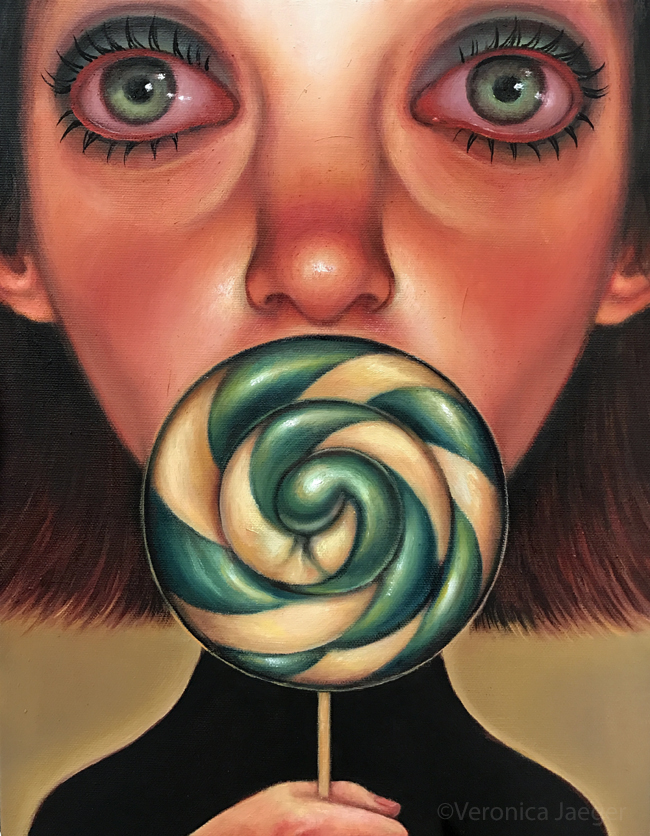
Veronica Jaeger painting
©Veronica Jaeger, Sweet. Oil on canvas, 14 x 11 inches.

This post was originally published on April 20, 2017, and has been updated with original comments intact.

The post Artist Catalogs: Why You Need Them, What to Include, and How to Use appeared first on Art Biz Success.

]]>

https://dy-online.com/catalog-of-your-art/feed/ 42
Where to Distribute Catalogs of Your Art https://dy-online.com/distribute-catalogs/ https://dy-online.com/distribute-catalogs/#comments Fri, 24 Aug 2012 11:00:00 +0000 http://artbizsuccess.com/?p=13421 A few weeks ago I wrote about what should go into a catalog of your art. (Be sure to read the comments for catalog tips from readers.) Now I want to talk about what to do with a catalog you've created.

The post Where to Distribute Catalogs of Your Art appeared first on Art Biz Success.

]]>

A few weeks ago I wrote about what should go into a catalog of your art.  (Be sure to read the comments for catalog tips from readers.)
Now I want to talk about what to do with a catalog you’ve created.

The Reality of Printing a Catalog

Sarah Atlee, Normal, OK
Sarah Atlee’s catalog Normal, OK.

Printing one catalog at a time isn’t cheap, so I would never encourage you to print more than you need.
The cost of printing a 20-page 7×7-inch catalog at Blurb is $11. If you gave away just 10 copies, it would cost you $110 + shipping.
That’s pricey! But put in perspective, artists of yore (you know who you are) used to send out sets of slide sheets to promote their art. With 20 slides to a sheet at a cost of about $1.50 (minimum) per slide, each slide sheet cost at least $35 to produce!
Catalogs aren’t looking so bad anymore, huh? So don’t be too stingy with their distribution.

Who Might Get a Copy

Everyone who helped you with the catalog should receive a copy. This might include your photographer, designer, writer, and editor. Yes, you should have an editor!
Your best friends, supporters, and family would be thrilled to receive copies, although many of these people would probably be delighted to help you out by purchasing their copies.
Your collectors! I can’t think of a nicer gift to give your VIP collectors than a catalog of your art.
Your top prospects for gallery representation – those who already know your name or are well vetted through other means – might be impressed seeing your art in print. As we established above, this is more cost effective than our old method of sending slide sets. It’s also more effective in general since there’s no need to plug in a projector and fill up a slide tray to see the work.
You might also share copies with the follow people – depending on your relationship with each:

  • Arts writers and critics
  • Anyone who sponsored your exhibit or event
  • Any funding agencies from whom you received grants
  • Top art bloggers or bloggers/writers within your niche
  • Curators

Exhibition Spaces

Wherever your work is shown, place a catalog on view with a sticker on it that says “Not For Sale, Gallery Copy.”
Provide a handout or business card that explains how viewers can purchase their own copy of your catalog.
What have I forgotten?

The post Where to Distribute Catalogs of Your Art appeared first on Art Biz Success.

]]>
https://dy-online.com/distribute-catalogs/feed/ 10
Peek Inside a Catalog of Your Art https://dy-online.com/artist-catalog/ https://dy-online.com/artist-catalog/#comments Wed, 25 Jul 2012 11:00:31 +0000 http://artbizsuccess.com/?p=13433 Catalogs document an exhibit or body of work, and they are a record of your career at a moment in time. Consider creating an electronic or printed catalog to utilize as marketing pieces of your work. Here is a list of key features to include in your catalog.

The post Peek Inside a Catalog of Your Art appeared first on Art Biz Success.

]]>
Catalogs document an exhibition or body of work. They are a record of your career at a moment in time.
You can create electronic catalogs and/or printed catalogs, but I urge you to consider the latter.
A printed catalog is tactile. It can be placed in a gallery setting and held in one’s hands. It can be sent through the mail with a handwritten note as a gift to one of your VIPs. There’s nothing quite like seeing your art in print!
Printed catalogs can also be sold. However, catalogs are rarely money-making ventures. I encourage you to think of them as marketing pieces and documentation rather than products you might sell for profit.
Artist Catalogs
A selection of artist catalogs

In order to ensure that your catalog is a lasting document of a point in your art career, see that all of the components are in place.

Catalog Contents

Focus
For a cohesive catalog, focus on a single solo exhibit or body of work. Unless your exhibit is a retrospective, you won’t be served by putting everything you’ve made into a catalog.
Cover


Title Page


Flipside of Title Page


  • Copyright notice and date
  • Credits: Designer, Editor, Proofreader, Essayist, Photographer, etc.
  • ISBN number (if you use one)
  • Instructions for ordering copies

Images
There’s no sense having a catalog without images! Just be sure that your images follow these guidelines.

  • Images should be of high resolution and of excellent quality.
  • Images placed next to one another in the catalog should look good together.
  • Images should have credit lines. You don’t need your name with every image unless the catalog includes work besides your own, but there should be a title, medium, dimensions (HxWxD), and date (if you use dates).

Text
The written portion of your catalog is an opportunity to tell people about you and make deeper connections. Consider the following sections.
About can be placed at the front or back of the catalog. It could include:

  • Short bio
  • All contact info

Your Artist Statement can be near your About or placed next to the images.
A Galleries section tells readers where to find your work.
An Essay by someone else can contextualize your art.
Individual Stories next to images provide entry points for readers.
Prices
Rather than printing prices in your catalog, insert a separate piece of paper with a price list. This allows you more flexibility with pricing.

After Your Catalog is Printed

Take advantage of your new catalog as soon as it’s published. If you’re hard at work in the studio, it will soon be out of date.
I’ll be giving you some ideas for catalog distribution in an upcoming post. Be sure you’re subscribed (upper right of any page on this blog) so you don’t miss this information.
Have you printed a catalog of your art? Share your experience and, if we can read about it or see it online, feel free to leave a link.

The post Peek Inside a Catalog of Your Art appeared first on Art Biz Success.

]]>
https://dy-online.com/artist-catalog/feed/ 50