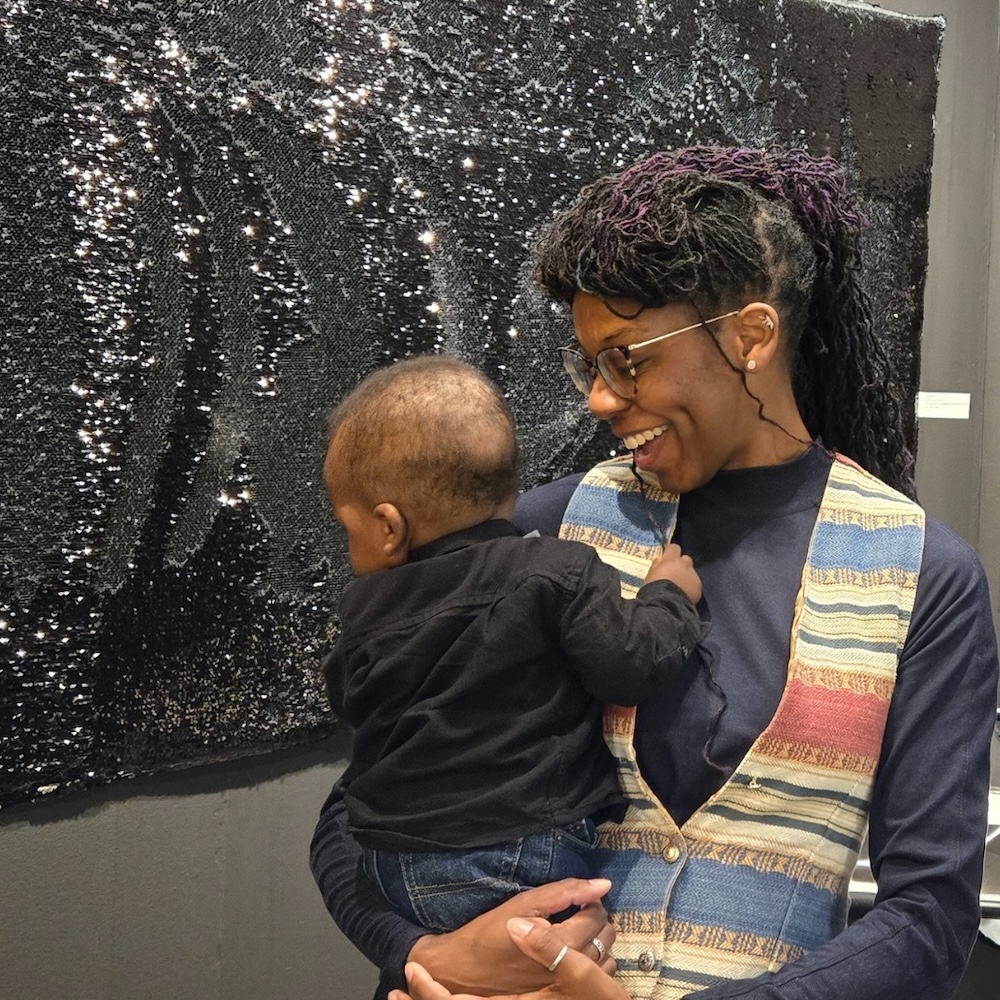
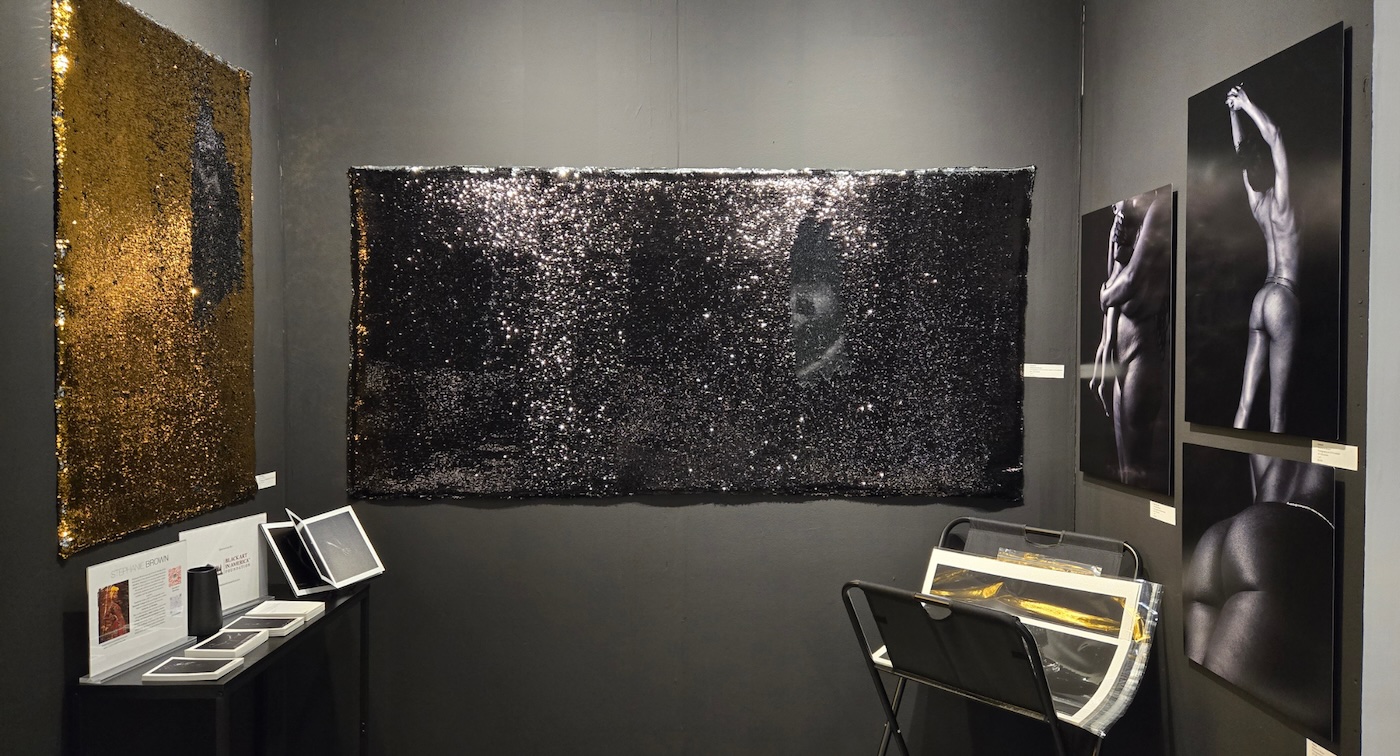
She also shares how she's built a sustainable art career by treating it like a business from day one, leveraging transferable skills, and setting non-negotiable rules for her practice.
The post The Strategic Artist: Zero Debt Art Degrees with Stephanie Brown (247) appeared first on Art Biz Success.
]]>


The post The Strategic Artist: Zero Debt Art Degrees with Stephanie Brown (247) appeared first on Art Biz Success.
]]>Since Kelly was experiencing such great commercial success, I wondered at the time why on earth she wanted to return to grad school. Now that she has been out of school about a year, Kelly is ready to talk about her decision on the Art Biz Podcast.
I'm tying this to the theme of adjusting your approach. Tweaking this or that. Looking at new possibilities. Or even turning your art business and career upside down and returning to school like Kelly.
We make these adjustments to get better results in our business and lives, to make us feel more fulfilled, or just to bring a greater sense of happiness.
Listen to hear what it was for Kelly. You'll hear about how she juggles two very different art businesses, the biggest benefits of grad school for her, and what her daily practice is like.
The post The Art Biz ep. 85: Returning to Grad School for an MFA with Kelly M O’Brien appeared first on Art Biz Success.
]]>Since Kelly was experiencing such great commercial success, I wondered at the time why on earth she wanted to return to grad school. Now that she has been out of school about a year, Kelly is ready to talk about her decision on the Art Biz Podcast.

I’m tying this to the theme of adjusting your approach. Tweaking this or that. Looking at new possibilities. Or even turning your art business and career upside down and returning to school like Kelly.
We make these adjustments to get better results in our business and lives, to make us feel more fulfilled, or just to bring a greater sense of happiness.
Listen to hear what it was for Kelly. You’ll hear about how she juggles two very different art businesses, the biggest benefits of grad school for her, and what her daily practice is like.
Music by Wildermiss
Highlights
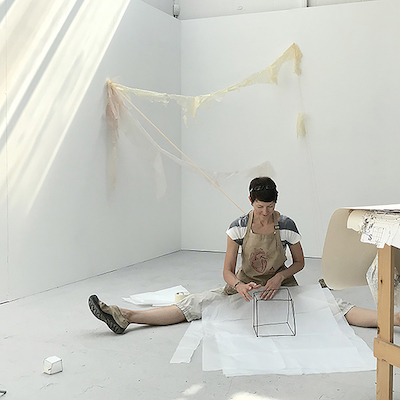
- Kelly M O’Brien shares her art path and the works that have gone viral. (1:49)
- Finding more meaning and depth in your art. (5:47)
- Changing the focus of her work resulted in Kelly creating two different practices. (8:08)
- Finding the right time and the right approach to return to graduate school. (11:51)
- The value of intentional planning sessions to help you grow as an artist. (17:15)
- The biggest benefits of returning to school. (20:02)
- How to determine if an MFA is right for your career. (23:45)
- Balancing money-making ventures with your education. (24:49)
- How to respond to the stigma surrounding serious artists who work to make money. (26:27)
- Changes in Kelly’s practice as a result of earning her MFA. (28:32)
- A look inside Kelly’s daily practice in the studio. (31:04)
- Learning a visual vocabulary that shapes the statement of your work. (34:47)
- What is holding Kelly’s attention in her studio. (38:18)
Mentioned
Artist Support Pledge in support of artists and makers
Arts Council England working to create a country transformed by culture
Chuck Close at Pace Gallery
Kelly M O’Brien Quotes
“I frankly believe artists of any ilk need to make money. If I can sell work, if I can get paid to do installations and museum projects and get grants and all that, bring it on.”
“I’ve really started to understand how an art practice could be a place of voice and advocacy and engagement.”
“The key is to have a lot in the pipeline. Just keep moving and keep looking forward.”
About My Guest
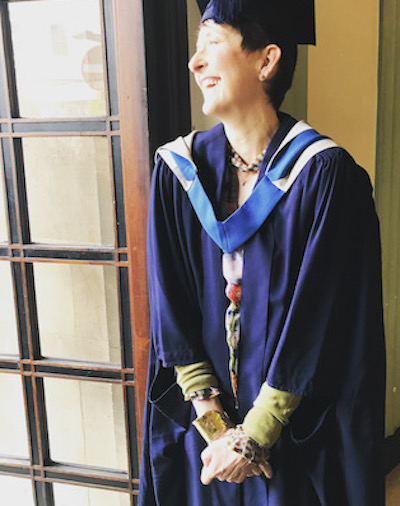
Kelly M O’Brien is an American mixed-media sculptor who lives and works near Bristol, England. She completed a Master of Fine Art (Distinction) at Bath Spa University in 2019.
Kelly is co-founder of A Gathering of Unasked Possibility, a collaborative project fostering active hope through creative practitioners, and runs PaperJoy Studio, offering bespoke paper art originals and hand-embellished prints for hospitality and important residential projects.
Follow Kelly’s emerging work on Instagram: @kellyobrienart
Follow PaperJoy Studio on Instagram: @paperjoystudio
Music by Wildermiss
The post The Art Biz ep. 85: Returning to Grad School for an MFA with Kelly M O’Brien appeared first on Art Biz Success.
]]>The gist of the questions is: This class looks enticing, but is it right for me?
Most often, my response isn’t a simple Yes or No, but a volley of questions in return intended to help the inquisitor come to a conclusion.
Here’s what those questions look like.
Will you be physically at your home or studio to implement the lessons?
The lessons in Creative Content Camp can be consumed and implemented from anywhere in the world as long as there is connectivity.
On the other hand, the organizing class I previously taught required organizing a physical space. That’s a program you wouldn’t want to be away for.
If you’re going to be on vacation for one or more of the lessons, the decision whether or not to enroll in a class depends on your answers to a couple of (more) questions:
- Are you planning on doing any work during your travels? If you have built in a few hours a week to work, as I do during many of my trips, perhaps it’s doable.
- Can you make a plan - and stick to it - for your return? If you get your affairs in order so that you pick up (and catch up) where you left off, you’re likely to be more successful after the break.
Can you devote the time to the lessons and homework?
I tell students that
The post How to Decide if a Class or Workshop is Right for You appeared first on Art Biz Success.
]]>Whenever a new class begins, I receive plenty of questions.
The gist of the questions is: This class looks enticing, but is it right for me?
Most often, my response isn’t a simple Yes or No, but a volley of questions in return intended to help the inquisitor come to a conclusion. Here’s what those questions look like.
Will you be physically at your home or studio to implement the lessons?
The lessons in Creative Content Camp can be consumed and implemented from anywhere in the world as long as there is connectivity.
On the other hand, the organizing class I previously taught required organizing a physical space. That’s a program you wouldn’t want to be away for.
If you’re going to be on vacation for one or more of the lessons, the decision whether or not to enroll in a class depends on your answers to a couple of (more) questions:
- Are you planning on doing any work during your travels? If you have built in a few hours a week to work, as I do during many of my trips, perhaps it’s doable.
- Can you make a plan – and stick to it – for your return? If you get your affairs in order so that you pick up (and catch up) where you left off, you’re likely to be more successful after the break.
Can you devote the time to the lessons and homework?
I tell students that I can share all of the wisdom I have, but it doesn’t do any good until they put it to use. Nothing makes me happier than to witness their growth throughout a course.
Can you maintain other commitments – especially the commitment you have made to your studio practice?
Can you commit a few hours to class lessons and homework or to practice a new studio skill?

Can you use the information immediately?
If it’s an online class and you aren’t prepared to do the homework, you won’t be able to take advantage of the resources provided during a live class. More to the point, most of us are no more likely to do the lessons later than we are right now.
If it’s a live class – perhaps a studio skills class – do you have time to practice what you’ve learned?
Using new information while it’s fresh helps cement the new knowledge. Otherwise, you may have to relearn it.
Are you willing to interact with others and with me or your other teachers?
Will you share and comment in a forum? In a group, you are likely to learn as much from the students as you do from the teacher – but not if you don’t interact with them.
Perhaps the most important question to answer is …
Why are you enrolling?
What do you want to get from the class?
I ask students at the beginning of my programs what their goals are. You can do this for yourself if an instructor doesn’t ask. Are you seeking:
- More subscribers and followers? How many?
- Greater confidence? How will you measure it?
- Clarity? What do you want the answers to?
Do you need this class? Did you look at the lessons and discover information that might fill some of the gaps in your knowledge?
Do you not know this already? Or are you simply not implementing what you know?
The energy of a group class and the right instructor can help you implement what you haven’t been able to do on your own. But you need to accept responsibility for consuming the information and putting it to work.
Your Turn
How do you know if a class is or isn’t right for you?
The post How to Decide if a Class or Workshop is Right for You appeared first on Art Biz Success.
]]>The post Dear John: So Your Kid Wants To Go To Art School appeared first on Art Biz Success.
]]>In honor of Fathers’ Day week (Can I declare a week for all dads?), I share this query from John G. from my Facebook page. He wrote:
I have 19-year-old daughter who is passionate about art and is pursuing her dream at college. As a father . . . and as the person paying her entire tuition . . . I’m naturally concerned about how she will turn her passion for art into a career.
I’ve done some research and found an interview you gave, so thought I’d reach out as a caring father to seek some much wiser advice on the topic. . . .
My advice to her has been to find a mentor or sponsor that will open the door to real-world experience as it relates to pursuing an art career, but how to go about finding such a mentor or whether it’s the right approach at this point in time…well, quite frankly it’s out of my realm of experience.
What thoughts and advice to you have for daughter and me?
Perhaps some of my thoughts might help other parents of would-be artists.
Dear John . . .
John, your daughter is very lucky to have such a caring father and I hope she realizes that. So many artists are without people in their lives to support and understand them.
I would encourage her to stay focused on developing her art. Give her space to be a student – to experiment and to make mistakes.
Too many people start marketing before the work is mature. She needs to build confidence in her abilities.
She will learn a number of things in art school that will serve her well: discipline, accepting criticism, art history, contemporary context, etc. Let her soak in these lessons.
But, as you surmised, school probably won’t teach her how to make a business from her art. Then again, doctors and lawyers never learn how to open their offices while in school.
The cool thing about kids these days is that they are savvier about business and marketing than any previous generation. And they are open to creating new business models for their art without being tied to traditional “rules” of how things should be done properly.
All parents should encourage their kids to break the rules! That’s what the most successful artists do. They find their own paths.

John, I have another idea that might make it easier for you to sleep at night. It’s not too different from your idea of a mentor.
Whenever your daughter is on a school break (summer, holiday breaks) give her real-world assignments.
Help her write letters or emails to set up appointments with people in your community who work in the art arena: curators, working artists, arts writers, arts council personnel, arts festival organizers, and anyone else you can think of.
People in the arts are generous. Have your daughter ask for 30 minutes of their time to talk with her about what they do and how they got to be in their current position. She will learn a lot about how an arts community functions and how she envisions future self.
She will also learn how to ask for what she wants through this process!
We can thank my dad for this idea.
When I was living at home and finishing up my graduate-school thesis, my dad worried for my future. I worried, too! I thought I was going to grad school to get a Ph.D. and teach, but I left with an M.A. I had no idea what I was going to do after the diploma came in the mail.
My dad helped me connect with arts leaders in the community. Though it’s probably something I should have figured out before I ever went to grad school, I wasn’t confident or outgoing enough to do this on my own. I was grateful he nudged me.
And I’m not sure I’ve ever said that. So, Thanks, Dad!
And thanks to all of the parents out there like you, John.
How about you? Do you have any advice for John or his daughter?
The post Dear John: So Your Kid Wants To Go To Art School appeared first on Art Biz Success.
]]>The post Best Gifts for Budding Artists appeared first on Art Biz Success.
]]>
Some people were glib:
- “Acid”
- “An exorcism”
- “An application for a job”
But most of my fans took the question seriously.
Several offered advice in lieu of a gift. They said the recent high-school graduate needs encouragement and support. They stressed, “Don’t get influenced by the party crowd. There will be enough time for that later on.”
Other fans said the best gift would be mentoring.
MANY people said the kid needed businesses classes and a copy of my book (thank you!).
I question this. Does a kid straight out of high school really need business classes when he should be focusing on developing a studio discipline?
I’m still not sure, although I wouldn’t mind the topic being introduced in year 2 of school. Too many schools offer business classes during the final semester only, which seems far too late for anything to stick.
The Top 6 Gifts for Artists
The graduation gifts for budding artists that seemed to attract the most votes were, in no particular order:
- Money
- Art supplies
- Books, especially Art and Fear by David Bayles and Ted Orland
- Gift certificate for art supplies and restaurants
- URL/Domain name
- Museum membership
One person observed that most of these would make good gifts for any artist.
Read all of the responses here.
What are your favorite gifts to give and receive?
The post Best Gifts for Budding Artists appeared first on Art Biz Success.
]]>But I'm going to let you in on a hush-hush marketing strategy that will draw even more people into your circle: education.
Before you doze off at the word "education," consider why you should heed my advice.
Most of the population was raised without an art education. If they were a student of the 1960s or 1970s, as I was, they probably had to make clay ashtrays or embellish turkeys from an outline drawing of their hands.
But that’s about the extent of it. Most adults, including artists themselves, haven’t been trained how to look at and appreciate art.
To these people, art can be stuffy, elitist, and inaccessible. Here’s where you step in.
Part of your job in promoting your art is to
The post The Secret to Attracting More Fans for Your Art appeared first on Art Biz Success.
]]>
Everyone knows that the #1 way to attract fans for your art is to make amazing work. That’s no secret.
But I’m going to let you in on a hush-hush marketing strategy that will draw even more people into your circle: education.
Before you doze off at the word “education,” consider why you should heed my advice.
Most of the population was raised without an art education. If they were a student of the 1960s or 1970s, as I was, they probably had to make clay ashtrays or embellish turkeys from an outline drawing of their hands.
But that’s about the extent of it. Most adults, including artists themselves, haven’t been trained how to look at and appreciate art.
To these people, art can be stuffy, elitist, and inaccessible. Here’s where you step in.
Part of your job in promoting your art is to give viewers a pathway to your work—to show them how to look at and appreciate it.
If you want to reach the widest possible audience, it’s critical that you accept your role as primary educator for your art.
Most artists think of educating about the media, but I’d like for you to teach people how to look.
Showing people how to view your art empowers them. It gives them skills they’ll use forever.
Whenever appropriate, even in your artist statement, discuss the formal elements of your work:
- Line (parallel, symmetrical, straight, diverging, undulating)
- Color (muted, intense, complementary, monochromatic)
- Shape (geometric, organic, repeated)
- Texture (rough, smooth, bumpy)

If your work leans toward the conceptual, discuss ideas and how viewers can use their life experience as an entry point.
To be the best educator, don’t lecture, but engage people in a dialogue. Listen to the questions that arise and pay attention to the aha moments.
Making amazing work is one thing, but helping people to understand why it’s amazing can lead to more fans.
How do you educate people about your art?
The post The Secret to Attracting More Fans for Your Art appeared first on Art Biz Success.
]]>The post Don't Waste Your Investment in Learning Opportunities appeared first on Art Biz Success.
]]>Use these tips for any workshop, seminar, or class you attend. After all, you paid good money.
1. Do your homework. Research the presenters and their topics. If they have a blog, leave comments and mention the upcoming event. I’m always delighted when my workshop participants start appearing on my blog. It shows they’re tuned in. You can also start following presenters on Twitter, liking their pages on Facebook, and signing up for their newsletters.
2. Get plenty of sleep. You need to be well rested in order to absorb as much as possible. Presenters can only do so much of the work. Your heart and brain have to meet them halfway.
3. Arrive with an open mind. If you come with a bunch of excuses as to why something can’t be done, you might as well stay home. I’m a hard-ass about this. Presenters will show you what’s possible, but you have to believe.
4. Come prepared to learn and implement. Be excited about getting new information or having previous knowledge confirmed. Then, get ready to implement what is right for you after the workshop. After all, it doesn’t help to learn a bunch of stuff and never use the knowledge.
5. Be ready to meet other people (code: Network). Workshops and seminars offer a terrific opportunity for you to expand your web of friends. Everyone is there for the same reason. You all share a common goal, although the means to achieving that goal will vary. Bring your business cards, your portfolio (just in case), and share, share, share! Don’t be afraid to offer a handshake and introduce yourself to someone you’ve never met. You never know where it might lead.
6. Set realistic expectations. No single workshop is going to give you everything you need. Even if it did, you still have to be responsible for making sense of all the information. Promise yourself that you will absorb as much as possible without being stressed about implementing every idea right away.
The post Don't Waste Your Investment in Learning Opportunities appeared first on Art Biz Success.
]]>The post Syllabus for teaching with my book, I’d Rather Be in the Studio! appeared first on Art Biz Success.
]]>Painting professor Sandra Reed has designed a course for graduate students at the Savannah College of Art and Design using my book as the required text. The course is “Fine Art M.F.A. Self-Promotion.”
With her permission, I am thrilled to share the IRBITS syllabus with you.

Professor Reed notes:
The Course Description, Goals, and Student Learning Outcomes are developed by the entire department (these areas are the same for all sections of this course, no matter who teaches it). The Grading Standards, all seven items following College Policy, and the graphic design are identical in all syllabi at SCAD. Everything else in the syllabus is my work. Like most professors, I put a lot of heart and soul into course structure, and hope that the syllabus conveys both the spirit and the letter of the course intent.
I’d love to hear from you if you teach and have used my book in your classroom. And, if you’re a professor who would like input on your syllabus, feel free to contact me.
The post Syllabus for teaching with my book, I’d Rather Be in the Studio! appeared first on Art Biz Success.
]]>