Learn when it’s time to remove inactive subscribers and how doing so creates space for genuine connection and sustainable growth.
The post Clean your email list to improve deliverability and engagement (236) appeared first on Art Biz Success.
]]>
The post Clean your email list to improve deliverability and engagement (236) appeared first on Art Biz Success.
]]>How do you know which is right? There’s only one way to know which is the right option for you. Test and track them!
The post Test your email marketing and track your results appeared first on Art Biz Success.
]]>
The post Test your email marketing and track your results appeared first on Art Biz Success.
]]>I have some ideas for doing just that. Many of these suggestions lend themselves to emails, while others could easily be adapted for social media.
The post Vary your marketing message appeared first on Art Biz Success.
]]>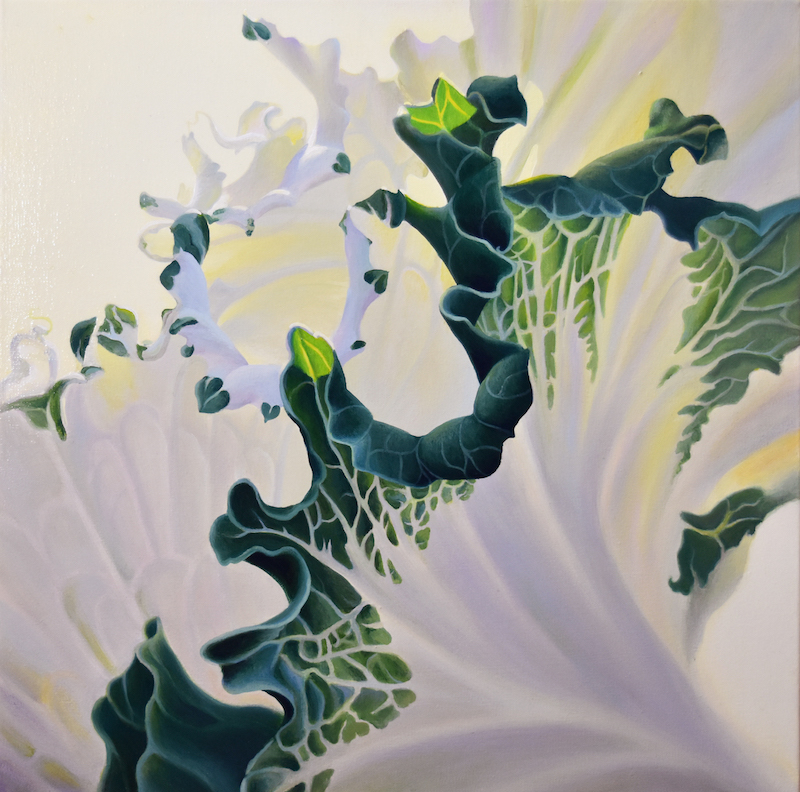
There is much more to your art show than the title, dates, times, and location, although those items are critical to include.
You don’t have to dig too deep to unearth new perspectives.
- Rotate images of your art with short 2- or 3-sentence stories for each. People are more likely to get excited about a show when they know what they’ll see and the stories can help sell the work.
- Mention other artists who will be in the exhibition and why it’s an honor to show with them. Explain what your art has in common with theirs.

- Discuss the history of the juried show you’re in and why it’s valuable to be part of it. The purpose should lead back to you.
- Offer suggestions for nearby galleries or places to dine. Add your personal slant on these establishments: “Don’t miss the green curry!” or “The back gallery is showing X, who was featured in last year’s Whitney Biennial.” This is especially helpful for people who are coming from a distance and want to make the most of their trip.
- Relate a particular piece in the show to something that has been prominent in the news recently.
- Highlight special or unexpected features of the event. Maybe you are having live music, serving something besides wine and cheese (hallelujah!), or organizing a hands-on art activity.
- Provide a list of your blog posts that might enlighten people about the exhibition. Point to specific posts that relate to the work they’ll see at your show. Include an image from each post, a short teaser, and a link to the whole article. See the impressive job Leslie Peterson Sapp did for her Creating Time: Art & Archeology show.
- Create a Pinterest board for your exhibition and share it with your followers. Or build a private area on your website for a preview of the work.
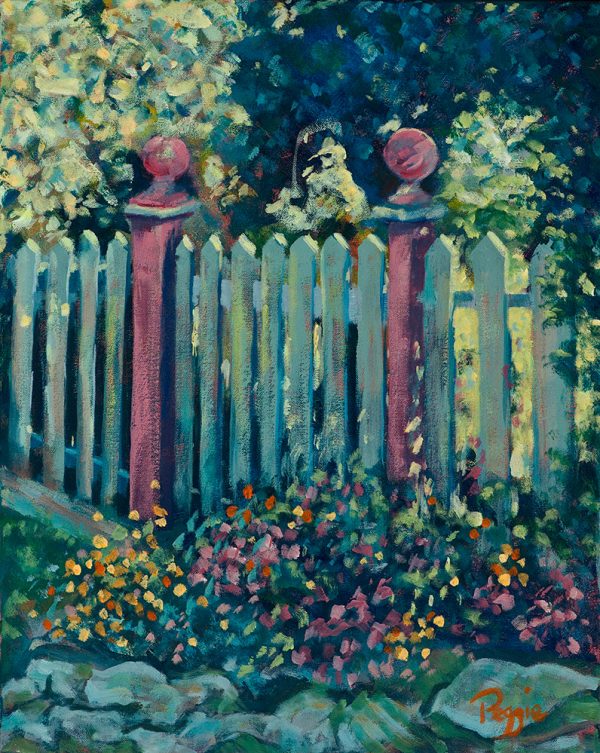
The post Vary your marketing message appeared first on Art Biz Success.
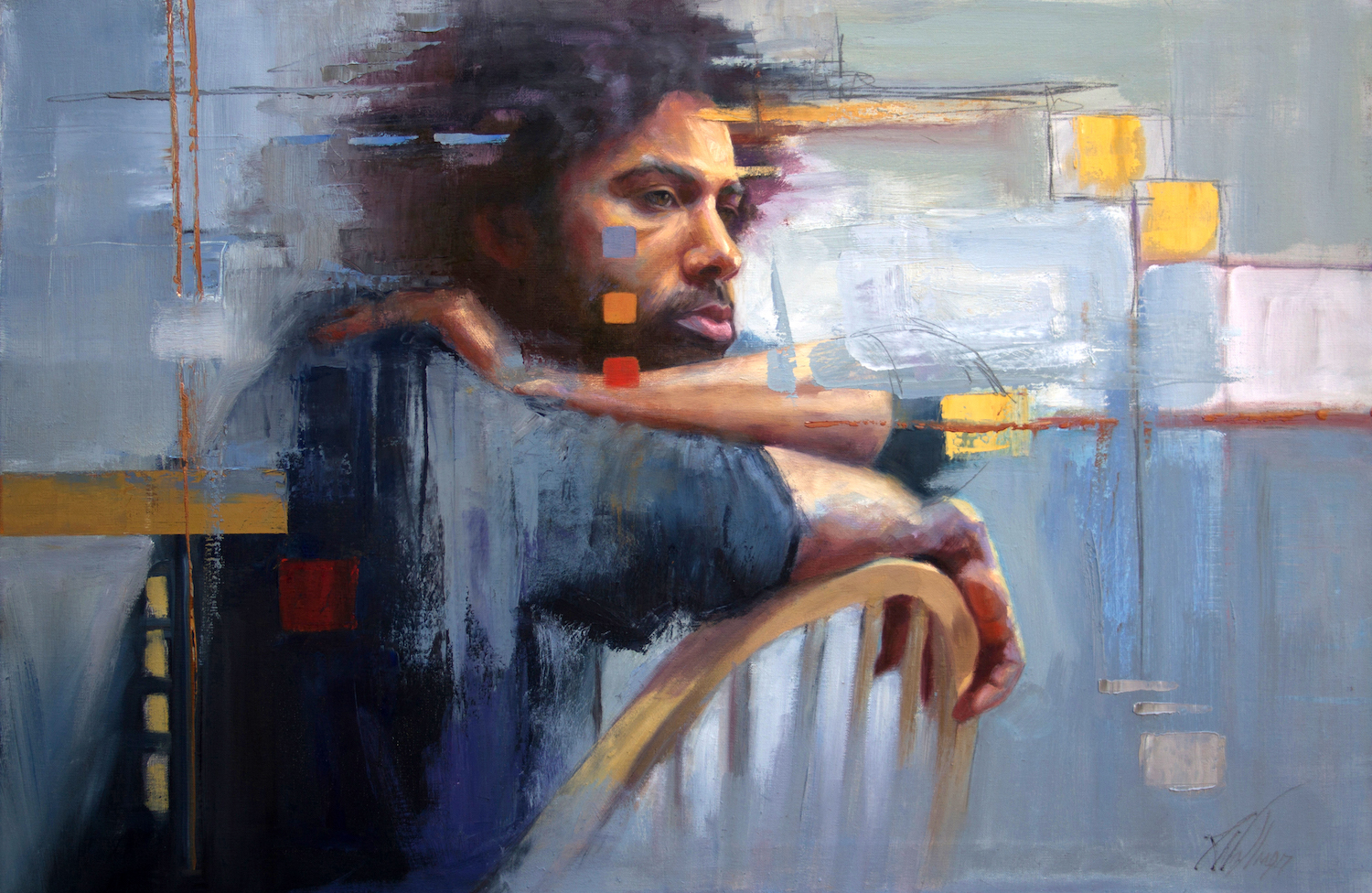
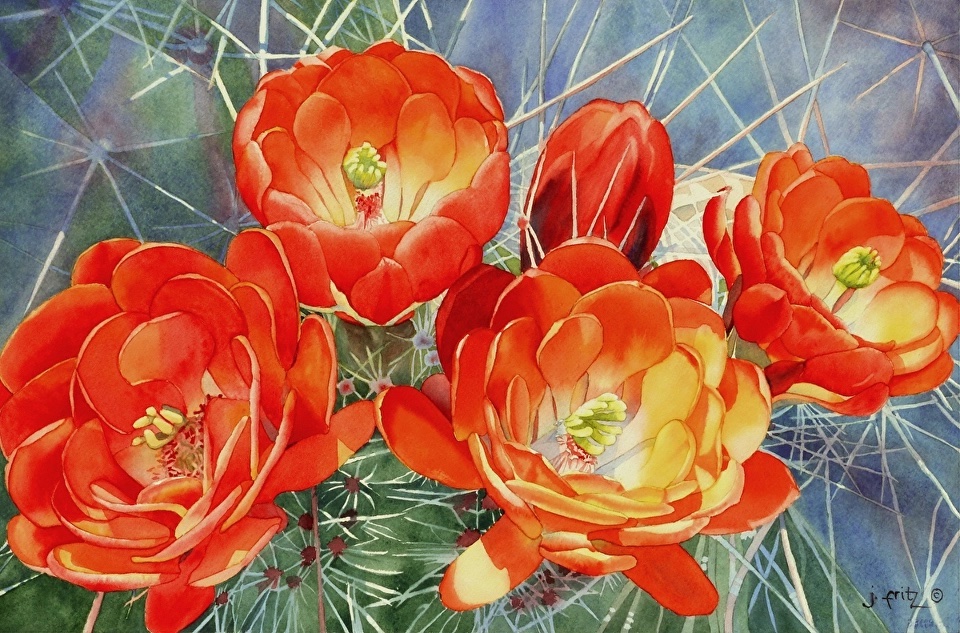
]]>Without the nurturing, you might find yourself having to reintroduce yourself at some point to a list that has gone cold.
Bonus: Staying in touch makes you the artist who comes to mind when people look for art.
The post The purpose of your artist newsletter appeared first on Art Biz Success.
]]>
The post The purpose of your artist newsletter appeared first on Art Biz Success.
]]>It's your #1 marketing asset—unique to your art and goals.
While growing an email list has become challenging, that doesn't mean we should give up. Take advantage of every opportunity (asking, using forms, offering freebies) to attract and add subscribers—remembering, always, that it's more important to engage the right people than to focus on the numbers.
The post Options for growing your email list appeared first on Art Biz Success.
]]>
Having said this, I realize that it’s harder than ever to grow an email list. I don’t want you to obsess over “getting” more names on your list.
Numbers don’t matter. What matters is that the people on your list are paying attention to what you have to say or share.
We need to use as many avenues as possible to build our email lists. Not quantity for quantity’s sake, but seeking the highest quality of loyal subscribers.
[ Note: Your definitive list is much larger, and ultimately more important than your email list.  ]
With all of this in mind, you want to take advantage of every opportunity for adding to your subscribers. Here are some reminders.
Special Reports & E-Books
Reports and e-books might take a checklist as the basis, and then go more into depth. While a report might be 5-10 pages in length, we would expect an e-book to be longer. And longer isn’t always better.
Consider pulling together a special report on a single aspect of your teaching—one that plays only a small role in your program.
[ See how freebies work on my Free Stuff page. ]
Webinars and Live Streaming
Webinars usually include visual images (slides) whereas live streaming is teaching in front of a webcam with an audience watching in real time.
Create a 1-hour content-rich virtual event and promote the heck out of it online. In the best of all worlds, this will not only build your list, but also lead to more enrollments for your program.
Warning  Teaching live through webinars or livestreams isn’t for amateurs. You can do a lot of work that leads to nowhere if you haven’t studied the secret sauce that makes them beneficial.
Telesummits
You’ve seen telesummits offered online and have probably participated in one. One or two people enlist 10 or 15 others to interview over the course of a week or two.
Presumably, everyone participating builds their lists. The catch is that they all have to send multiple emails to their lists. This is why I rarely participate in these events. I am too protective of the people on my list.
I feel like telesummits have gone out of favor (thank goodness). Like webinars, they require loads of planning and reliable infrastructure to pull off properly. Imagine coordinating all of those guests!
The post Options for growing your email list appeared first on Art Biz Success.
]]>Neglecting subscribers for months or,yikes!, years, renders your list cold. If you're ready to commit to staying in touch with the people who asked to hear from you, you might need to reintroduce yourself.
It's not as difficult as it sounds, but the longer you wait, the bigger the task seems.
The post How to warm up a cold email list appeared first on Art Biz Success.
]]>
The post How to warm up a cold email list appeared first on Art Biz Success.
]]>If you think about it as your only opportunity, you aren’t leaving open the possibility of developing a meaningful relationship. And strong professional relationships are what will grow and sustain your art career.
The post Instant Relief from the Pressure of Pitching Your Art appeared first on Art Biz Success.
]]>
The post Instant Relief from the Pressure of Pitching Your Art appeared first on Art Biz Success.
]]>More of anything! Because it makes our efforts feel worthwhile. It seems validating.
But we're often stopped in our tracks when we begin to realize what we need to do in order to increase our numbers.
We think we have to post more, research hashtags, invest in advertising, create a lead magnet, learn to write better copy, or forget about a restful night's sleep.
Yeah, you probably do have to do some of those things in order to attract more followers and subscribers, but you might also benefit from being open to doing things a little differently to increase those numbers.
In this episode of the Art Biz Podcast I talk with Trudy Rice about how she has grown her Instagram and email list by cross-promoting other brands.
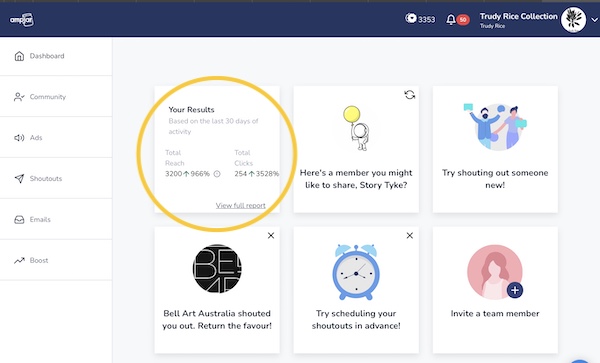
Trudy uses a platform called Ampjar, but the underlying lesson is to find like-minded people and share each other's art, products, and services. Trudy refers to these as "shout outs" and loves this system because of the good karma it creates.
The post The Art Biz ep. 77: Growing Your Audience with Good Karma with Trudy Rice appeared first on Art Biz Success.
]]>More of anything! Because it makes our efforts feel worthwhile. It seems validating.
But we’re often stopped in our tracks when we begin to realize what we need to do in order to increase our numbers.
We think we have to post more, research hashtags, invest in advertising, create a lead magnet, learn to write better copy, or forget about a restful night’s sleep.
Yeah, you probably do have to do some of those things in order to attract more followers and subscribers, but you might also benefit from being open to doing things a little differently to increase those numbers.
In this episode of the Art Biz Podcast I talk with Trudy Rice about how she has grown her Instagram and email list by cross-promoting other brands.
Trudy uses a platform called Ampjar, but the underlying lesson is to find like-minded people and share each other’s art, products, and services. Trudy refers to these as “shout outs” and loves this system because of the good karma it creates.
Music by Wildermiss
Highlights
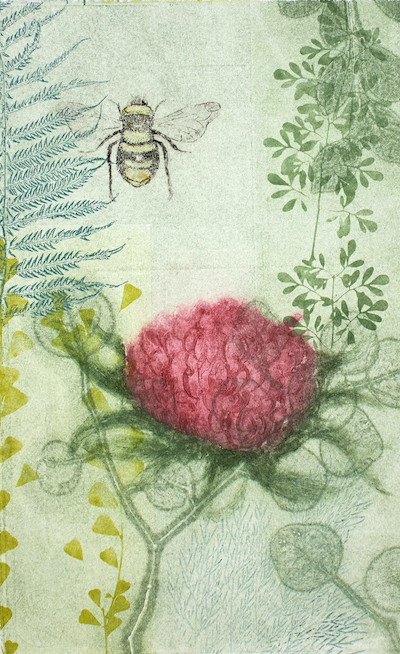
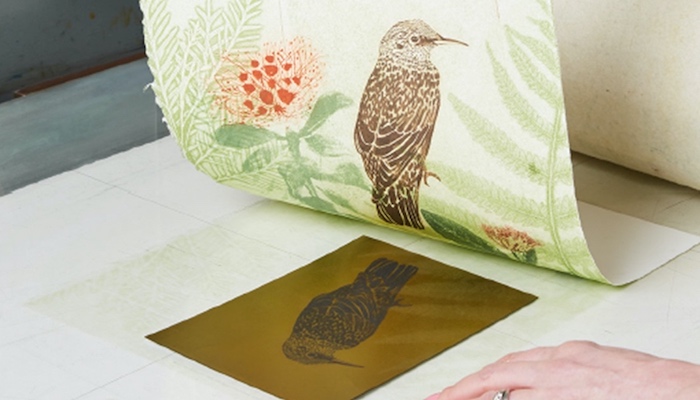
- Trudy Rice details her Australian flora and fauna art, teaching, and other current projects. (2:13)
- Taking original prints and paintings to a homewares line. (4:28)
- Quantifying the growth of a successful art business through a variety of income streams. (6:18)
- The primary systems and marketing channels Trudy uses for her sales. (8:25)
- Details about the Ampjar mailing system and the karmic aspect to shout outs. (11:37)
- The algorithms behind the Ampjar shout-out system. (13:57)
- How to systematically simplify the process of business promotion. (17:39)
- Promoting other artists while boosting yourself. (21:16)
- The variety of brands that Trudy promotes through Ampjar. (22:18)
- How to connect with new and international audiences through shout outs. (23:57)
- Tracking the success that has come with integrating new systems. (26:08)
- The importance of collaborating with other artists who have systems that work. (29:23)
- How to do the work once and benefit from it over and over again. (30:17)
- Trudy shares her project and collaboration plans for 2021. (33:35)
Mentioned
Ampjar karmic advertising community
Shopify e-commerce
Loomly social media content management
ConvertKit e-mail marketing
Related Episodes
Growing Your Art Business on Instagram with Jeanne Rosier Smith
Creating a Monthly Report for Your Art Business (measuring success)
Facebook Live Group Art Shows with Brooke Harker (collaborating)
Quotes
“What really drew me to this system was the karmic aspect of it.” —Trudy Rice
“I’m a community-minded person and I love supporting local brands.” —Trudy Rice
“Not only were you making connections, but you were getting results.” —Alyson Stanfield
“In that eight months I gained 1500 followers on Instagram, which is a lot more than I normally would.” —Trudy Rice
About My Guest
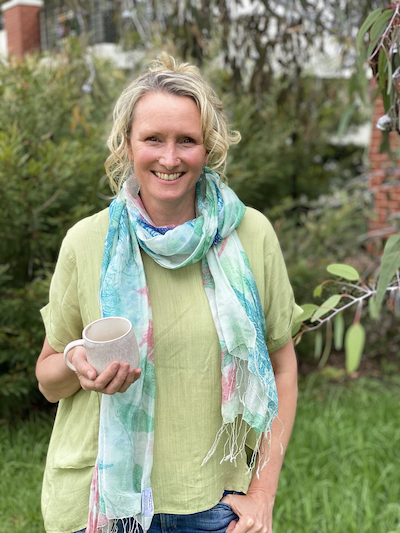
Trudy Rice is an Australian painter and printmaker whose inspiration is taken from the coastal landscape in and around Lorne on Victoria’s picturesque Great Ocean Road. She is passionate about her environment—working on paper using the non-toxic print method of solar plate etching. She also incorporates other printmaking techniques including linocut, collograph, monotype & etching.
Trudy has applied her images from nature to a line of popular homewares and wearable art that add delight to anyone’s table or wardrobe.
Follow Trudy on Instagram: @trudy_rice
Music by Wildermiss
The post The Art Biz ep. 77: Growing Your Audience with Good Karma with Trudy Rice appeared first on Art Biz Success.
]]>What to Include in Your Signature Block
Your signature block might contain a mixture of any, but not all!, of the following.
- Your full name (required)
I have a policy against answering emails that are unsigned, and I'm sure I'm not alone. If you don't care to tell me who you are, why in the world should I respond? - A link to a compelling page on your website.
- Your location (You're sending email all over the world. Tell people where you're from!)
- Your phone number
- Your website address
- Select social media links
- A tagline about your art
- An upcoming event, such as a workshop or exhibition, you're promoting
How Much to Include
Err on the side of brevity. The fewer words, and the fewer links the better in your signature block.
The post Your Artist Email Signature Block appeared first on Art Biz Success.
]]>What to Include in Your Signature Block
Your signature block might contain a mixture of any, but not all!, of the following.
- Your full name (required)
I have a policy against answering emails that are unsigned, and I’m sure I’m not alone. If you don’t care to tell me who you are, why in the world should I respond? - A link to a compelling page on your website.

- Your location (You’re sending email all over the world. Tell people where you’re from!)
- Your phone number
- Your website address
- Select social media links
- A tagline about your art
- An upcoming event, such as a workshop or exhibition, you’re promoting
How Much to Include
Err on the side of brevity. The fewer words, and the fewer links the better in your signature block.

No one has time to read your artist statement, bio, or life story.

I suggest no more than 2 links in an email. I use only 1 link per signature. No one has time to decide which link to click.
You can easily update your email signature block or create multiple options for different purposes. I’ve illustrated this post with the different versions that I use.
Using Images in Your Signature Block
Images in artist’s email signature blocks are more common than they were when I first wrote about this. (You’ll find a discussion about this topic on the comments from the original 2006 post.)
It can be quite nice to see the artist’s work without having to click on a link.
If you decide to add an image to your signature, keep it to just one images. Remember that images arrive in inboxes as attachments that must be downloaded (automatically or manually, depending on how you’ve configured your email program). Not everyone is keen on getting attachments if they don’t know you.
You take a chance.
I happen to like them, but I’m highly artist-friendly (as you know!) and I love to see new work.
I advise you to select an image that is still available in order to help sell it.
The post Your Artist Email Signature Block appeared first on Art Biz Success.
]]>And ... It’s less effort to nurture relationships with people who already know, like, and trust you than to find new people to share your art with. Acquiring customers, in marketing terms, is a long and costly process.
Therefore, it makes sense to take care of the people who have purchased from you. Show them you appreciate them now instead of contacting them later only when you want something from them.
One of the biggest mistakes artist-entrepreneurs make is not following up with people who have given them money.
If you’ve been lax in this area, you might be leaving money on the table.
If you sell art from your studio, rather than through a gallery, you have no excuses for not following up appropriately. You have the name and contact information of your collectors.
Here’s a plan to awe your collectors--not just once, but over the course of your relationship.
Within 1 Week of Sale: Express Gratitude
Send a thank-you note in the mail. Use notecards with images of your art on them for all of your handwritten notes.
This is yet another opportunity to put your art in front of people who appreciate it. The cards, of course, have your contact info or website on the back.
Don’t exploit this as an opportunity to ask for anything else. Thank-you notes are for expressing gratitude only, not for additional sales or requests.
Two Weeks Later: Ask to Connect
In this email, suggest to your collector that
The post Following Up After You’ve Sold a Piece of Art appeared first on Art Biz Success.
]]>And … It’s less effort to nurture relationships with people who already know, like, and trust you than to find new people to share your art with. Acquiring customers, in marketing terms, is a long and costly process.
Therefore, it makes sense to take care of the people who have purchased from you. Show them you appreciate them now instead of contacting them later only when you want something from them.
One of the biggest mistakes artist-entrepreneurs make is not following up with people who have given them money.
If you’ve been lax in this area, you might be leaving money on the table.
If you sell art from your studio, rather than through a gallery, you have no excuses for not following up appropriately. You have the name and contact information of your collectors.
Here’s a plan to awe your collectors–not just once, but over the course of your relationship.
Within 1 Week of Sale: Express Gratitude
Send a thank-you note in the mail. Use notecards with images of your art on them for all of your handwritten notes.
This is yet another opportunity to put your art in front of people who appreciate it. The cards, of course, have your contact info or website on the back.
Don’t exploit this as an opportunity to ask for anything else. Thank-you notes are for expressing gratitude only, not for additional sales or requests.
Two Weeks Later: Ask to Connect
In this email, suggest to your collector that you would like to stay in touch through social media, if you haven’t already connected there.
Explain, too, that you send a regular email with updates about your art and ask if they would like to receive it. If they are added to the list, you can keep the relationship warm through your planned emails.
If they don’t get on that list, they should receive a personalized sequence of email and regular mail to ensure they are not forgotten.
After 3 or 4 Months: Use Real Mail
Earlier, you sent a thank-you note in the mail. At this point, it’s your choice. It doesn’t matter what you send or say as long as it’s from the heart.
You might send a postcard, a photocopy of an article that was written about your work, or an invitation to an exhibition.
If the purchase was substantial, you might consider a small gift, such as a set of notecards with your art on them.
Twice a Year: Choose Your Action
After you have followed up with email and regular mail communications within three or four months, your collectors can graduate to your VIP list.
You’ll want to make sure you are in touch with your VIPs at least twice a year.
Your collectors might receive a special mailing on an off-holiday (Arbor Day, anyone?) or their birthdays. Or perhaps they’d like a phone message or short video recording in which you share only that you’re thinking of them and are hoping they’re happy and well.
Don’t overthink this because that could lead to procrastination. It’s the thought that counts! Your collectors will be impressed by an unexpected contact from an artist they admire.
This post was originally published on June 2, 2016, and has been updated with the original comments intact.
The post Following Up After You’ve Sold a Piece of Art appeared first on Art Biz Success.
]]>