
This conversation explores why artists develop allergies to financial conversations, how negative beliefs about wealth prevent fair compensation, and two practical strategies for building confidence with your numbers.
The post Healing Your Money Allergy with Hannah Cole (256) appeared first on Art Biz Success.
]]>




The post Healing Your Money Allergy with Hannah Cole (256) appeared first on Art Biz Success.
]]>Mary says she paints so that she can buy real estate so that she can collect art by other artists.
The post The investing artist: art, real estate, and legacy with Mary Erickson (223) appeared first on Art Biz Success.
]]>




The post The investing artist: art, real estate, and legacy with Mary Erickson (223) appeared first on Art Biz Success.
]]>In this episode, I discuss why you might want to diversify beyond originals, how to categorize your income sources, and how to analyze where the money has come from in the past so you can plan for the future.
The post How do artists make money? (159) appeared first on Art Biz Success.
]]>



The post How do artists make money? (159) appeared first on Art Biz Success.
]]>The pressure to make money in a business is real. But businesses, by definition, seek profit. Breaking even can only work for so long. This episode of The Art Biz is for you if you're ready to step up and be the boss of your art business.
The post Ensuring a profitable art business (96) appeared first on Art Biz Success.
]]>
You can look at these numbers with all of your income streams: original works and reproductions that require framing and shipping, lower priced products like clothing and pillows that take attention away from selling higher-priced originals, a calendar, book, or note cards. Analyze them all.
Which are worth saving? Maybe they’re not your highest earners right now, but you can see a path for them rising to the top.
This brings me to my final point.
You Must Be Able to Adapt to a Changing Environment
If Covid taught us anything, it taught us that some artists were better prepared to adapt than others. They had an online shopping cart or an online classroom in place. They had invested in their online presence and weren’t afraid to adapt in-person events to the online world. (On a side note, I believe individual artists were far better prepared to pivot than galleries or museums. Kudos to you for that!)
The world is changing faster than ever before. To run a profitable art business, you want to stay on top of technology, trends, materials, and information.
It’s not helpful to wish things were different than they are or for the good old days when you didn’t have to use email or a social media account (remember those?). It’s not just not helpful. It’s destructive.
As an Artist CEO, you keep an eye on trends. Here are three to be aware of.
- Where art is being exhibited, whether it’s at international art fairs, traditional galleries, outdoor festivals, or online.
- How art is being exhibited, because exhibition design evolves.
- How art is being promoted and sold. What’s the latest way to photograph your art, share on social media, and advertise? What kind of events and experiences are other artists and venues staging?
You might be intrigued by virtual reality tours of exhibition spaces and contemplate the possibilities. God forbid you should consider turning your art into NFTs. I’m not a fan, but we can’t ignore what’s happening around us. You might not dive into these waters quickly, but you know they’re available. You are aware. You’re in tune with your local community and with the greater art world.
You anticipate that the landscape will change because that’s how the world evolves. It is never satisfied with the status quo. But you don’t mind. You have staying power. You are becoming a profitable artist. You are prepared to adapt and even eager for new challenges.
And you know you don’t have to do it alone.
The post Ensuring a profitable art business (96) appeared first on Art Biz Success.
]]>We are consumed by “getting” more followers and subscribers.
But do numbers equal success?
No, of course not. But they are an easy way to measure what is working well and what might need a little tweaking.
This month in the Art Biz Success community, we're looking into measuring success.
What do you measure?
How do you measure?
Do the numbers tell a story?
Most importantly, you have to know what success means to you before you can discern any insights in the measuring step. Numbers will never be helpful until there is meaning behind them.
I've said before that I believe success is measured by the progress you make, not by comparing yourself to others. Check out The Art Biz Podcast episodes #32 (Success Is Complicated) and #71 (Goals for Artists) for more about that.
This new episode gives you a framework.
The post The Art Biz ep. 74: Creating a Monthly Report for Your Art Business appeared first on Art Biz Success.
]]>We’re obsessed with how many likes we get on social media posts or how many views our videos received.
We are consumed by “getting” more followers and subscribers.
But do numbers equal success?
No, of course not. But they are an easy way to measure what is working well and what might need a little tweaking.

This month in the Art Biz Success community, we’re looking into measuring success.
What do you measure?
How do you measure?
Do the numbers tell a story?
Most importantly, you have to know what success means to you before you can discern any insights in the measuring step. Numbers will never be helpful until there is meaning behind them.
I’ve said before that I believe success is measured by the progress you make, not by comparing yourself to others. Check out The Art Biz Podcast episodes #32 (Success Is Complicated) and #71 (Goals for Artists) for more about that.
This new episode gives you a framework.
Listen Now
Music by Wildermiss
Being Authentic in Your Business
One thing is for sure. You’ll never feel successful if you aren’t happy in the work you’re doing and true to yourself—no matter what the numbers say. (1:26)
By way of example, a few years back I was making more money than I ever imagined I could. I had a fantastic coach, whom I learned a great deal from and still love and respect. But I was implementing HER formula for success. After awhile, it started feeling icky and I stopped enjoying the work.
I didn’t feel successful because the formula for success was handed to me by someone else. I had lost my way. In order to get back on track, I had to blow it all up.
I decided to stop doing what had become unpalatable. I can’t enjoy every aspect of my business, just as you can’t, but I felt I had to enjoy 90% of it. And I had to regain pride in my work—pride I had lost.

Why in the world have your own business if you don’t enjoy it?! It’s So. Much. Work. Might as well go get a job somewhere else because it will be a heckuva lot easier than running a profitable art business.
While my gross income is down from when it was at its peak, so are my expenses. A LOT. I enjoy my business more because I can be more creative. No more formulas unless I’m the one devising them.
Measuring success for me still involves numbers. Business, by its very definition, assumes you aim for profit, and you have to keep an eye on numbers to stay in business and to grow your business. (3:37)
Numbers can be defeating. I won’t lie. My ego took a bit of a blow when my revenue dropped so much, but they (my ego and the revenue) have rebounded. This is gratifying because I’m writing my own playbook for success.
Monthly Report for Your Art Business
While it’s difficult to confront low numbers in any category, I insist that it’s absolutely necessary when you want to grow—as a person and as a business.

For many years, I had a simple Word document that I used to record my numbers. I made a bunch of copies and kept them in a 3-ring binder. At the beginning of a new month, I completed the form with the previous month’s results.
My business grew by 25-40% every year, and I attribute much of that growth to this tracking procedure.
I didn’t do it when I felt like it. I committed to tracking the numbers every month, and you can easily implement a version of it for your art business.
Capturing your numbers forces you to be realistic about where you are instead of ignoring any weak areas. It also challenges you to make up for any lost ground.
If you have an unsatisfactory number in one area, you can do something about it rather than accepting it.
The point of the process is to make it work for you, not to adopt a template from someone else’s art business that has nothing to do with your own. Here are some ideas to get you started on your monthly business report.
< While the accompanying download is no longer available, everything you need to conduct a thorough business report is below. >
Art Business Big Picture
In the first part of your report, you want to take the temperature. Consider things that might not be measurable, but are worth noting in order to track business growth.
What was really good about the month?
What do you consider your biggest accomplishments for the month?
What didn’t go so well?
What did you learn?
Next, go straight to the money.
Money in Your Art Business
What were your gross sales for the month?
What were the sources of income that contributed to those gross sales? To give you an idea of what I mean, check out episode 18 with Helen Hiebert, where we have a terrific conversation about multiple income sources.
Year-to-date income and then a comparison of it to the previous year’s YTD income.
What were your total expenses? And then what is your net income (gross income minus expenses)?
Now … try to make sense of these numbers. Do you have any insights about this month’s income? Do you see any trends or notice anything to be concerned about? (5:38)
What is on your plate for next month that will help bring in revenue?
Connections Made in Your Art Business
Cool connections you made:
Did you meet any curators, gallerists, consultants, designers, arts administrators, artists, or art collectors? (6:53)
Personal contact you made with individuals on your list:
Who was especially nice or helpful?
Who left multiple comments on your blog or shared a few of your Facebook posts?
Who sent you a complimentary letter or email?
Who helped you hang your show or offered a resource for you?
Live art events attended (online or in person):
Number of students in your classes and workshops:
Exhibitions entered or proposed, or opportunities applied for:
Licensing contracts added:
Looking at the above, what insights do you have?
What did you enjoy most about making these connections?
Promoting Your Art
Number of followers on
Top posts on that platform and any insights:
Repeat as often as necessary for each social platform you use.
Number of people on your email list:
Emails sent to your list:
Open rate:
Click-through rate:

Press releases written:
Articles, posts, or podcasts featuring your art:
Blog posts or articles written:
Online sales venues added:
Videos created:
Most visited page on your website:
What insights do you have when you look at the above numbers? Remember, you’re trying to find meaning. (8:30)
What part of promoting your art did you enjoy most this past month?
This should get you started on your monthly report for tracking business growth.
Mentioned
Episode 32 — Success is Complicated
Episode 71 — Goals for Artists
Episode 18 — Transform Your Creative Ideas into Multiple Income Streams with Helen Hiebert

Alyson Stanfield Quotes
“Numbers will never be helpful until there is meaning behind them.”
“Success is measured by the progress you make, not by comparing yourself to others.”
“You’ll never feel successful if you aren’t happy in the work you’re doing and true to yourself—no matter what the numbers say.”
“The point of this process is to make it work for you.”
On the Art Biz Podcast in February 2021
Here are three interviews that elaborate on the measuring success theme. (10:22)
In episode #75 I talk with Simonne Roy about her quiet gallery. Last year, like so many of us, Simonne’s biggest money-maker was canceled. Rather than giving in to the defeat, she devised a way to make up the income, reward her local audience, and enjoy the process. It was a big success. The numbers don’t lie.
Romy Owens is my guest for episode #76. Romy gave herself a big challenge to make and gift a large-scale sculpture and community gathering spot to her hometown of Enid, Oklahoma. She raised more than $250,000.
For episode #77, I talk with Trudy Rice. Trudy has been a long-time client who is brilliant with the business side of her art. We will discuss an email delivery service she uses that has dramatically increased her followers, sales, and subscribers. Of course she knows this because she’s tracking.
Please tell me how you measure success or how you track your numbers.
Music by Wildermiss
This post was originally published on February 25, 2016. It has been updated and supplemented with a podcast episode, with original comments left intact.
The post The Art Biz ep. 74: Creating a Monthly Report for Your Art Business appeared first on Art Biz Success.
]]>It costs more than an entry fee. It might cost the venue commission, your labor, material, and not to mention your emotional energy. Still, there are reasons to enter. Be clear about what you're getting into.
The post How much will that juried art show cost you? appeared first on Art Biz Success.
]]>Those in charge of juried art shows have made it stupid easy for you to enter.

Step 1: Upload images.
Step 2: Complete form.
Step 3: Enter credit card and click the submit button.
The wise artist will pause before that last step and ask these questions.
- Does this show contribute to my goals?
- What do I want to accomplish by being in this exhibition?
- Aside from the nominal entry fee, what are the other costs that are involved if my work is selected?
There are many other things to consider, but these are at the top of the list. And it’s the final bullet point that I want to address.
The Costs of a Juried Art Show
You won’t know if a show is worth your financial investment until you do the math.
Back in 2012, an artist sent me an email about a painting she was sending to a juried art exhibition that would sell for $1200.
She outlined the fees involved as follows, which appear to be for 2 shows.
Framing $400
Shipping to both shows $300
Entry fees $70
Hanging fees $70
Box $50
Subtotal = $890

If the work sold, she would have a $310 profit. ($1200 – $890)
But, the venue would take a 35% commission, which would be $420, and mean that she would be $110 in the hole. ($420-310)
None of this math includes the costs of material, labor, office time, or emotional energy. So why would she participate?
Why Enter Juried Art Exhibitions
Do enter juried shows for experience. If you pay close attention, you will learn something from every exhibition you enter.
Do enter juried shows to network with other artists and organizers. You never know who you’ll meet.
Do enter juried shows if they produce nice catalogs and have a prestigious track record.

Don’t entered juried shows (especially ones across the country) in hopes of making money.
Resolve
Get smart about money! It’s okay to invest money in experience and exposure as long as you know what you’re doing and understand the financial implications.
I teach my students and clients to do the numbers when they want to make a profit. Read about my Essentials classes.
This post was originally published on January 7, 2013, and has been updated with original comments intact.
The post How much will that juried art show cost you? appeared first on Art Biz Success.
]]>Every year I learn something new at tax time that I wish I had known in advance – insights that would have made the filing process much easier.
These three actions are a compilation of what I’ve learned from my experiences and those of my clients, which should eliminate some of the crazies around tax time.
1. Take charge of your business finances.
Don’t rely on a spouse to take care of your business finances. You, as CEO and CFO of your art career, need to know how to manage the money. You must take 100% responsibility for your future.
As sad as it is, I’ve heard many stories about people being duped out of their life savings by spouses who made poor financial decisions. These weren’t features in the paper or characters in a television exposé. These were artists and clients.
At the same time,
The post 3 Simple Actions To Avoid The Tax Time Crazies appeared first on Art Biz Success.
]]>Every year I learn something new at tax time that I wish I had known in advance – insights that would have made the filing process much easier.
These three actions are a compilation of what I’ve learned from my experiences and those of my clients, which should eliminate some of the crazies around tax time.

1. Take charge of your business finances.
Don’t rely on a spouse to take care of your business finances. You, as CEO and CFO of your art career, need to know how to manage the money. You must take 100% responsibility for your future. [Tweet “Be the CEO and CFO of your art biz: take charge of your finances @abstanfield http://artbizsuccess.com/tax-time-crazies.html”]
As sad as it is, I’ve heard many stories about people being duped out of their life savings by spouses who made poor financial decisions. These weren’t features in the paper or characters in a television exposé. These were artists and clients.
At the same time, if someone besides you pays your household bills, get a grip on what your expenses are: garbage removal, newspaper, electricity, cable, Internet, phone, water, and everything else. You want to know exactly what it would cost to continue living in the manner to which you are accustomed and do your part to eliminate unnecessary expenses.
You’re probably thinking: How is all of this work “simple”? Wouldn’t it be easier if someone else did it? The simplicity is accepting the truth that you are in charge. It’s up to you to step into this role and start making informed decisions that eliminate the possibility of any future surprises (crazies).
2. Separate your business from your personal life.
If you haven’t already done so, apply for an Employer Identification Number (EIN). Also known as a Federal Tax Identification Number, the EIN isn’t mandatory unless you are incorporated or in a partnership, but it comes in handy.

Even if you never hire any employees, the EIN can be used in place of your Social Security Number as a sole proprietor. That means you can give your EIN to anyone who pays you for services (such as teaching) instead of your SSN. This adds a layer of protection from identity theft.
Requesting an EIN is easy and free using form SS-4 from the IRS.
Use a business credit card and business checking account to clearly delineate personal from business transactions. The IRS wants to make sure you are running a legitimate business, and mixing records makes you look more like a hobbyist.
Bonus: separating your business from your personal life will simplify the complex task of bookkeeping like you can’t yet imagine.
Things might seem rosy now, but you need to safeguard your future.
A client once shared with me the heartbreaking story of how her deceased husband’s grown children fought with her after his death. She paid dearly in this battle (financially and emotionally) because she had intermixed her personal and business finances.
She told me her story so that I could do my part to see that other artists didn’t do as she had done.
3. Make bookkeeping part of your routine.
As tax deadlines draw closer each year, have you ever tried to reconstruct something that happened a year ago? I know I have, and it’s torture.
The longer you wait, the more likely you are to forget details of a financial transaction. You’ll spend two or three times as long to figure out what should have been a quick entry in your records.

Set aside a regular time every month that you spend with your financial records. You might:
- Input income and expenses into your financial software, and then file receipts
- Send invoices, receipts, and statements to customers/clients/collectors
- Reconcile accounts
- Review checking, savings, and retirement accounts
- Pay credit card balances
- Reimburse yourself for any out-of-pocket business expenses
- Note sales taxes owed (pay sales taxes, if required, each month or quarter)
- Review profit & loss (P&L) statement, as well as sales totals and accounts receivable
During this same time, you might also review your itemized deductions to see that they are properly recorded:
- Track your mileage
- Verify charitable contributions
- Record health care expenses
Next time April 15 rolls around you’ll be sitting pretty because you did most of the work throughout the year. It’s a simple solution to avoid the crazies.
Your Turn
How do you simplify tax time?
The post 3 Simple Actions To Avoid The Tax Time Crazies appeared first on Art Biz Success.
]]>The post What Your Art Business Will Cost You appeared first on Art Biz Success.
]]>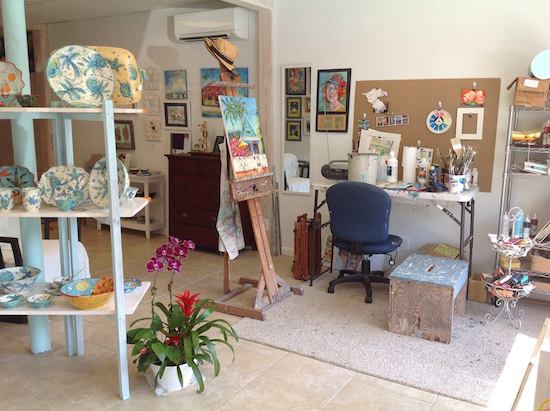
Studio Space
These numbers are based on responses I received through Twitter and Facebook. (sf = square feet)
Central Virginia (476sf): $355/month
Key West, FL (750sf – 3 rooms): $1600 for studio + store front
Ravenswood, Chicago, IL (600+ sf): $540/month
Downtown Chicago, IL (sf n/a): $485/month
Gages Lake, IL (1200sf): $500/month with utilities
Albuquerque, NM (175sf): $200/mo in nonprofit art center, includes utilities, not air-conditioned
Colorado Springs, CO (400sf): $455 includes utilities
San Francisco, CA (154sf): $431/month and says most of her friends pay around $800 for an equivalent space
San Diego, CA (185sf): $550/month is on the high side because it’s in a retail space and on the art walk path
Los Angeles, CA (800sf, skylight, private bathroom, gated parking): $1050/month
Chilturn, Victoria, Australia: $120AU/week (about $105US) + $1100AU year in utilities

Inventory Business Management System
Artwork Archive: $9-36/mo, Cloud-based (2026 update)
Email Delivery Platform
MailChimp is free up to 2,000 names. You can pay a little for more features. Those rates start at $10/month for up to 500 contacts.
Constant Contact starts at $20/month for up to 500 contacts.
iContact starts at $14/month for up to 500 contacts.
Business Licenses
Registering a Doing-Business-As name with your state. In Colorado, this fee is $20 for a sole proprietorship.
Applying for a sales tax license is $16 (for 2 years) in Colorado with a one-time deposit of $50 that is refundable. It is an additional $20 fee (for 4 years) in my city.

Entry Fees
Average: $15-40 per entry for art shows and festivals.
In contrast, a gallery booth at Art Basel Miami Beach in 2012 was $55,000.
Click here for the art fair cheat sheet.
Booth Set-Up
Textile artist Lisa Call spent $11,380 on her first booth for the American Craft Council Show in Baltimore. Of that, about $5,000 was for items she will reuse. That means about $6,400 for each additional year she does the show.
The booth fee for the 2014 American Craft Council wholesale show in Baltimore was $800-1500.
Flower photographer Patti Hankins offers these numbers:
- I started with grid walls and an EZ Up Canopy. The grid walls were about $900 and the EZ up was under $200. I upgraded to my current booth in stages.
- Booth fees range from $75 to $1000 for craft shows. I often do a booth and a half indoors. Flower & garden show fees are much higher.
- My tent is a TrimLine that was $1000 for the basic setup plus more for extra canopies, sta-bars, etc.
- Pro Panels are more than $3000. I have enough walls for a 20-foot booth, bins, desk, and shelf.
- Chevy Cargo Van was more than I care to remember. Having a van to haul everything is so much easier than dealing with a trailer, and it’s so nice to have a vehicle just for shows.
- Bonus info … And for photographers who plan on doing their own printing, you’ll need a professional photo printer. My Epson 9800 was $5000.

Website
Domain name (URL): around $15/year at 1and1.com and GoDaddy, although they offer very inexpensive first-year prices to hook you. NameCheap is $10.69/year.
Website hosting: $4-20/month and up
After watching my previous hosting service and platform deteriorate badly in 2013, I vowed to stay away from the numerous companies bought up by EIG. Here’s why. I now pay a lot more for more reliable up-time and better customer service at LiquidWeb. I found this review site to be particularly helpful when searching for a new Web hosting service.
Web designer: fees up to $75/hour
Printed Material
Graphic Designers: up to $75/hour
Business Cards
Moo: $19.99 for 100 MiniCards or $39.98 for 100 Classic (regular size)
GotPrint: $18.10 for 100 standard cards (14pt Premium Uncoated Cover)
VistaPrint: $13.39 for 500 (front only)
OvernightPrints: $39.95 front+back for 500 Art Biz Coach cards
4×6” Postcards (+ shipping to my Colorado home (500 quantity) color front and black back)
PrintingforLess: $131.62 (120# gloss color)
GotPrint: $47.01 (14pt Gloss Coated Cover with UV)
Modern Postcard: $144.35
Brochures
500 4-color, Tri-Fold, 100lb Gloss (folds to 3.6” x 8.5”)
Modern Postcard: $406
PsPrint: $308.70 (they had a 60% off promotional discount when I checked – total =$123.48!)

Catalogs
Blurb: $12.99/each for 7×7” square with 20 pages
PrintingForLess: $4.04 each for 5.5×8.5” with 20 pages when you print 250 copies
PsPrint: $10.60/unit when you print just 25 copies (gloss color interior + 13 pt matte cover) or $2.514/unit for 250 copies
Assistants
Bookkeepers
$20-35 an hour for sole proprietorships, which most artists are. More for corporations. The more complicated your books and tax preparations are, the more you should expect to pay.
Virtual Assistants or Online Business Managers
$35 and up per hour
Studio assistants
$10-20 an hour
In sum
Yes, your art business is an investment and the expenses can add up. It’s critical to keep excellent financial records.
The United States Tax Court recently ruled in favor of artist Susan Crile who had been claiming expenses for 40 years without seeing much profit. She beat the IRS!
==>Read the comments below from artists who told us about their expenses.
The post What Your Art Business Will Cost You appeared first on Art Biz Success.
]]>The post Organizing Financial Invoices and Receipts Electronically appeared first on Art Biz Success.
]]>If you haven’t done so already, it’s time to update your files for the New Year.
I thought I’d share how I organize my finances electronically to avoid finding more space for paper files.
Here’s how my Finances e-file looked a couple of days ago.

Note that I have 4 major files for every year: Book Orders, Invoices, Receipts, and Taxes.
I add the year (2012 in this case) to the names of the files because they’re the same folders every year and I wouldn’t be able to tell them apart in a search if they weren’t differentiated somehow. (This took me a long time to figure out!)
When the New Year Begins
1. When the New Year begins, I put all of the old files into the Archives.
The image at right shows where those 2012 folders are now. →
2. Then I create new folders for the New Year – using the same old categories. ↓
By using consistent folder names, I create a habit. I know what things are called when I go to look for them!
I Haven’t Given Up on Paper
E-filing is my preference for a simplified workflow, but paper receipts are inevitable. Because I believe in making things easy, turning all paper receipts into e-documents is an unnecessary extra step for me.
I file all of my paper receipts and invoices for my business in an accordion folder by month.
This system has worked for me for years. (Update 2023: Still working for me!)
Steal from it what you think might work for your business or tell us your alternative method in a comment below.
The post Organizing Financial Invoices and Receipts Electronically appeared first on Art Biz Success.
]]>The post How to Know It’s Time for a Change appeared first on Art Biz Success.
]]>Change helps us innovate and become better leaders.
This is easy for me to say because I love change. You’ve probably heard my announcements that my series of 3 classes ends with the Get Organized class, a new website is in the works, and my Shameless Self-Promotion workshops will be put to rest after Nashville in March of 2013.
Why all of the changes? GROWTH!
This is how the Universe works, too. Leaves changing colors, seasons changing, temperatures changing and, this past weekend, time changing. Nothing stands still.

Still, I understand that change can be debilitating for many people.
If you are open to change, there are two criteria I advise you to use when deciding whether change is necessary.
1. You Aren’t Growing
Some people will tell you that work shouldn’t be too much of a strain, — that it should be effortless. I disagree. I think growth only happens when we stretch.
If something has become too easy for you, ask yourself if it’s time for a change.
Every week I struggle to make the Art Biz Insider newsletter and Art Biz Blog posts valuable to you. These have never been easy! But I continue to grow through the process of listening to you, researching, writing, and interacting about the topics.
If you’ve been doing the same thing in your studio or marketing the same way for as long as you can remember, it’s probably time for change.
Change makes us a little (or a lot!) uncomfortable, which usually means that growth is ahead.
2. You Aren’t Seeing Results
If you have been doing a task consistently over time and you aren’t seeing the desired results, it’s time to change!
If you aren’t gaining subscribers and comments on your blog, you need to shake things up. Change the time of day you’re publishing, the frequency, the day of the week, the titles of your posts, the content, and/or the size of images. Experiment!
If social media platforms suck all of the energy out of you and leave nothing for your art or business, stop the madness. Reconsider your use of social media sites with the possibility that they might not be your best marketing tools.
If you aren’t selling as much art as you’d like, you have to consider changing your entire marketing strategy:
Are you showing at the right venues?
Does your festival booth design say “Come on in!” or “Stay back!”?
Are you networking in the right places and with the right people?
Is your pricing out of whack?
Are you regularly staying in touch with contacts?
Are you following up and following through?
Does your promotional sequence need tweaking?
Are you throwing ideas out there without a plan to be consistent and strategic?
What is it time to change in your art business?
The post How to Know It’s Time for a Change appeared first on Art Biz Success.
]]>