That’s our topic for this Art Biz Podcast.
Listen in as Claudia McClain, founder of HomeBusinessInsurance.com, addresses the various levels of an artist’s career and the kinds of insurance you need at each point.
You never think about business insurance until someone asks to see your certificate of insurance or, more likely, until it’s too late. Until something bad has happened.
If you are an artist selling your art and you don’t have a specific policy for your business, this episode is for you. Refrain from clicking the Play button at your peril …
Level 1: Homeowners Insurance Only
This is the earliest phase in an artist's career and is for hobbyists only. You're making art just for yourself, not to sell.
At the point when you start selling, you are considered a business by the IRS and must take additional steps to protect your business.
Level 2: Incidental Business Occupancy Endorsement
This is a very affordable option for your home studio, which is tacked onto your homeowners' policy.
It doesn't cover the instances when you take your art outside of your home, and it might not cover liability when you have visitors to your home studio. That's when you need ...
The post The Art Biz ep. 7: 4 Levels of Business Insurance for Artists appeared first on Art Biz Success.
]]>That’s our topic for this Art Biz Podcast. Stay with me because this is important.
Claudia McClain addresses the various levels of an artist’s career and the kinds of insurance you need at each point. I loved the way she broke this down – explaining very clearly what type of insurance you need at each level.
You never think about business insurance until someone asks to see your certificate of insurance or, more likely, until it’s too late. Until something bad has happened.
If you are an artist selling your art and you don’t have a specific policy for your business, this episode is for you. Refrain from clicking the Play button at your peril …
Listen to or subscribe on iTunes.
Level 1: Homeowners Insurance Only
This is the earliest phase in an artist’s career and is for hobbyists only. You’re making art just for yourself, not to sell.
At the point when you start selling, you are considered a business by the IRS and must take additional steps to protect your business.
Level 2: Incidental Business Occupancy Endorsement
This is a very affordable option for your home studio, which is tacked onto your homeowners policy.
It doesn’t cover the instances when you take your art outside of your home, and it might not cover liability when you have visitors to your home studio. That’s when you need …
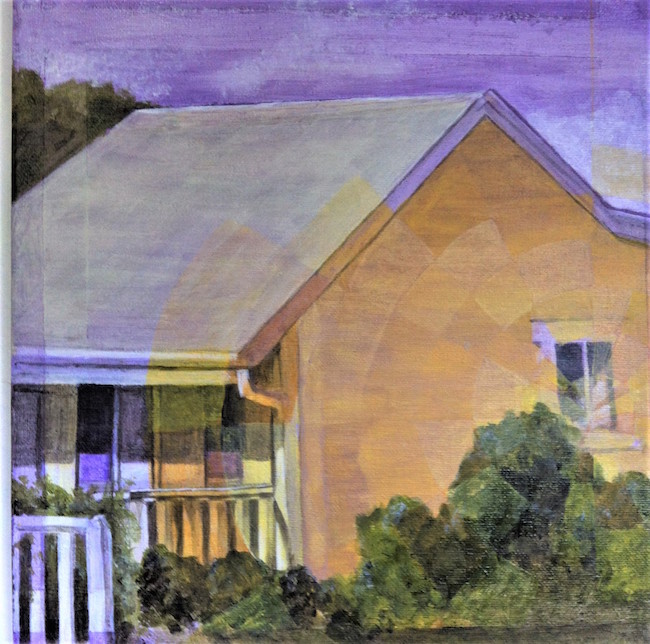
Level 3: Home-Based Business Policy
In this step, your home is still your base of operation, but you are taking your art to festivals or exhibitions outside of the home. These venues are likely to ask for a certificate of insurance. However, even if they don’t, you still want to protect yourself.
If you usually purchase insurance for a single event, it’s probably more cost-effective to insure your business for the whole year.
Level 4: Commercial Insurance
When you get to the point where you are earning significant revenue and/or you have a studio outside of the home, you need to look into commercial insurance.
Mentioned + Resources
Get a quote for what insurance might cost for your art business. (Rates based on Western U.S.)
About My Guest
Claudia McClain is founder of McClain Insurance which, serendipitously, she started in her own home in 1977.
Claudia came to my attention through a mutual artist-client (thanks, Cynthia Lait!) and clearly has a passion for helping artists make sure their businesses are protected.

Subscribe on iTunes and please leave us a rating there. We’d love to know that you’re listening and enjoying it!
The post The Art Biz ep. 7: 4 Levels of Business Insurance for Artists appeared first on Art Biz Success.
]]>Deep Thought . . . .Do you have health insurance? Did you get it for you as an individual or through work or a spouse?
Have you tried to access health insurance through the HealthCare.gov site? Or have you used a state exchange?
The post Artists and Health Insurance appeared first on Art Biz Success.
]]>Deep Thought
Do you have health insurance? Did you get it for you as an individual or through work or a spouse?
Have you tried to access health insurance through the HealthCare.gov site? Or have you used a state exchange?
If so, what did you find out?
Has the Affordable Care Act made any difference in your ability to obtain health insurance?
I look forward to a meaningful discussion about this, but it’s not my intention to incite political rants. We’re here to help other artists out.
The post Artists and Health Insurance appeared first on Art Biz Success.
]]>The post Is Your Art Business Prepared For Disaster? appeared first on Art Biz Success.
]]>Art Biz Blog readers (you!) know that these unsexy topics are necessary to confront.
Do not put this off. Right about now you’re probably saying Bor-ing! and you want to leave. But this is critical.
Take a look at any of the stories on the Craft Emergency Relief Fund (CERF+) website and you’ll see that many artists haven’t acted in time.
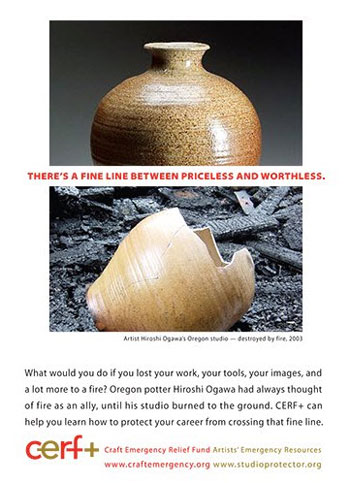
Whether it’s the floods in the Midwest, the hurricanes on the East Coast, the fires in the West, or a freak accident, your livelihood is at risk.
You cannot control disasters. You are a victim to their fury.
You might as well work on the things you can control and mitigate the effects of a natural or manmade disaster. These tips were generated with the help of CERF+.
1. Understand your business insurance coverage.
Homeowner’s and renter’s insurance almost never covers business-related losses or liability. Your art business most assuredly falls under the category of business insurance.
Read your policy! Know where you stand and seek supplemental business insurance if you’re not covered.
2. Save!
You need a cushion of savings to get through any disaster. This comes in handy even when the disaster is a prolonged illness.
Put aside money in a savings account to help you survive a rough period.
3. Consider flood insurance.
What is your risk of flooding? Serious flooding can result not just in coastal areas but far inland in low-lying areas and near rivers and streams.
We are currently witnessing the devastation from spring rains and snow thaws and hurricane season begins a month from now.
Be aware that serious flooding sometimes occurs in areas that are not designated as flood zones.
While insurance normally covers water damage from burst pipes or leaking roofs, neither business insurance nor homeowner’s insurance covers damage from “rising water.”
The National Flood Insurance Program sells insurance to cover these risks. You need separate flood insurance policies to cover your home and your business assets, even if your art-related business operates from your home. Renters can also buy this insurance.
4. Back up your computer and store a backup copy in a safe place.
You’ve heard this before, but are you doing it? No one really believes it’s necessary to back up off-site until it’s too late.
A safe offsite location can store copies of your images and critical records such as business documents, sketches, glaze formulas, and process notes. This place should be 50-100 miles away from your studio, where it is unlikely to be affected by the same disaster.
 A safe deposit box in your community, while useful, may not be the best place to put this material.
A good option these days might be online storage, like Dropbox. I use Backblaze to back up my computer to the Cloud.
5. Get the Studio Protector.
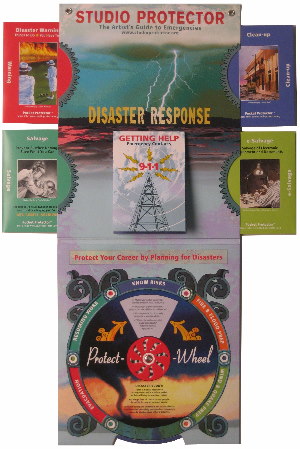
CERF+ has created the Studio Protector, a terrific and inexpensive tool to help you prepare for an emergency. (One side is shown here.) At only $16, the Studio Protector will help you be savvier about your assets.
Today is MayDay, designated by the Society of American Archivists as a time to encourage those in the cultural communities to prepare for disaster in order to protect our heritage. Your art is part of that heritage.
Share your stories about disaster-related lessons you learned too late. Your experience may prompt another artist to take action this MayDay.
The post Is Your Art Business Prepared For Disaster? appeared first on Art Biz Success.
]]>The post Is your art business prepared for flood? Fire? appeared first on Art Biz Success.
]]>CERF+(*) encourages all artists to consider taking these 5 steps toward peace of mind.
1. Read your insurance policy and take notes.
Homeowner’s and renter’s insurance almost never covers business-related losses or liability. If you are reading this, you probably are in business (at least by an insurance companies’ definition). Know where you stand and seek supplemental business insurance if you’re not covered.
Tip: Insurance policies make good airplane reading.
2. Assess your risk of floods and look into flood insurance.
It is important to be aware that serious flooding sometimes occurs in areas that are not designated as flood zones. Hurricane season is a month away and spring rains and thaws are happening right now. Serious flooding can result not just in coastal areas but far in-land in low-lying areas and near rivers and streams.
While insurance normally covers water damage from burst pipes or leaking roofs, neither business insurance nor homeowner’s insurance covers damage from “rising water.” The National Flood Insurance Program has been set up to sell insurance to cover these risks. You would need separate policies to cover your home and your business assets, even if your art-related business operates from your home. Renters can also buy this insurance.
3. Back up your computer and store a backup in a safe place.
Find a Safe Offsite Location to store copies of your images and critical records such as business documents, sketches, glaze formulas, and process notes. A SOL is a place 50-100 miles away from your studio that is unlikely to be affected by the same disaster.
A safe deposit box in your community, while useful, may not be the best place to put this material. Read Safekeeping Your Business Records.
4. Get a weather radio.
While weather radios have been strongly promoted in “tornado alley” and other areas that are prone to weather-related disasters, shifting weather patterns make this inexpensive warning system a good investment anywhere.
A NOAA Public Alert certified radio activates automatically when a warning in your area is issued by the National Weather Service, even if the radio is turned off. This is especially important if you are asleep or working in the studio and not tuned to a local radio or television station that carries the alerts.
5. Get the Studio Protector.
CERF+ has created the Studio Protector–a terrific and inexpensive tool to help you prepare for an emergency. (One side is shown here.) At only $16, it’s affordable, it will help you be more savvy about your assets, and the sales support a good cause.
(*Craft Emergency Relief Fund + Artist Emergency Resources–an unwieldy name change–but that’s a different subject)
The post Is your art business prepared for flood? Fire? appeared first on Art Biz Success.
]]>The post Are you ready for a disaster? appeared first on Art Biz Success.
]]>How would you go about salvaging the wreckage after a flood or earthquake?
Do you have a fire safety plan in place?
Even if you don’t live in a place considered to be prone to natural disasters, you still need to be prepared for more localized disasters like studio fires and broken pipes.
Enter The Studio Protector
The Studio Protector (The Artist’s Guide to Emergencies) was created by the esteemed Craft Emergency Relief Fund (CERF), whose mission is to strengthen and sustain the careers of artists by building emergency readiness and relief support.
The Studio Protector–which is wall-mounted, like a calendar–helps you create and implement a plan. It features two spinning wheel charts that explain how artists can plan ahead for emergencies and reduce the impact of a disaster. Five “pocket protectors” or pullout guides provide detailed information about what to do in the minutes before a disaster strikes, how to clean up after a calamitous event and how to salvage fire and water damaged items.
The Studio Protector wall version also coordinates with an online e-version that goes more into depth on disaster readiness, response, and recovery.
The Studio Protector is only $16 and proceeds go to support the production and distribution of artists’ emergency resources. This would be a great gift for any artist, but make sure you also have one of your own. Find out how to order.
I’m a huge fan of and donor to CERF and receive nothing for promoting this–other than the satisfaction of helping you prepare for an emergency and further supporting CERF’s efforts.
The post Are you ready for a disaster? appeared first on Art Biz Success.
]]>