Making Art Archives - Art Biz Success https://dy-online.com/tag/making-art/ Trusted Art Business Coaching and Consulting Wed, 10 Jun 2026 22:18:15 +0000 en-US hourly 1 https://wordpress.org/?v=7.1.4 https://dy-online.com/wp-content/uploads/2022/02/favicon-2-150x150.png Making Art Archives - Art Biz Success https://dy-online.com/tag/making-art/ 32 32 How curiosity and research deepen your studio practice (268) https://dy-online.com/curiosity-research/ https://dy-online.com/curiosity-research/#comments Thu, 11 Jun 2026 12:04:00 +0000 https://dy-online.com/?p=61034 Research isn't only an academic exercise — it's a commitment to following your curiosity, and it's inseparable from making strong work.

In this episode of The Art Biz, I make the case that the artists who build enduring careers are the ones who keep asking questions: about their subjects, their materials, and anything else that attracts them. Here's what that looks like in practice, and why it matters even beyond the studio.

The post How curiosity and research deepen your studio practice (268) appeared first on Art Biz Success.

]]>
Before we get into it, I want you to sit with a few questions:

Why this subject?

Why this material?

Why now?

Not the polished version you’d put in an artist statement, but your initial gut response.

If you can get past “I’ve always been drawn to it” and find something more specific, more alive, more curious to say, you probably already have a research practice. You may just have never called it that.

Let’s name it and embrace it. This episode of The Art Biz is about going deeper by leading with curiosity.

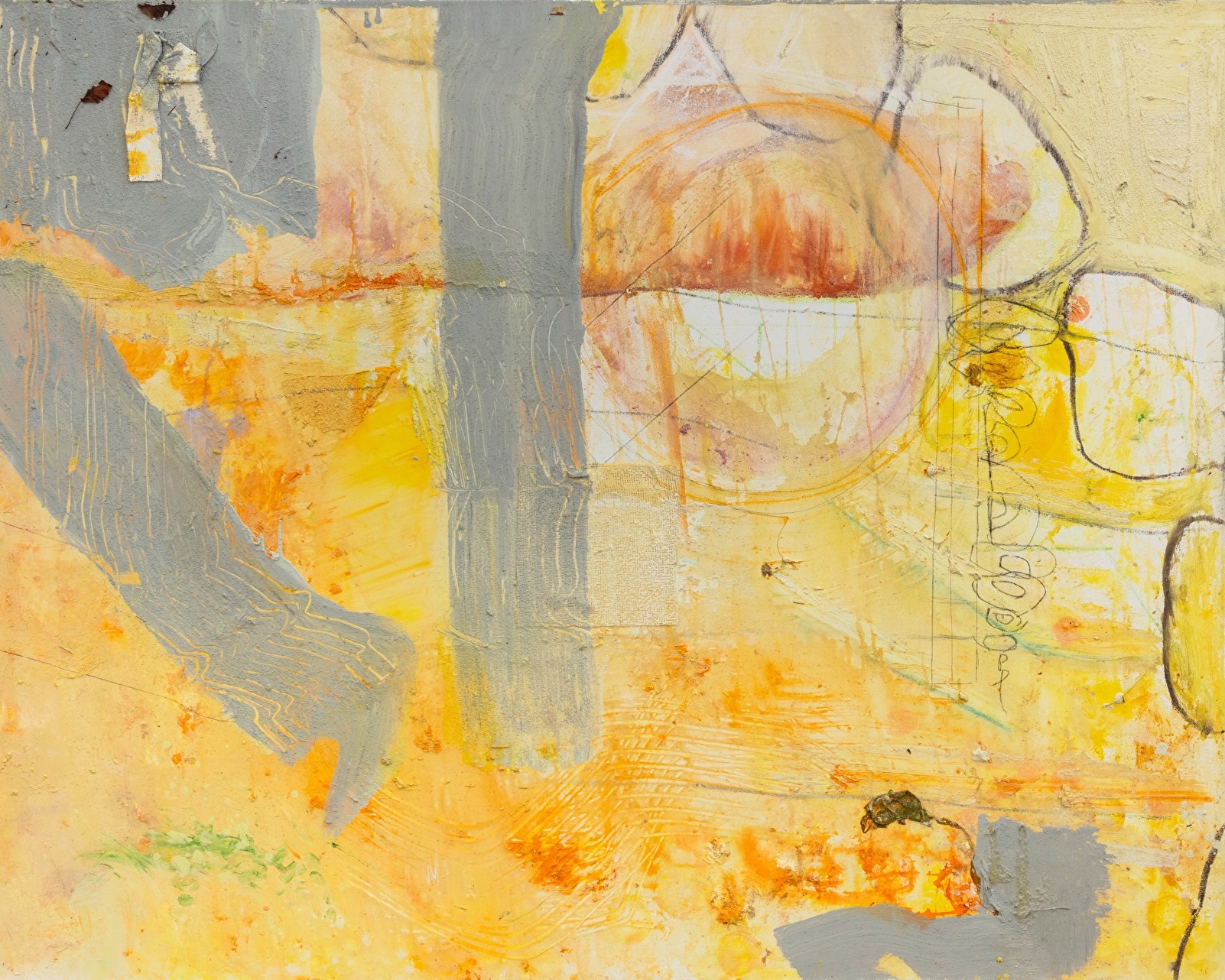
Textural contemporary abstract painting in shades of yellow, gold, and silver.
©Jenny Hope Antes, Series 7 #4, Ancient Firepit Series. Powdered tempera, found charcoal, acrylic, plaster, and tempera on canvas, 48 x 60 x 2.5 inches

I’m not talking about reference images. I’m not talking about scrolling through other artists’ work for inspiration. That’s surface-level inspiration at best.

Research, as I’m defining it, is any sustained act of curiosity about your subject: what it is, where it comes from, what it means, how it behaves, who has cared about it before you and why.

It can look like visiting a place, reading about a historical period, interviewing someone, observing something over time, or working with a material you don’t yet fully understand.

For artists, inquiry and making are distinct activities but inseparable. Each feeds the other.

The question to keep returning to: What don’t I know about this that I should?

Listen

How I lead with curiosity

Quick example of how this has shown up for me.

I’ve been drawn to timelines ever since my days as an art history student. They helped me memorize dates and visualize progression. I used them again when planning shows at the art museum, and I teach their usage in my planning workshop.

I wondered how they might show up in my own art so I began investigating them. I started with web searches and found all kinds of crazy timelines, eventually coming across a definitive book: Cartographies of Time: A History of the Timeline by Daniel Rosenberg and Anthony Grafton.

I have no idea where it’s going. That’s the point. I’m allowing myself to be curious about this interest.

What it does to the work

I want to be very clear about something: you are not researching to find the right answer.

This is a real problem in our lives and how we move through the world right now. We’ve been trained to google the answer, to resolve the question as quickly as possible rather than sit in the unknown. But that’s not what this is.

Research for artists is about being open to more questions. It’s a process of self-discovery — of finding out what you notice, what you think, what only you see because you’re paying attention.

That means no AI, no Google searches looking for conclusions. Use those tools to find a book, to locate an archive, to find where records are held so you can go visit. But the inquiry itself has to be yours.

A word about how to research

Research produces specificity, and specificity is what allows a viewer to connect with work rather than scroll or stroll past it.

The difference between a painting of a barn and a painting of this barn is something we can feel even if we don’t know the backstory: this geography, this history, this light at this time of year. The layers of meaning don’t have to be visible to be present. We feel the weight of them, the sophistication behind them.

Work that comes from genuine inquiry isn’t fully resolved on the surface. It holds something back. It pulls you deeper as the artist, and it pulls the viewer in.

Decorative work is beautiful, and there’s nothing wrong with it, but you see it, register it, and move on. Work that came from real investigation takes us on a ride.

How it shows up in your career

Beyond the studio, a research practice changes things in concrete ways.

  • It creates a body of work with a through-line. You aren’t making a bunch of random, unrelated pieces (however strong individually) but work that’s going somewhere.
  • It transforms your artist statement, which is important because this is the basis for how you define your work to your audience. There’s a significant difference between a statement that summarizes your subject and one that articulates your relationship to it. Research makes the second possible. The personal is universal. Specificity pulls people in.
  • It makes your conversations with collectors and gallerists more substantive. When you can talk about your work with genuine curiosity and depth, you become someone worth knowing, worth showing, worth collecting. People want to be around that. They want to be in dialogue with you.
  • It builds confidence, which is a key asset for an art business since there’s no shortage of things and people that will try to erode it. When you know where the work is grounded, that confidence is earned.

The career-level effect: depth of practice becomes depth of reputation over time.

Depth of practice

becomes depth of reputation

Making curiosity a practice

Research isn’t a phase you move through before a project begins. It’s ongoing. Something you’re always feeding, especially when you’re not in the studio.

Keep a notebook. Take audio notes on walks. Write on your sketches and preparation drawings rather than keeping them separate from your thinking.

When something catches your attention — a color, a story, a texture, a fact — stay with it long enough to ask why. Then ask why again.

That habit of asking is what distinguishes artists who make a lot of good individual pieces from those who build a meaningful body of work.

The post How curiosity and research deepen your studio practice (268) appeared first on Art Biz Success.

]]>
https://dy-online.com/curiosity-research/feed/ 4
Finding Your Artist Voice through Mentorship with Julie deBoer (ep. 201) https://dy-online.com/deboer-mentoring/ Thu, 29 Aug 2024 11:39:00 +0000 https://dy-online.com/?p=50925 This episode of The Art Biz delves into developing an artistic style with the support of mentorship. Julie and I explore the challenges of finding a unique voice, the significance of embracing what naturally emerges in your work, her shift from gallery representation to self-sales, and the value of being part of an artist community.

We end with a conversation about how, with so many commitments, Julie prioritizes her art.

The post Finding Your Artist Voice through Mentorship with Julie deBoer (ep. 201) appeared first on Art Biz Success.

]]>
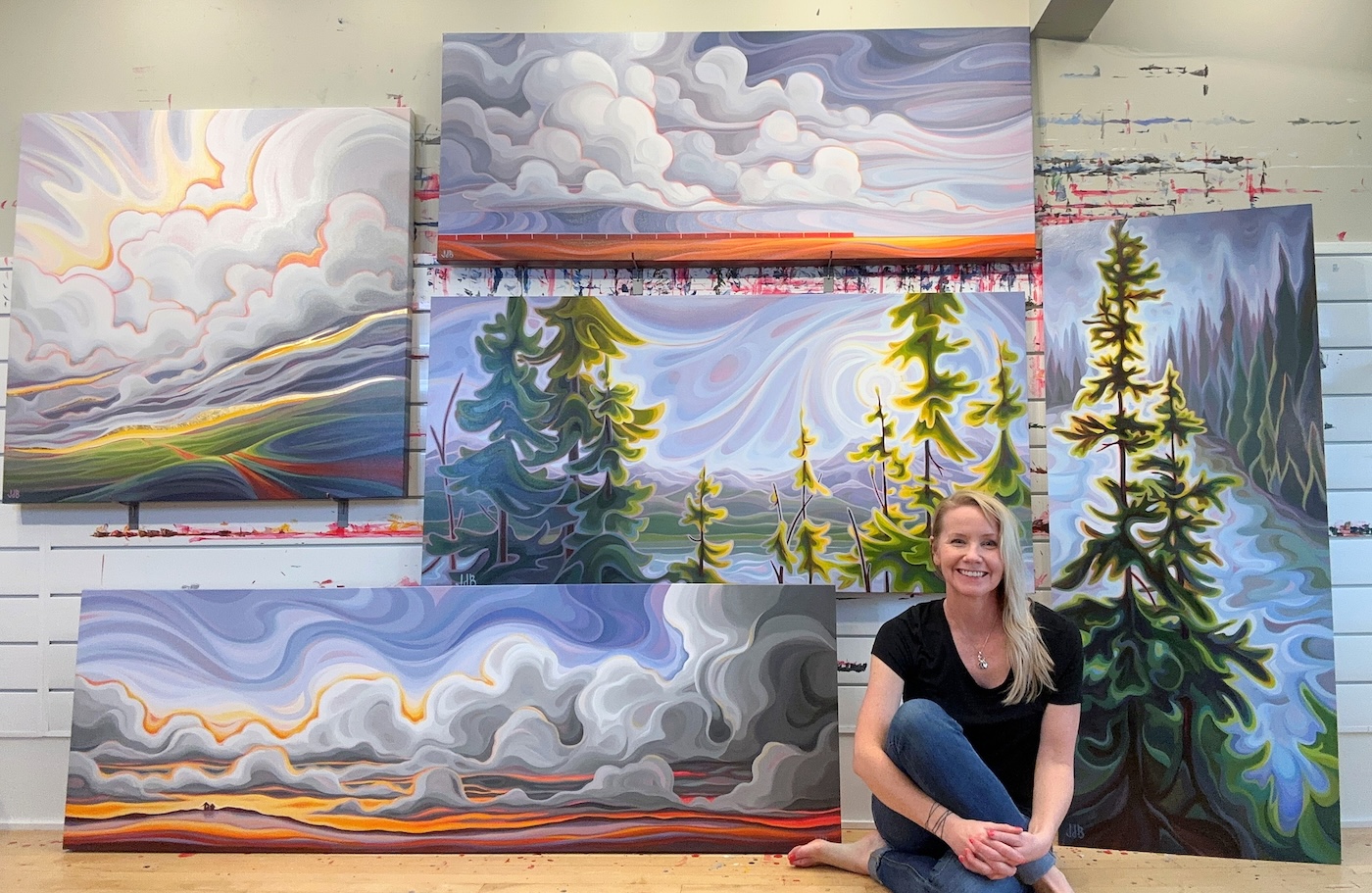
Artistic style is something most artists struggle with when starting out. There’s a lot of pressure to find your own voice so that you’re not cranking out work that looks like that of your teachers.

I don’t think that a consistent style is as important as it was even 20 years ago, but I know it’s still worth pursuing.

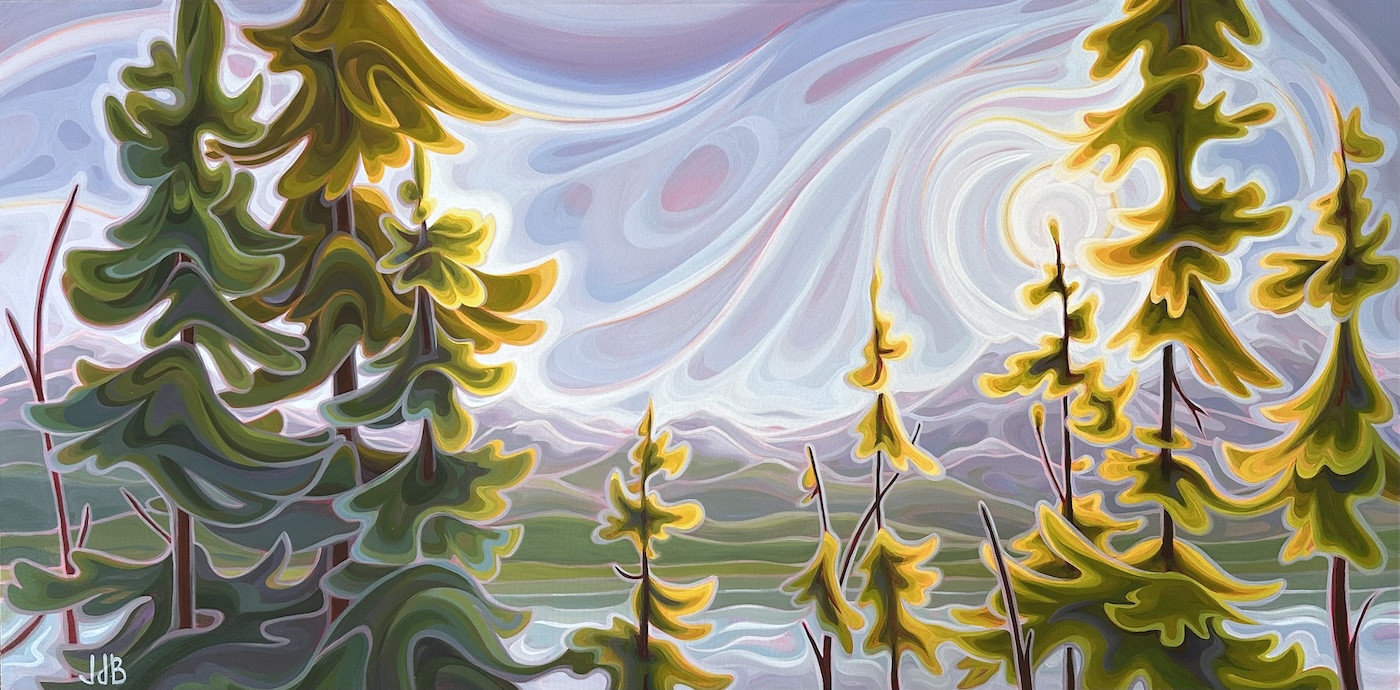
Julie deBoer acrylic painting
©Julie deBoer, In All Our Glory. Acrylic on canvas, 30 x 60 inches.

In this episode of The Art Biz I talk with artist Julie deBoer, founder of Mastrius, a mentorship platform for artists. While we do discuss Mastrius in the second half of the show, I was most interested in talking with Julie about how she developed her painting style with the help of a mentor—primarily because she resisted what was coming from her hands for so long.

We discuss:

  • Why she feels it was a mistake to try to go it alone rather than embrace the resources that were available for her to grow as an artist.
  • Her decision to leave her galleries to focus on self-sales.
  • Finding your creative edge, which led Julie to finding her personal style.
  • Embracing what naturally wants to flow from your hands.
  • The value of a mentorship, receiving feedback, and being part of an artist community.
  • How Mastrius is structured for artist mentoring.
  • The episode wraps up with one of my favorite discussions: how Julie finds the time to fit everything in while prioritizing her art. 

Listen

Mentioned

Julie deBoer in her studio
Julie in her studio with a few pieces featured in a recent gallery show.

Julie deBoer Quotes

“I just felt like I was hitting my head against the wall for a couple years, not enjoying the process. So that’s when I decided just to cut that out and just let it happen.”

“We can stare at our own work day after day after day … and struggle and not know what the issue is that we’re struggling against. And all it takes is someone to take a quick look and say, Oh yeah, it’s right there.”

“Being in relationship with other artists really opened my mind to, Oh my goodness, there’s many, many different ways to do this journey. There’s many different definitions of success.”

“You don’t know how badly you need community and connection until you have it, and then you realize, Oh, I’ll never go without again.”

“We really aren’t in competition with each other…. We’re running the race side by side and we just go farther, faster, and it’s much more enjoyable and life giving.”

Julie deBoer, founder of the global mentorship community for artists, Mastrius, is celebrated for her bold, stylized, whimsical paintings that flow and dance across the canvas. Best known for her large, stormy sky landscapes, her new work explores the movement and story of fire and smoke.

Though self-taught and isolated for many years, she found her greatest success once she stepped out of her studio and into mentorship and relationship with other artists. She’s an avid believer that we find success and joy faster when we work together, shoulder-to-shoulder, in non-competitive, goals focused, and supportive community.

Follow Julie on Instagram: @julie.deboer.art

Julie deBoer

The post Finding Your Artist Voice through Mentorship with Julie deBoer (ep. 201) appeared first on Art Biz Success.

]]>
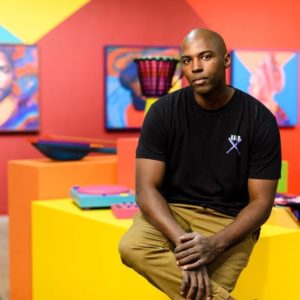
The Art Biz ep. 149: The Traveling Artist: Residencies with Amy Clay https://dy-online.com/amy-clay-residencies/ https://dy-online.com/amy-clay-residencies/#comments Tue, 30 May 2023 15:13:43 +0000 https://dy-online.com/?p=43487 Artist residencies play important roles in an artist’s career, but there are as many different types of artist residencies as there are artists who fill them.

In this episode, Amy Clay shares what she has learned from being an artist-in-residence in more than 30 locations around the world, including what she looks for in a location, how she funds them, and why they're important to her practice.

The post The Art Biz ep. 149: The Traveling Artist: Residencies with Amy Clay appeared first on Art Biz Success.

]]>
If you are an artist who loves to travel and explore new places, this is for you.

Artist residencies are something I’ve been wanting to dig into for a long time. Fate—in the guise of artist Janice Mason Steeves—put me in touch with Amy Clay.

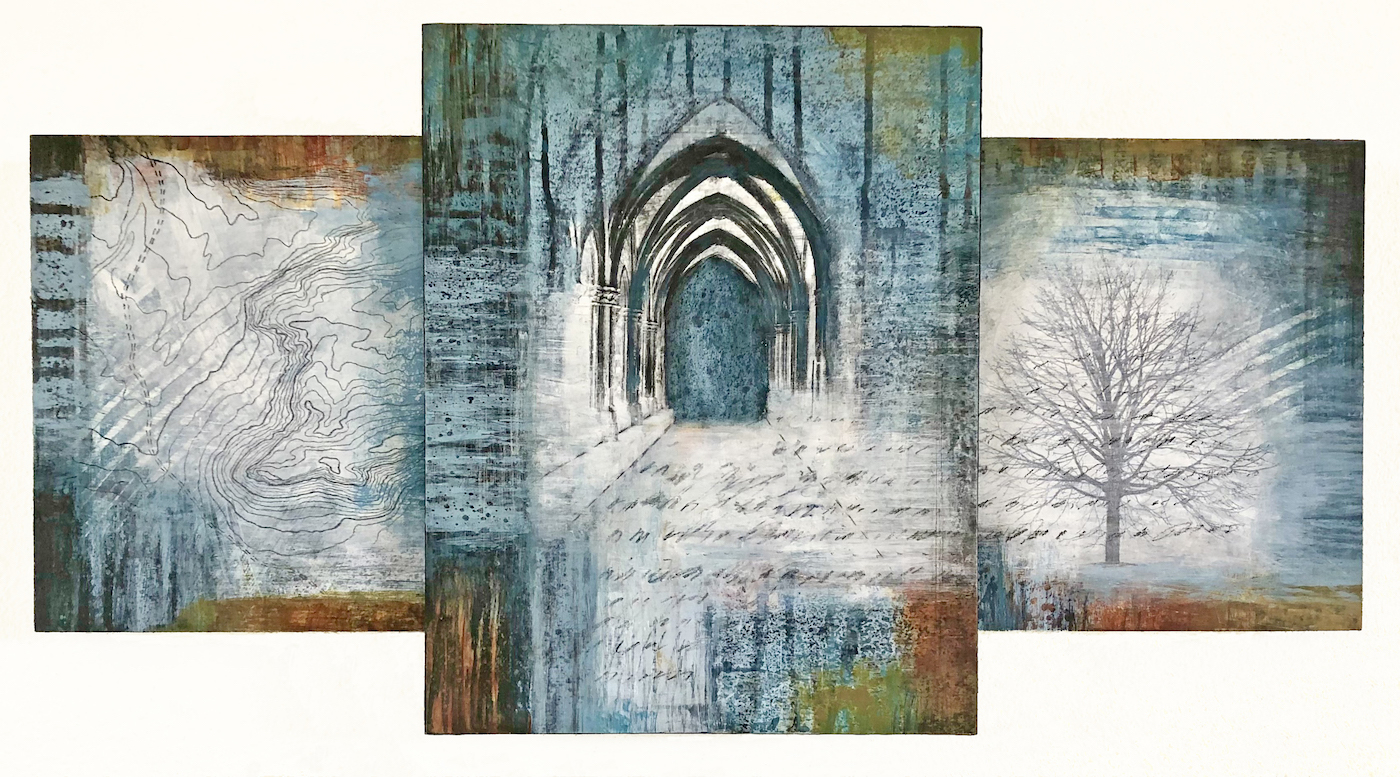
Triptych painting by Amy Clay
©Amy Clay, A Great Thought is Eternal. Acrylic and toner on multiple panels, 14 x 27.25 x 2 inches.

In this episode of The Art Biz, I talk with Amy Clay about her life as a “professional” artist-in-residence.

She’s away from her home base for 4 to 6 months at a time, stringing together one artist residency after another to fulfill her lust for travel and build what she calls her visual library.

Amy and I discuss:

  • How this lifestyle started for her.
  • The various formats of artist residencies.
  • What she looks for in a location.
  • How she finds funding for residencies.
  • How residencies have made her feel part of a global artist community.

Listen

Mentioned

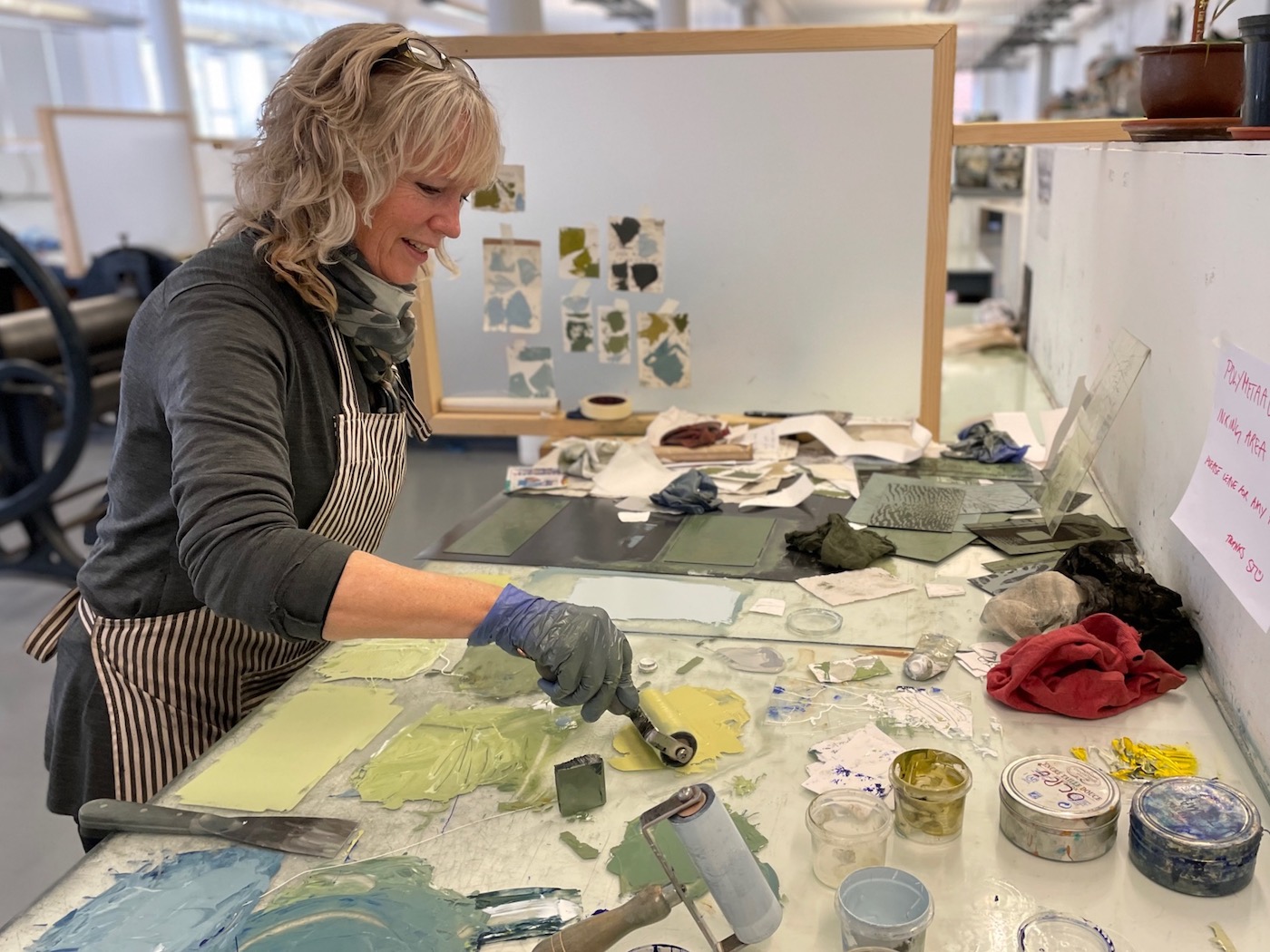
Artist Amy Clay in the studio
Amy as artist-in-residence at Glasgow Print Studio, Scotland 2023, working on one of her prints.

Amy Clay Quotes

“I’ve made friends from all over the world that I’m still in touch with.”

“You really do feel part of this kind of global artist community.”

“As artists, we’re always building this visual library.”

“It’s about absorbing all of the sensual—the smells and tastes and sounds and light and all of these kinds of things. I’m taking that in, but I’m also taking in and expressing some essence of the place.”

Amy’s 5 Favorite Residencies (so far)

  1. Arteventura, southern Spain
  2. Admiral’s House, Isle of Skye, Scotland 
  3. BigCi Residency, Blue Mountains, Australia     
  4. InCahoots  Residency, Petaluma, CA  (printmaking only)
  5. Obras Foundation, Portugal   

About My Guest

Amy Guion Clay is a painter/printmaker, a traveler and teacher. Her abstract paintings and etchings reflect her love of traveling the world as an artist in residence. To date she has been to over 30 different residencies in countries around the world such as Turkey, Spain, Iceland and Australia. She is most interested in the mythical journey and how place impacts her work, and her explorations have led to many exhibitions both nationally and internationally.

She currently resides in Boulder, CO and finds the Rocky Mountains and the local art community in Boulder and Denver to be rich with inspiration when she’s not on the road.

Check out her online course: Artist Residencies

Follow her on Instagram: @amyclayart

The post The Art Biz ep. 149: The Traveling Artist: Residencies with Amy Clay appeared first on Art Biz Success.

]]>
https://dy-online.com/amy-clay-residencies/feed/ 2
The Art Biz ep. 131: Injecting Personal Narrative into Your Art with Sara Lee Hughes https://dy-online.com/narrative-hughes-podcast/ https://dy-online.com/narrative-hughes-podcast/#comments Wed, 12 Oct 2022 18:53:09 +0000 https://dy-online.com/?p=40947 Will art sell when it's focused on the artist’s personal narrative? Sara Lee Hughes is deep into a body of narrative paintings with that is steeped in her personal story.

We discuss the genesis of this body of work (It’s a great story!), how Sara Lee focuses on the long game, how she keeps her ideas, and how she balances motherhood with her studio practice.

The post The Art Biz ep. 131: Injecting Personal Narrative into Your Art with Sara Lee Hughes appeared first on Art Biz Success.

]]>

I’m a huge fan of the photographer Sally Mann who, in the documentary about her work titled What Remains, said that it never occurred to her to look outside of her home, family, and immediate vicinity to find inspiration.

So many artists feel they need to travel. To find exotic locations. Never exploring what is right in front of them or what they encounter in their daily lives.

This results in missed opportunities to make art that is uniquely your own.

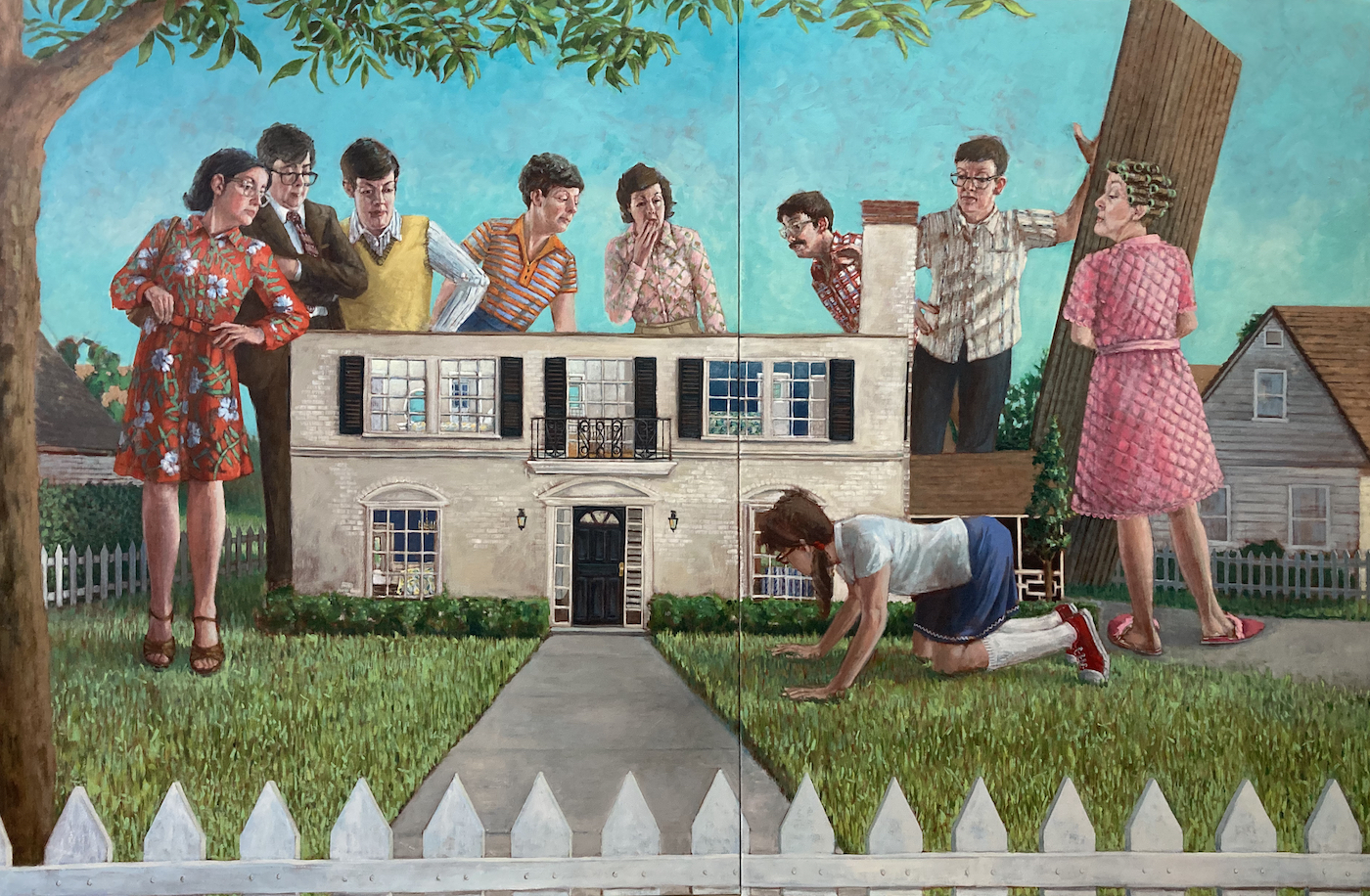
Oil painting of group of people with same face peering into windows of house that is smaller than them | on Art Biz Success
©2022 Sara Lee Hughes, What Will The Neighbors Think?! Oil on canvas, 54 x 82 inches.

In this episode of The Art Biz I talk with Sara Lee Hughes who is deep into a body of narrative paintings with recognizable imagery that is steeped in her personal story—going so far as to include her self-portraits in many of them. (As in the many faces of Sara Lee in the painting above.)

I wanted to ask Sara Lee about making work with her life experience at its core, and, honestly, the market for art that is so personal. The bottom line: Will art sell when it’s focused on the artist’s personal narrative?

Sara Lee says her ultimate intention is that she gets under your skin. That, when viewing her paintings, you start to question your actions and might even find yourself reflecting on the encounter weeks later.

We discuss the genesis of this body of work (It’s a great story!), how she is looking at her art in terms of the long game rather than seeking quick gratification, how she keeps her ideas, and how she has created a discipline that balances motherhood with her studio practice.

Listen to the Podcast

Highlights

  • Waiting, Father Daughter Dance, and other paintings inspired by Sara Lee’s life. (1:55)
  • The family letters that have helped Sara Lee navigate her true self. (6:57)
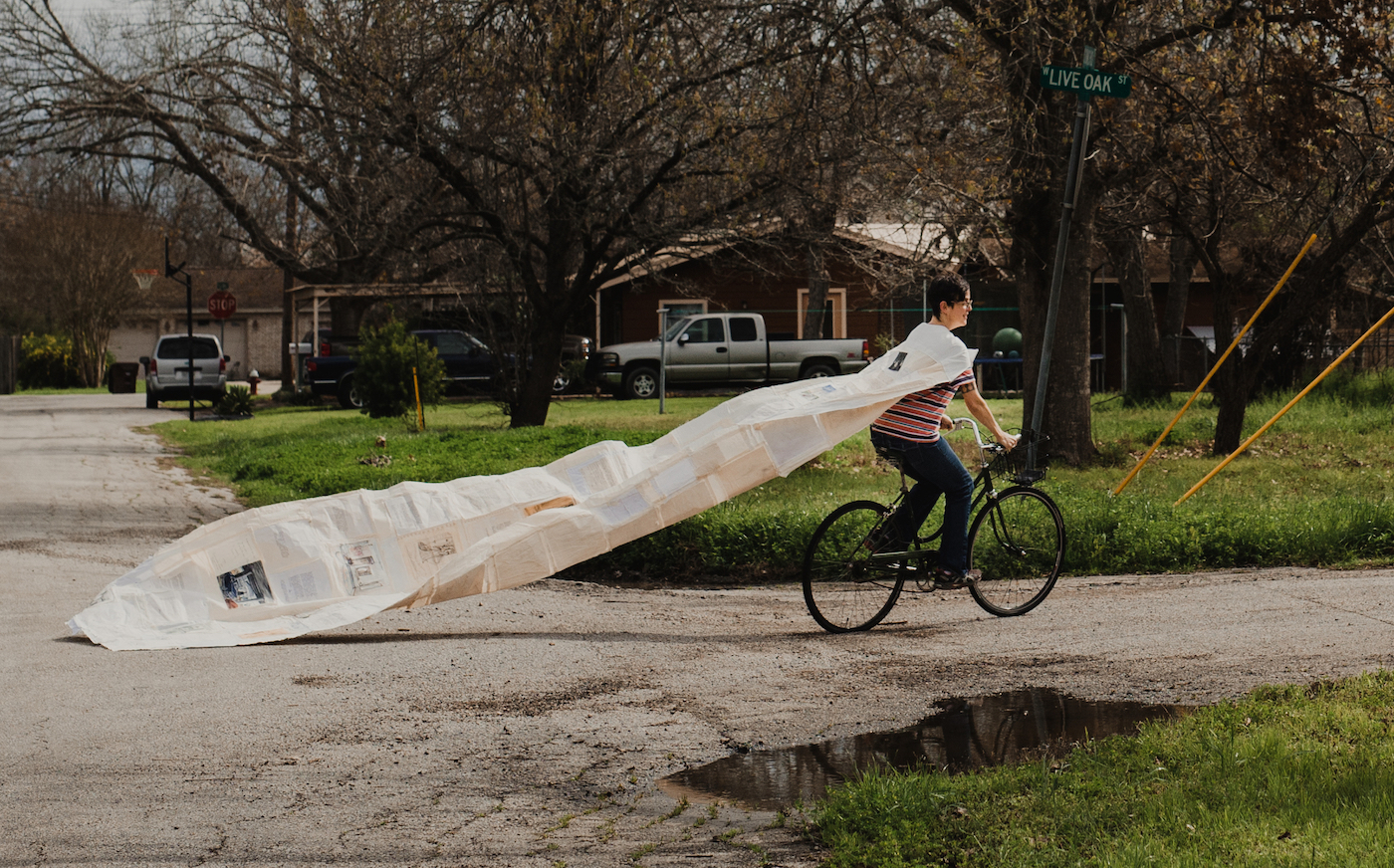
  • Sara Lee’s 12-ft superhero cape and what it represents. (9:05)
  • Painting from experiences results in sincerity. (11:15)
  • Asking yourself questions can lead to your next inspiration. (14:55)
  • Sara Lee’s decision to use her own face in her paintings. (18:19)
  • The value of painting the part of your history that isn’t talked about. (21:32)
  • There are parts of your story that anyone can relate to. (25:17)
  • Using a list—rather than a sketchbook—to keep your ideas. (27:04)
  • Does personal work sell? (30:20)
  • Sara Lee’s approach to her art business, her schedule, and balancing motherhood. (32:39)
Photo of a woman riding a bike with a 12 foot cape trailing behind her | on Art Biz Success
Sara Lee wearing her superhero cape. Photo by Vanessa Lain.

Sara Lee Hughes Quotes

  • “These tossed-off sketches are seeds for the work that I’ve done in the last five years.”
  • “When I paint from my own experience, there’s a sincerity in my paintings.”
  • “All of my work is my personal experience, so who better to use than myself?”
  • “My intention is to resonate with you through the works that have inspired me to be an artist.”

About My Guest

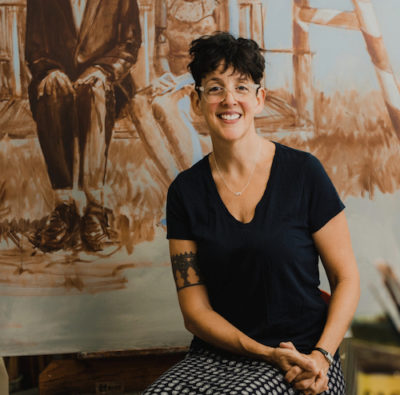
Seated woman with short dark hair in front of large painting | on Art Biz Success
Photo by Vanessa Lain.

Sara Lee Hughes is a narrative painter living and working in Lockhart, Texas. Her representational narratives are influenced by growing up in the south during the 1970s and 80s with divorced parents and operate as metaphors for discovery, other-ness, identity, connection, balance and truth. As a body of work, they highlight moments, memories, and ideas that mark a journey of navigation through the differences between her gay father, straight mother and the socio-cultural norms of the era and those proceeding.

In her work she is most interested in exploring and sharing the connection she had with her father before his death of AIDS, the profound guidance it had on her life, and how this personal experience fits into our country’s broader social and cultural heritage.

Sara Lee studied classical drawing and painting at the Pennsylvania Academy of Fine Arts, where she earned a certificate in painting and printmaking. She earned her MFA in painting from Pratt Institute. 

Follow her on Instagram @sara.lee.hughes

The post The Art Biz ep. 131: Injecting Personal Narrative into Your Art with Sara Lee Hughes appeared first on Art Biz Success.

]]>
https://dy-online.com/narrative-hughes-podcast/feed/ 3
Expanding your skillset to respond to opportunities with Detour (128) https://dy-online.com/skillset-detour-podcast/ Wed, 07 Sep 2022 16:33:28 +0000 https://dy-online.com/?p=40594 Detour doesn’t want to be limited by what he currently knows, so he’s learning how to use new technologies to help him land complex opportunities. He isn't afraid to discover that the best way to approach an artistic problem is something he hasn’t done before.

Big on presenting himself in the most professional light, he says, “You never know who is watching.”

The post Expanding your skillset to respond to opportunities with Detour (128) appeared first on Art Biz Success.

]]>
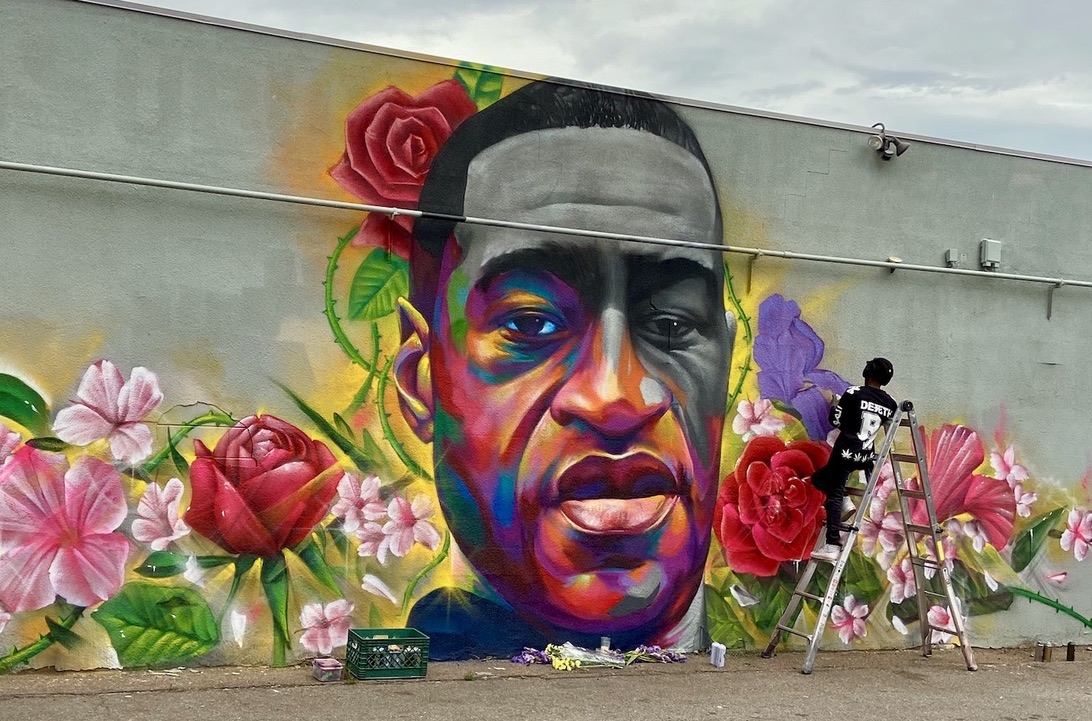
I didn’t know who had the spray paint cans in their hands when I stumbled upon the painting of the George Floyd mural in Denver. I wasn’t surprised to later found out it was Hiero Veiga and Detour working hard that day in 2020.
Mural in Denver of George Floyd by Hiero Veiga and Detour, 2020
Tribute to George Floyd mural in process by Hiero Veiga and Detour, 2020. Personal photo.

I had heard Detour’s name around Denver, and I knew he had recently written a book for artists. You don’t forget the name of an artist who goes by Detour.

After the encounter with the mural, I started seeing Detour’s name in more places.

Maybe it’s another mural, every bit as impactful as the one I watched him paint. Or there’s an article. Or he pops up on the local news.

He’s everywhere. Not just Denver. He travels to communities all over to paint murals, but he also works on canvas, and in music, installation, and sculpture.

In this episode of The Art Biz, I talk with Detour to find how he does it all. By himself and without an assistant.

We discuss his various income streams—prints, murals, corporate sponsorships, and grants—and why he doesn’t want to be limited by what he currently knows. 

To that end, he’s learning how to use new technologies that will help him land complex opportunities requiring new skillsets. He’s not afraid to discover that the best way to approach an artistic problem is something he hasn’t done before.

Detour is big on collaboration and presenting himself in the most professional light. He says, “You never know who is watching.”

I encourage you to listen closely to the questions he asks himself before agreeing to take on new work. Good stuff there.

Highlights

  • Carving out new and alternative paths in the art world. (5:00)
  • Merging your career skills with your creative opportunities. (9:09)
  • How Detour found his artist voice while creating interactive art ‘for the people.’ (11:40)
  • Detour’s active and passive income streams. (17:22)
  • Planning for sporadic paychecks in advance. (22:15)
  • How Detour’s MBA has benefitted his artist endeavors. (25:38)
  • The importance of building relationships with everyone in your artist community. (28:09)
  • Collaborating with other artists to add value to your work. (32:24)
  • Questions to ask when considering—or turning down—opportunities. (34:53)
  • A look at Detour’s typical week. (37:05)
  • Finding fun and balance in the work of every day. (40:18)
  • Why is it important to be an artist who helps other artists?(44:44)

Detour talks contracts and licensing artwork.

Mentioned

Detour Quotes

  • “I want to make sure when I’m presented with an opportunity to solve an idea creatively, I’m not limited by what I’m used to doing.”
  • “You never know what will work until you throw something out there and it sticks.”
  • “When you do art you never know exactly who’s looking at it.”
  • “Everything I do in life is related to art making and sharing.”

Related Episodes

Willie Cole collaborates with name brands and insists on enjoying life and work. 

Advocating for artists in their communities with Louise Martorano.

Leisa Collins reveals an unusual path to finding art commissions.

About My Guest

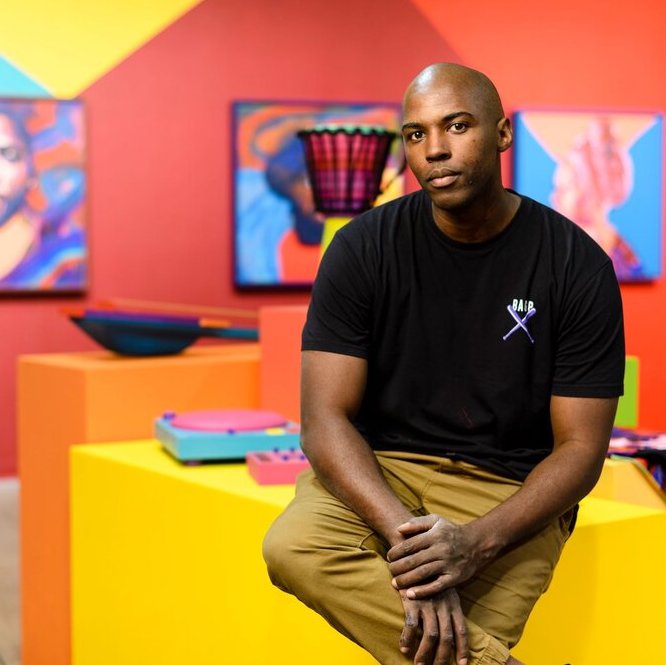
Photo of Thomas Thomas Evans, a.k.a. Detour, is an all-around creative specializing in large scale public art, interactive visuals, portraiture, immersive spaces, and creative directing. His focus is to create work where art and innovation meet. A born collaborator and “military brat,” Detour pulls from every conceivable experience that shapes his landscapes and perspectives.

Explaining Detour’s work is no easy task, as ongoing experimentations in visual art, music, and interactive technologies have his practice continually expanding. With his ever-evolving approach to art, Detour’s focus is on expanding customary views of creativity and challenging fine-art paradigms by mixing traditional mediums with new approaches—all the while opening up the creative process from that of a singular artist to one that thrives on multi-layered collaboration and viewer participation.

Follow him on Instagram @detour303

The post Expanding your skillset to respond to opportunities with Detour (128) appeared first on Art Biz Success.

]]>
Play tops work, connection tops solitude, and confidence tops fear with Willie Cole (126) https://dy-online.com/studio-play-cole-podcast/ https://dy-online.com/studio-play-cole-podcast/#comments Wed, 10 Aug 2022 13:22:21 +0000 https://dy-online.com/?p=39739 This is inspiration for when you feel like your art becomes work and there's little to look forward to.

Willie talks about the faith he has in his practice as a result of being consistent throughout the years, why he prefers to approach his studio in the spirit of play, and how he uses visualization.

The post Play tops work, connection tops solitude, and confidence tops fear with Willie Cole (126) appeared first on Art Biz Success.

]]>
There’s always plenty to be learned from artists who have been making a go of it for decades. Just think about how much has changed in 30 years!

In this episode of The Art Biz, my guest is Willie Cole, a self-described perceptual engineer with an impressive list of collaborations under his belt and even more in the works.

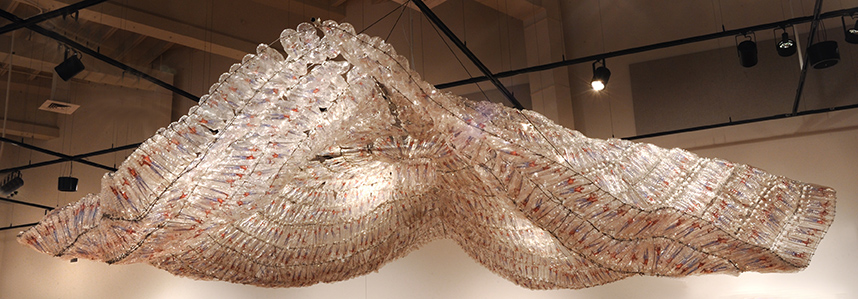
Sculpture of water bottles in serpentine shapes artist Willie Cole | on Art Biz Success
© 2016 Willie Cole, ASCENSION. Plastic water bottles, 300 inch (762 centimeter) diameter. Photo by Greg Staley. Image courtesy of the artist and Alexander and Bonin, New York.

Willie and I spoke about the faith he has in his work as a result of being consistent throughout the years. And, actually, why he says work is a bad word and prefers to approach his studio in the spirit of play.

We discuss his art and why he challenges people to perceive recognizable objects, like shoes and musical instruments, in new ways. 

Willie has also perceived what is possible for his art and career in new ways by considering possibilities beyond galleries and museums. He says, “They are part of the game but not the whole game.” (Yes, he used the word game. Again, adding an element of play to his vision.)

You’ll hear how one of his Instagram posts—where he mocked up his art as if to appear on the cover of Vogue (see below)—led to collaborations with major fashion brands. Such opportunities continue coming his way, which might be the result of his faith in his practice.

Spoiler: Visualizing success plays a role. 

Highlights

  • Willie calls himself a perceptual engineer, but what exactly does that mean? (3:12)
  • The importance (if any) of showing the materials Willie uses to create his work, including parts from 75 guitars. (5:35) 
  • “Planning makes it feel too much like a job.” How Willie approaches his work instead. (11:02)
  • A peek inside Willie’s studio. (13:58)
  • Work is a bad word, but play can make your business better every day. (15:55)
  • Staying in a playful mindset in every stage of production. (19:15)
  • The value of improvisation and the value of not knowing everything. (21:08)
  • Willie feels like the luckiest business person in America. (23:40) 
  • The business-minded people that make up Willie’s team, and insights into his collaborations. (25:36)
  • Propelling yourself forward in spite of your fears. (35:24)
  • The difference between fashion industry collaborations and gallery relationships. (37:51)
  • The music on Willie’s current playlist and what is coming up next in his work. (40:28)

Willie Cole Quotes

  • “I enjoy making your brain stutter.”
  • “Play is play, and the opposite of play, I guess, would be work.” 
  • “It becomes work rather than play when it becomes a money making business.” 
  • “Knowing has limitations, because once you find something, you only see it as that.” 
  • “I feel like the luckiest business person in America.” 
  • “When passion marries intention and it can be monetized, it’s work but it’s also just joy.” 
  • “To proceed with confidence and fearlessness, I have to believe that opportunities connect.” 
  • “Connections open up so many doors, they keep the fear way behind me.” 

Related Episodes

Geoffrey Gorman philosophizes on living the life of an artist.

Alicia Goodwin talks about how she is always looking for the next opportunity.

Christine Aaron confronts risk, rejection, and resilience. 

Laurence de Valmy discusses how she boldly reached out to art world influencers.

About My Guest

Willie Cole calls himself a perceptual engineer. Whether he is using the symbolism of a steam iron or the shapes of high fashion shoes and recognizable music instruments, he challenges how we look at things.

While he has had solo exhibitions at esteemed institutions such as the Museum of Modern Art, Miami Art Museum, and Montclair Art Museum, Willie embraces nontraditional avenues for his work, such as collaborations with major fashion brands. He is represented by Alexander and Bonin Gallery in New York, Maus Contemporary Gallery (Alabama), Gavlak Gallery (Los Angeles/Florida), and Kavi Gupta Gallery (Chicago). Willie lives and works in New Jersey.

Follow him in Instagram: @williecoleart

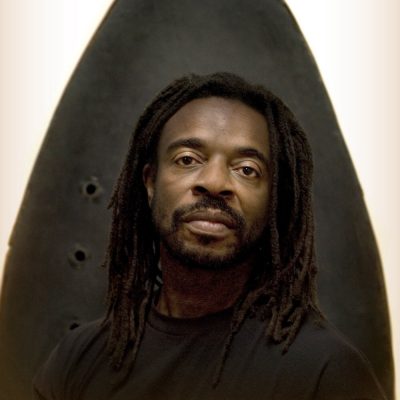
artist Willie Cole with long dreadlocked hair and black shirt

The post Play tops work, connection tops solitude, and confidence tops fear with Willie Cole (126) appeared first on Art Biz Success.

]]>
https://dy-online.com/studio-play-cole-podcast/feed/ 4
Being an artist with Geoffrey Gorman (124) https://dy-online.com/being-gorman-podcast/ https://dy-online.com/being-gorman-podcast/#comments Wed, 13 Jul 2022 14:48:37 +0000 https://dy-online.com/?p=38996 To know what a real artist’s life looks like on a daily basis, you have to study and talk to those artists. Short of visiting their studios, you read their biographies. Watch their videos. Listen to them on podcasts, like The Art Biz.

That's what this conversation is about. Geoffrey Gorman talks about how he approaches his work and the rapidly-evolving art market.

The post Being an artist with Geoffrey Gorman (124) appeared first on Art Biz Success.

]]>

There are thousands of people out there who can teach you how to make art. 

Here’s how you throw a pot.
Here’s how you make a mold.
Here’s how you mix colors. (As an aside, don’t ever skip that color-mixing class! It’s easy to identify the artists who think they can get around it.)

wood and found object sculpture of krill catcher fish | on Art Biz Success
©Geoffrey Gorman, The Krill Catcher. Apricot wood and found material, 14 x 21 x 7 inches.

Yep, you have plenty of people who teach you how to make things.

There are others who will teach you how to promote it, how to hack Instagram, or make a video of your work. Or, like me, who help you focus on relationship marketing because it’s the people you know and connect with that will make the biggest positive difference in your art business and career.

But to know what a real artist’s life looks like on a daily basis, you have to study and talk to those artists. Short of visiting their studios, you read their biographies. Watch their videos. Listen to them on podcasts, like The Art Biz.

This latest episode is one of those episodes about being an artist. About living and being committed to the artist’s life.

Geoffrey Gorman talks about what it’s like to be a working artist, an identity he came to later in life and has sustained for nearly two decades.

Geoffrey and I discuss his background as a furniture maker, gallery dealer, and artist consultant and how each role has contributed to his life as an artist. He also talks extensively and instructionally about how he approaches his work and where he finds inspiration.

You’ll hear Geoffrey’s take on how the art world is changing and his advice to artists in the rapidly-evolving market.

Like gallery director Jeremy Tessmer in episode 123, Geoffrey says flat out: Your best resource is another artist.

Highlights

  • “You can make something from anything.” The evolution of Geoffrey’s process. (2:35)
  • Journeying back into his studio after a 30-year break. (8:45)
  • Geoffrey’s timeline from furniture maker to gallery dealer, artist coach to full-time artist. (11:08)
  • What does being an artist look like in Geoffrey’s material-driven world? (16:02)
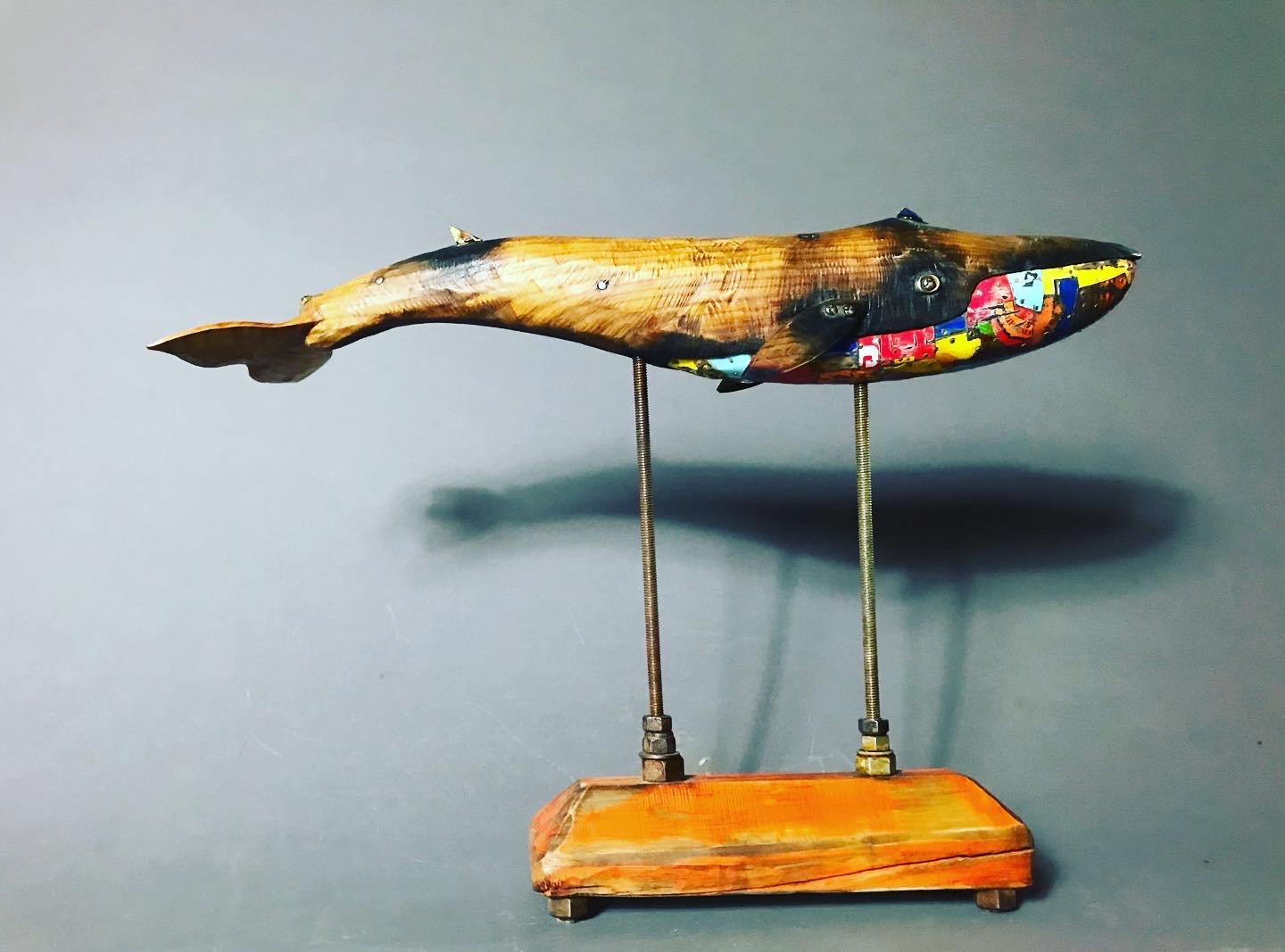
  • Carving a whale and honoring the passing of time. (23:21)
  • Tactics for increasing your credibility as an artist. (28:02)
  • Evolving with the demands of a constantly changing art world. (31:16)
  • Navigating your relationships with dealers. (36:02)
  • Feedback worth soliciting as an artist. (38:55)
  • The importance of connections as a small business owner. (43:00)
  • How can artists utilize social media to find collectors and curators? (48:00)
  • A look at where Geoffrey is putting his efforts next. (50:22)
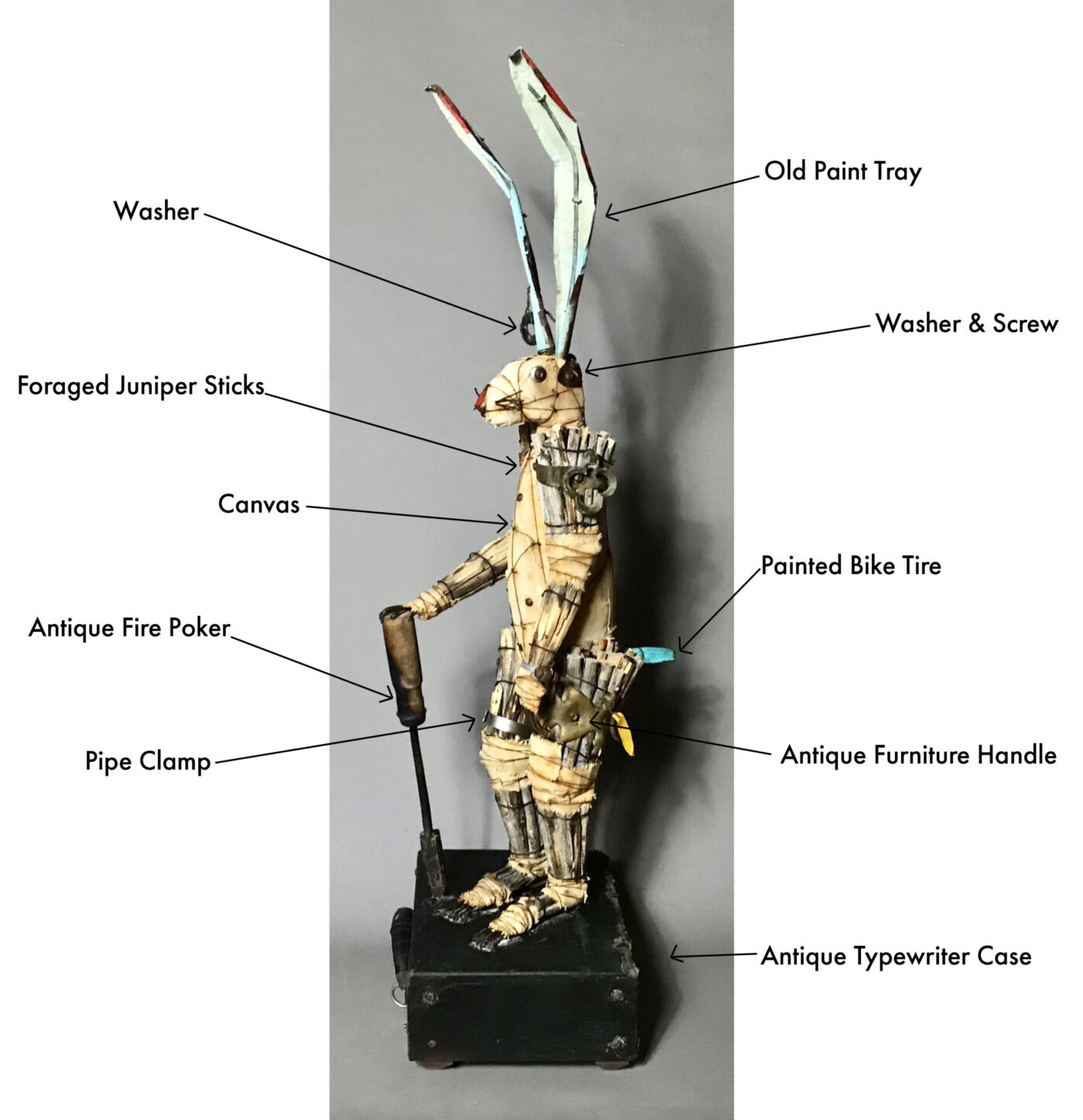
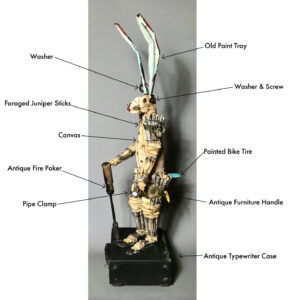
wood rabbit sculpture images shows where artist found the materials he uses | on Art Biz Success
The various materials that Geoffrey used to create one of his found object sculptures.

Geoffrey Gorman Quotes

  • “I realized I had to create this world that I was producing.”
  • “You are the number one expert about your work in the world.”
  • “A lot of old benchmarks are now gone for artists.”
  • “There are so many opportunities for us as artists out there.”
  • “Your best resource is another artist.”

Related Episodes

How Dianna Fritzler went full time with her art.

Changes Sara Schroeder made to be more serious about her work.

How to get better feedback when you want to improve.

James Holmes reveals his criteria for knowing he was a real artist.

About Geoffrey Gorman

Geoffrey Gorman was born in Paris, France, but eventually moved to and grew up on an old horse farm in the countryside near Baltimore, Maryland. The dilapidated architecture and abandoned quarries of his childhood influence and inspire the found material sculptures the artist creates today.

Gorman has worked as a contemporary furniture designer, gallery dealer, curator, and art consultant before becoming a full-time professional artist. He has exhibited nationally and internationally, including in China and South Korea. Gorman’s work is in public and private collections, including the Racine Art Museum and the University of Colorado.

Follow him on Instagram @geoffreygorman

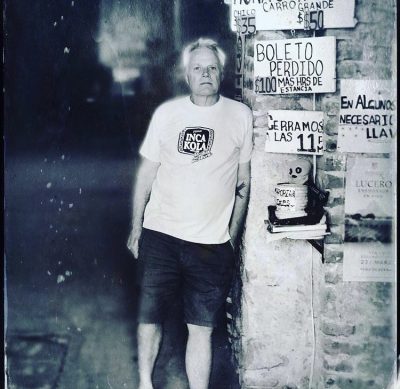
Artist Geoffrey Gorman leaning against signs. In black and white

The post Being an artist with Geoffrey Gorman (124) appeared first on Art Biz Success.

]]>
https://dy-online.com/being-gorman-podcast/feed/ 4
Ensuring a profitable art business (96) https://dy-online.com/ceo/ https://dy-online.com/ceo/#comments Thu, 05 Aug 2021 11:00:53 +0000 http://artbizsuccess.com/?p=13620 Many artists try to make a little money here and there, and then find they no longer enjoy making art after trying to sell it.

The pressure to make money in a business is real. But businesses, by definition, seek profit. Breaking even can only work for so long. This episode of The Art Biz is for you if you're ready to step up and be the boss of your art business.

The post Ensuring a profitable art business (96) appeared first on Art Biz Success.

]]>

Are you seeking a profitable art business?

This is the Art BIZ Podcast on the blog at Art BIZ Success. I assume that, if you’re listening, you are interested in an art business, not just an art hobby.

There’s nothing at all wrong with art hobbies. I highly recommend them. But it’s a whole new ballgame when you turn your art into a business. When you begin asking for money in exchange for your talent.

I want to talk about being a profitable artist. What it takes to not just make and sell art, but to also make money. To ensure that you have a positive net income in your art business. Stick with me.

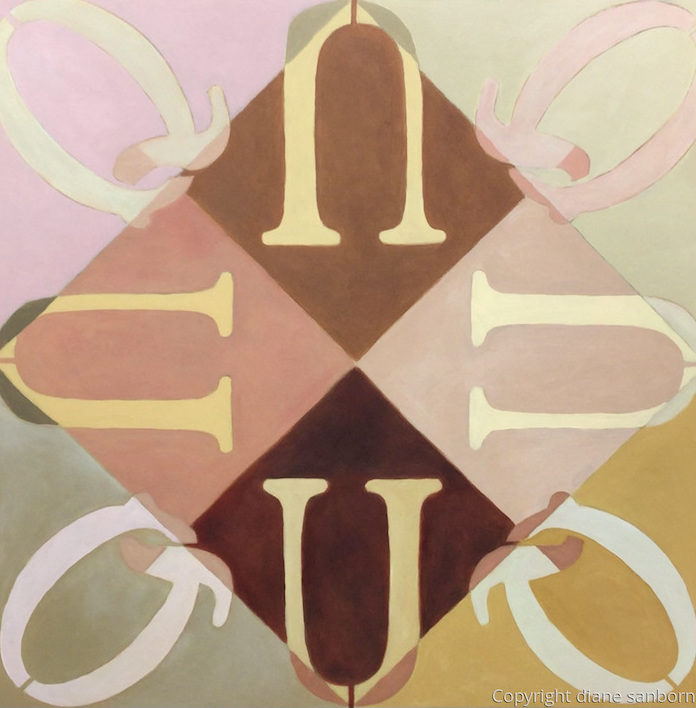
Diane Sanborn oil cod wax painting | on Art Biz Success
©Diane Di Bernadino Sanborn, Equal Partners. Oil and cold wax on wood panel, 24 x 24 inches.
I’ve talked with many artists who try to make a little money here and there, and then find they no longer enjoy making art after trying to sell it. The pressure to make money in a business is real. Businesses, by definition, seek profit. Breaking even with the numbers can only work for so long. If you’re claiming deductions on a business here in the U.S., the IRS is going to come after you if you continue to operate at a loss. See the “hobby loss” rule for the details and talk with your accountant. Look for similar rules if you are outside our borders. As I said, this episode of the podcast isn’t for hobbyists. It’s for you if you are ready to step up and be the boss of your art business. To be the CEO.

The CEO (Chief Executive Officer) is the person at the top of a company’s hierarchy. The buck ultimately stops with the CEO.

You must BE the CEO of your art business. Because, like it or not, that’s exactly what you are.

Let’s break down what that means.

Profitable Artists Are in Charge

If you want to control your art business, you must take charge of your destiny. No one cares about your success more than you do.

Nobody else is going to look after you or your business like you can. Nobody.

This means that you assume 100% responsibility for your actions, decisions, and results. No whining. No complaining. This is your business.

In my programs, I ask artists to sign a responsibility contract.

I want my students and clients to understand that, while I am responsible for giving them valuable information and strategies or running a profitable art business, they are responsible for doing the work.

I can’t control what they do outside of my watch or even under my watch, but I can remind them of the power they possess.

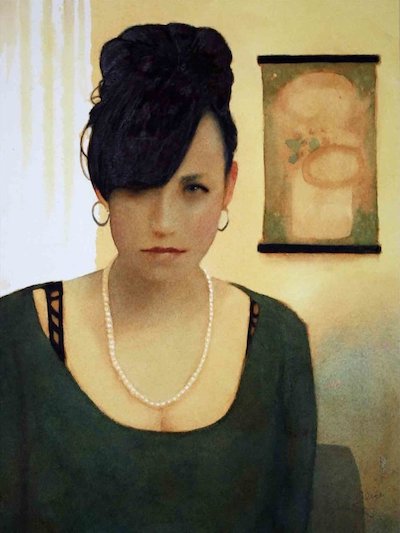
Jan Alice Keeling watercolor painting | on Art Biz Success
©Jan Alice Keeling, Kelly in Pearls. Watercolor on paper, 12 x 9 inches.

You Don't Need to Do It Alone

CEOs don’t run companies all by themselves! They have COOs, CTOs, other managers, and a full staff of competent hires that often don’t get enough credit or share in the profits. But I’ll leave that to another podcast to tackle.

Unfortunately, when you are a 1-person business, you are not just the CEO. You also assume these other roles. But you are not alone.

As an Artist CEO, you seek input from a spouse, another artist, a friend with business savvy, or a coach. You find community—online or in person—with other like-minded artists with whom you can discuss challenges and strategies to overcome them. You know who to go to for support with specific situations, and who to avoid when negativism or criticism is possible.

In short, you ask for help. There are so many people out there ready to help you—even ready to help you sell your art.

Asking for help and advice is a sign of strength rather than weakness. You can make more informed decisions for your business by learning from others’ experiences, and that can help you become a profitable artist.

That brings me to my next point.

Delegate Your Weaknesses

CEOs do what they do best and delegate the rest. A CEO doesn’t have time to micromanage or, worse, do work that other people are better qualified to do.

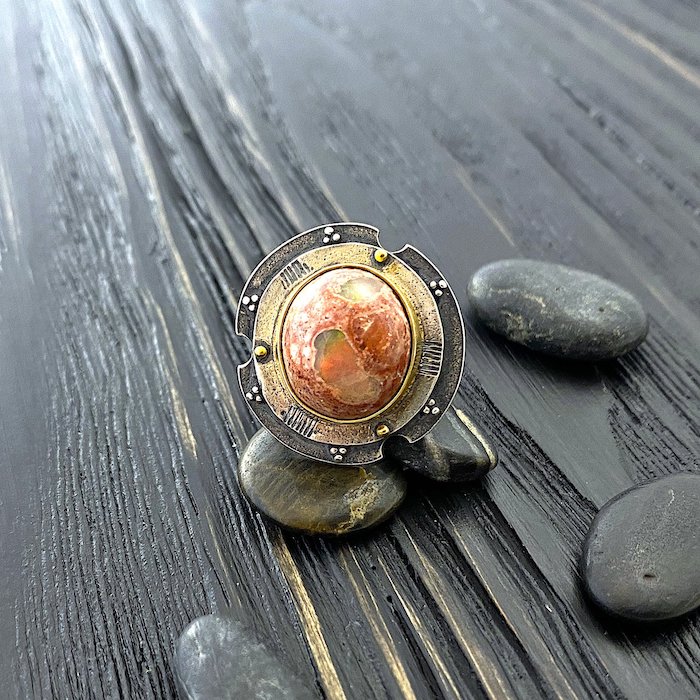
Jen McCaw boulder opal ring | on Art Biz Success
©Jen McCaw, Boulder opal and 22k gold shield ring. Boulder opal with great orange and red flash set in 22k gold, Argentium, and sterling silver, size 6.5.

As an Artist CEO, your #1 priority is your studio practice. Always! If you aren’t getting enough time in the studio, something on the business side needs to change. It must change. Because without the art you are not an artist. Without the art, there is no prospect of a profitable business.

As you go throughout your week, pay attention to tasks you’re currently doing that you could delegate. It doesn’t mean you’re going to hire someone right away. I just want you to be aware of how you’re spending your time. I think you’ll be surprised.

Now let’s talk about how you’re spending your money.

As a Profitable Artist, You Know Your Numbers

It is true that you have to spend money to make money, but do you know the actual numbers that it takes?

As an Artist CEO, you sure do. You know how to cost out a service or product, and you know what your profit margins are.

You take into account all of your expenses and overhead costs, including your materials, time, and what I call the PITA factor (pain-in-the-ass factor). You understand that your work must be priced for its market, but you are also aware that you must make a living.

A number of years ago, artist Liz Crain wrote a couple of blog posts that detail the considerations of showing her work in certain venues and which ended up, surprisingly, to be most profitable. One is for brick-and-mortar spaces and the other for online opportunities.

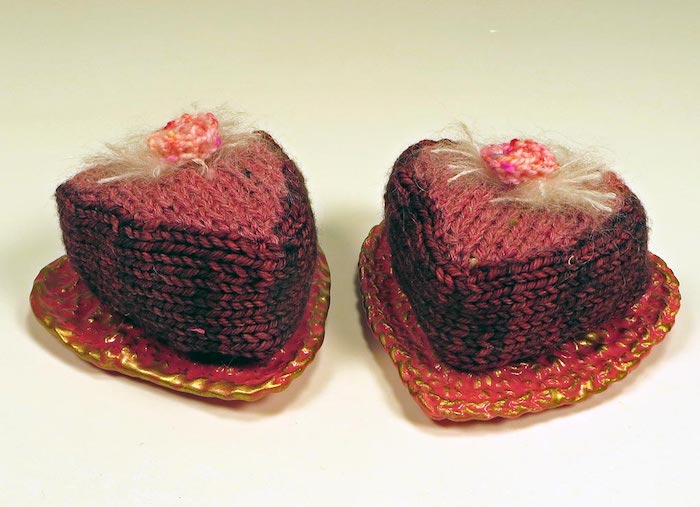
Clay fiber heart cakes artist Liz Crain | on Art Biz Success
©Liz Crain, 2 Heart Cakes. Medium, 2.75 x 4.25 x 4 inches each.

I think you’ll find these posts enlightening and be inspired by the deep dive she did to find her most profitable venues for sales.

Analyze Your P&L Statement

Look at your Profit & Loss (P&L) statement every month or so. This isn’t an easy task if you aren’t using bookkeeping software, so I hope you already have numbers plugged in to Quickbooks, Quicken, FreshBooks, or something similar. You really want to understand the numbers in front of you so you can adjust operations as necessary.

This statement, which outlines income and expenses, will show you what income stream is making you the most money, and will also show you where your expenses are the heaviest. If a product, service, venue, or sales outlet is losing money, do what you can to stop the bleeding immediately. Before it’s too late.

[ Hear more about income streams in Art Biz Podcast episode 18 with Helen Hiebert ]

Okay, so you have your P&L statement in front of you. Just do a once over. The numbers are tempting. You see a big number in one of the income areas and get excited. Oooo. That must be a good one!

Not. So. Fast.

Just because you’re making a lot of sales in one area, doesn’t mean it’s the most profitable income stream. You have to take into account the expenses: real and emotional.

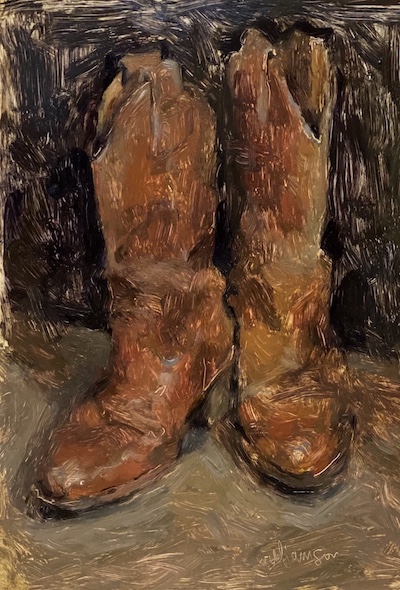
Mel Williamson oil painting of cowboy boots | on Art Biz Success
©Mel Williamson, Thriftstore Cowgirl. Oil on Yupo, 13 x 9.25 inches.

Which income streams have higher expenses associated with them than others? For example, you gave a workshop. You made a good amount from registrations, but you also had to rent the space, take out ads, provide food and beverage, get extra insurance to cover that space, hire an extra hand, and spend way too much time and energy getting people to sign up.

Can you decrease expenses and become a more profitable artist with the next workshop? Maybe make it bigger or smaller?

Which are taking too much of your time or emotional energy? In other words, you really dislike doing them for the amount of time they take or the amount of income you see in return.

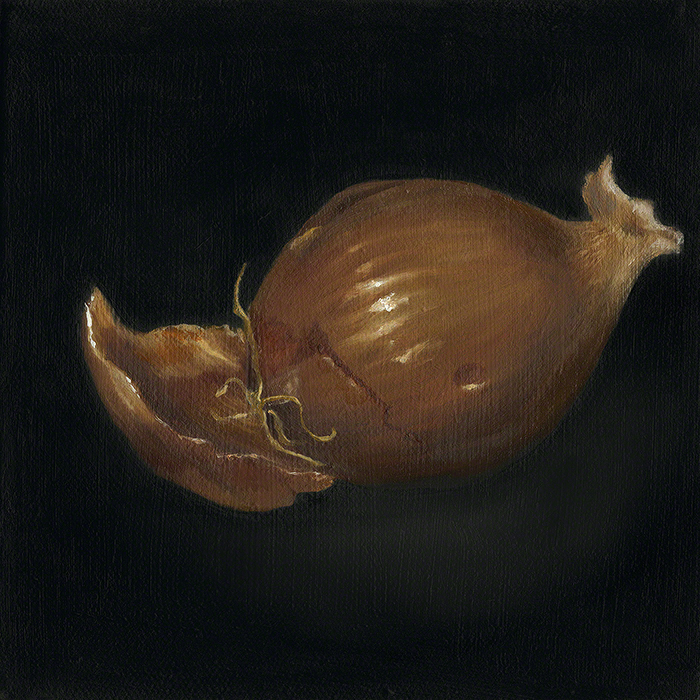
Annette Kaplan oil painting of onion | on Art Biz Success
©Annette Kaplan, Mr Onion. Oil on canvas, 6 x 6 inches.

 You can look at these numbers with all of your income streams: original works and reproductions that require framing and shipping, lower priced products like clothing and pillows that take attention away from selling higher-priced originals, a calendar, book, or note cards. Analyze them all.

Which are worth saving? Maybe they’re not your highest earners right now, but you can see a path for them rising to the top.

This brings me to my final point.

You Must Be Able to Adapt to a Changing Environment

If Covid taught us anything, it taught us that some artists were better prepared to adapt than others. They had an online shopping cart or an online classroom in place. They had invested in their online presence and weren’t afraid to adapt in-person events to the online world. (On a side note, I believe individual artists were far better prepared to pivot than galleries or museums. Kudos to you for that!)

The world is changing faster than ever before. To run a profitable art business, you want to stay on top of technology, trends, materials, and information.

It’s not helpful to wish things were different than they are or for the good old days when you didn’t have to use email or a social media account (remember those?). It’s not just not helpful. It’s destructive.

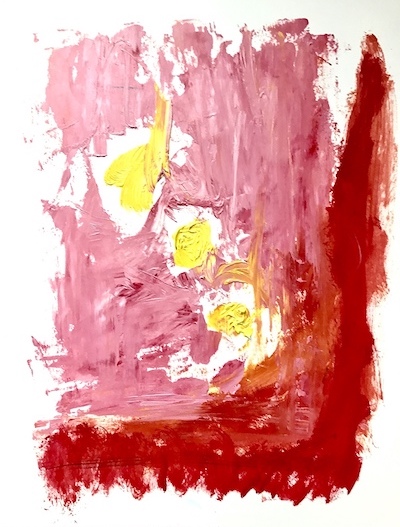
Jenny Hope Antes oil abstract painting | on Art Biz Success
©Jenny Hope Antes, Dreaming Again. Oil on paper, 14 x 11 inches.

As an Artist CEO, you keep an eye on trends. Here are three to be aware of.

  1. Where art is being exhibited, whether it’s at international art fairs, traditional galleries, outdoor festivals, or online.
  2. How art is being exhibited, because exhibition design evolves.
  3. How art is being promoted and sold. What’s the latest way to photograph your art, share on social media, and advertise? What kind of events and experiences are other artists and venues staging?

You might be intrigued by virtual reality tours of exhibition spaces and contemplate the possibilities. God forbid you should consider turning your art into NFTs. I’m not a fan, but we can’t ignore what’s happening around us. You might not dive into these waters quickly, but you know they’re available. You are aware. You’re in tune with your local community and with the greater art world.

You anticipate that the landscape will change because that’s how the world evolves. It is never satisfied with the status quo. But you don’t mind. You have staying power. You are becoming a profitable artist. You are prepared to adapt and even eager for new challenges.

And you know you don’t have to do it alone.

Related Episodes

Check out episode 97 where I talk with ceramist Patricia Griffin about how she sells her functional ceramics by opening up her shopping cart only at certain points during the year. It’s made her more money, created a heckuva lot of buzz, and been fun for her.

And episode 98 in which painter Jill Soukup discusses how her business has changed in the last 10 years and the steps she has taken to become more profitable.

Listen to the Podcast

This post was first published on August 15, 2012, and has been expanded with an added podcast episode. Original comments are intact.

The post Ensuring a profitable art business (96) appeared first on Art Biz Success.

]]>
https://dy-online.com/ceo/feed/ 15
The Art Biz ep. 72: Planning a Year’s Worth of Artwork with Dawn Williams Boyd https://dy-online.com/planning-artwork-boyd-podcast/ https://dy-online.com/planning-artwork-boyd-podcast/#comments Thu, 21 Jan 2021 12:43:57 +0000 https://dy-online.com/?p=31252 Taking charge of your art business isn’t only about bookkeeping, inventorying the work, and promoting your art effectively.

Taking charge of your art business is about assuming 100% responsibility for your actions—all of your actions, especially in your studio.

We all want to increase our productivity and creativity, and Dawn Williams Boyd has mastered doing exactly that by planning ahead.

Dawn makes figurative textile paintings that reveal stories—not always pretty ones—about life in America. Dawn’s work has an unapologetic social activist message that addresses the Black experience, feminine sexuality, social issues, and this country’s politics.

In today’s social and political climate, there aren’t enough hours in the day for Dawn to convey all of the messages she wants to share in her art. She has to carefully plan the body of work she is going to make throughout the year. She takes charge of her production for the entire year.

In our conversation for the Art Biz Podcast, Dawn and I discuss her process for plotting out which pieces she will make each year. We also talk about why now is not the time to make art that matches the couch, what kinds of conversations she wants people to have around her work, and how she makes the valuable connections that are helping her reach her most ambitious goals.

The post The Art Biz ep. 72: Planning a Year’s Worth of Artwork with Dawn Williams Boyd appeared first on Art Biz Success.

]]>
Taking charge of your art business isn’t only about bookkeeping, inventorying the work, and promoting your art effectively.

Taking charge of your art business is about assuming 100% responsibility for your actions—all of your actions, especially in your studio.

We all want to increase our productivity and creativity, and Dawn Williams Boyd has mastered doing exactly that by planning ahead.

© 2017 Dawn Williams Boyd, All Through the Night: America's Homeless. Assorted fabrics, cotton embroidery floss, antique quilt, lace, buttons, child's socks, 39 x 61.5 inches. Ron Witherspoon Photography
©2017 Dawn Williams Boyd, All Through the Night: America’s Homeless. Assorted fabrics, cotton embroidery floss, antique quilt, lace, buttons, child’s socks, 39 x 61.5 inches. Ron Witherspoon Photography.

Dawn makes figurative textile paintings that reveal stories—not always pretty ones—about life in America. Dawn’s work has an unapologetic social activist message that addresses the Black experience, feminine sexuality, social issues, and this country’s politics.

In today’s social and political climate, there aren’t enough hours in the day for Dawn to convey all of the messages she wants to share in her art. She has to carefully plan the body of work she is going to make throughout the year. She takes charge of her production for the entire year.

In our conversation for the Art Biz Podcast, Dawn and I discuss her process for plotting out which pieces she will make each year. We also talk about why now is not the time to make art that matches the couch, what kinds of conversations she wants people to have around her work, and how she makes the valuable connections that are helping her reach her most ambitious goals.

Listen

Music by Wildermiss

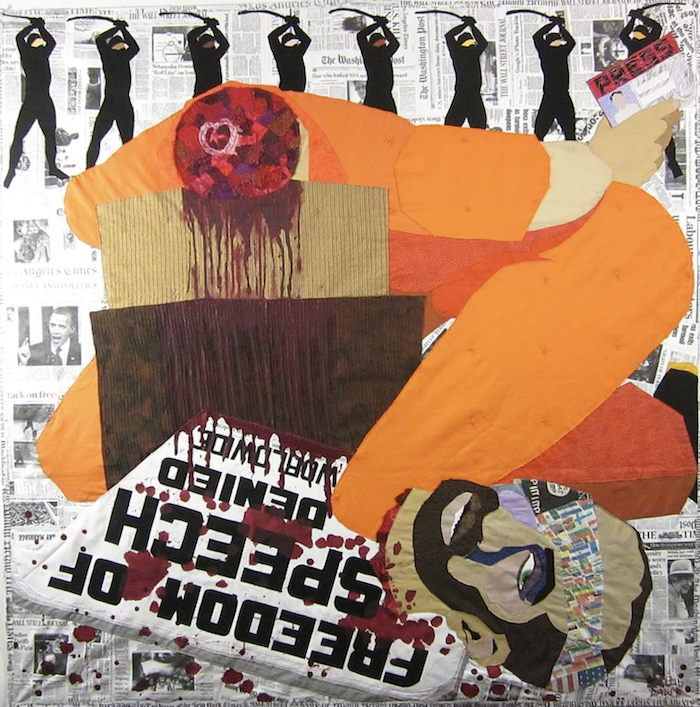
Cloth painting by Dawn Williams Boyd
©Dawn Williams Boyd, Human Rights in the New Millennium: Freedom of Speech. Assorted fabrics, cotton floss, acrylic paints, inkjet printed fabrics. Appliquéd by machine. Embroidered, embellished and quilted by hand, 49.5 x 49.5 inches.

Highlights

  • Dawn Williams Boyd responds to her daughter’s statement that she is a righteous badass. (3:45)
  • Art that represents the effect of the history of the United States on the African American community, created by an African American woman. (6:14)
  • What interested Dawn most in her Art History class is featured in her own work. (9:30)
  • Dawn reflects on the big plans that she had for exhibiting her work in 2020. (12:47)
  • The good things that can happen when you have nowhere to go and no one to see your work. (16:06)
  • “The List” and how it influences Dawn’s productivity and creativity every year. (18:02)
  • Now is not the time to make art that matches the couch. Dawn explains the opportunity artists have to use their voice to influence others. (21:32)
  • A look inside Dawn’s notebook, including the details, fabrics, facts, and titles that drive her work. (26:15)
  • Questions that Dawn asks herself in the planning stage of each new piece. (31:10)
  • The criteria that guides Dawn’s ability to set goals and plan her work out a year in advance. (34:10)
  • Dawn reflects on her 2020 goals, the pieces that she actually created and how she is constantly preparing for what is coming next. (36:50)
  • The conversations Dawn wants people to have around her work. (43:50)
  • Understanding the worldwide problems that are depicted in the imagery in Dawn’s piece, All Through the Night: America’s Homeless (shown above). (48:03)
  • The overarching business and career goals that guide Dawn’s work every single day. (53:10)
  • How an ambitious artist can ensure that their art is being viewed by the right people. (57:08)
  • A peek into all that is in store for Dawn in 2021. (59:00)
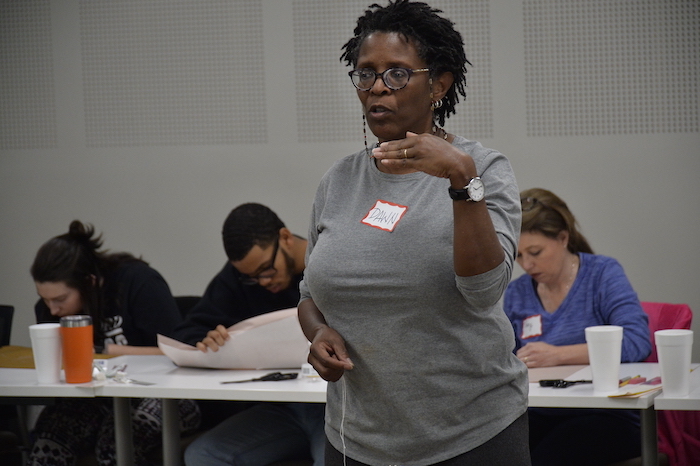
Artist Dawn Williams Boyd teaching lecture
Dawn Williams Boyd teaching at Wofford College, Spartanburg, SC, in 2019. Photo by Irvin Wheeler.

Mentioned

Dawn Williams Boyd Quotes

“That art history book that I fell asleep on? I want to be in that book. That’s my goal.”

“It is possible in fact, it’s preferable to determine how you want to show yourself in the world.”

“Now is not the time to make art that matches the couch. You could be influencing someone, or educating someone.”

“I like to have a goal to work toward, because that pushes me to work every day.”

“More black visual artists need to appear in art history books, and why not me?”

About My Guest

Artist Dawn Williams Boyd

Artist Dawn Williams Boyd makes figurative textile paintings that reveal stories—not always pretty ones—about the American experience. Her latest series, The Trump Era, specifically focuses on xenophobia and immigration, but her work has also explored feminine sexuality, the Black American experience, as well as forgotten moments from American history.

In 2021 her piece, Sankofa, entered the collection of the Metropolitan Museum of Art.

Dawn is represented by Fort Gansevoort gallery in New York City. She is a member of the Women of Color Quilters Network, which was recently highlighted in this New York Times article that includes mention of Dawn along with an image of her work. She helped found and run two influential Black artists collectives in Denver before returning to her native Atlanta in 2010.

Related Episodes

Elevating Women and People of Color with Adri Norris

Making Work That Matters with Suzanne Gibbs

Multi-State Multi-Year Multi-Artist Art Project with Marilyn Artus

Listen

Music by Wildermiss

The post The Art Biz ep. 72: Planning a Year’s Worth of Artwork with Dawn Williams Boyd appeared first on Art Biz Success.

]]>
https://dy-online.com/planning-artwork-boyd-podcast/feed/ 11
The Art Biz ep. 40: Focusing on Making Work That Matters with Suzanne Gibbs https://dy-online.com/work-that-matters-podcast/ https://dy-online.com/work-that-matters-podcast/#comments Thu, 02 Jan 2020 11:46:23 +0000 https://dy-online.com/?p=29126 Two years ago, Suzanne Gibbs entered my Art Biz Inner Circle and began taking full advantage of everything that was offered.

As an aside, although we no longer offer the Inner Circle, we do continue to support artists through the Art Career Success System and our new small group artist masterminds. But, no matter how hard we try, we can’t make you do the work, whether it's business or studio based.

And that's where Suzanne's story comes in.

What she wanted to share in this episode is critical to every artist's success.

She and I started talking about the idea of doing less (not more) in order to accomplish your goals, but it turned into a conversation about focusing more. Focusing on what matters. For Suzanne, that meant making a new body of work.

Nothing is more important to your professionalism as an artist than a consistent studio practice. Nothing!

Listen to this episode to hear how Suzanne got over FOMO, set herself up for success, and used trusted artists to keep her on track for creating that body of work.

The post The Art Biz ep. 40: Focusing on Making Work That Matters with Suzanne Gibbs appeared first on Art Biz Success.

]]>
Two years ago, Suzanne Gibbs entered my Art Biz Inner Circle and began taking full advantage of everything that was offered.

As an aside, although we no longer offer the Inner Circle, we do continue to support artists through the Art Career Success System and our new small group artist masterminds. But, no matter how hard we try, we can’t make you do the work, whether it’s business or studio based.

And that’s where Suzanne’s story comes in.

Artist and this week's podcast guest Suzanne Gibbs
©2019, Suzanne Gibbs in her studio painting, Photo courtesy Amanda Looney at AmandaElise Photography.

What Suzanne wanted to share in this episode of the podcast is critical to every artist’s success.

She and I started talking about the idea of doing less (not more) in order to accomplish your goals, but it turned into a conversation about focusing more. Focusing on what matters. For Suzanne, that meant making a new body of work.

Nothing is more important to your professionalism as an artist than a consistent studio practice. Nothing!

Listen Now


Music by Wildermiss.

Painting and mixed media collage by artist Suzanne Gibbs
©2019 Suzanne Gibbs, Dropped Voice. Painting on wood panel with mixed media collage, 48 x 36 inches. Used with permission.

Highlights

We discuss the following.

  • Why Suzanne felt like she was approaching her art career like an amateur in early 2018.
  • The trap Suzanne fell into of thinking that she needed to take advantage of everything that was offered.
  • The vast difference in how Suzanne approached her art business over the course of 2 years, and what the turning point was.
  • Why doing less = focusing more.
  • There’s no such thing as balance.
  • How Suzanne prepared for her self-directed studio retreat over the summer to ensure that she maximized her focus and production.
  • How she got over FOMO (fear of missing out).
  • Why it’s been critical for Suzanne to have trusted artists and friends to support her during this period of growth.
  • The motivation Suzanne received from her work that kept her from feeling she was missing out on having her hand in everything.
  • How Suzanne’s dedicated practice of journaling keeps her grounded and focused.

Mentioned

The Artist’s Way by Julia Cameron (morning pages)
Art Career Success System
Sketchbook Skool

About My Guest

Artist Suzanne Gibbs
©2019 Suzanne Gibbs on her studio deck, Photo courtesy Amanda Looney at AmandaElise Photography.

Suzanne Gibbs is an artist and author based in Portland, Oregon. She creates contemporary abstract portraits exploring the roles of women, in particular homemakers, in society. In 2013 she graduated from Claremont Graduate University’s MFA program. She received her MS in Communication from the University of Portland and a BFA in Design from Carnegie-Mellon University. She also studied drawing and painting at Napa Valley Community College and Academy of Art University in San Francisco.

Throughout her career, Suzanne has taught art and creativity workshops to students of all ages in schools, museums, private homes, and from her studio. Her work has been exhibited and collected nationally and internationally.

Follow Suzanne on Instagram: @suzannegibbsart


Music by Wildermiss.

Recommended Art Biz Action

This episode is sponsored my signature business-building program, the Art Career Success System, a program I have perfected after more than 17 years working with artists. Why take time away from your work in the studio to create your own business systems when I have done it for you?

Become part of a community of artists who are forward-thinking and forward-moving while streamlining your business and marketing.

join us Now

The post The Art Biz ep. 40: Focusing on Making Work That Matters with Suzanne Gibbs appeared first on Art Biz Success.

]]>
https://dy-online.com/work-that-matters-podcast/feed/ 27