But what I can't seem to reconcile is when artists aren't taking precautionary steps to claim ownership in the first place.
I'm talking about giving yourself credit whenever and wherever you show your art—with your name and a complete credit line—even on Instagram.
The post Checklist for Crediting Your Art appeared first on Art Biz Success.
]]>

The post Checklist for Crediting Your Art appeared first on Art Biz Success.
]]>Allow me to bottom line this entire article: If you are a fine artist, your first choice is to always use your given name for marketing your original art.
And yet you might resist this. Read and listen to find out why I'm right.
The post How to name your art business (56) appeared first on Art Biz Success.
]]>One of the first steps an artist makes when turning professional is to decide on an art business name, and many new artists make this more complicated than it should be.
Allow me to bottom line this entire article: If you are a fine artist, your first choice is to always use your given name for marketing your original art.
Using a Name Other Than Your Own
There are two primary reasons for using a name besides your own (aka “Doing Business As” or “DBA” name).
- The first is that you are a service business like Art Biz Success and want the benefits of the service to be in your business name. But even with a service business, you should be front and center for your business since we hire services from people we trust and like. I don’t know about you, but when I’m buying services, I want to know who is behind them and why I should trust their expertise. Artists who also provide services include muralists, wedding and portrait photographers, instructors, and so forth. But don’t think that you need a DBA just because you provide a service. It still might be to your advantage to keep your name as your business name.
- The second reason to use a name besides your own is that you have a production line or “less serious” body of work that you want to keep separate from the art you choose to be known for. Reserve your name for how you want to go down in the history books and use a DBA for the other work.
You Are an Artist, Not a Company
Art history is a history of individual artists, not of company names. Since my master’s degree is in art history, I naturally want you to use your name when promoting your art.
Using a company name puts you in league with all of the companies out there who are manufacturing and promoting unremarkable products. You’re different. Art is different. Art is not a mass-produced product.
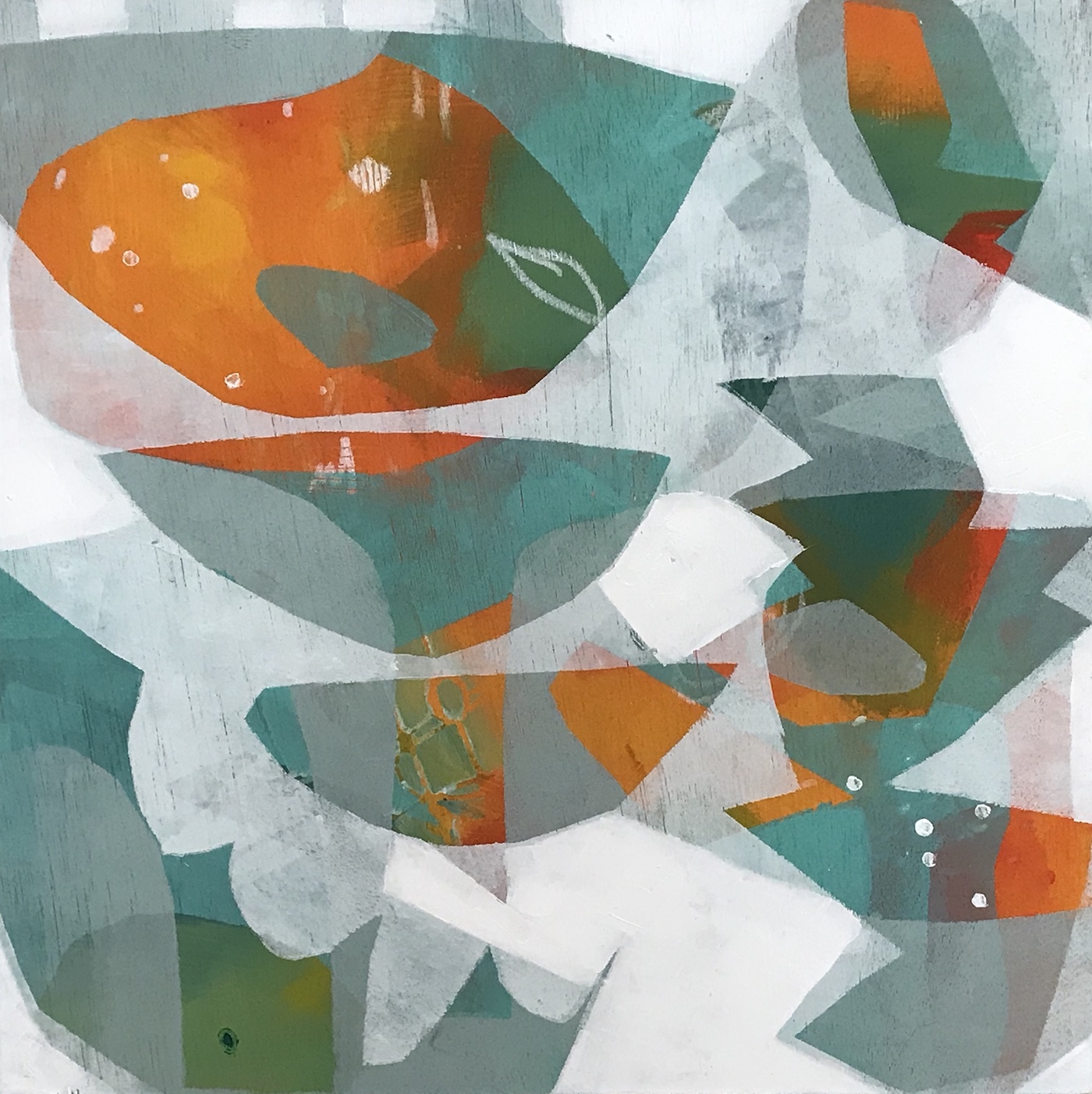
Using your name for your business name tells the world that your art is elevated from the stuff they can pick up at Target or Pier One. It says “This is made by hand, and not just any hand, but the hand of an artist.”
While it may seem safer to hide behind a business name, playing it safe won’t get you too far in your art career.
I understand it isn’t always this easy. There are sometimes reasons for not using your own name, including, as I’ve learned, reasons of physical and emotional safety.
Setting aside these very real concerns for the moment, the most frequent arguments against using given names for an art business are the following.
- My name is too common / Someone else already owns the URL with my name [And she’s a porno star!]
- My name is too hard to spell
- I sign my name as X on my paintings, but I want to be known as Y
Let’s consider these objections one by one.
Prefer to Listen?
Music by Wildermiss.
My Name is Too Common
If you think your name is too common, you have a couple of options for naming your art business.
You can change it (Hey, it’s been done!) as long as you haven’t already built a reputation with your given name. Or you can embrace it and distinguish it somehow. Add your middle name, your middle initial, or your maiden name.
Here’s how that might play out with your name and possible URL. When this article was first published in an earlier version, I used Jim Harris to illustrate my point, so we’ll stick with this real-life example. (I haven’t checked on the availability or use of any of these, but that’s not important to the argument.)
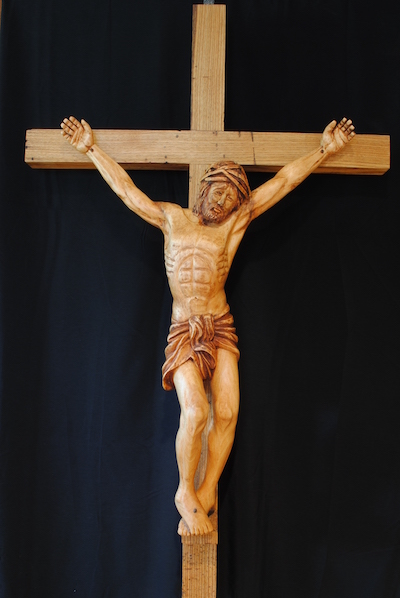
Jim I. Harris : jimiharris.com
James I. Harris : jamesiharris.com
Jim Harris : jimharrisculpture.com
James Harris : jamesharrisfineart.com
In the end, Jim chose to be known as James Harris professionally and use JamesIHarris.com. After all, a URL is just a web address. It doesn’t matter that it might be slightly different than what is on his business card, website banner, or marketing material.
Jim was concerned that James was too formal and that everyone knew him as Jim. We all know that Jim is a shortened form of James. We aren’t surprised that someone’s professional name is James and prefers to be called Jim in everyday conversation.
If you have one of these names (Peter/Pete, Robert/Rob, Michael/Mike, Katherine/Kate, Margaret/Meg, Jessica/Jessie), you can tap into variations of your name—as long as you’re comfortable being known by that moniker.
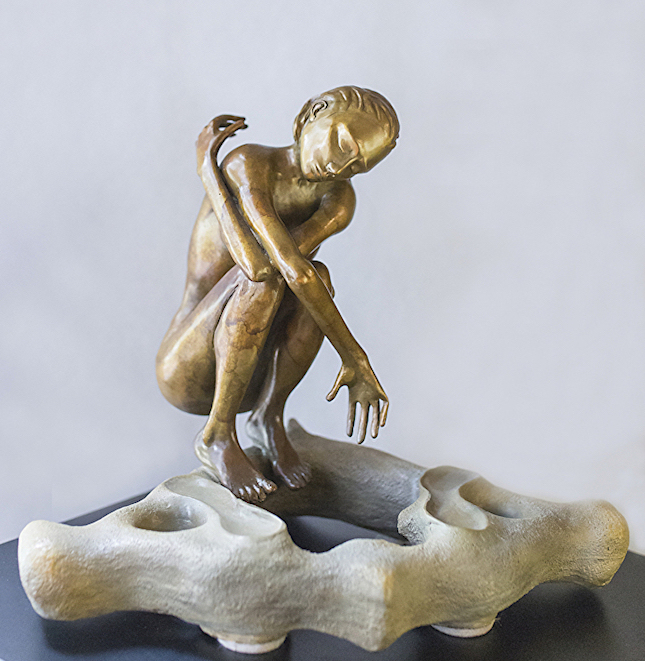
You could also default to your initials, like Lindsay Obermeyer, whose art is featured below. [Lindsay has sadly passed on, but her former studio was lbostudio.com ].
Then there is the opposite problem expressed by artists who struggle with using their names for their art business.
My Name is Hard to Spell or Remember
As someone whose name is rarely spelled correctly (Alison, Allison, Allyson, Stansfield, Stanfill, . . . ) I get where you’re coming from!
Still, use your name, even when it is frequently misspelled.
If you think your name is too difficult to spell, take solace in the fact that you probably have it easier than artists who have common names. You are more likely to stand out with an unusual name. Think Toyin Oji Odutola, Kehinde Wiley, or Yayoi Kusama.
To simplify matters when deciding on a URL, you might add “art,” “fine art” or “studio” to the end of your first or last name, but always keep your name prominent on the pages of the site. You are an individual, not a dot com.
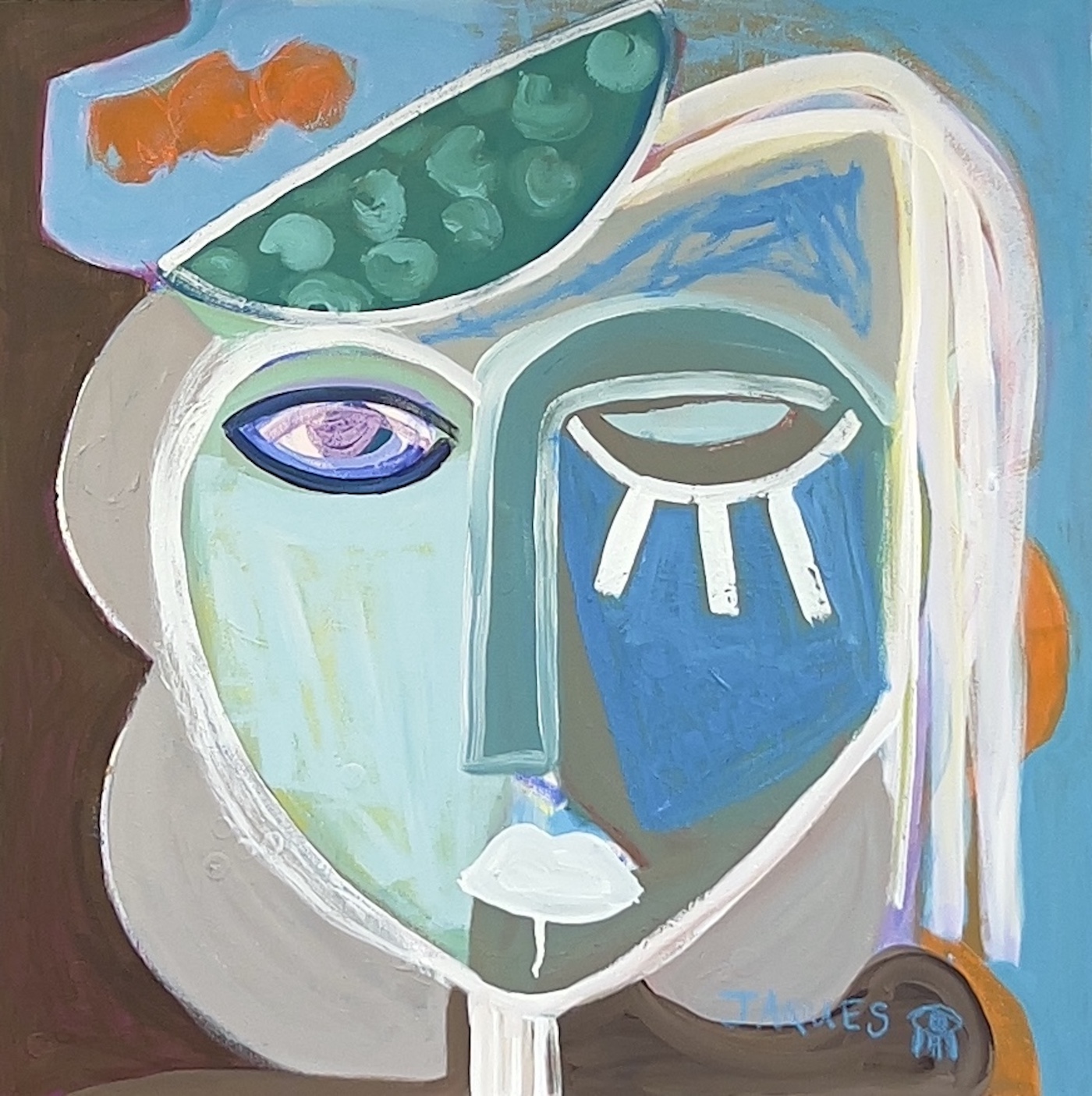
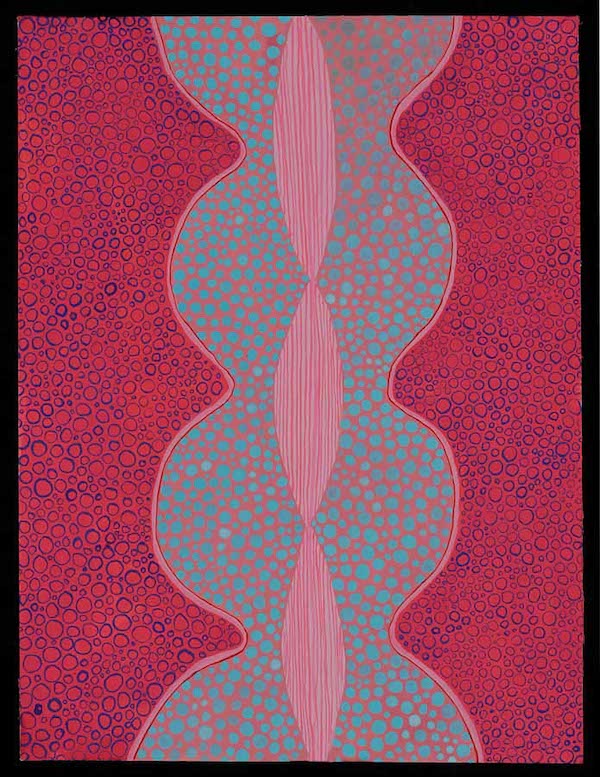
Dianna Fritzler, whose art is at the top of this post, isn’t an unusual name, but she has 2 “n”s in her first name. Nobody remembers that! Her website is dfritzlerart.com.
Now for the final concern….
I Don’t Sign My Name to My Art That Way
You do not have to sign your art with the full name you choose to be known as.
A signature is just a mark, just as a URL is just a web address. You can sign your art with whatever feels natural.
For example, I have signed my name “AB Stanfield” since I was a teenager. “Alyson Stanfield” was just too long to write out and the y in my first name seemed to interrupt the flow of writing it out. So, AB Stanfield it is. Signing my full name is awkward. But, I chose “Alyson B. Stanfield” as my professional name. I didn’t fear there would ever be too many Alyson Stanfields around, but I’m kind of attached to my middle name, so I always wanted the B in there.
Need more to go on?
Other Artists Share Their Naming Experiences
I asked artists how they decided on their professional names. Read their insights. In particular, read what women wrote in the comments. There is solid evidence that all women should use their maiden names.
Did you make the mistake of taking your spouse’s name and now wish to shed it? Try this approach.
Even though you select a name by which you would like to be known, it doesn’t mean that careless people will abide by your wishes. Sometimes, people make up their own names for you. Read my suggestion for handling this.
The big question to answer is: How do you want to go down in the history books? The choice is yours! Nobody else can select your art business name for you. But you have to select one and use it everywhere with conviction.
I know from experience that even after reading this, you may still have concerns or be confused. Please tell me what those are in the comments.
Music by Wildermiss.
This post is a compilation of posts that were published starting in 2008, which were added to a post originally published on November 29, 2010. The original comments from 2010 are intact.
The post How to name your art business (56) appeared first on Art Biz Success.
]]>The post Would You Benefit From Using a Different Artist Name? appeared first on Art Biz Success.
]]>It never would have occurred to me in a million years that artists would use any name other than their own for their work.
Well, apparently it’s not always that easy.
There are reasons to work under a different name that I never considered. At least two artists spoke to me about their fear of being found by those who had abused them. Another didn’t want to be associated in any way with his family name.
Using a different name in either of these circumstances is understandable, and you might be best served by legally changing your name so that there is no confusion.
There is also the possibility that you want to use a business name rather than the name of an individual.
Using a DBA Name
There are two primary reasons for using a business or company name besides your own. This is know as a “Doing Business As” or “DBA” name.
1. You have a service business.
The first is that you are a service business like Art Biz Success and want the benefits of the service to be evident in your business name.
But even with a service business, you should be front and center for your business since we hire services from people we trust and like. We want to know them as a person that we’d like to work with.
Artists who also provide services include muralists, wedding and portrait photographers, instructors, and so forth. But don’t think that you need a DBA just because you provide a service. It still might be to your advantage to keep your name as your business name.
2. You have a production line of art.
The second reason to use a name besides your own is that you have a production line or “less serious” body of work that you want to keep separate from the art you choose to be known for.
In this case, reserve your name for how you want to go down in the history books and use a DBA for the other work.
Moving Away from a DBA Name
If neither of the two reasons above applies and you are already known under a DBA, don’t worry. At least you’re known!
If you’re still early in your career and using a DBA, I advise the following steps to switch back to using your given name.
-
- Purchase the URLs for both your business name and your own name. Forward the URL for the DBA to the one with your name.
- Add your name to your business name in your marketing material. From this point forward, your business won’t be “Golden Gems” but “Golden Gems by Sue Henderson” or “Sue Henderson’s Golden Gems.” Eventually, you’ll be able to drop the DBA altogether.
One final note. Just because you are incorporated or official under a legal DBA name does not mean that you have to plaster that name everywhere.
No one has to know a legal business name until they buy something from you, at which point it will show up on an invoice or credit card statement. For instance, I am incorporated under Stanfield Art Associates, so when you buy something from me, you get a receipt from Stanfield Art Associates, Inc. But my brand is Art Biz Success.
This post was originally published in 2008 and again in 2012. It has been updated with original comments intact.
The post Would You Benefit From Using a Different Artist Name? appeared first on Art Biz Success.
]]>The post Legal Resources for Starting an Art Business in the U.S. appeared first on Art Biz Success.
]]>The post Legal Resources for Starting an Art Business in the U.S. appeared first on Art Biz Success.
]]>