planning & strategy Archives - Art Biz Success https://dy-online.com/tag/planning-strategy/ Trusted Art Business Coaching and Consulting Fri, 28 Aug 2026 19:23:24 +0000 en-US hourly 1 https://wordpress.org/?v=7.1.4 https://dy-online.com/wp-content/uploads/2022/02/favicon-2-150x150.png planning & strategy Archives - Art Biz Success https://dy-online.com/tag/planning-strategy/ 32 32 Stop complicating your art marketing plan (275) https://dy-online.com/marketing-plan/ Thu, 20 Aug 2026 12:37:00 +0000 https://dy-online.com/?p=62166 The traditional view of a marketing plan is a detailed spreadsheet full of tasks and self-imposed deadlines. It doesn't have to be that hard.

On this episode of The Art Biz, I make the case for routines over spreadsheets, share the three distinct ways I see artists approach their marketing, and explain why marketing is bigger than self-promotion. If you've ever built a plan and abandoned it by week two, this one is for you.

The post Stop complicating your art marketing plan (275) appeared first on Art Biz Success.

]]>

The traditional view of a marketing plan is a detailed spreadsheet with a crazy amount of tasks and self-imposed deadlines. But it doesn’t have to be that hard.

I’d rather you build a routine of strategies and tactics you commit to doing on a regular basis. Routines stick.

They become part of your identity. They help you stay grounded and focused. And they keep you from overcommitting, because you know how much time your routine takes.

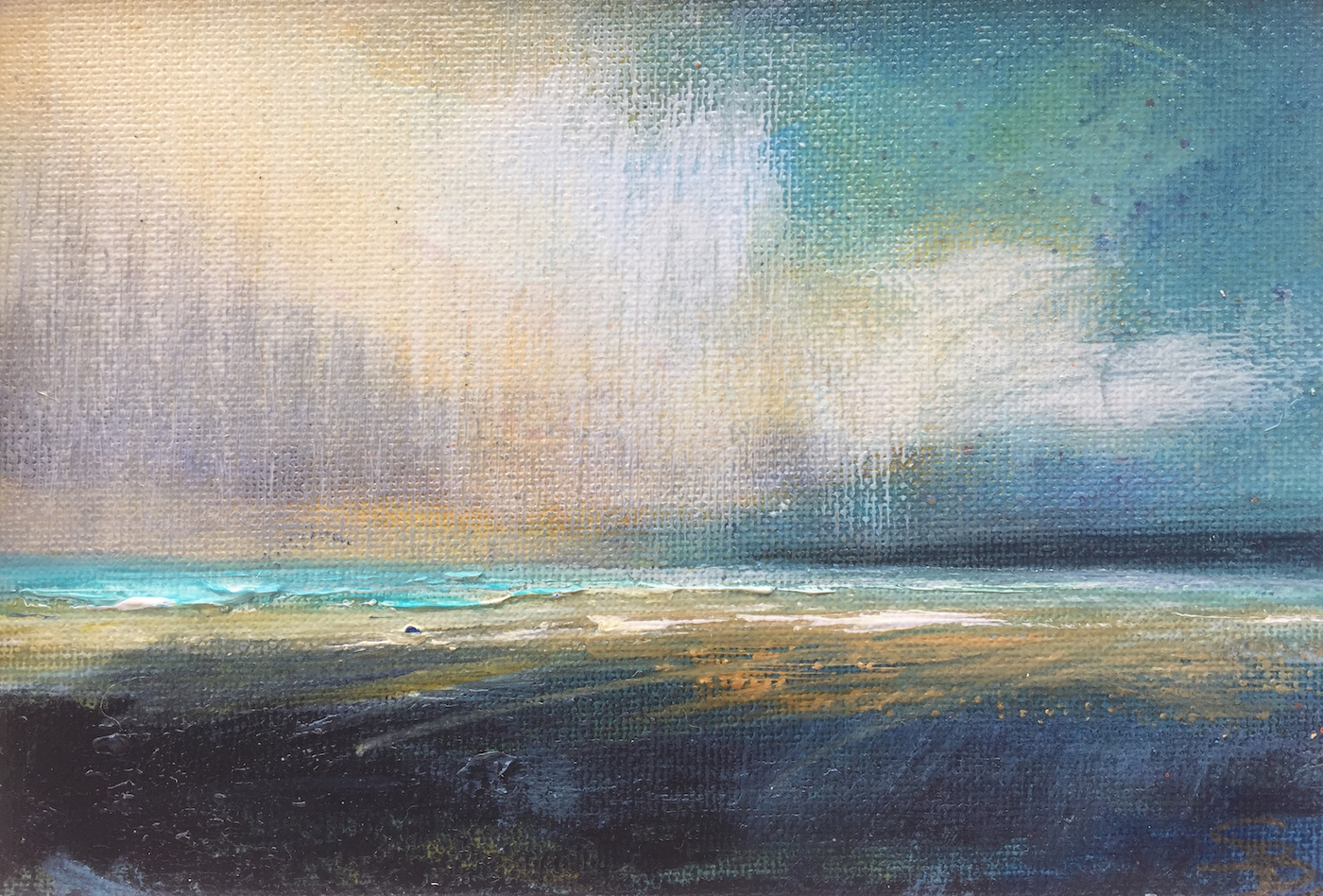
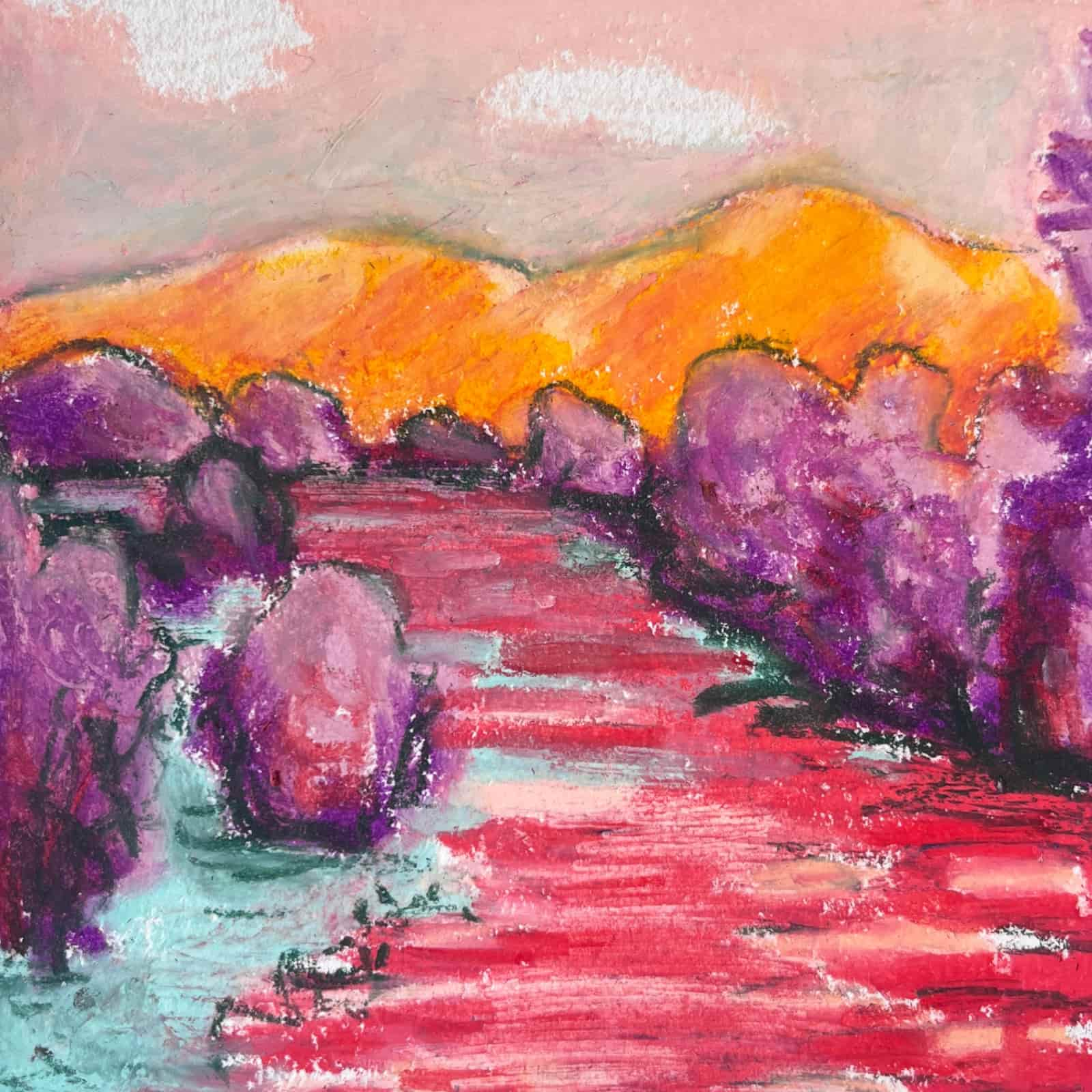
Colorful landscape with purple trees, a red path, orange mountain, and pink sky.
©Teresa Stern, Small Escapes: Flow IV. Oil pastel on fine art paper, 4 x 4 inches.

Marketing is bigger than self-promotion

Marketing is everything you do, outside of making art, to grow your art business and expand your art career. It has to include the business routines and maintenance that lead to higher success rates when you get to the self-promotion part.

Things like segmenting your list, cleaning your list, and revising your artist statement.

These are pieces that we tend to push aside in the busy-ness of life, but they matter when you want your promotional efforts to be effective.

Listen

Three ways artists approach marketing

In this episode of The Art Biz, I walk through three distinct profiles. See if any of these sound familiar.

  • The artist with a promotional routine. You send a monthly email, post to social media a few times a week, apply to the right opportunities when they cross your path. It’s comfortable, but often the maintenance pieces I mentioned above are overlooked. There isn’t a holistic approach.
  • The artist throwing spaghetti at the wall. You try something once, it doesn’t work, you decide it was a dumb idea. Or you keep doing it because you heard it was a good idea, but it has no legs because it isn’t part of a larger strategy. Either way, you don’t see a payoff, so you give up.
  • The artist who does nothing. You’re overwhelmed by all that’s possible and unsure of what’s best for you, so you avoid being proactive. You respond to opportunities when they come across your path, but you aren’t proactive. You’ve surrendered your art career to fate.

You want to be the first artist. But even that isn’t ideal because it’s missing the big picture.

Why it feels so hard

There’s always more you could do. Marketing is never done.

As long as you’re making art and searching for new opportunities, you’ve got to spend at least 50% of your time on the business.

And then something new comes out and throws you a curveball. One day Instagram rewards carousels, then suddenly there’s pressure to make talking-head videos. Don’t get me started on yet another app that was recommended.

It’s exhausting. You’ve got to know what you want and what your priorities are or else you’ll get caught up in things that don’t matter.

A plan can help you get there.

Two kinds of plans

The marketing plan I’d have you build isn’t the traditional one you’ll find in a book. It’s two pieces working together.

The first is a plan for ongoing marketing. A one-page monthly routine, and, depending on how you format it, more like half a page. This is for maintaining visibility and attracting new eyeballs. For ensuring you don’t disappear for weeks at a time.

But this alone won’t serve you if you have events, exhibitions, workshops, and sales. Those require a lot of your energy, and your ongoing plan has to adjust to make room for them. So the second piece is a way of overlaying an event on top of your ongoing plan.

You need both for piece of mind.

I’ll help you build these foundational documents in my Your Art Marketing Plan workshop on September 10, 2026.

About Hayley Price

Hayley Price is a dedicated advocate and mentor for artists at every stage of their careers. With a rich educational background as a Studio Art and Business double major from Washington & Lee University, Hayley possesses a deep understanding of both the creative and commercial challenges artists face in the ever-changing landscape of today’s art world.

Her journey has been shaped by a commitment to fostering growth, building relationships, and empowering artists to focus on their passion while she tackles the challenges that ultimately take them out of the studio. 

Follow Hayley on Instagram: @theartcoachingclub

Photo of Jenny McCarty, a woman with dark hair against a dark background and wearing a black scooped-neck top.

The post Stop complicating your art marketing plan (275) appeared first on Art Biz Success.

]]>
What are you waiting for? The real costs of postponing strategic work in your art business (261) https://dy-online.com/now-seems-right/ https://dy-online.com/now-seems-right/#comments Thu, 26 Mar 2026 13:50:40 +0000 http://artbizsuccess.com/?p=19810 The daily work of running an art business — making art, posting, responding, shipping — always feels urgent. The strategic work doesn't. So it waits. But postponing that deeper evaluation isn't neutral.

There are five specific costs that accumulate when you keep the strategic work on the back burner, quarter after quarter. None of them announce themselves. And that's precisely what makes them so damaging.

The post What are you waiting for? The real costs of postponing strategic work in your art business (261) appeared first on Art Biz Success.

]]>
There’s a question my long-time students and clients know is coming. It’s simple: By when?

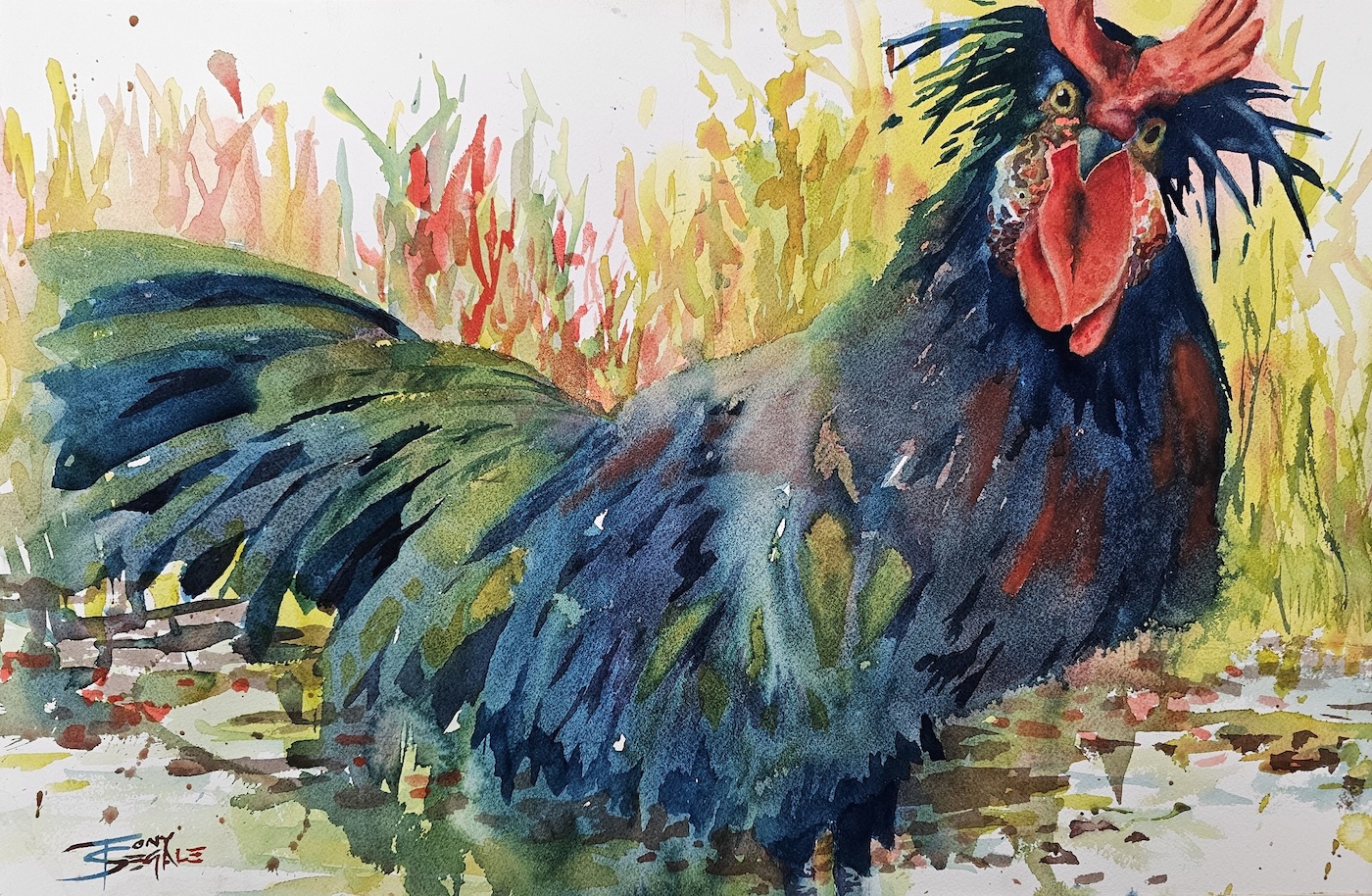
Tony Segale watercolor painting of rooster with dark plumage, a prominent red comb, and wattle
©Tony Segale, Whatcha Lookin At? Watercolor on Arches 140lb Cold Press, 15 x 22 inches.

By when will you follow up with your collector?

By when will you contact your gallery to ask about payment?

When I ask, the answer is almost always “by the end of next week.” And my response, when I know what’s at stake … when I know they’re capable of more, is: Why not now?

There’s always a pause. Because the idea seemed very good right up until I suggested doing it immediately. These are tactical questions. Delaying them directly delays results.

But then there are the bigger, strategic questions that also get put off — and these are the ones that cost you more in the long run.

By when will you evaluate which income streams are earning their place?

By when will you slow down long enough to review the weakest links in your business systems?

This kind of work is fuzzier. It takes longer. It requires more pieces to pull together a clear picture. And nobody is waiting on it. No order goes unfulfilled if you skip it.

Nothing breaks today. So it waits. And it costs you.

In episode 261 of The Art Biz, I walk through five specific costs that accumulate when artists keep postponing this kind of work. None of them announce themselves. That’s what makes them so damaging. 

Listen

The 5 costs of postponing strategic work

1. You’re leaving money on the table.

The income stream that kept requiring energy you never formally decided to give it. The email list that didn’t grow because you never stopped to ask why. The collectors who landed on your website, didn’t find what they needed, and left without a trace.

You’ll never know exactly what you didn’t earn, and that’s precisely what makes it so easy to ignore.

2. Unresolved questions are taking up mental real estate.

Every strategic question you’re carrying runs in the background. The platform you know isn’t working but haven’t officially walked away from. The show you signed up for again without examining whether it was worth it.

You’re paying a constant tax on your attention by carrying these things unresolved, and that’s energy that could be going into your creative work.

3. You don’t know if you’re executing on the right things. 

The longer you build in a direction you haven’t examined, the more expensive it is to redirect.

This is a mostly invisible cost, because it doesn’t feel like anything is going wrong. It just feels like you’re busy. You’re executing. You’re checking things off.

But execution without direction is just activity.

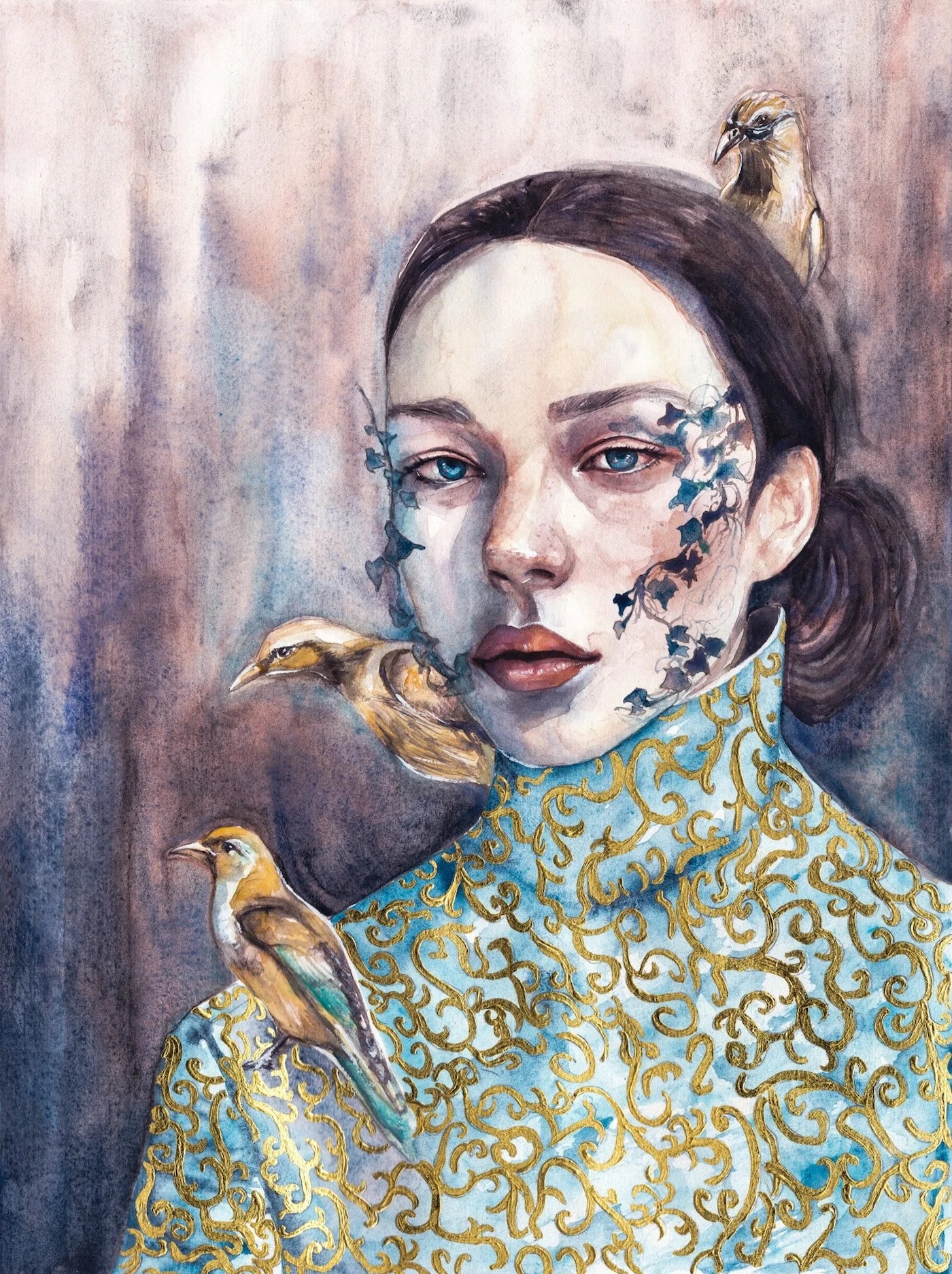
Miwa Gardner emotive watercolor portrait of a woman surrounded by birds and with vine-like markings on her face. The subject is wearing a high-necked garment adorned with intricate gold filigree patterns.
©Miwa Gardner, Autumn Dawn. Watercolor and 22k gold on paper, 40 x 30 centimeters.

4. The longer you wait, the harder it gets.

A cold email list gets colder. An out-of-date website feels like a bigger project the longer it sits. Waiting doesn’t make the work easier, it raises the cost of entry.

The longer you’ve waited, the higher the bar feels, not because the work itself changed but because you’ve been adding to it psychologically every day you didn’t begin.

5. Your confidence takes a hit. 

When you know something isn’t working and you keep not addressing it, it does something to how you feel about your business. Not dramatically. There’s no crisis moment. Just a slow accumulation of knowing and not acting.

That gap, over time, affects how you show up, how you talk about your work, and whether you put yourself forward or hold back.

None of these costs announce themselves. There’s no invoice, no warning, no interruption to your day. They compound through constant execution without strategic audits, until you look up and realize your business looks very much like it did a year ago. Only with a longer to-do list.

Pick one strategic question you’ve been carrying. Something you already know needs your attention. Name the date by which you’ll address it. Not “sometime soon.” A real date. Like … today.

Alyson Quotes

“Why not now? Now seems like exactly the right time.”

“Ignoring the strategic work almost always never produces a better outcome. It just postpones the results you’re after.”

“Execution without direction is just activity.”

“You are paying a constant tax on your attention by carrying them unresolved. That’s energy — energy that could be going into your art.”

“Waiting never makes the work easier. It just raises the cost of entry.”

“Artists who do this work don’t just leave with their priorities in order. They leave with something that’s harder to manufacture: confidence.”

The post What are you waiting for? The real costs of postponing strategic work in your art business (261) appeared first on Art Biz Success.

]]>
https://dy-online.com/now-seems-right/feed/ 7
The art business self-assessment every artists should do (260) https://dy-online.com/self-assessment/ Thu, 19 Mar 2026 11:22:00 +0000 https://dy-online.com/?p=57304 Before you can decide what to do next in your art business, you need to know what you actually have. In episode 260 of The Art Biz, I walk through the three-zone framework I use with every private client: Outreach, Presence, and Systems.

It's a structured self-assessment that gives you a clear, honest picture of where your business stands, so you can stop guessing and start making decisions that actually move things forward.

The post The art business self-assessment every artists should do (260) appeared first on Art Biz Success.

]]>
Before I talk strategy with any private client, I ask one question: What do you actually have right now, and is it working?

It’s a simple question, but we rarely take a breath long enough to consider it.

You know which part of your business is currently taking up your energy: the email you haven’t sent, the website that needs updating, the show deadline coming up. But you might not have a clear picture of the whole thing.

That’s what a real art business assessment gives you. And it’s where every private consulting relationship I have begins.

Over years of working with artists, I’ve found that everything you do to build your art business — outside of making the work, which is always the most important part — falls into one of three zones.

I’ve named them Outreach, Presence, and Systems. Understanding these zones, and honestly evaluating where you stand in each one, is the foundation of any meaningful strategic conversation.

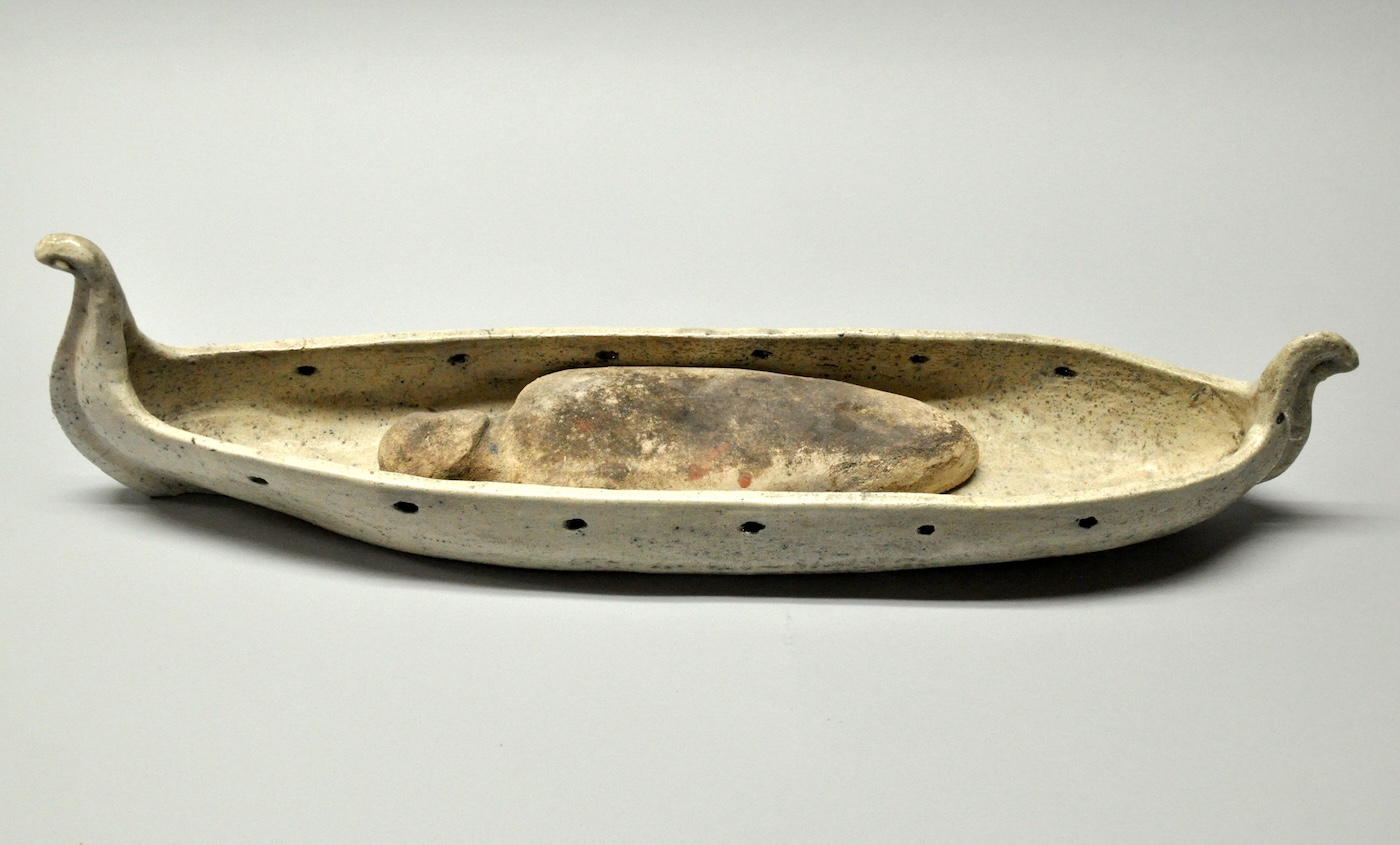
Cindy Rassche ceramic model of a boat
©Cindy Rasche, Gjellstad Ship. Raku fired clay, 5.25 x 20.5 x 4 inches.

Zone 1: Outreach

Outreach is everything you do to actively reach people. You might think of this as marketing, and that’s close enough.

It starts with your email list, which is the only audience you actually own. Everything on social media is rented. Platforms change, accounts get restricted, algorithms shift. The people who have asked to be on your list are yours.

So the first question is simple: is that list growing, shrinking, or stagnant, and do you know why?

Social media is part of outreach too, even though you don’t own it. I include it in your broader list because these are people who have opted to follow you.

Is your platform of choice, and that’s Instagram for most artists, working for you or are you working for it? What might you lose if you decreased your activity there or removed it from your to-do list altogether?

In-person networking belongs in this zone as well, and it’s the piece artists most consistently undervalue. We just get so comfortable at home and in the studio.

When did you last put yourself in a room where collectors, collaborators, or the right connections were present? Being seen in your community, building the kind of recognition that can’t happen on a screen is valuable outreach work, and it compounds over time.

And then there’s personal outreach: the one-to-one contact that we don’t get around to because it requires real attention. Writing personally to a gallery, following up with a collector, reaching out to someone you’ve been meaning to contact for months.

It’s high-touch by definition. It’s also the most direct form of reach available to you, and the one that tends to make the biggest difference.

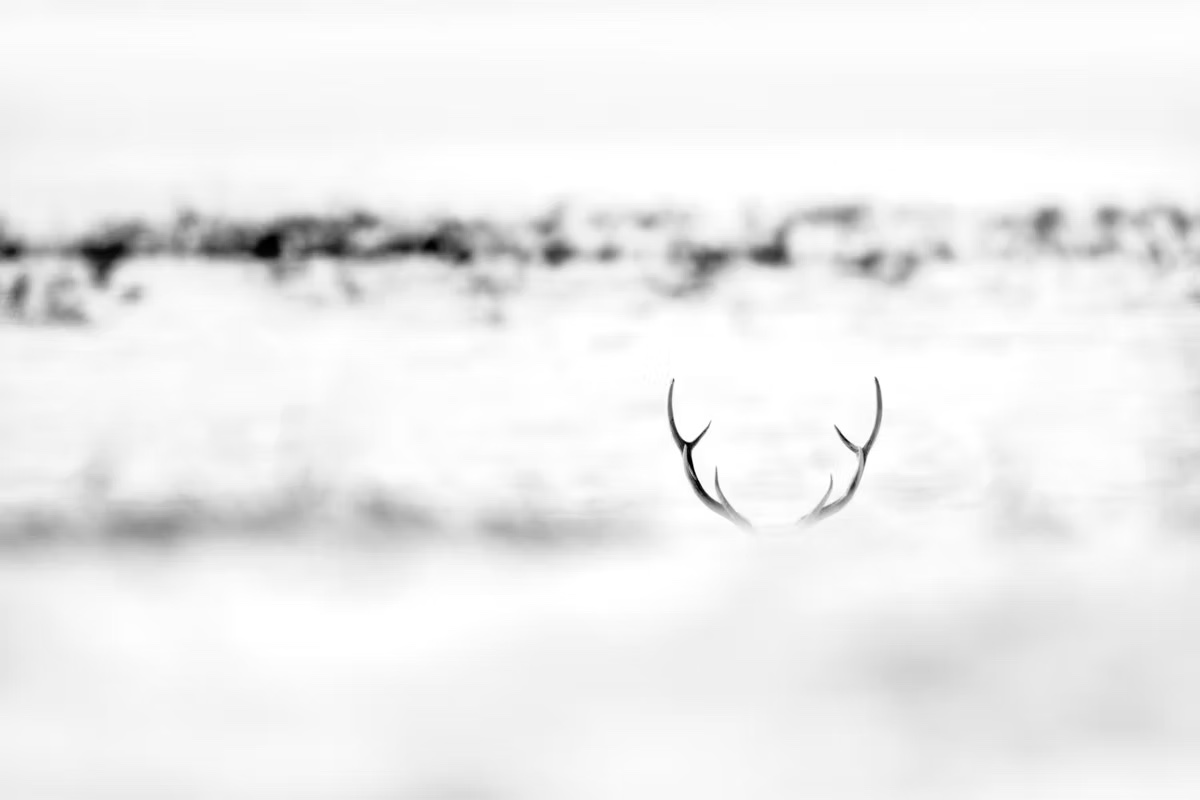
Johann Siggesson black and white photograph of symmetrical deer antlers against a stark winter snowy background
©Johan Siggesson, Headless Symmetry. Archival pigment print.

Zone 2: Presence

Presence is what people find once you’ve reached them. It starts with the art itself, always, and extends to everything that surrounds it.

Your website is often the first place someone will experience your work in depth. It’s working (or it isn’t) whether you’re paying attention to it or not.

If a collector landed there today for the first time, what story would they walk away with? What would they understand about you and your work? What would make them want to stay?

Your marketing materials are part of presence too. Whether someone is holding a postcard from your last show or reading an email announcement, those materials are representing you when you’re not in the room.

Is the design right? Is your work shown in its best light? Is everything aligned with the reputation you’re building?

And then there are your shows and exhibitions, the critical in-person encounters where presence becomes physical. Where you show matters. Who else is showing there matters. Whether the space itself elevates your work or works against it matters.

I regularly advise private clients to leave shows they’ve outgrown, because continuing to show in the wrong context can quietly undermine the reputation they’re working to build.

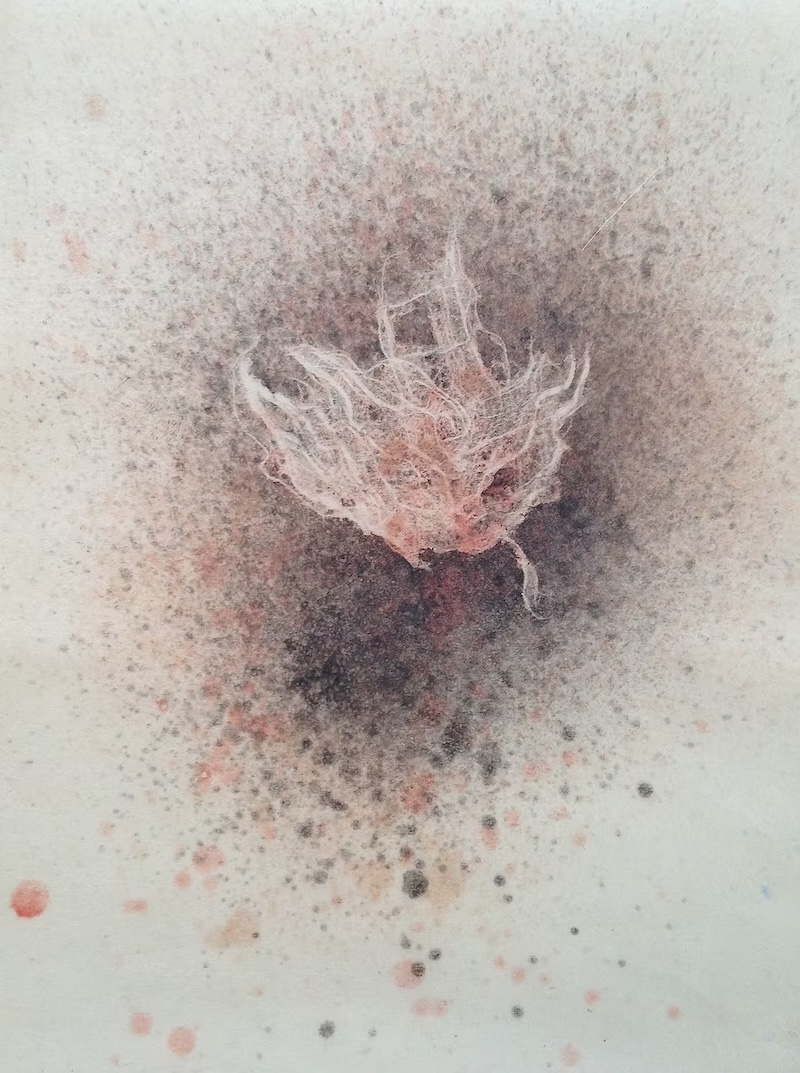
amy miami richard abstract pink and tan cotton pulp creating ethereal, organic forms that resemble a biological plant-like structure
©2016 amy miami richard, INNER GLOW. Pigmented cotton pulp on artist-made paper (kozo fiber), 10.75 x 8.5 inches.

Zone 3: Systems

Systems are the behind-the-scenes infrastructure that holds everything else together. They’re what you do when no one is watching, and they determine the level to which your outreach and presence can effectively do their jobs.

Income streams live in this zone because they’re structural. How many ways is your art generating income for you? And are those sources aligned with the work you actually want to make? Which ones are costing you more energy relative to what it returns?

More income streams don’t automatically mean a stronger business. In some cases, they are a diversion and weaken your business.

Business operations are systems too: how you handle inquiries, how you track inventory, how you manage money, how you manage yourself.

Where do things fall through the cracks in your business? Once you can see the leaks, you can take action to fix them.

And then there’s follow-up, which I’d argue is the most overlooked system of all. The conversation happened. The connection was made. The interest was expressed. And then nothing, because there was no system in place to carry it forward.

Lack of follow-up costs you more than you realize.

Listen

Seeing the Whole Picture

What this three-zone framework gives you is a way to step back from the daily work and look at your business holistically. Not just the part that’s on fire this week, and not just the area someone in a YouTube video told you to fix.

Every art business is different. The zone that needs the most attention in yours is specific to you, your goals, and where you are right now.

That’s exactly the kind of thinking I do with private clients: not handing over a generic checklist, but helping you find the one move that will have the biggest ripple effect in your specific situation.

Alyson Stanfield Quotes

“Everything you do to build your art business, outside of the making, is going to show up in one of these three zones.”

“Your list is the only audience you own. Everything else is rented.”

“Is social media working for you, or are you working for it?”

“Personal outreach is the most direct form of reach, and the one that so many of us don’t get around to, because it’s so high-touch.”

“When did you last put yourself in a room that wasn’t your own studio or booth?”

“Presence is whether everything around your art is doing that art justice.”

“More income streams don’t necessarily mean better. It could mean the exact opposite.”

“One move that’s going to give you the biggest ripple effect.”

The post The art business self-assessment every artists should do (260) appeared first on Art Biz Success.

]]>
Do you have the art business you actually want? (259) https://dy-online.com/business-model/ https://dy-online.com/business-model/#comments Thu, 12 Mar 2026 11:15:00 +0000 https://dy-online.com/?p=57187 Most artists didn't design their art business. They drifted into it. A gallery here, a commission there, a product line because someone asked.

In this episode of The Art Biz, I invite you to step back and ask a question most artists never take the time to ask: if you were starting fresh today, would you build it this way? That one question can change everything.

The post Do you have the art business you actually want? (259) appeared first on Art Biz Success.

]]>
If you’re like most artists, you didn’t sit down one day and design your art business. You built it one Yes at a time.

A gallery approached you … and you said yes.

Someone asked for a commission … yes.

A print shop made it easy to add products … sure, why not.

And somewhere along the way, a business took shape without you ever deciding that’s what it would look like.

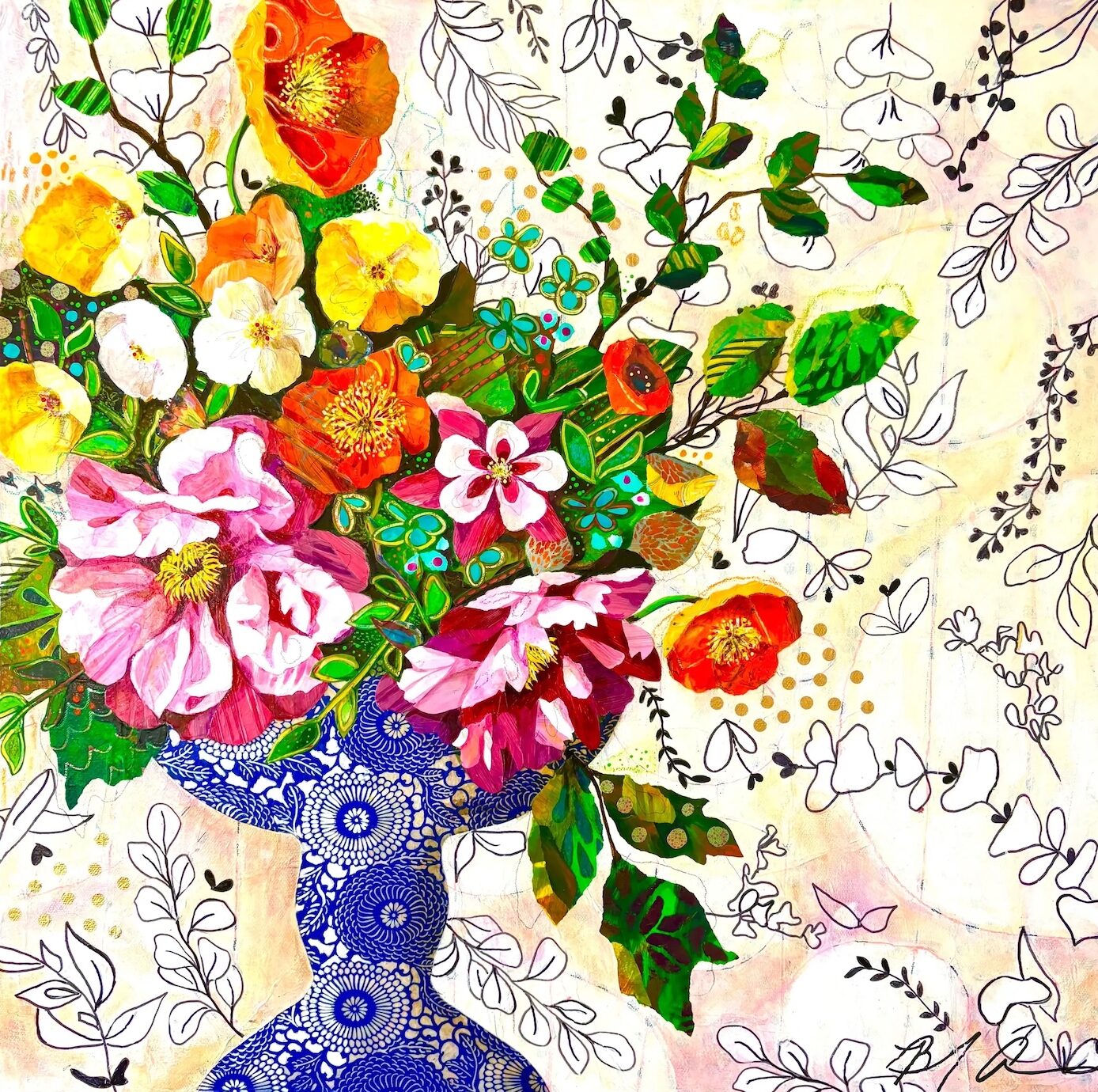
Behnaz Ahmadian mixed media on canvas of colorful floral blooms in a blue patterned vase
©Behnaz Ahmadian, June’s Bloom. Mixed media on canvas, 24 x 24 inches.

There’s nothing wrong with any of those individual decisions. But when they pile up without intention, you can end up running a business that feels like it belongs to someone else.

I know this pattern because I’ve lived it. At one point I looked up and had a tangle of products and services I hadn’t consciously chosen. I had drifted too.

And here’s what I’ve come to understand: when you’re swimming in information — in courses, social media posts, and videos all offering advice — it’s easy to get pulled toward whatever is in front of you rather than what’s right for you. That’s how drift happens.

[ See Beyond Information: Why Artists Need Frameworks (251) ]

Your Art Business Model

Your business model is simply how your art generates value for others and, in return, how it generates something for you. Perhaps money, recognition, connection, or all three. You have one whether you designed it or not. The question is whether the one you have is the one you want. That’s what this episode of The Art Biz asks you to consider. The first thing I ask a new private client is: what do you want for your art? What do you want it to do for you? What do you want to happen to it? Once you know what you want, you have a lens. And that lens is exactly what you need for the reset question: if you were starting fresh today, would you build your business the way you’ve built it? Before you can answer that honestly, you need to see clearly what you’ve actually built. Take inventory. Ask yourself:
  • How are you reaching people?
  • What do people find when they encounter your work?
  • What’s holding everything together?
Once you can see it clearly, then you can evaluate. Decide what’s working, what you’d change, what you’d ditch if you could.

Listen

Alyson Quotes

“You fall into patterns. You say yes to what’s in front of you, and then one day you look up and wonder why the business feels like it belongs to someone else.”

“You have a business model whether you designed it or not.”

“There is so much coming at us that we grab onto what appears, rather than examining whether it deserves a place in our businesses, let alone in our lives.”

“Did I choose this, or did I drift into it?”

“Name it. That’s the point where the intentional design actually begins.”

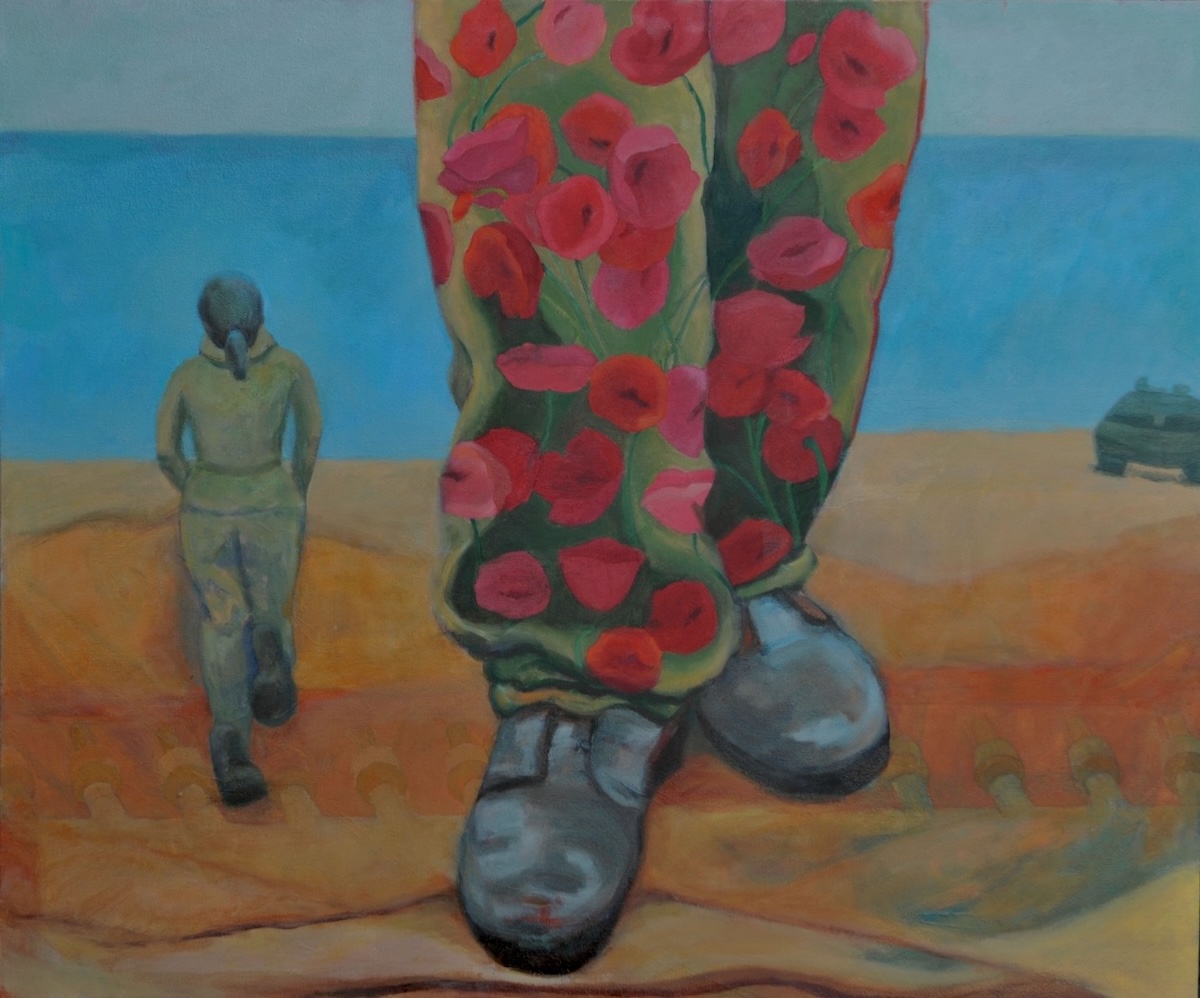
Paula Blumenfeld oil painting that features a figure in poppy-patterned trousers in the foreground, with a smaller figure walking toward a body of water in the background.
©Paula Blumenfeld, I Don’t Feel Like a Hero. Oil on canvas, 30 x 36 inches.

Mentioned

Beyond Information: Why Artists Need Frameworks (251)

Art Business Reset is no longer available

The post Do you have the art business you actually want? (259) appeared first on Art Biz Success.

]]>
https://dy-online.com/business-model/feed/ 1
Stop being busy, start being strategic (258) https://dy-online.com/in-v-on/ Thu, 05 Mar 2026 13:04:00 +0000 https://dy-online.com/?p=57119 There's a difference between working in your art business and working on it, and most artists spend almost all of their time on one of them.

This episode breaks down what each mode looks like, why the balance matters, and what it actually looks like to step back and think strategically rather than just execute.

The post Stop being busy, start being strategic (258) appeared first on Art Biz Success.

]]>
Being busy is boring.

I don’t mean just saying it, though that’s boring too. You know the moment: someone asks how you’re doing and before you can think, out comes “I’ve just been so busy.”

It’s a conversational dead end. Nobody knows what to do with it. Because they’re busy, too. Everyone is busy!

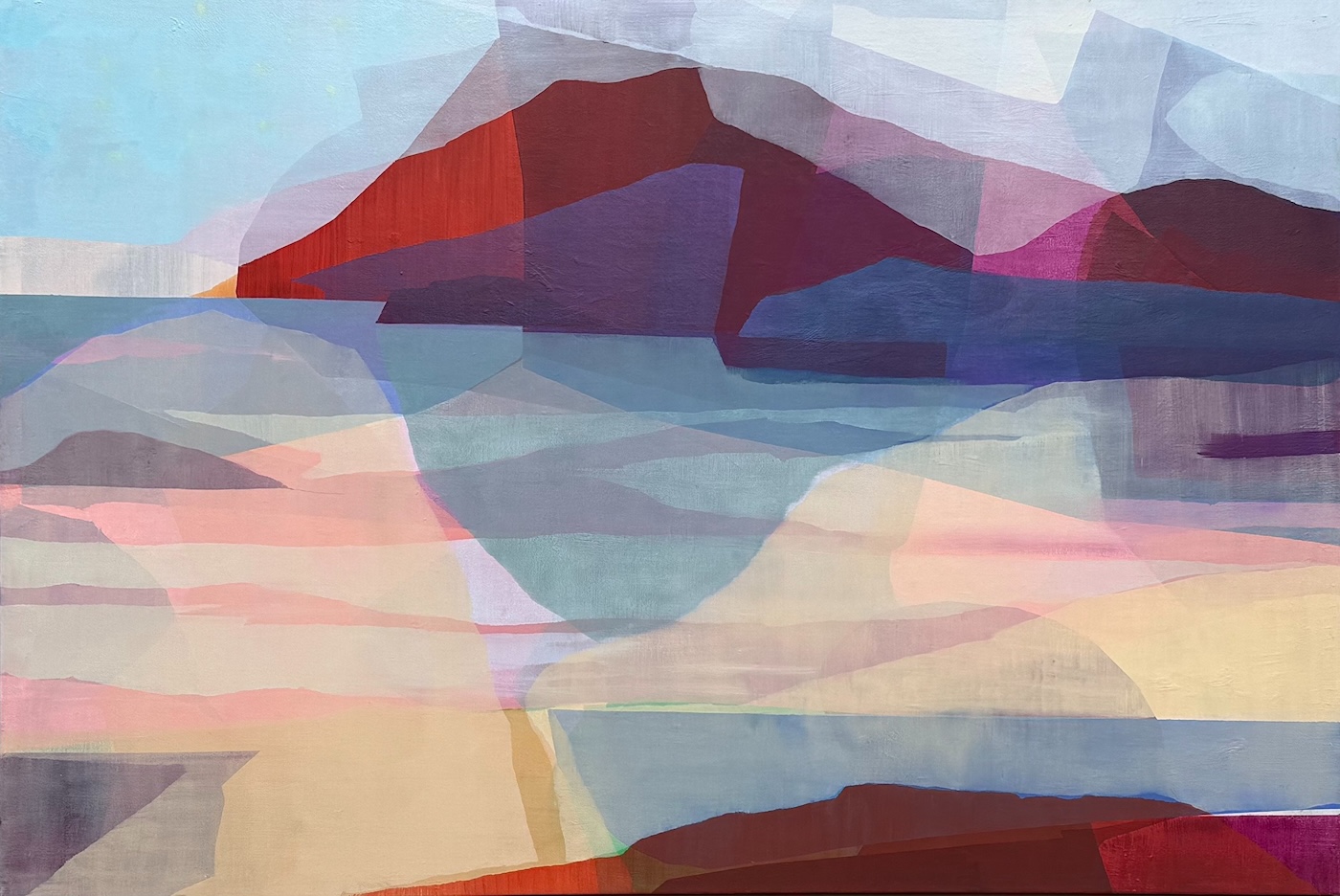
Abstracted landscape layered in reds and blues by Greta Laundy.
©Greta Laundy, The Seeking. Oil on polycotton, 82 x 122 x 5 centimeters.

But the deeper problem is actually being that busy. When your entire existence as an artist has been reduced to a task list, you have no direction to report, no story to tell, no point of view on where any of it is going. Just motion.

That’s what working IN your business without ever working ON it does to you.

In this episode of The Art Biz, I talk about one of the most important distinctions in running a sustainable art business: the difference between working IN your business and working ON it.

Listen

Executing v. Evaluating

Working IN your art business is execution. Posting to social media, responding to emails, filling out show applications, sending your newsletter. It’s necessary, and it has to happen.

But working ON your business is something different. It’s stepping back to look at the whole picture. Evaluating what’s working, weighing opportunities, asking hard questions about where you’re headed and whether your current path is still right.

This is higher-level thinking that must be addressed when you’re trying to build your reputation or make a living from your art.

Before we work together, most of my artist-clients are almost entirely in execution mode. And without ON time, there’s no filter.

Every new platform, every trend, every idea from another artist pulls at your attention, because you have no compass telling you what actually matters right now.

I also talk about the opposite problem: artists who spend too much time planning and refining, and not enough time executing. A perfect plan that never launches is just a very organized fantasy.

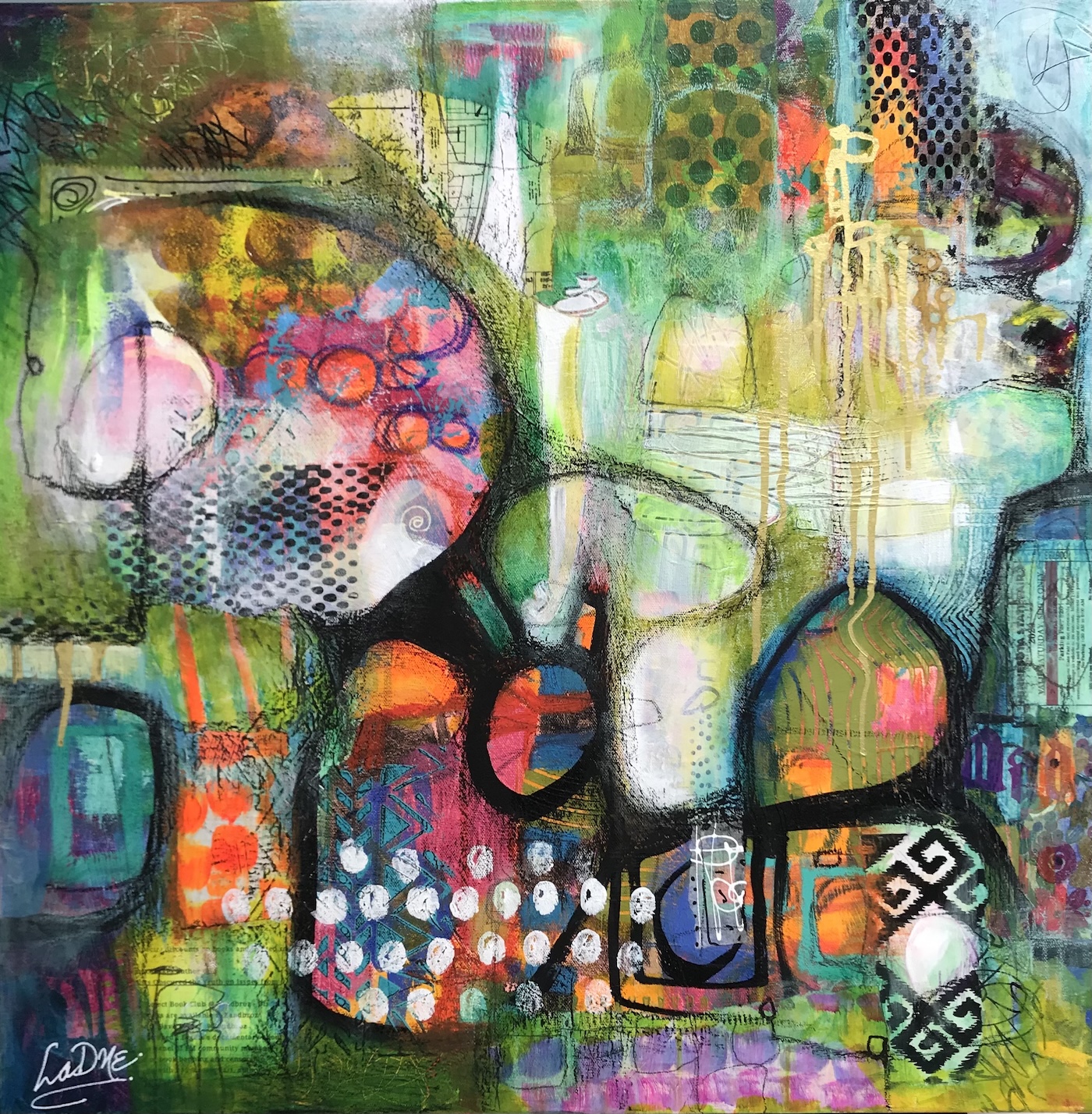
Abstract painting that is primarily green with spots of bright colors. Includes black linework and patterns on the surface.
©2024, Paige LaDue Henry, Dreaming the Dreams of a Seeker. Acrylic, collage paper, oil pastel on 1.5” gallery wrap canvas, 24 x 24 inches.

Questions to Ask During Your ON Time

Working ON your business doesn’t require a full-day retreat, like the ones I describe in episode 251.

It can be one protected hour a week, where you ask not What do I need to do today? but these questions:

  • Is what I am doing actually working? WHY?
  • Is this still where I want to go? WHY?
  • What’s on my to-do list that no longer serves me?
  • What has the best potential for a long-term payoff?
  • Where am I playing it too safe?

Record everything in your journal for your next session.

You don’t have to do this alone. Check out options for private consulting with me.

Alyson Stanfield Quotes

  • “Stop saying you’re busy.”
  • “Execution without direction is just activity.”
  • “A perfect plan that never launches is just a very organized fantasy.”
  • “Without the ON time, there’s no filter.”
  • “This isn’t about thinking it, it’s about inking it.” (Nod to Mark Victor Hansen.)
  • “Working on your business is not about creating a perfect plan. It’s about being awake to what’s happening.”
  • “ON time is where you ask: what am I willing to give up to move forward? That’s a different question than what do I need to do today?”

The post Stop being busy, start being strategic (258) appeared first on Art Biz Success.

]]>
Beyond information: why every artist needs frameworks (251) https://dy-online.com/beyond-information/ Thu, 11 Dec 2025 12:55:00 +0000 https://dy-online.com/?p=56410 I get brutally honest about anxiety, sleepless nights, and an identity crisis: Who am I if not a teacher creating content?

I reflect on information overload and why artists don't need more lessons—you need frameworks, filters, and boundaries. A vulnerable look at what happens when you realize something fundamental needs to change.

The post Beyond information: why every artist needs frameworks (251) appeared first on Art Biz Success.

]]>
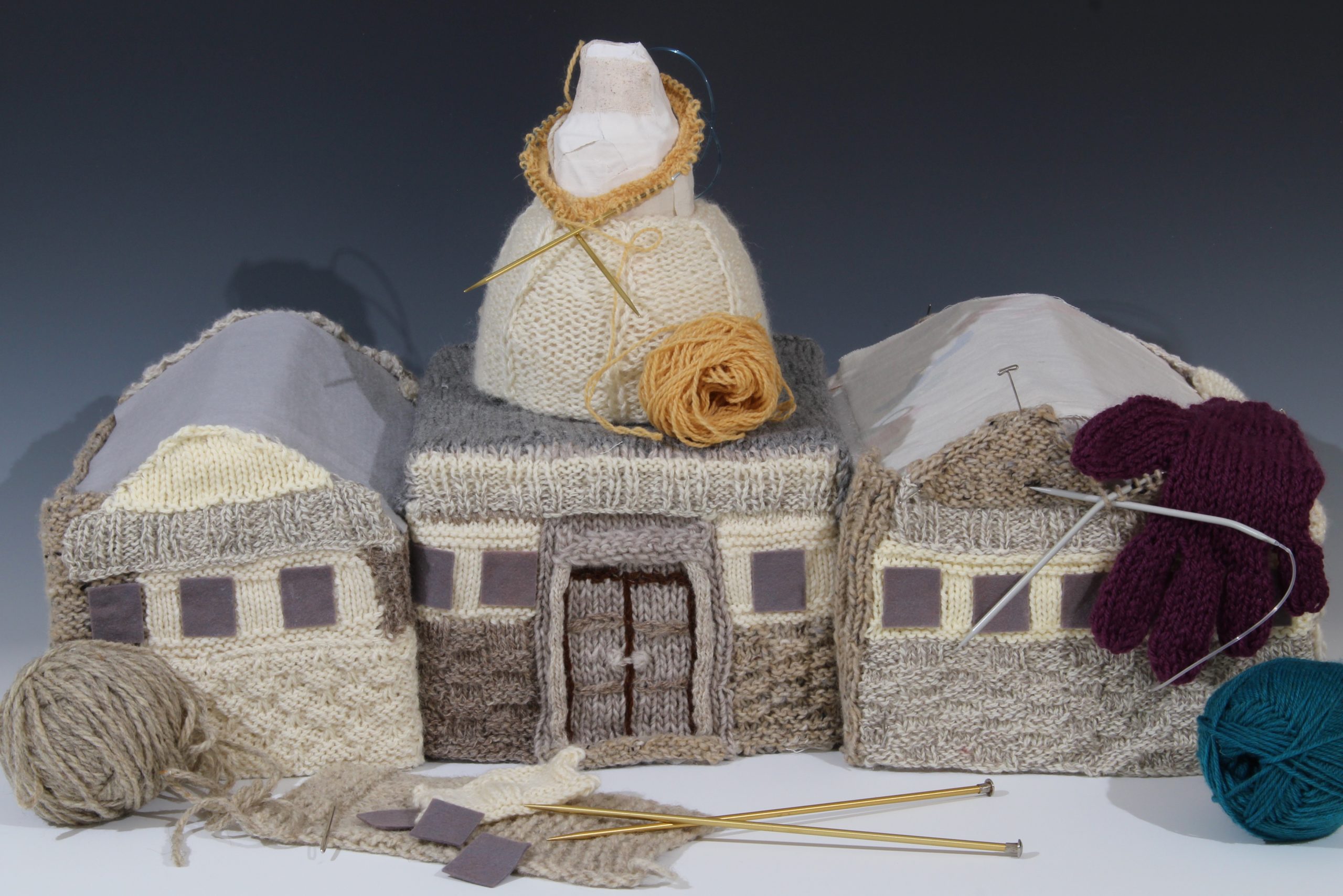
Information is everywhere. You can Google anything. Ask AI anything. But we’re drowning in it.

What artists actually need aren’t more lessons.

If you are serious about building a reputation and earning a living, you need containers to organize information, filters to know what matters, and frameworks to apply it to your specific business.

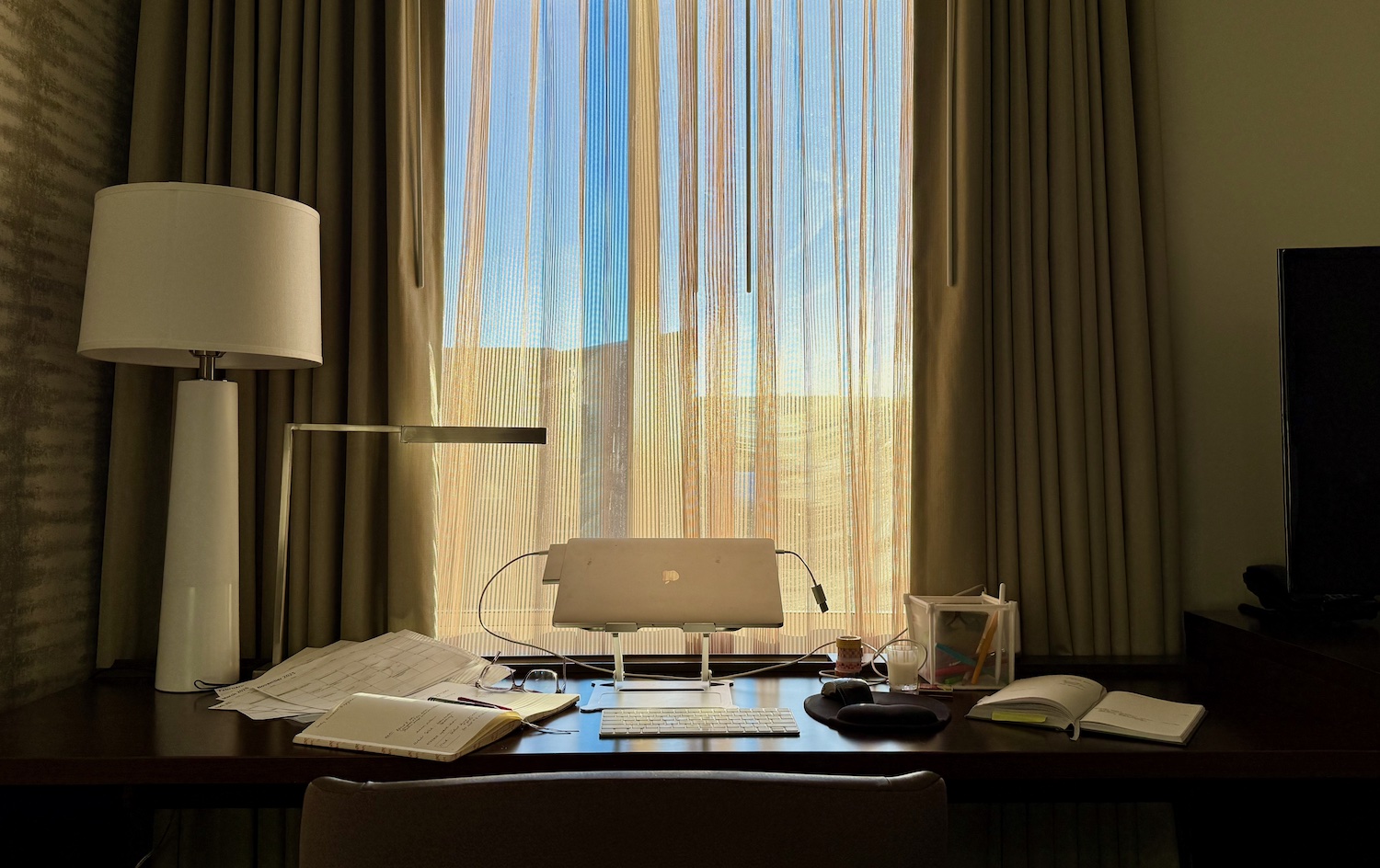
What my hotel planning retreat looks like—pretty much every time!

I’ve been contributing to the problem. For months, I’ve been waking up with anxiety, my gut in knots, the pressure building. I kept adding more curriculum, more workshops, more content—preaching sane planning while juggling an insane schedule.

My guiding word for 2025 was RADIANT. I wanted space in my calendar and my brain. But I kept betraying that intention.

Something had to give.

After conversations with trusted advisors, I got clear: This is about identity. Who am I if not a teacher constantly creating content? What is Art Biz Success if it’s not about adding more?

Maybe you’re asking similar questions. Who am I if I stop offering discounts? If I leave galleries and build my own collector list? If I stop taking commissions to focus on the work that feeds my creativity?

The question isn’t “what more do I need to learn?” The question is: “What do I need to let go of? Where can I lower the bar?”

So I’m evolving along with Art Biz Success. I’ll be creating AI tools you can adapt. Working more closely with private clients. Leading in-person retreats focused on your process, not information dumps. And restructuring Essentials to focus on supporting you as you implement the knowledge at your fingertips.

I get really personal in this episode of The Art Biz.

Listen

The Artist’s Annual Review for 2025 is no longer available.

Alyson Quotes

“You know far more than you probably give yourself credit for.”

“I continue contributing to the information dumpster.”

“AI is only as useful as what you feed it. You have to know the right questions to ask.”

“I’m creating faster than is useful to you and faster than what is good for my health and well being.”

“I am NOT setting a good example. I am not running my business the way I want you to run yours.”

“The bottom line is that I’m preaching sane planning out of one side of my mouth while juggling an insane schedule.”

“This is about IDENTITY. The reason this is such a struggle is it’s about who I am at my very core.”

“You need help making sense of what’s already out there. You need filters. You need containers.”

“The question isn’t ‘what more do I need to learn?’ The question is: ‘What do I need to let go of? Where can I lower the bar?'”

“This isn’t about abandoning what I’ve built. It’s about evolution, which I consider one of my superpowers.”

Mentioned

Cynthia Morris, Original Impulse (trusted advisor)

Zach Wolfson, Ready to Record (trusted advisor)

The post Beyond information: why every artist needs frameworks (251) appeared first on Art Biz Success.

]]>
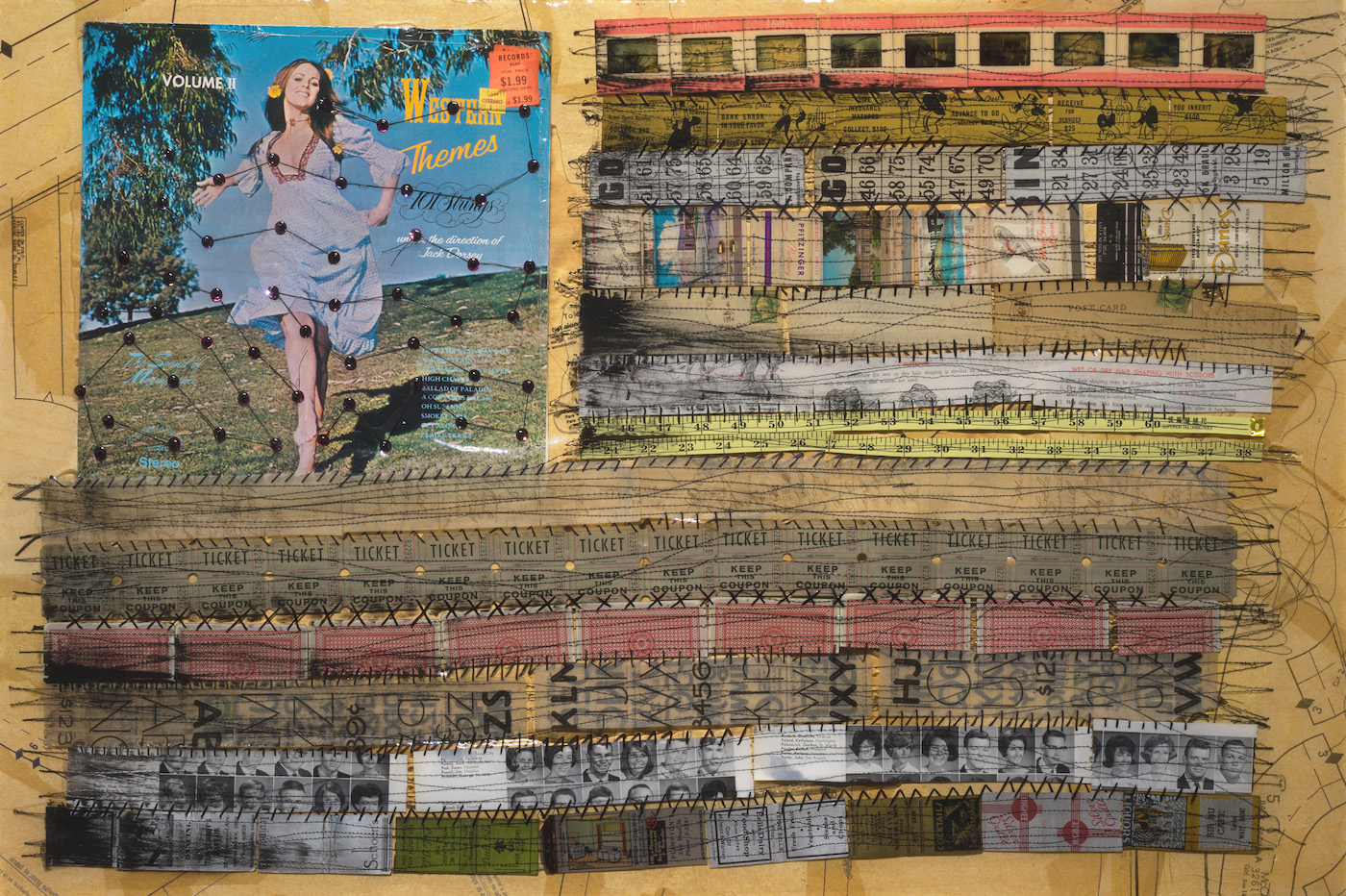
5 Timelines to help you plan https://dy-online.com/timelines/ https://dy-online.com/timelines/#comments Wed, 02 Apr 2025 16:52:48 +0000 http://artbizsuccess.com/?p=15748 Planning ahead can make all the difference in your art business.

In this post, I share 5 essential timelines to help you stay organized and reduce last-minute stress. From publishing a blog post to promoting a solo show, updating your website, and following up with contacts—these timelines give you structure so you can focus more on your art. Use them as-is or adapt them to fit your unique workflow.

The post 5 Timelines to help you plan appeared first on Art Biz Success.

]]>

If you’ve ever found yourself scrambling at the last minute to meet a deadline—or worse, completely forgetting something important—timelines might be your new best friend.

They provide structure and clarity so you don’t have to reinvent the wheel every time you plan a show, write a newsletter, or update your website.

I use timelines extensively in my Artist Planning Workshops, and today I’m sharing five of my go-to versions to help you sleep better at night, knowing your bases are covered:

  1. Timeline for Publishing a Blog Post or Artist Newsletter
  2. Timeline for Designing Your Artist Website
  3. Lead Times for an Art Show
  4. Timeline for Promoting Your Solo Show
  5. Schedules for Following Up with People
Sarah Jane Brown oil painting
©Sarah Jane Brown, Balanced. Oil on canvas, 13 x 18 centimeters.

1. Timeline for Publishing a Blog Post or Artist Newsletter

Publishing is a process. Nobody writes a publishable article on the first draft.

Even seasoned writers need plenty of time and space, so give yourself a break and acknowledge the amount of time you need.

Schedule your writing and editing time wisely.

  • Ongoing :: Gather content ideas. Don your journalist cap and be on the lookout for things to write about.
  • 1 Week out :: Write your first draft.
  • 2 Days before publishing :: Edit your draft.
  • 1 Day before publishing :: Do your final edit. Schedule your post or email for delivery.
  • Publishing day :: Share on social media.

2. Timeline for Designing Your Artist Website

While sites like SquareSpace and FASO make it easy to build a functional, attractive artist DIY website, you might decide your time is better spent elsewhere. If so, your first step to a new website is interviewing (then hiring) a designer.

Designers have lots of other clients and need to squeeze you into their calendars.  Simultaneously, begin researching sites so that you know what you want and like.

The schedule below is an example. You will need to  agree with your designer on deadlines and adhere to them. Once you miss a deadline, the designer will move on to another client and put you at the back of the queue. 

  • 2-3 Months from launch :: Finalize design, navigation, and page content. Everything you add after this point will be an additional charge if working with a designer.

    [ See Presenting Yourself Professionally on Your Artist Website with Jessica Burko ]
  • 7 Weeks from launch :: Rewrite or update text.
  • 5 Weeks from launch :: Give final text and images to the designer.
  • 2 Weeks from launch :: Review draft pages that designer has created. Make any suggestions for improvements.
  • 1 Week from launch :: Review final pages, read all of the text, and test all links. Your designer is responsible for the design. You are responsible for making sure it works as you would like.
Cynthia Mosser gouache painting
©Cynthia Mosser, Muffy I. Gouache on museum board, 12 x 9.5 inches.

3. Lead Times for an Art Show

This is more of a list for various venues, than a timeline as there are too many variables at play. There are some venues that might allow you to schedule and install a show next month. Others have more rigorous schedules and require advanced planning. 

  • Alternative venue :: This might include a coffee shop, restaurant, hospital, library, or other public space. Your lead time for these venues varies based on how organized the person in charge is.
  • Art venues :: Co-op galleries, nonprofit spaces, smaller galleries, and public spaces with a defined art program may schedule their shows at least 1 year in advance.
  • Top tier galleries :: The most in-demand galleries will likely have their shows scheduled out for 2-3 years so that their artists have plenty of time to create a new body of work.
  • Museums :: Smaller museums may schedule shows 18-24 months out, but larger ones will look at 3 years or longer. Museums need time to write grants and raise funds, which contributes to the longer lead time.

How curators work.

Art center curator Collin Parson talks about how he plans exhibitions and works with artists.

The Art Biz episode 116

3. Timeline for Promoting Your Solo Show

Most artists don’t promote their shows enough.

They send one announcement and trust that it registers with all recipients. You have to be more vigilant than this, but it doesn’t mean that you treat all shows equally.

This timeline is for a solo show, which deserves much more attention than group shows.

  • ASAP :: Segment your list. This is a key module in my ESSENTIALS program, and is needed so you can target those most likely to attend.
  • 1-2 Months out :: Announce it in your newsletter (your entire list).
  • 1 Month out :: Send a save-the-date postcard or email to those most likely to attend and VIPs who need to know about it. Post the same info to social media.
  • 2 Weeks out :: Email the official invitation to your local segment. Reach out with a personal email, text, or DM to those you’d really like to attend or at least know about it. (Everything from this point on is to only those who are most likely to show up.)
  • A few days before the opening :: Send an email that “it’s this week.”
  • 1 Day before opening :: Send “it’s tomorrow” email.
  • Ongoing :: Post to social media. Here are 22 ideas for sharing news about your show.
  • 1 Week before closing :: Send email that there’s 1 week remaining to see the show.
Cheryl Berech oil painting
©Cheryl Berech, Keisha I. Oil on canvas, 12 x 9 inches.

5. Schedules for Following Up with People

This is a different type of timeline—a list of various people you will come across and the attention they should be given. You can’t neglect follow-up when you are trying to make a living.

  • New acquaintances :: Send an email or handwritten note within 3 days of meeting, with the message “it was nice to meet you.”
  • Potential buyers :: Anyone who expresses interested in your work should command your prompt attention. Respond immediately.
  • Interested media people or writers :: Ditto above. Anyone who wants to share your art in an article, video, or podcast needs swift follow-through.
  • New email subscribers :: Send 2 warm “here’s what I’m all about” emails within the first week as this is when they are most excited to hear from you. After that, a  monthly newsletter is good.
  • Buyers :: Send a thank-you note within a week and make a plan to stay in touch on a regular basis if they aren’t on your email list.

Listen to this to improve your follow-up.

I hope these timelines help you feel more grounded and prepared as you plan your next steps. They’re meant to take the guesswork out of your process and free up more energy for your creative work.

I walk artists through creating their own timelines in my Artist Planning Workshops, which I offer three times a year. If you need extra support and structure, I’d love for you to join us.

And I’d love to hear from you—how are you using timelines in your art business? Share your thoughts in a comment below.

This article was originally posted on June 26, 2013, was updated on July 25, 2019, and has been updated again with original comments intact.

The post 5 Timelines to help you plan appeared first on Art Biz Success.

]]>
https://dy-online.com/timelines/feed/ 11
The artist’s guide to confident decision-making (219) https://dy-online.com/decision-framework/ Thu, 13 Mar 2025 14:25:09 +0000 https://dy-online.com/?p=53154 As an artist, you’re constantly faced with choices—whether to take on a project, collaborate, or invest time in new opportunities.

In this episode of The Art Biz and accompanying post, I walk you through a step-by-step decision-making framework designed to help you evaluate opportunities with clarity and confidence. You’ll learn how to prioritize, set boundaries, and trust your choices so you can move forward with certainty in your art career.

The post The artist’s guide to confident decision-making (219) appeared first on Art Biz Success.

]]>
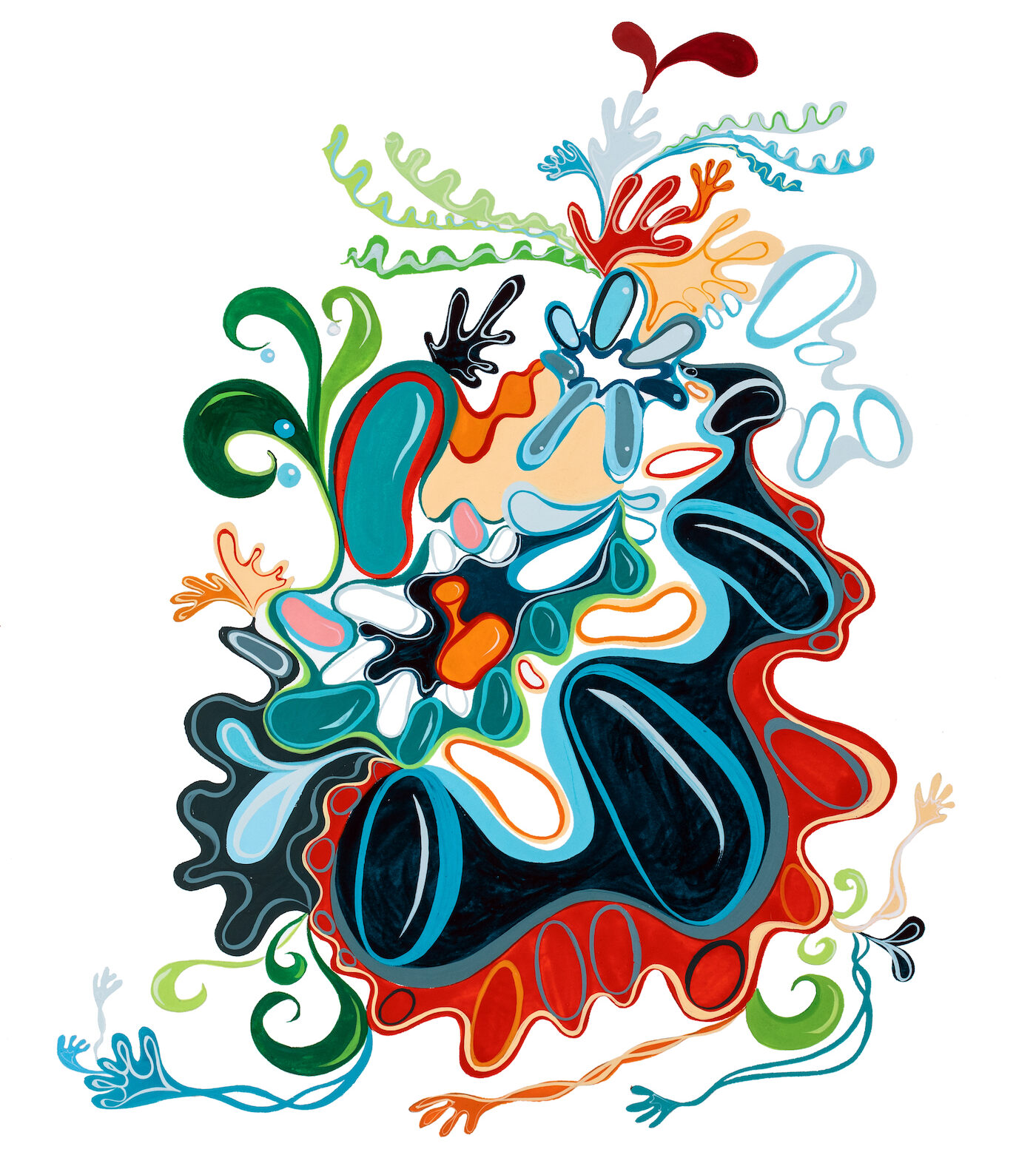
You are in charge of your art career. That means you get to decide what’s worth your time and energy. But let’s be real—that kind of freedom can feel overwhelming.

How do you know what’s the right move? How do you trust yourself when every opportunity sounds promising?

Self-employment freedom sounded ideal until you realized how hard it is to prioritize your life and business by yourself.

You might have been previously accustomed to a boss telling you where to focus your energy. No more. That boss is now you.

And let me tell you … The hardest thing about owning your own business isn’t marketing, sales, or making the art. It’s making decisions.

This post and episode of The Art Biz are to help you DECIDE.

Alex Sax The Jar Project
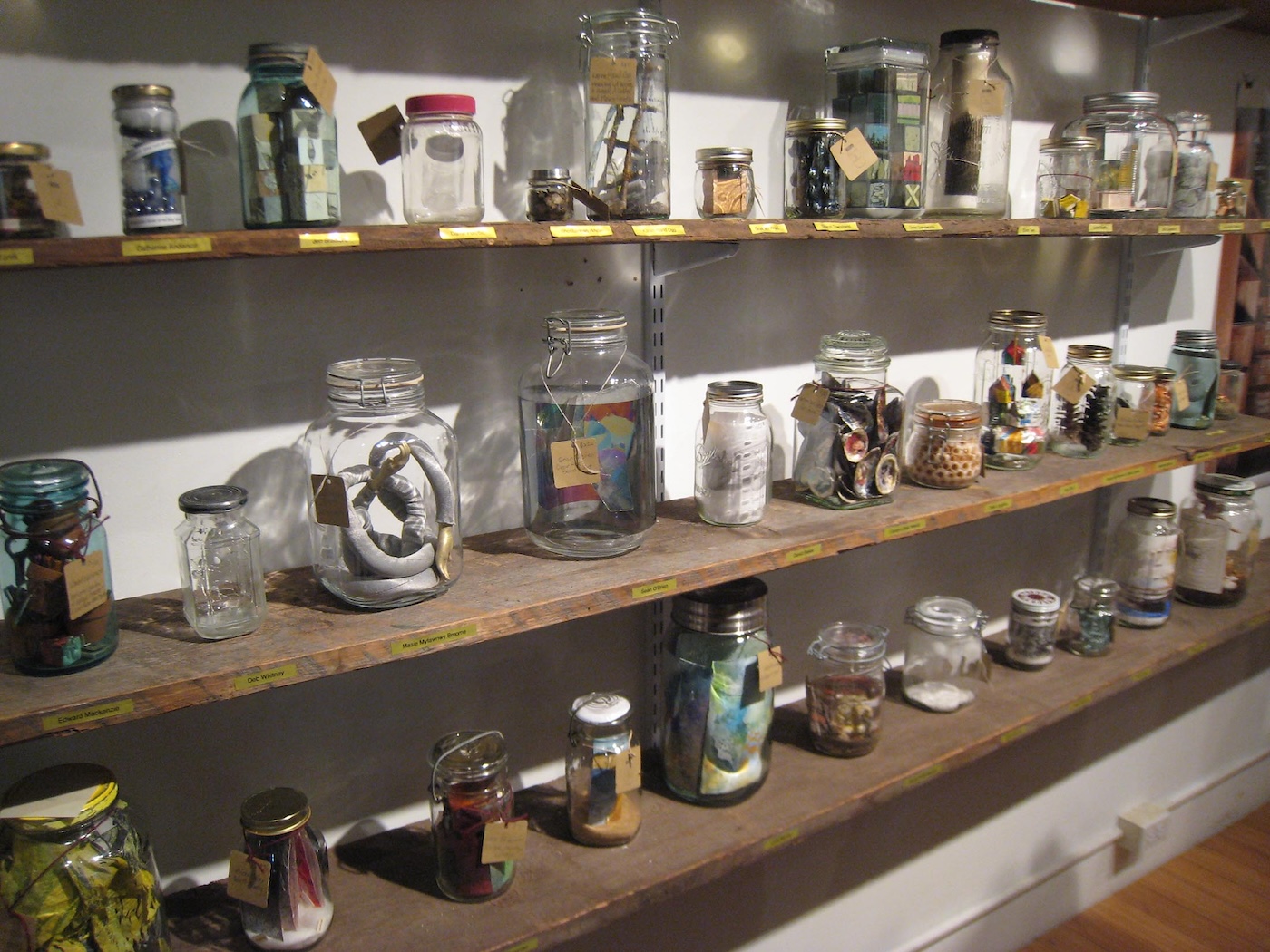
©Alex Sax, The Jar Project, installation at Whitney Art Works, Portland, Maine. 60 art-filled jars by 60 artists with connections to Maine, the jars vary in size, color and texture, and contain a range of genres and mediums including drawings, paintings, photographs, sculptures, and mixed media.

Certainty Is a Myth

I teach a planning workshop three times a year, in which I ask members to decide on and commit to no more than three focus projects at a time—in addition to everything else it takes to keep an art business afloat.

Over the years, I’ve noticed something: some artists hold off on making decisions because they’re waiting for certainty. They want to be absolutely sure of positive results before committing to a project.

That certainty is a myth.

If you wait until things are perfect—until you have all the information, until you feel completely confident—you’ll stay stuck. Decision-making isn’t about knowing for sure. It’s about trusting yourself and moving forward.

On my shelf is The Decision Book: 50 Models for Strategic Thinking by Mikael Krogerus and Roman Tshäppeler (2008). It’s fascinating, but most of these models aren’t how my brain works.

That said, one framework stands out: The Eisenhower Matrix. You’ve probably seen it, even if you don’t know it by name. It’s a simple tool that can help artists (and all business owners) prioritize their time and energy more effectively.

Listen

The Eisenhower Matrix: A Tool for Prioritizing

This matrix, named after President Dwight D. Eisenhower, is based on a principle he supposedly lived by: “The most urgent decisions are rarely the most important ones.”

Picture a square in 4 quadrants. Starting in the upper right and going clockwise, label each quadrant in this order:

  • Urgent and Important: Do it immediately.
  • Urgent but not important: Delegate it to somebody else.
  • Not important, not urgent: Do it later.
  • Important, but not urgent: Decide when you’ll do it.

Most of us get caught up in the Urgent & Important quadrant—rushing to meet deadlines and reacting to last-minute opportunities. But the real magic happens when we carve out time for the Important but Not Urgent tasks—things like long-term planning, relationship-building, and creative growth.

Because if we don’t? They’ll eventually become urgent, and we’ll find ourselves scrambling.

Katrina Thorstensen pastel
©Katrina Thorstensen, Blue in Winter. Pastel on archival paper, 7 x 10 inches.

Deciding Faster with Policies

Even with a tool like the Eisenhower Matrix, some decisions will still feel tough. This is where policies come in.

In my Essentials for Artist Success program, I start the discussion of building strong business systems by helping artists create formal policies. These policies aren’t just business rules—they are commitments to yourself about what you will and won’t do. They protect your time, energy, and focus so that every opportunity doesn’t feel like a new decision-making crisis.

When you have strong policies in place, decision-making gets easier.

  • Is this aligned with how I want to work? (If not, your policy says no and so do you.)
  • Does this fit within my pricing structure? (If not, no negotiation needed.)
  • Am I willing to take on this type of project? (If your policy says no commissions, the decision is already made.)

Policies help you say Yes with confidence and No without guilt.

If you don’t have clear policies yet, I highly recommend taking the time to create them. In Essentials, we go through this process step by step, ensuring that artists feel more empowered in their decisions and don’t waste time on things that don’t serve their long-term vision.

When you have policies in place, your decision might be right in front of you. But what if you haven’t yet created a policy for a particular situation? 

Don’t miss new articles, podcasts, programs, and some of my favorite discoveries.

Sign up for my weekly newsletter.

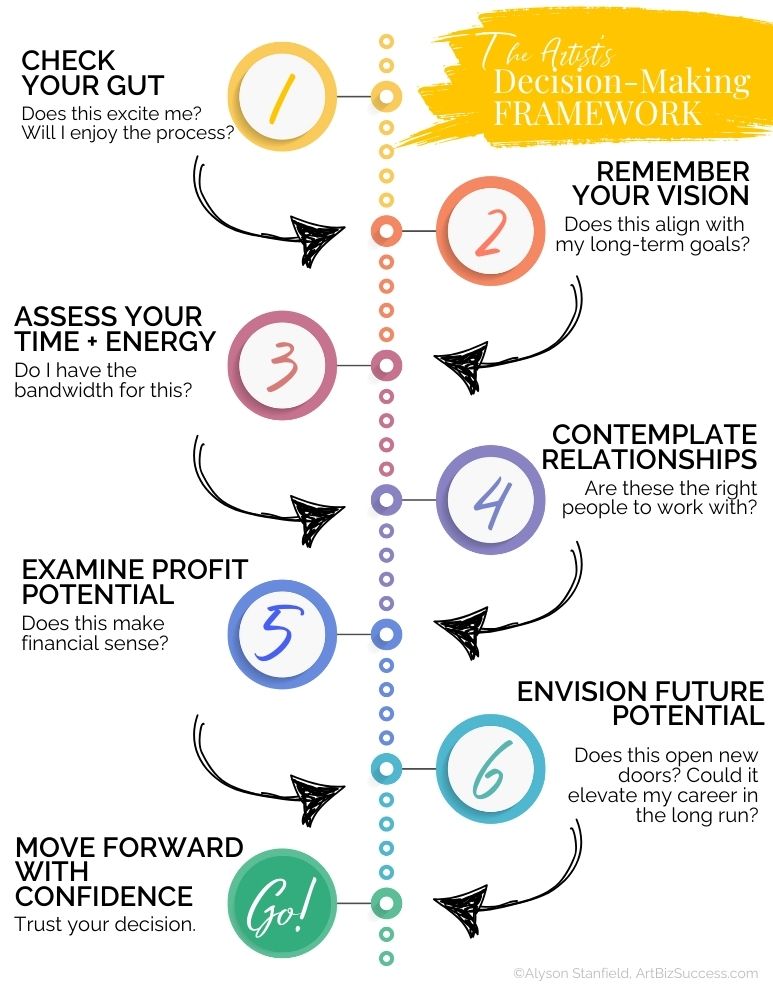
The Artist’s Decision-Making Framework

If you don’t already have a policy in place for a particular situation, I’ve got your back!

This is where The Artist’s Decision-Making Framework comes in handy. 

I’m going to walk you through these six steps one at a time, and I’ve also provided an info graphic for you to download (no optin required 😇). 

Click to download the PDF →

It’s probably worth printing, laminating, and hanging in your studio and office. 

Okay, let’s look at these in more depth.

Step 1: Take It for a Spin

Do a gut check around your creative priorities.

Does this excite me, or does it just sound good on paper?

Will I enjoy the process, or just the outcome?

Would I take this on if money weren’t a factor?

If it feels like a bad fit → STOP HERE

Example: Someone asks you to paint a pet portrait but you are an abstract collage artist. (Huh?) The pet portrait might sound like a fun challenge (see Step 6) or the thought of it might make you want to pull your hair out.

On the other hand, it’s deeply satisfying for artists and entrepreneurs to challenge themselves to learn a new technique, technology, or medium. If you’re bored or stuck, the siren call of a challenge might be just what you need.

Jennifer Winship Mark watercolor painting
©Jennifer Winship Mark, Orange Victorian. Watercolor on paper, 9 x 12 inches.

Step 2: Remember Your Vision

Does this align with my long-term goals?

Will this move me forward, or will it pull me off track?

Will I regret saying yes?

If it doesn’t fit your vision → TURN IT DOWN

Unless, you are ready for and open to a new vision.

Sometimes it is wise to change course when opportunity knocks. That’s how Art Biz Success came about. If I had stubbornly pursued the path I started, I would never have discovered such rewarding work with artists like you.

Step 3: Assess Your Time & Energy

Review your current commitments, future availability, and energy levels.

Realistically, how much time will this take?

What will I have to say NO to in order to say YES to this?

Is this worth the time investment?

If you don’t have or can’t adjust to find the bandwidth → SAY NO (or adjust scope)

Time is the great mystery, which is why you must always err on the side of overestimating your time. Some productivity experts suggest estimating your time and then doubling it for a more realistic view—a tactic I have come to embrace.

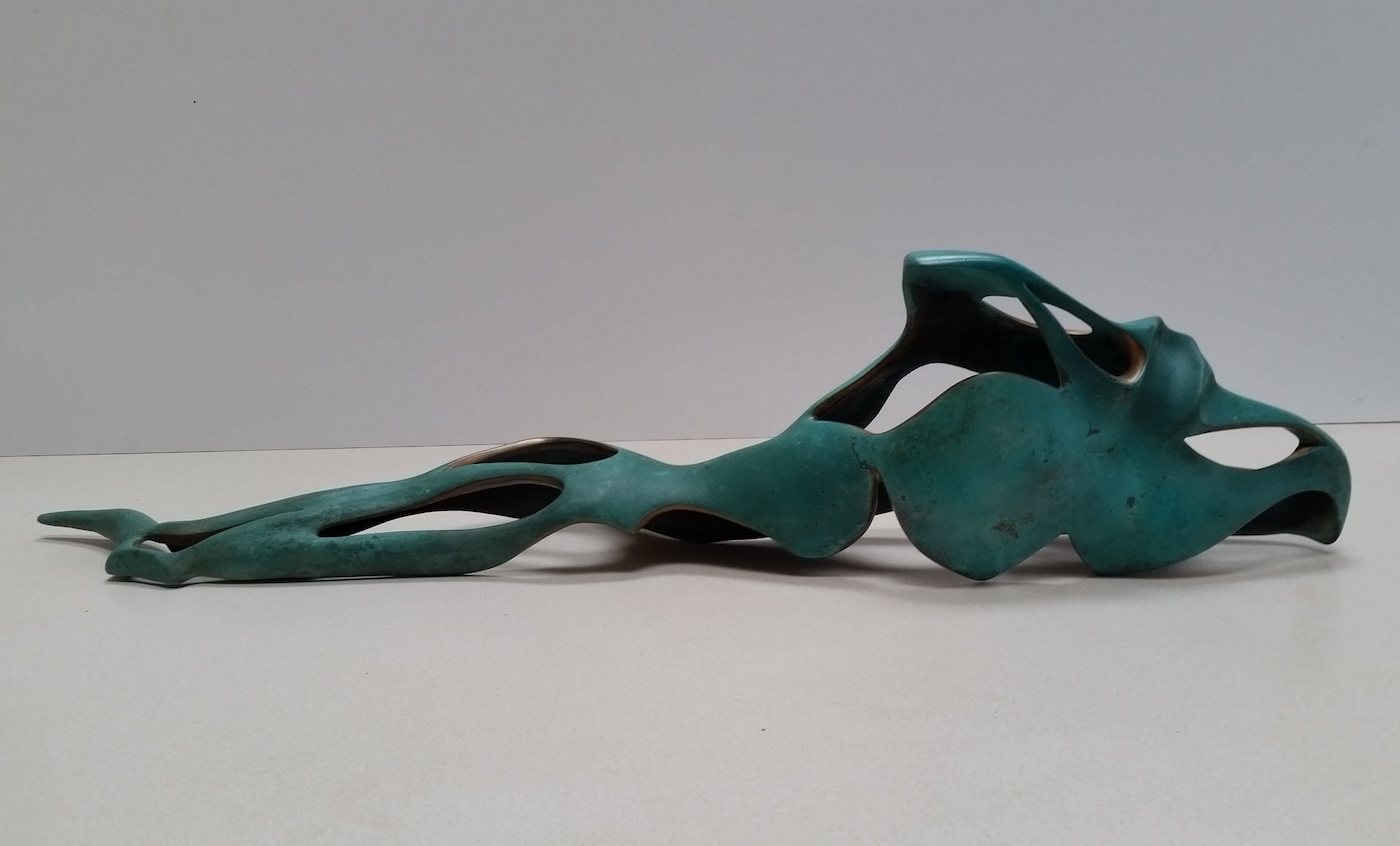
Trinita Waller bronze sculpture
©Trinita Waller, The Swimmer. Bronze sculpture, 31 x 7 x 5 inches.

Step 4: Contemplate Relationships

Networking is key to a successful art career, but partnerships with the wrong people can be more trouble than they are worth.

Do I want to work with these people?

Are they professional and communicative?

Could this connection open future doors for me?

If the people involved are a red flag → WALK AWAY

Step 5: Examine Profit Potential

There are times when earning more income must be a priority, but enter a new commitment with your eyes wide open.

What is the best- and worst-case financial scenario?

Will this lead to bigger opportunities down the road?

Does this help me build financial stability?

If it’s a financial drain with no upside → RECONSIDER

It might be worth earning less if it leads to future opportunities that have bigger payoffs. For example, many of my artist-clients don’t do well at an open studio or art festival, but those events lead to commissions and future sales for them. As long as they have a plan to nurture relationships, these lower-profit events can make good business sense.

That brings us to the final consideration.

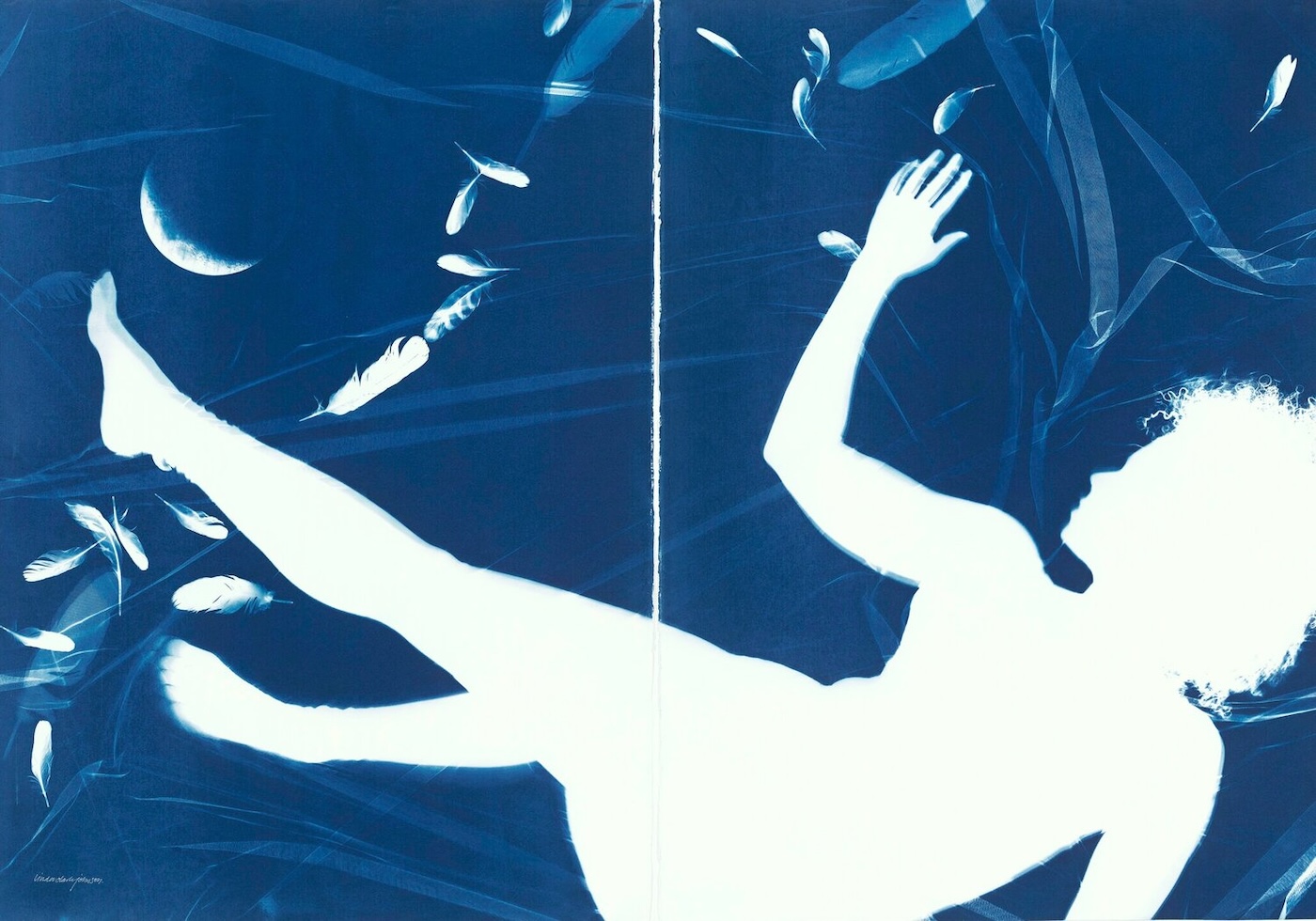
Linda Clark Johnson cyanotype
©Linda Clark Johnson, I Dreamed I Was Falling. Cyanotype diptych on 300# Fabriano Artistico watercolor paper, 41 x 60 inches.

Step 6: Envision Future Potential

Will this give me valuable exposure, connections, or credibility?

Will I regret not taking this?

Is this a stepping stone to something greater?

As I said, I work with a number of artists who think long term. They know where they want to end up (their vision) and strategically consider options that will get them there.

If you’ve made it through all six steps and it’s a YES—go for it with confidence and trust in your decision!

Owning Your Decision

In the end, making decisions about your art career or business isn’t about being right or wrong. It’s about taking ownership of your choices, trusting yourself, and moving forward with confidence.

The more you practice making intentional decisions—whether it’s about opportunities, projects, or where you invest your time—the easier it becomes.

No decision is ever set in stone. The beauty of being an artist and entrepreneur is that you get to adapt, pivot, and refine as you go. Trust yourself. Trust your process. And know that every decision you make is shaping your journey in a way that’s uniquely yours.

I hope you find the framework useful when it comes to figuring out your next steps.

Here’s that PDF download again. →

Don’t miss new articles, podcasts, programs, and some of my favorite discoveries.

Sign up for my weekly newsletter.

The post The artist’s guide to confident decision-making (219) appeared first on Art Biz Success.

]]>
Ensuring a profitable art business (96) https://dy-online.com/ceo/ https://dy-online.com/ceo/#comments Thu, 05 Aug 2021 11:00:53 +0000 http://artbizsuccess.com/?p=13620 Many artists try to make a little money here and there, and then find they no longer enjoy making art after trying to sell it.

The pressure to make money in a business is real. But businesses, by definition, seek profit. Breaking even can only work for so long. This episode of The Art Biz is for you if you're ready to step up and be the boss of your art business.

The post Ensuring a profitable art business (96) appeared first on Art Biz Success.

]]>
Are you seeking a profitable art business?

This is the Art BIZ Podcast on the blog at Art BIZ Success. I assume that, if you’re listening, you are interested in an art business, not just an art hobby.

There’s nothing at all wrong with art hobbies. I highly recommend them. But it’s a whole new ballgame when you turn your art into a business. When you begin asking for money in exchange for your talent.

I want to talk about being a profitable artist. What it takes to not just make and sell art, but to also make money. To ensure that you have a positive net income in your art business. Stick with me.

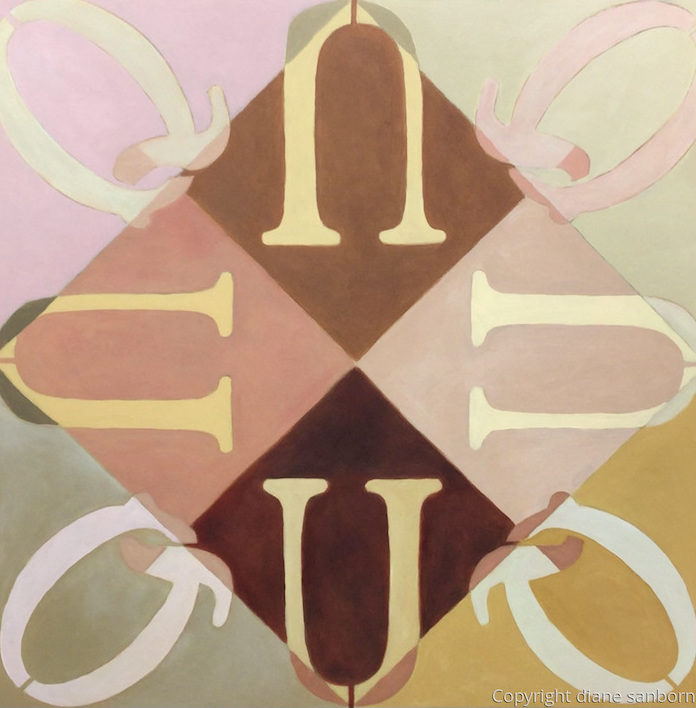
Diane Sanborn oil cod wax painting | on Art Biz Success
©Diane Di Bernadino Sanborn, Equal Partners. Oil and cold wax on wood panel, 24 x 24 inches.
I’ve talked with many artists who try to make a little money here and there, and then find they no longer enjoy making art after trying to sell it. The pressure to make money in a business is real. Businesses, by definition, seek profit. Breaking even with the numbers can only work for so long. If you’re claiming deductions on a business here in the U.S., the IRS is going to come after you if you continue to operate at a loss. See the “hobby loss” rule for the details and talk with your accountant. Look for similar rules if you are outside our borders. As I said, this episode of the podcast isn’t for hobbyists. It’s for you if you are ready to step up and be the boss of your art business. To be the CEO.

The CEO (Chief Executive Officer) is the person at the top of a company’s hierarchy. The buck ultimately stops with the CEO.

You must BE the CEO of your art business. Because, like it or not, that’s exactly what you are.

Let’s break down what that means.

Profitable Artists Are in Charge

If you want to control your art business, you must take charge of your destiny. No one cares about your success more than you do.

Nobody else is going to look after you or your business like you can. Nobody.

This means that you assume 100% responsibility for your actions, decisions, and results. No whining. No complaining. This is your business.

In my programs, I ask artists to sign a responsibility contract.

I want my students and clients to understand that, while I am responsible for giving them valuable information and strategies or running a profitable art business, they are responsible for doing the work.

I can’t control what they do outside of my watch or even under my watch, but I can remind them of the power they possess.

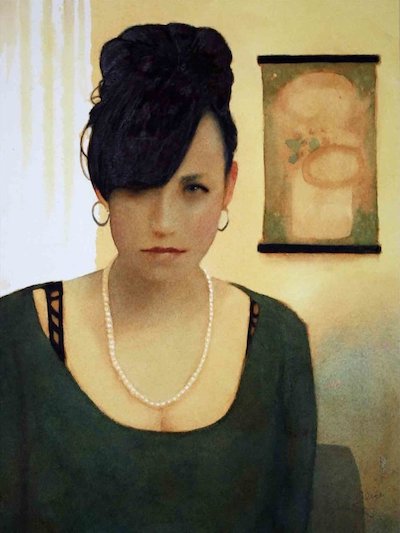
Jan Alice Keeling watercolor painting | on Art Biz Success
©Jan Alice Keeling, Kelly in Pearls. Watercolor on paper, 12 x 9 inches.

You Don't Need to Do It Alone

CEOs don’t run companies all by themselves! They have COOs, CTOs, other managers, and a full staff of competent hires that often don’t get enough credit or share in the profits. But I’ll leave that to another podcast to tackle.

Unfortunately, when you are a 1-person business, you are not just the CEO. You also assume these other roles. But you are not alone.

As an Artist CEO, you seek input from a spouse, another artist, a friend with business savvy, or a coach. You find community—online or in person—with other like-minded artists with whom you can discuss challenges and strategies to overcome them. You know who to go to for support with specific situations, and who to avoid when negativism or criticism is possible.

In short, you ask for help. There are so many people out there ready to help you—even ready to help you sell your art.

Asking for help and advice is a sign of strength rather than weakness. You can make more informed decisions for your business by learning from others’ experiences, and that can help you become a profitable artist.

That brings me to my next point.

Delegate Your Weaknesses

CEOs do what they do best and delegate the rest. A CEO doesn’t have time to micromanage or, worse, do work that other people are better qualified to do.

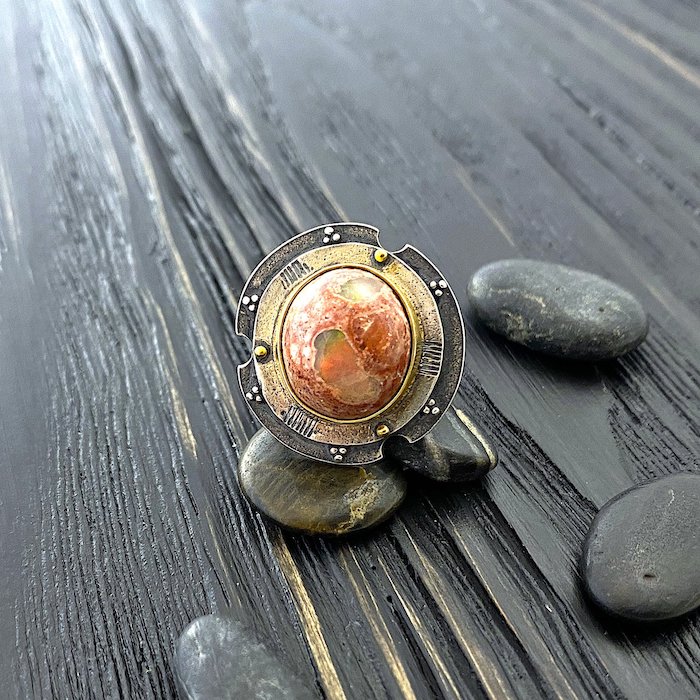
Jen McCaw boulder opal ring | on Art Biz Success
©Jen McCaw, Boulder opal and 22k gold shield ring. Boulder opal with great orange and red flash set in 22k gold, Argentium, and sterling silver, size 6.5.

As an Artist CEO, your #1 priority is your studio practice. Always! If you aren’t getting enough time in the studio, something on the business side needs to change. It must change. Because without the art you are not an artist. Without the art, there is no prospect of a profitable business.

As you go throughout your week, pay attention to tasks you’re currently doing that you could delegate. It doesn’t mean you’re going to hire someone right away. I just want you to be aware of how you’re spending your time. I think you’ll be surprised.

Now let’s talk about how you’re spending your money.

As a Profitable Artist, You Know Your Numbers

It is true that you have to spend money to make money, but do you know the actual numbers that it takes?

As an Artist CEO, you sure do. You know how to cost out a service or product, and you know what your profit margins are.

You take into account all of your expenses and overhead costs, including your materials, time, and what I call the PITA factor (pain-in-the-ass factor). You understand that your work must be priced for its market, but you are also aware that you must make a living.

A number of years ago, artist Liz Crain wrote a couple of blog posts that detail the considerations of showing her work in certain venues and which ended up, surprisingly, to be most profitable. One is for brick-and-mortar spaces and the other for online opportunities.

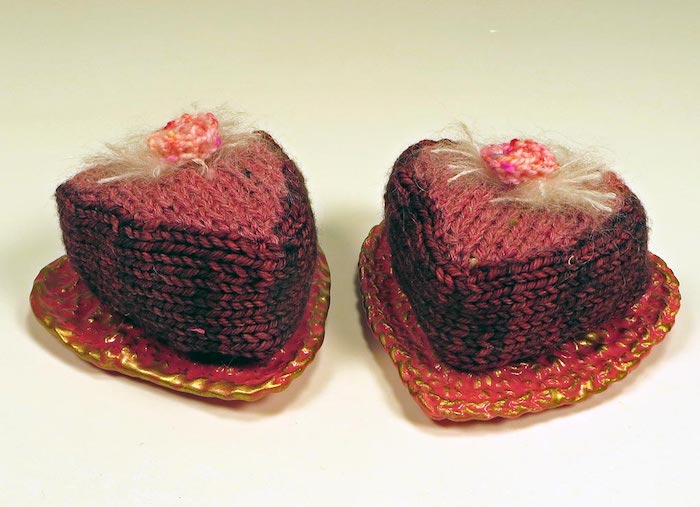
Clay fiber heart cakes artist Liz Crain | on Art Biz Success
©Liz Crain, 2 Heart Cakes. Medium, 2.75 x 4.25 x 4 inches each.

I think you’ll find these posts enlightening and be inspired by the deep dive she did to find her most profitable venues for sales.

Analyze Your P&L Statement

Look at your Profit & Loss (P&L) statement every month or so. This isn’t an easy task if you aren’t using bookkeeping software, so I hope you already have numbers plugged in to Quickbooks, Quicken, FreshBooks, or something similar. You really want to understand the numbers in front of you so you can adjust operations as necessary.

This statement, which outlines income and expenses, will show you what income stream is making you the most money, and will also show you where your expenses are the heaviest. If a product, service, venue, or sales outlet is losing money, do what you can to stop the bleeding immediately. Before it’s too late.

[ Hear more about income streams in Art Biz Podcast episode 18 with Helen Hiebert ]

Okay, so you have your P&L statement in front of you. Just do a once over. The numbers are tempting. You see a big number in one of the income areas and get excited. Oooo. That must be a good one!

Not. So. Fast.

Just because you’re making a lot of sales in one area, doesn’t mean it’s the most profitable income stream. You have to take into account the expenses: real and emotional.

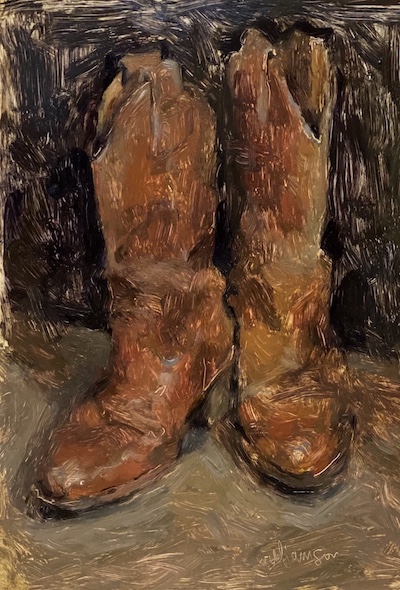
Mel Williamson oil painting of cowboy boots | on Art Biz Success
©Mel Williamson, Thriftstore Cowgirl. Oil on Yupo, 13 x 9.25 inches.

Which income streams have higher expenses associated with them than others? For example, you gave a workshop. You made a good amount from registrations, but you also had to rent the space, take out ads, provide food and beverage, get extra insurance to cover that space, hire an extra hand, and spend way too much time and energy getting people to sign up.

Can you decrease expenses and become a more profitable artist with the next workshop? Maybe make it bigger or smaller?

Which are taking too much of your time or emotional energy? In other words, you really dislike doing them for the amount of time they take or the amount of income you see in return.

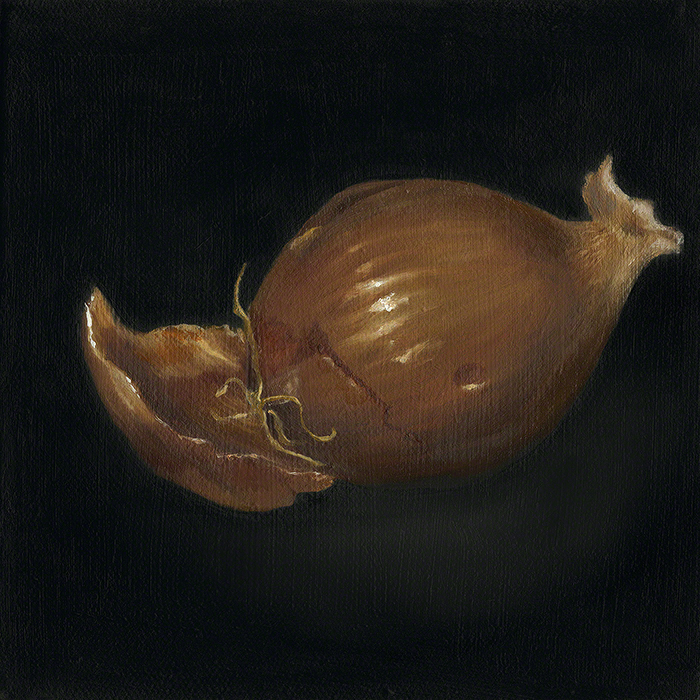
Annette Kaplan oil painting of onion | on Art Biz Success
©Annette Kaplan, Mr Onion. Oil on canvas, 6 x 6 inches.

 You can look at these numbers with all of your income streams: original works and reproductions that require framing and shipping, lower priced products like clothing and pillows that take attention away from selling higher-priced originals, a calendar, book, or note cards. Analyze them all.

Which are worth saving? Maybe they’re not your highest earners right now, but you can see a path for them rising to the top.

This brings me to my final point.

You Must Be Able to Adapt to a Changing Environment

If Covid taught us anything, it taught us that some artists were better prepared to adapt than others. They had an online shopping cart or an online classroom in place. They had invested in their online presence and weren’t afraid to adapt in-person events to the online world. (On a side note, I believe individual artists were far better prepared to pivot than galleries or museums. Kudos to you for that!)

The world is changing faster than ever before. To run a profitable art business, you want to stay on top of technology, trends, materials, and information.

It’s not helpful to wish things were different than they are or for the good old days when you didn’t have to use email or a social media account (remember those?). It’s not just not helpful. It’s destructive.

Jenny Hope Antes oil abstract painting | on Art Biz Success
©Jenny Hope Antes, Dreaming Again. Oil on paper, 14 x 11 inches.

As an Artist CEO, you keep an eye on trends. Here are three to be aware of.

  1. Where art is being exhibited, whether it’s at international art fairs, traditional galleries, outdoor festivals, or online.
  2. How art is being exhibited, because exhibition design evolves.
  3. How art is being promoted and sold. What’s the latest way to photograph your art, share on social media, and advertise? What kind of events and experiences are other artists and venues staging?

You might be intrigued by virtual reality tours of exhibition spaces and contemplate the possibilities. God forbid you should consider turning your art into NFTs. I’m not a fan, but we can’t ignore what’s happening around us. You might not dive into these waters quickly, but you know they’re available. You are aware. You’re in tune with your local community and with the greater art world.

You anticipate that the landscape will change because that’s how the world evolves. It is never satisfied with the status quo. But you don’t mind. You have staying power. You are becoming a profitable artist. You are prepared to adapt and even eager for new challenges.

And you know you don’t have to do it alone.

Related Episodes

Check out episode 97 where I talk with ceramist Patricia Griffin about how she sells her functional ceramics by opening up her shopping cart only at certain points during the year. It’s made her more money, created a heckuva lot of buzz, and been fun for her.

And episode 98 in which painter Jill Soukup discusses how her business has changed in the last 10 years and the steps she has taken to become more profitable.

Listen to the Podcast

This post was first published on August 15, 2012, and has been expanded with an added podcast episode. Original comments are intact.

The post Ensuring a profitable art business (96) appeared first on Art Biz Success.

]]>
https://dy-online.com/ceo/feed/ 15