presentations Archives - Art Biz Success https://dy-online.com/tag/presentations/ Trusted Art Business Coaching and Consulting Thu, 04 Jun 2026 18:42:31 +0000 en-US hourly 1 https://wordpress.org/?v=7.1.4 https://dy-online.com/wp-content/uploads/2022/02/favicon-2-150x150.png presentations Archives - Art Biz Success https://dy-online.com/tag/presentations/ 32 32 The Art Biz ep. 150: How to Project Confidence Even When You’re Not Feeling It https://dy-online.com/project-confidence/ https://dy-online.com/project-confidence/#comments Thu, 08 Jun 2023 14:05:08 +0000 http://artbizsuccess.com/?p=18021 Every artist who takes risks and commits to creative and professional growth struggles with confidence at some point. It should help you to know that you are not alone.

But confidence in your art is necessary when you want to share it with others.

I share 6 tips to help you project confidence even when you're questioning your talent and place in the world.

The post The Art Biz ep. 150: How to Project Confidence Even When You’re Not Feeling It appeared first on Art Biz Success.

]]>
I don’t know exactly what it’s like to move your art from the safety of the studio and put it on view for the world to see. As a non-practicing artist, I have only entered my art in a show one time—a fiber sculpture that was juried into an annual exhibition.

Because it was a juried show, there were many artists, so I could slip in under the radar at the same time I was comforted that not all eyes (if any) were on my piece.

Since then, I have felt the discomfort of the spotlight on a regular basis. In a different way.

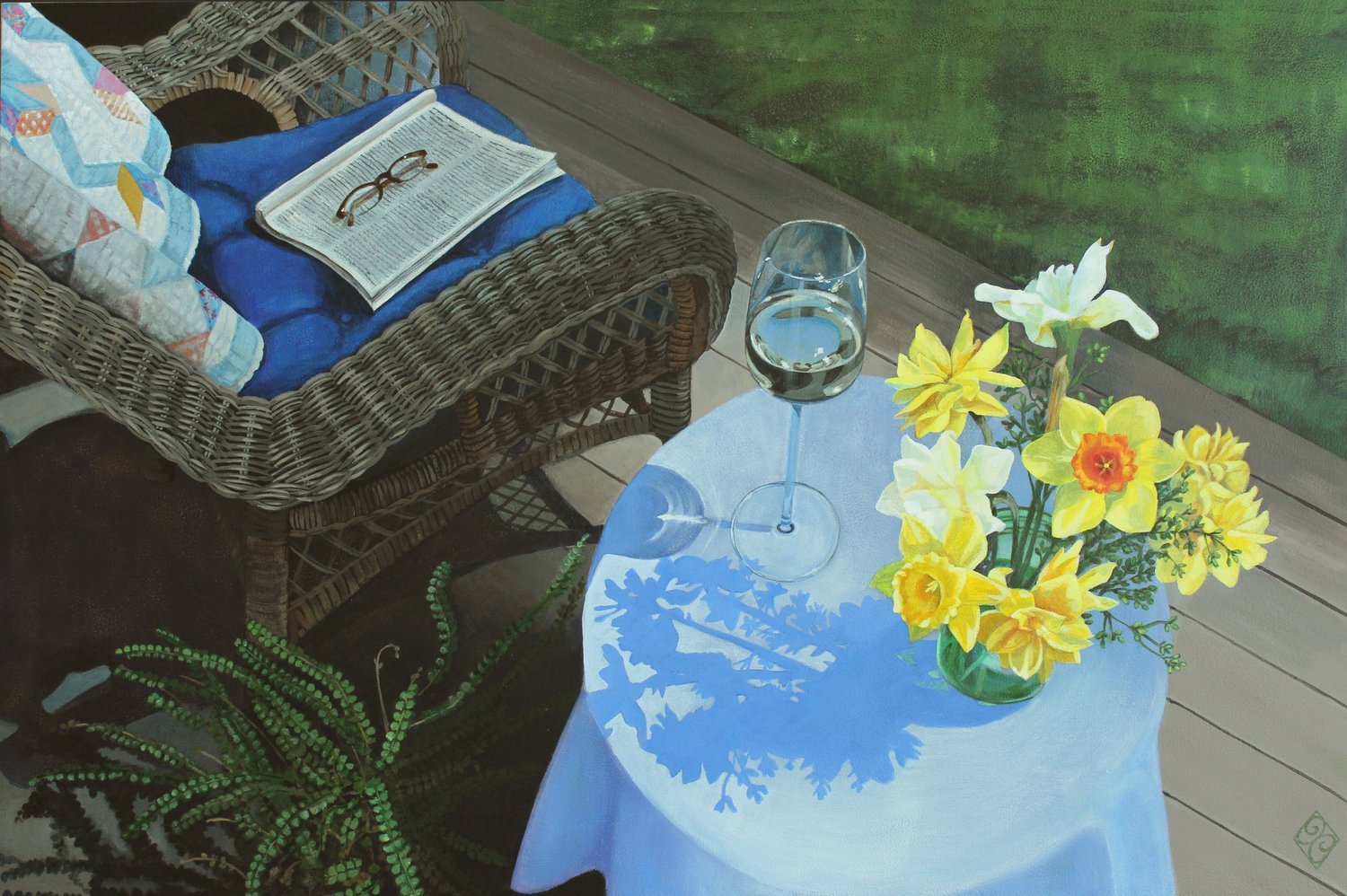
Joan Chamberlain painting
©Joan Chamberlain, Floral Notes with a Lively Finish. Acrylic on cradled panel, 24 x 36 x 2 inches.

I’ve sandwiched this solo episode of the Art Biz in between two episodes about artist residencies to discuss a huge barrier that we’re faced with when unveiling our work or, say, applying to residencies: lack of confidence.

Listen Now or Keep Reading

You need …

Confidence in your art.
Confidence in sharing your art with others.
Confidence in your direction.

And confidence, as you have no doubt discovered, is slippery. It sticks around for awhile and then suddenly disappears for no good reason.

While I’m not an artist with a committed practice …

I know what it’s like to put my thoughts, ideas, and opinions out into the world in the form of this podcast, articles, videos, social media posts, my programs, and my book. I know what it’s like to feel shaky about my efforts. To wish I had a few more hours or days to massage my message.

I know what it’s like to work really hard on something and feel you weren’t properly acknowledged or rewarded for that work. To wonder why the heck you even bother making and promoting something if nobody—or fewer than you’d hoped for—responds to it.

I know what it’s like to look at your social media feed and try your best to resist comparing yourself to others.

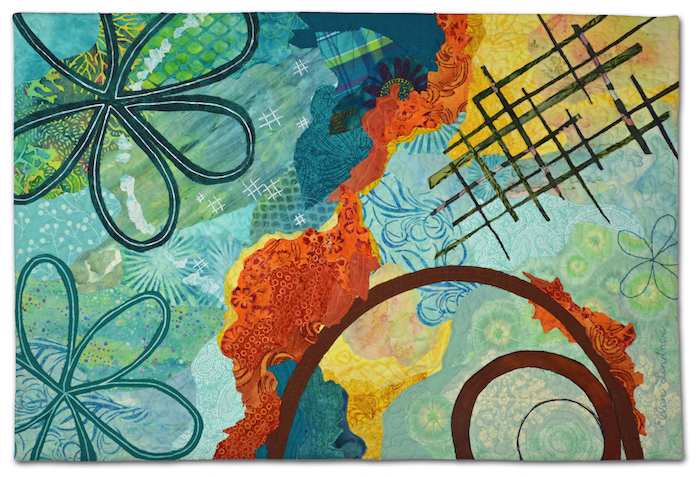
Ellen Lindner art
©Ellen Lindner, Brainstorm. Cotton and silk fabrics, thread, batting, fusible web, permanent pens; raw edge collage; machine and hand stitched and fused, 17 x 25 inches.

And I know what it’s like to have naysayers and even haters. I don’t do well with negative feedback, and it’s taken me a lifetime to realize how important it is to divorce myself from my work and all feedback—positive or negative. I have been helped along by Tara Mohr’s book, Playing Big. In particular, the chapter titled Unhooking from Praise and Criticism.

She says, “Feedback is vital … because it tells us whether we are reaching the people we need to reach.” And adds that feedback is “just useful data, nothing more…. Feedback is emotionally neutral information that tells you what resonates for your desired audience, what engages the people you want to engage, what influences the people you want to influence.”

I’m getting a little off-track, but I wanted to put in the plug for Tara’s insights. The bottom line is that feedback and, worse, silence or indifference, can be confidence killers.

Fortunately, periods of confidence and lack thereof are intermittent.

Confidence is boosted when we make a sale, enroll a new student or client, or are invited to join a gallery or be in a show.

The doubt and fear come when we change course or try something new. They show up when sales are slow.

They never really go away because, as an artist, you are constantly reinventing yourself and your art. Every time you do this, you open yourself up.

This vulnerability is what makes you good at what you do. It is part of your authenticity.

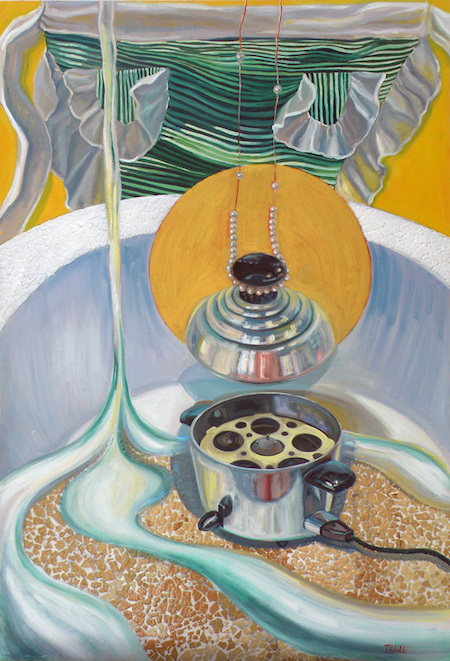
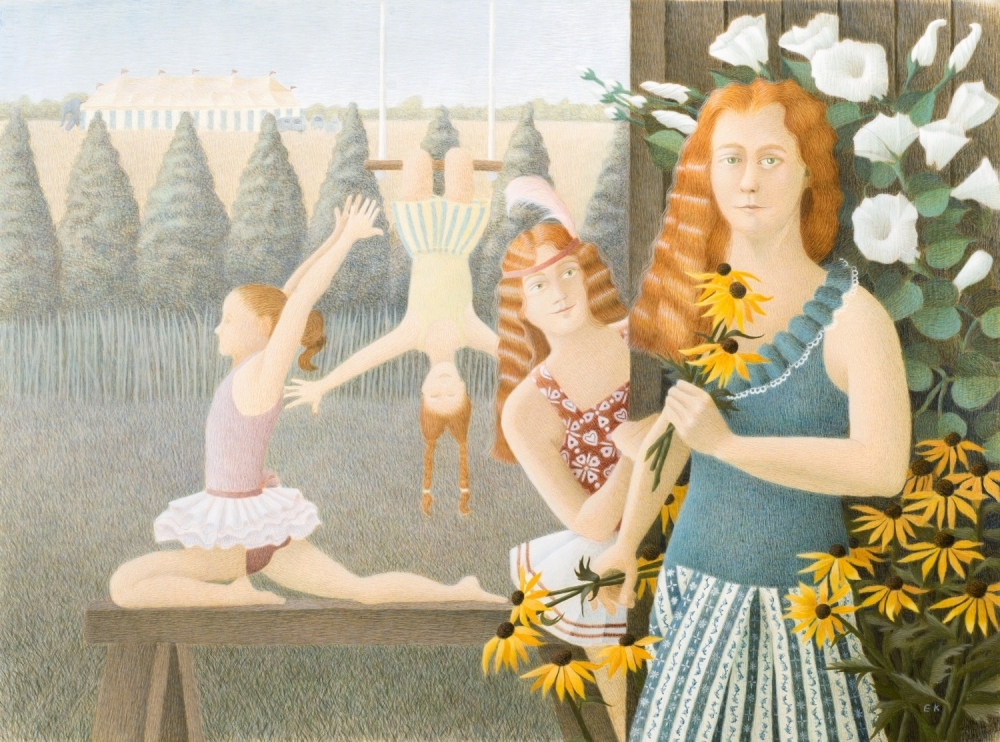
Eileen Kennedy painting
©Eileen Kennedy, Circus Summer. Egg tempera on gesso panel, 18 x 24 inches.

If you’re playing it safe by staying in your comfort zone, you’ll avoid the bouts of doubt and fear. But when you stretch, when you try something new, and when you grow,  you can bet your last dollar that the troublesome duo won’t be far behind.

You are bound to go through peaks and valleys as you’re experimenting with your art and business decisions.

You need to learn to be comfortable with the discomfort when it appears. It’s a muscle you build, which is easier to hone when you expect it and can prepare for it.

That’s why I want to emphasize that crashes in confidence will happen. They happen to everyone—even those artists you would never suspect. You are not alone. You’re not going through anything that others haven’t gone through before you. And you’re going to be okay. 

Lack of confidence gets in the way of your success.

You are more likely to get the commission, sell the work, fill your classes, gain social media followers, and have your proposal accepted if we believe in you.

And we are more likely to believe in you if you believe in yourself and your art.

Next time you find yourself in the center of a confidence crash, use these tips to work your way out of it one step at a time. They will help you project confidence even when you’re questioning your talent and place in the world.

Anne Shutan Door
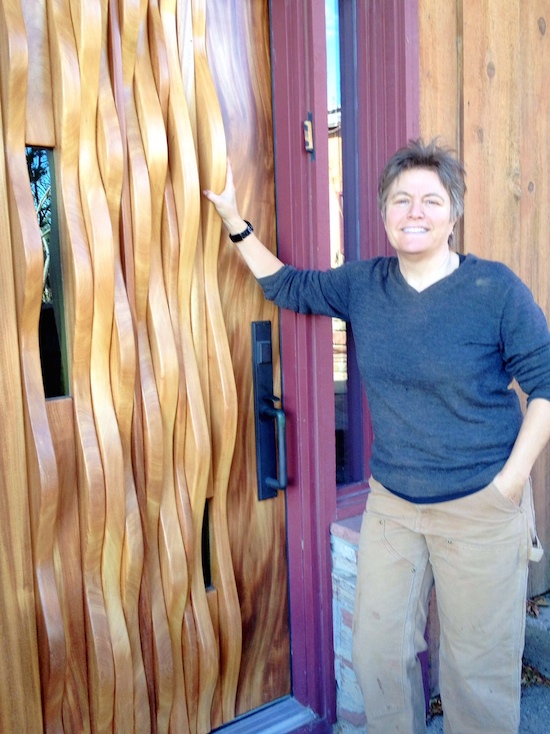
The thing I enjoyed most about meeting Anne Shutan is that she was as excited about her work as I was. When I complimented something, she said, "I know! Isn't that cool?!" I love that kind of enthusiasm. Here she is with the front door she carved.

Load up on experience.

The best potion for exorcising fear and doubt is experience.

Experience builds confidence 99x faster than walking on hot coals or loading your shelves with self-help books.

Make more art. And more art.
Enter more shows.
Apply for more grants and residencies.
Rack up the rejections. Keep counting the Noes so you can get to the Yeses.

I promise your confidence increases and you are less concerned with what others think as you become more experienced.

Spiff up.

Increase your confidence by honing your professional presentation.

Consider making these improvements.

  • Rewrite your artist statement with language that guides people to look more closely at your art.
  • Improve how you introduce yourself to people in order to pique interest.
  • Update your bio to better highlight your accomplishments.
  • Freshen up your website and branding to reflect your ambitions.
  • Engage art viewers at a deeper level so that they spend more time with your art.

Consider joining my Magnetic You program to help with all of these.

In Magnetic You, I walk you through a process of creating or refining your artist statement and bio, developing stories around your art, and clarifying your visual branding. And you have the support of my team, our community members, and me for feedback and accountability when you need it. MagneticYouArtist.com

Work on the outside.

Looks shouldn’t matter, but they do—mostly because they affect how you feel about yourself. Little adjustments can go a long way.

A new outfit can do wonders for your esteem, as can painting your nails, shining your shoes, or getting a new hairdo.

Wear your “power color” or a good-luck necklace. Or hold a talisman in your pocket.

Update your website and branding.

This isn’t gender-specific. Anyone can do this.

Anything that improves your appearance and presentation will give you a boost.

Stand up straight. Or sit up straight. Don’t slouch in the back of the room. Or hunch over your desk while on a Zoom call.

Pull your shoulders back, hold your head high, and introduce yourself to people.

Remember that everyone at an art opening or on a livestream is there for the same reason.

Act like you belong there. Because you do.

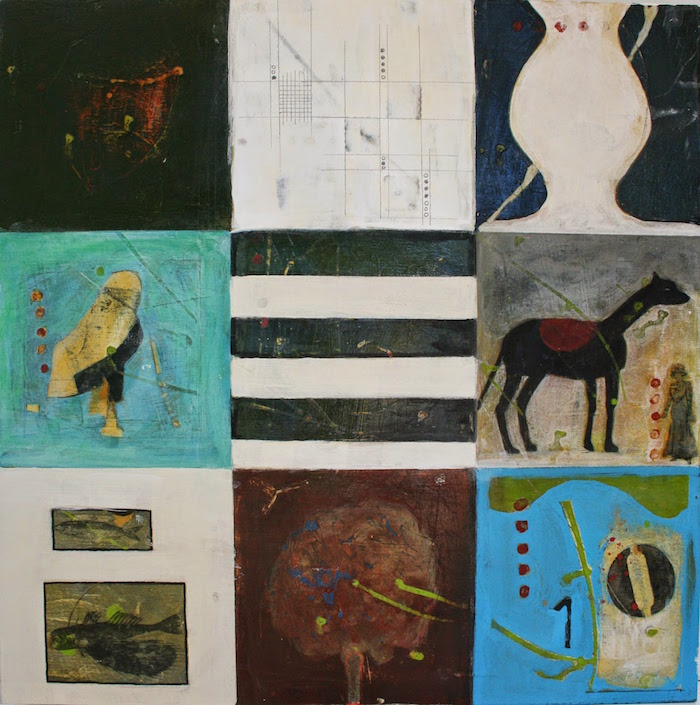
Jennie Schaeffer mixed media
©Jennie Traill Schaeffer, 35. Mixed media on wood panel, 36 x 24 inches.

Visualize the situation.

As you are preparing for an event that puts you in the spotlight, visualize how you want to show up. Imagine yourself firmly planted in the room, be it live or virtual.

Again, you belong there.

Anticipate the questions that might be asked, prepare talking notes, and know that you will rely on your experience, professional presentation, and preparation.

Consider: “How would show up in this situation?”

I love Adam Grant’s interview on the Rethinking podcast with Steve Martin and Adam Gopnik, when Martin says: “ I think the advice of “be yourself” is the worst advice for humanity” and reveals how he channels Carl Reiner’s charisma in social situations. [ Transcript and No. 18 in 2023 ]

Try the charm offensive.

Introducing yourself to strangers is a quick way to relieve any anxiety around an event with lots of people that you’d like to connect with.

As you meet someone new, look them in the eye, smile, and call them by name. Repeat their name a couple of times as you’re speaking so you remember it.

Focus on listening—listening to connect and to understand rather than half-heartedly listening to respond with your own stories.

Confident people are comfortable enough to focus on others rather than talk about themselves all of the time. They leave space for conversation.

Now for my final tip.

©Magdalena Bogart, Opinions. Acrylic and multimedia (collage, pencil, colored pens) on cradled wood panel, 24 x 24 inches.

Never belittle your work. Never apologize.

When someone says something kind about your art, all you have to do is say Thank you. Don’t giggle and brush aside their compliment. Don’t look down at the floor and say, Aw shucks. 

Look them in the eye and express your gratitude.

Don’t apologize for poorly cut mats or the dirty display pedestal. There’s no need to call attention to imperfections.

Better yet, attend to these details before you show your work so that you aren’t tempted to focus on them anymore.

Also, don’t apologize for your pricing or offer discounts out of the gate. If you have done your homework, you understand the value of your art. Your pricing is where it should be.

As I said earlier. Confidence is a muscle that you build through experience. The experience of getting your art out of the studio and in front of people, and the process of anticipating and preparing for interactions around your art.

Everyone wrestles with periods of insecurity. Everyone! There has got to be some kind of solace knowing that you are not alone.

And that you don’t always have to be confident. You just need to play the part.


This article was originally posted August 7, 2014, updated March 28, 2018, and has been updated significantly with the addition of a podcast episode and original comments intact.

The post The Art Biz ep. 150: How to Project Confidence Even When You’re Not Feeling It appeared first on Art Biz Success.

]]>
https://dy-online.com/project-confidence/feed/ 56
Beginning a Slide Presentation of Your Art https://dy-online.com/slide-presentations/ https://dy-online.com/slide-presentations/#comments Tue, 05 Apr 2011 11:00:00 +0000 http://artbizsuccess.com/?p=9499 If you talk about your art to groups, I suggest adding a silent run-through of your images the next time you open a talk.

The post Beginning a Slide Presentation of Your Art appeared first on Art Biz Success.

]]>
Arthur Comings, Bad Nurse
Arthur Comings, Bad Nurse. Mixed media, 63 x 15 x 15 inches.

I attended a slide presentation by an artist that was unlike any other I’ve been to.
Before speaking about her work, the artist scrolled through her slides relatively quickly and without comment so that we could familiarize ourselves with the images.
It was effective!
Even though we may have known her work previously, this silent introduction grounded us. We stayed with her because we looked forward to the point in which she would talk about this or that slide.
If you talk about your art to groups, I suggest adding a silent run-through of your images the next time you open a talk.

The post Beginning a Slide Presentation of Your Art appeared first on Art Biz Success.

]]>

https://dy-online.com/slide-presentations/feed/ 2