
Follow these 12 steps to ensure your artwork is properly archived, protected, and seen by the right audience.
The post 12 Steps to Take After Completing Your Artwork appeared first on Art Biz Success.
]]>
The post 12 Steps to Take After Completing Your Artwork appeared first on Art Biz Success.
]]>David Paul Bayles tells us what his professional archives consist of, including his photos, writings, records, and audio files. He also gives us insight into the process of negotiating with an institution to preserve his work.
As you listen, pay careful attention to all of the people David has connected with along the way. His story is one of finding and nurturing connections.
The post Confronting your professional legacy with David Paul Bayles (15) appeared first on Art Biz Success.
]]>Last fall I received an email from David Paul Bayles, who was a member of my class at the time. The email read, in part:
Recently The Bancroft Library at UC Berkeley (third largest special collections library in the U.S.) created The David Paul Bayles Photographic Archive to create a home for my life’s work.
I am driving down to meet with them on Monday to place a large number of prints and oral history audio files into the Archive.
Whoa. How cool is that? A major institution deemed David’s work worthy of saving forever – all together under a single roof.
After peppering David with questions, I knew that his was a story that needed to be shared with you.
I have been concerned about artists’ legacies and what artists are doing to prepare themselves and their loved ones for their passing. What happens to the work and the records after they’re gone?
In this episode of the Art Biz Podcast, David tells us what his professional archives consist of, including his photos, writings, records, and audio files.
He also gives us insight into the process of negotiating with the Library – fascinating stuff. And, yes, it includes lawyers.
 |  |
Of course, we also talked about his art and why he chose to focus on photographing trees throughout his career. A better way to frame the question is how the trees chose him.
And we ended with a discussion of David’s next big goals. What comes after finding a permanent home for your entire life’s work? For David, it’s an artist residency and a traveling exhibition.
As you listen, pay careful attention to all of the people David has connected with along the way. His story is one of finding and nurturing connections.
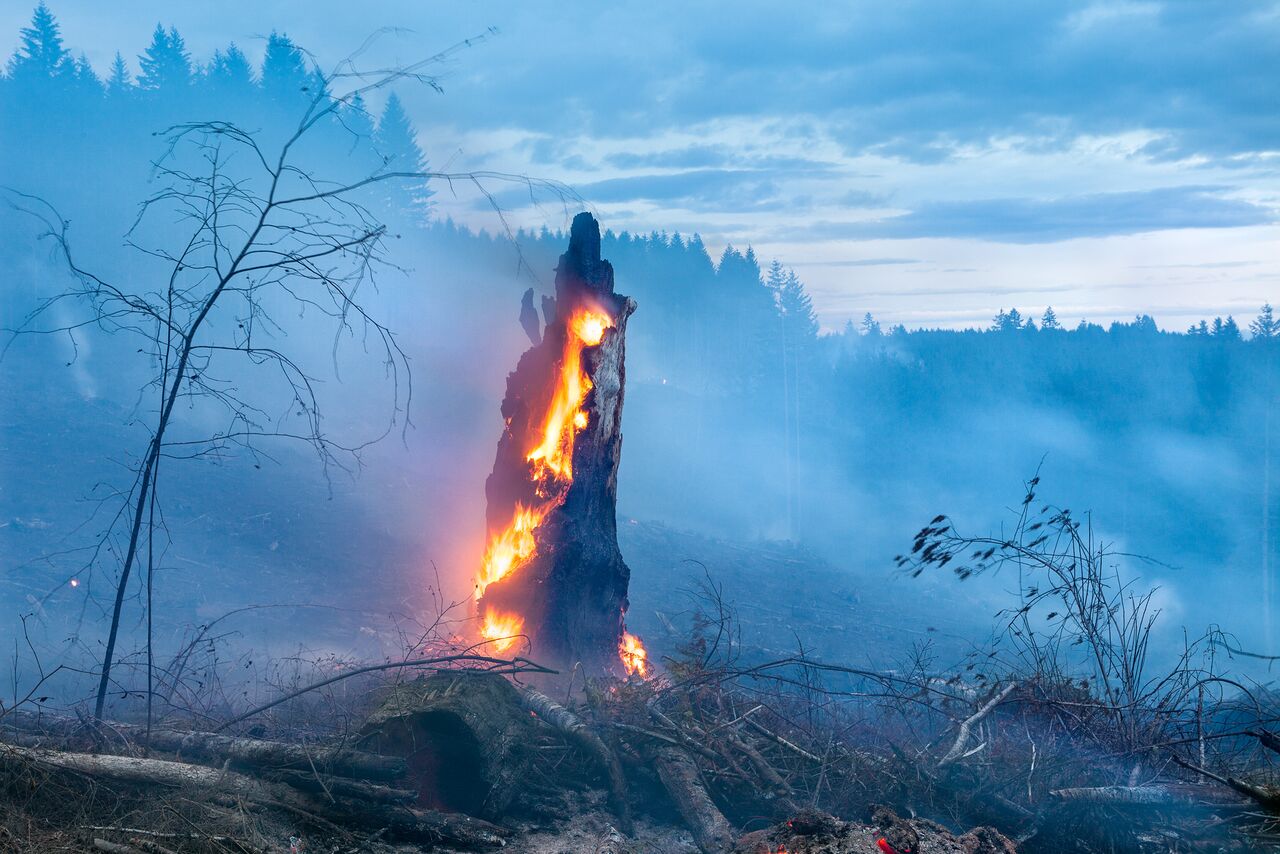
And it all started with a fire …
Music: Keep It Simple by Wildermiss. Used with permission.
Listen to or subscribe on iTunes.
About My Guest
David Paul Bayles has been a working photographer since the 1970s.
His photographs have been published in numerous magazines and his prints included in the collections of The Portland Art Museum, the Santa Barbara Art Museum, and The Harry Ransom Center, among others.

Mentioned in the Interview
Mary Virginia Swanson – Photography Marketing Consultant
Jennifer Stoots – Photography & Art Appraiser

The post Confronting your professional legacy with David Paul Bayles (15) appeared first on Art Biz Success.
]]>The post 16 Ways to Demonstrate Your Art Has Value appeared first on Art Biz Success.
]]>You teach people how to treat you and your art. Make sure you’re sending the right signals.
Here are 16 things to consider.
Making and Preparing Art
1. Use the highest quality materials you can afford. It would be humiliating for your art to start falling apart after it’s purchased.
2. Select frames that complement your work and are well made.
3. See that your mats are cut meticulously. Nothing ruins a good image like a sloppily cut mat.
4. Ensure that all 2-D art rests flat against the wall. It shouldn’t bow, droop, or buckle.
5. Sign your art. It doesn’t matter how you sign it or where, but sign it. Signing art says, “This is complete, and I made it.”

Handling Art
6. Don’t schlep your art around in supermarket bags. Use portfolios and beautiful boxes.
7. Use the right amount of packing material to ensure that the work will arrive safely.
8. Insure your work and studio appropriately. Home insurance rarely covers business mishaps.

Exhibiting Art
9. Let people see the art! Your work should be well lit wherever it is on exhibit. Look out for hot spots, glare, and shadows.
10. Create uniform wall labels that are carefully cut and stay snugly on the wall. Wonky labels that appear to be an afterthought can ruin an otherwise solid installation.
11. Use museum-quality hanging and installation devices.
Documenting Art
12. Document all of your art with high-quality photographs. They should be as good or better than the art because they represent the work and if you do your marketing right, you will sell art from JPEGs.
13. Keep your inventory database up to date, noting details such as size, specific materials, and exhibition record of each piece.
14. Maintain a price list. It’s unprofessional to make up prices on the fly.
Interpreting Art
15. Talk about your work with respect. Develop the language to speak intelligently and confidently about it.
16. Don’t ever apologize for your art or leave anyone to believe that you are less than an artist.
What else would you add to this list? Leave a comment and share your experience.
The post 16 Ways to Demonstrate Your Art Has Value appeared first on Art Biz Success.
]]>The post Separate Your Business from Your Personal Finances appeared first on Art Biz Success.
]]>Here are some steps to take.
Open a business checking account.
If you are a sole proprietor and can’t yet see the need for this just yet, you can start by coding your financial records somehow. Mark each item with “business.” But get the separate account ASAP.
Get a separate credit and/or debit card for your business.
I’m not encouraging credit card debt, but monthly statements make it easy to keep track of finances.
In the U.S., apply for an Employer Identification Number.
Also known as a Federal Tax Identification Number, the EIN isn’t mandatory unless you are incorporated or in a partnership. It can, however, be a protective measure.
If you don’t have an EIN, you would need to use your Social Security Number for business paperwork. The EIN provides you with a level of security to guard against identity theft.

Dedicate files for your business.
I file all of my financial paperwork into accordion folders by month. Every January, used to I purchase two new accordion folders. (I now reuse these so as not to contribute to plastic waste.)
They are different colors so I can distinguish between my business (Stanfield Art Associates, Inc.) and personal records. The files have gotten smaller over the years because I now keep many receipts electronically rather than on paper.
Be diligent about tracking your business expenses: cost of materials, mileage, postage, etc.
[ See ideas for digital financial records in this article. ]
Here’s why.
Need a good reason to take these steps?
The IRS wants to make sure you are running a legitimate business, especially when you are claiming deductions. Mixing records makes you look like a hobbyist.
On a more emotional level, a reader recently wrote with a heartbreaking story of dealing with her deceased husband’s grown children after his death. She paid dearly—financially and emotionally—because she had intermixed her personal and business finances. I know she told me her story because she wants better for you.
The post Separate Your Business from Your Personal Finances appeared first on Art Biz Success.
]]>The post 5 Reasons to Title Your Art appeared first on Art Biz Success.
]]>Here are 5 reasons to spend a little time titling your work.
5 Reasons to Title Your Art
1. Titles help you distinguish among numerous works.
Titled works are easier to find and to file in organizing systems. They’re also easier for you to talk about and refer people to.
The more unique each title is, the better. If you have a series of numbers, you might forget how Green Mountain #1 is different from Green Mountain #5.

2. Titles make it easier for art reviewers and critics to write about your art.
It’s difficult to write about untitled art because readers have to be clear about which artwork is being discussed.
When faced with untitled art, the writer must spend hunks of text describing which untitled work she’s referring to.
3. Intriguing titles are cause for contemplation.
Untitled or loosely titled works allow the viewer more freedom to interpret, but most people need and want guidance.
An interesting title might be enough for a viewer to stop, think, and look back at the art.
4. Titles look great in books.
Imagine all of the titled artwork in the index of a book about your art. No imagine a page of titles with the word Untitled appearing next to every page number.
5. Search engines find titles.
If you Google “dumb campers,” the second item that used to come up (after video results) was my About page.
Did I have anything on this site about people who aren’t so savvy in the wilderness? Nope.
But I do own a painting with that title, which appeared in my online bio. Google found it.
A Philosophy for Titling Your Art (Should they be descriptive or open for interpretation?)
The post 5 Reasons to Title Your Art appeared first on Art Biz Success.
]]>The post Conservation of Your Artwork: Intent and Keeping Records appeared first on Art Biz Success.
]]>What we desperately need to know from artists, I think, is a structure-and-instruction report which makes specific references to their intent. For example, “If that caviar falls off your work, should I restore it or just go buy fresh caviar?” [Did I mention Camilla has a sense of humor to be envied? She goes on . . . ]
Seriously, what I think would be of immense value would be a form that covers every aspect of the structure of the work. For example, on an oil painting, start with the “auxiliary support”: the stretcher, strainer, panel or board that the art is executed on. Then we would talk about the gesso or ground layer, then the paint film, the varnish, etc. It would be helpful to the artist to keep records of these things for their own future reference.
For each of these categories, the artist would list the brands or types of materials used including technical references, especially if it is an unusual material. If they would include procedural notes such as layering schemes it would be invaluable to future conservators.
Then, they could include notes on the degree to which they would have any part conserved or restored. For example, if the stretcher fails, do you approve of a conservator removing the canvas from the stretcher and replacing it?
In all of the different areas, artists could include condition notes and their thoughts about it with some general comments about their intent at the end. This might be anything from “Do anything necessary to preserve the 2-dimensional image” to “DO NOT VARNISH” to “Let the thing rot. I specifically do not want it to be preserved!”
If we had these types of guidelines from artists, it would be heaven!
Camilla used paintings in the above example–unconventional materials, to be exact–but this advice can be applied to any medium.
Future generations will have no idea what your intent was in making a piece of art or what your intent was for the future of that art. You have to spell it out if it isn’t obvious. Not everyone wants their art to be preserved forever. Some artists choose decaying materials on purpose–so that the work changes over time. But you have to make us (especially curators and conservators) aware of your intent.
Keep notes about your working materials, techniques, and intent. If you maintain, as you should, a database of your work, it’s easy to add these notes to your computerized inventory.
The post Conservation of Your Artwork: Intent and Keeping Records appeared first on Art Biz Success.
]]>