time management Archives - Art Biz Success https://dy-online.com/tag/time-management/ Trusted Art Business Coaching and Consulting Mon, 20 Jul 2026 21:07:29 +0000 en-US hourly 1 https://wordpress.org/?v=7.1.4 https://dy-online.com/wp-content/uploads/2022/02/favicon-2-150x150.png time management Archives - Art Biz Success https://dy-online.com/tag/time-management/ 32 32 The Art Biz ep. 152: How to Squeeze More Time from Your Busy Calendar https://dy-online.com/time-management/ https://dy-online.com/time-management/#comments Thu, 22 Jun 2023 13:37:48 +0000 http://artbizsuccess.com/?p=19543 As an artist and business owner, you're constantly juggling responsibilities. It's easy to feel overwhelmed, but take solace in knowing that you're not alone. In this episode, I share 8 tips for and 2 truths about time management.

Optimize your schedule and increase efficiency—not so you can do more, but so that you make the most out of your limited time and enjoy life.

The post The Art Biz ep. 152: How to Squeeze More Time from Your Busy Calendar appeared first on Art Biz Success.

]]>


As an artist and 1-person business owner, you are the talented maker, gregarious promoter, delightful conversationalist, and head honcho. All. At. The. Same. Time.

It’s easy to be overwhelmed by all of these simultaneous roles.

Landscape painting by Kim T. Richards
©Kim T. Richards, Morning Dunes. Oil on aluminum panel, 11 x 14 inches.

You’re juggling all of the moving pieces of your art business along with the responsibilities and joys of your personal life.

Perhaps … Just maybe … It might be heartening to remember that you are no busier and no more overwhelmed than the next artist. Everyone has something that steals their energy.

On the home front, it might be school-aged kids, struggling adult children, or aging parents. I also have clients whose work is sidelined by moving and building projects. And artists who deal with chronic pain, illness, and life-threatening health issues.

These are all real reasons for lower productivity.

Every artist I have ever worked with would like to squeeze more time from their busy calendars. After all, you are overflowing with ideas. You’ll never have time to make everything you want to make, and that is incredibly frustrating.

In this post and episode of the Art Biz, I’ll share 8 tips for time management along with 2 truths to consider.

Listen

Recovering Productivity Geek

Before we get deep into productivity tips, I must confess that I am a recovering productivity geek.

I used to read everything about the topic that came into view—subscribing to productivity newsletters and investing in more productivity courses. I still get caught in that trap.

But my interest in productivity has evolved since reading Oliver Burkeman’s book Four Thousand Weeks: Time Management for Mortals. I find myself recommending this book to everyone. (affiliate link)

His introduction is titled “In the Long Run, We’re All Dead.” Sounds fatalistic, but he speaks the truth. We’ve been given an average of 4,000 weeks on this big blue marble called Earth, but we act and work like we have infinite amounts of time. Trying to get more done, adding more to our calendars, isn’t necessarily the best way to spend our time.

Burkeman writes, “Productivity is a trap. Becoming more efficient just makes you more rushed, and trying to clear the decks simply makes them fill up again faster.” Chew on that for a while. Preferably while sipping a watermelon margarita by the pool.

Acrylic painting by Sierra Bailey
©Sierra Bailey, Confessions of a Domestic Failure. Acrylic on museum cradled panel, 24 x 30 inches.

Time Management Is a Lie

In sharing these time management tips, I’m not encouraging you to do MORE. I’m encouraging you to be more efficient so you can enjoy, as Mary Oliver wrote, this one precious life.

I’m just going to jump in with the first truth, which is this: Time management is a lie.

It’s impossible to manage time. The clocks keep ticking and the sun continues to rise and set. There’s nothing you can do about that.

Rather than talking about Time management, you need to focus on Self management.

Use these 8 tips to help with self-management and stick with me until the end because I’m certain you’ll be comforted by the second truth.

1. Make time for planning.

Planning time is your best friend.

If you think you’re too busy to set aside a couple of hours a week to plan, you will have no one to blame but yourself when you lose sleep. You’re likely feeling swamped because you didn’t make time to plan … when you stumbled from task to task because you had so much to do.

In my experience, overwhelm happens when everything is up in my head. I don’t know what happens up there and who is responsible for such shenanigans, but my brain in overwhelm gear is pretty worthless. It’s unfocused, directionless, fearful, and anxious. This makes it impossible to get anything constructive accomplished.

The solution is to get out the calendar and task list and map out everything on my plate.

I am speaking from experience as I’ve been in this state recently. It happens! In fact, it happens more often than I’d like to admit. But I can always find my way out of the overwhelm when I set aside time to plan.

Quick tool: The Brain Dump

2. Understand your natural rhythms.

When do you do your best work?

If it takes you 2 hours and 4 cups of coffee to wake up in the morning, don’t attempt your most valuable work during that time. Know when you are your most productive self and hold that time sacred for your art or writing.

As a corollary, if you aren’t currently productive in a particular area, monitor your calendar and figure out what you might need to switch around to make the most of your days.

3. Honor your calendar.

If it’s important, schedule it. Block out time on your calendar to take care of tasks that need significant amounts of uninterrupted time.

My calendar not only has my timed appointments with clients and coaching groups, but also blocks of time for creating content and making connections with people.

Review your calendar at the end of each day and again before you begin work in the morning.

4. Turn repeated tasks into systems.

Stop reinventing the steps it takes to publish a newsletter or blog post, or to promote an exhibition. Create reliable systems for every task you undertake on a regular basis. Well-defined systems will save your behind and help you rest easily.

A system is a series of steps that answer the following questions.

  • What, precisely, do you want to happen?
  • What tools and technology will you use?
  • Who else will be or needs to be part of it?
  • What are the repeatable steps—exactly?
  • What kind of review process will you put into place to make sure the system is working?

In his book, Atomic Habits: An Easy & Proven Way to Build Good Habits & Break Bad Ones, James Clear encourages us to focus on systems instead of goals—systems comprised of tiny (atomic) improvements. He writes, “You do not rise to the level of your goals. You fall to the level of your systems.” (affiliate link)

5. Group similar tasks together.

You have heard this advice before, but it might be time to revisit it when it comes to your art business.

Use the momentum you create from starting a single task to complete other tasks that are similar.

For example, write four article drafts in one sitting rather than doing one a day. It’s easier, I promise! It sounds crazy, but it’s true. Something happens when you devote a couple of hours to focused writing. It’s like your ideas start having babies. They multiply and feed off of one another, so pretty soon that one little idea becomes four.

Same thing happens when you schedule social media posts for an entire week or month of content.

Other tasks that you might group together include the following:

  • Run all of your errands or do all of your online shopping in one, dedicated, afternoon.
  • Process email in your inbox during two daily sessions rather than “checking it” throughout the day.
  • Save packing and shipping for dedicated time slots rather than doing it as orders come in. When I used to sell copies of my book directly from my website, I had text right there on the order page that said I shipped every Tuesday and Friday. The automated email buyers received included the same notification.
Acrylic painting by Francesca Bandino
©Francesca Bandino, Mystification. Acrylic on canvas, 12 x 16 x .8 inches.

6. Stop multitasking.

Multitasking is working on diverse tasks simultaneously and, usually, doing them all half-heartedly: responding to email while attending a webinar, texting while trying to write a newsletter, or just moving back and forth between your inbox and another open window on your computer.

Research shows that only about 2.5% of college students can multitask effectively.

And get this: Switching from task to task and back again adds as much as 25% more time to what it would normally take to complete each task. Twenty-five percent!

You don’t have 25% more time to waste.

If you want to save time and be a better self-manager, stop multitasking.

With so much demanding our attention these days, we all fall into this bad habit. When you catch yourself, feel free to snap out of it by reciting a mantra I devised for these moments: I do one thing at a time to completion.

7. Automate everything possible.

What happens when someone signs up for your email list? And then what? And then what? 

You can automate those responses when you use an email marketing platform.

Also consider automating:

  • Savings. Take 10% out of every payment and put it in a separate interest-earning savings account or retirement fund.
  • Meals. I love to cook, but we went through a meal-delivery period. My favorite thing about meal delivery isn’t the meals themselves, though they are delicious, but that it removed the need to make a decision about what to eat. (See #4.)
  • Orders for supplies you use regularly. For example, I love that Amazon sends us a package of 2 electric toothbrush heads every 3 months.
Oil painting by Jessica Pisano
©Jessica Pisano, The Kiss. Oil on panel, 24 x 24 inches.

8. Learn to say No (and mean it).

I saved the most difficult for last.

Invitations bombard you from every direction, and you have to have the strength to know what is critical to add to your calendar and, more importantly, what doesn’t deserve a place on your schedule.

It’s fairly easy to say No to what isn’t palatable or what doesn’t sound fun. It’s harder to turn down the things that are more enjoyable in order to give your best effort to long-term progress.

Clarity is key.

When you are very clear about your direction, it’s easier to say No to the opportunities and requests that don’t serve your best interests. This is the toughest lesson you’ll learn when trying to build your art business. 

If you master saying No, you’ll master yourself and your business.

If you find it difficult to manage yourself and your time, support and accountability might help. I give you that inside the Art Biz Accelerator. It’s a community of trusted artists who are on a similar journey and get you. I lead the coaching and conversations

Check it out and join us if it’s right for you.  You can join anytime but the sooner you join, the sooner you’ll reap the benefits.

The Second Truth

Those are the 8 tips.

I promised you a 2nd truth around time management, which I hope you’ll find comfort in. And that is this:

The important stuff always gets done.

Somehow, magically, amazingly.

It gets done because it’s important! You recognize its value and somehow manage to make it happen. Knowing this truth is a relief.

Remember: You have an average of 4,000 weeks on this planet. Don’t try to do more. Try finding ways to enjoy what you’re doing and to make time for the things that feed your soul.

First published August 6, 2015 and updated February 7, 2019. Updated and podcast episode added with original comments intact.

Related Episodes

These episodes focus on business systems.

The post The Art Biz ep. 152: How to Squeeze More Time from Your Busy Calendar appeared first on Art Biz Success.

]]>
https://dy-online.com/time-management/feed/ 50
Your decision filter for marketing and other projects (139) https://dy-online.com/your-marketing-mix/ https://dy-online.com/your-marketing-mix/#comments Fri, 20 Jan 2023 18:20:00 +0000 http://artbizsuccess.com/?p=17484 We all have a trusted process for making decisions, whether or not we’re aware of it. In this episode, I’m going to reveal something that has helped me enormously when making decisions.

But, first, I want to share my list of 8 criteria you might consider before making a decision about whether or not to steer your art business in a certain direction.

The post Your decision filter for marketing and other projects (139) appeared first on Art Biz Success.

]]>

Every day you are faced with new opportunities.

Should you invest in social media advertising? Or should you focus on being more consistent with your posts? Or maybe devote your time to learning how to use Pinterest more effectively?

Should you approach galleries to represent your art? Or organize a series of open studios? Or enter that show that seems like a long shot?

Should you create an online workshop to teach what you know best? Or double down on selling your art?

They all sound great! You’ve seen them work for other artists. You start shoulding on yourself.  There is so much you should do! So much you want to do!

How do you decide?

[ I’ve since refined these considerations into The Artist’s Decision-Making Framework ]

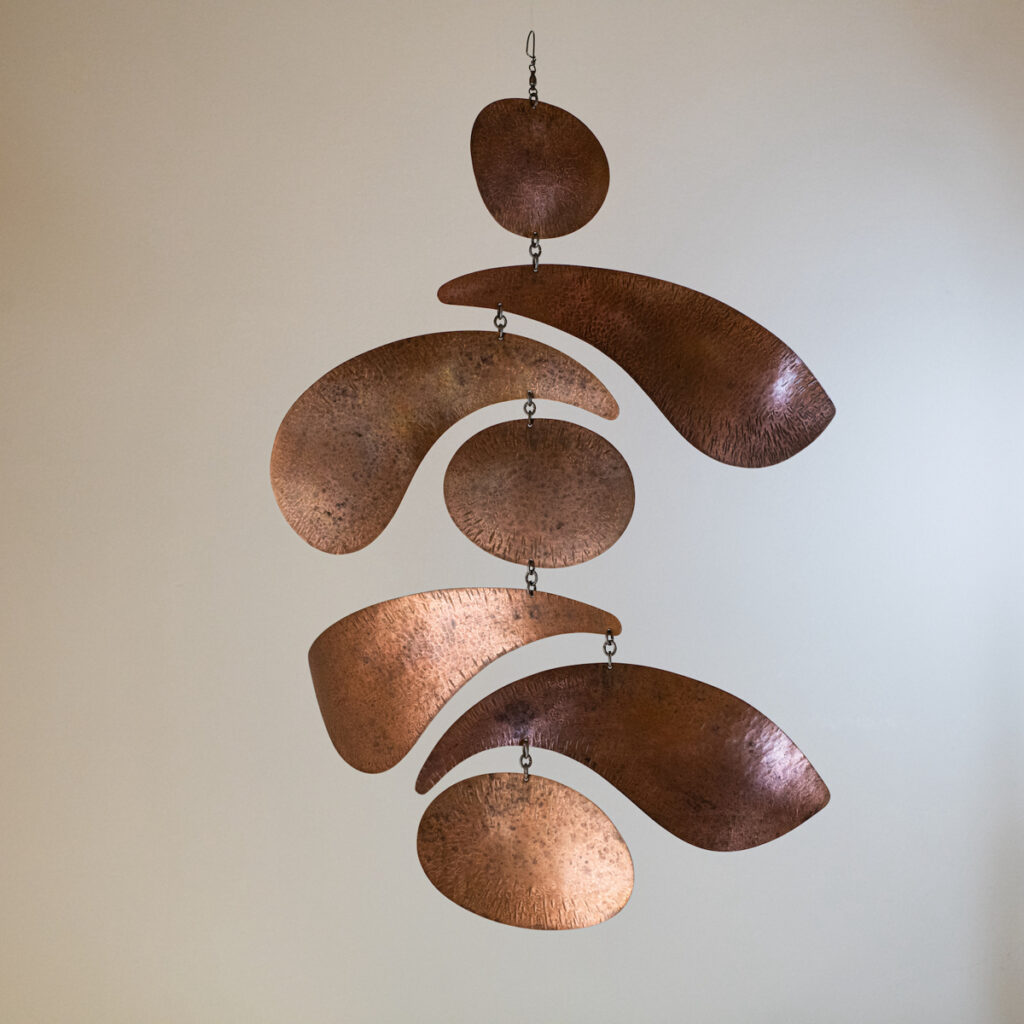
copper hanging mobile Antje Roitsch | on Art Biz Success
©Antje Roitzsch, Moon Shadow. Hammered copper mobile, 20 x 15 x 15 inches.

In this solo episode of The Art Biz, I want to talk about your decision filter: How you make decisions about what projects to take on and where to spend your time, energy, and financial resources.

If I could wave a magic wand and make one part of my business easier, it would be around making decisions. Specifically, I’d like to have to make far fewer decisions than is required.

Seriously, I would call upon the goddesses to remove this burden from my daily operations. Pleeeeeez. Now. 

But why should I get a pass? The whole world is grappling with decision fatigue. I recently read that we make as many as 200 decisions per day about food. Just. Food. Two-hundred decisions.

That’s exhausting! If we can’t decide what to eat, then how can we expect to have clarity about the potential of new opportunities like those I mentioned in the opening?

We all have a trusted process for making decisions, whether or not we’re aware of it. At the end of this article, I’m going to reveal something that has helped me enormously when making decisions.

But, first, I want to share my list of 8 criteria you might consider before making a decision about whether or not to take on a new project or steer your art business in a certain direction.

I previously had 6 criteria, and have to give a nod to Katie Hunt, who, in episode 138, gave me a couple more good ones to add to my list.

Listen Now

Kerry Schroeder acrylic painting | on Art Biz Success
©Kerry Schroeder, Released. Acrylic and graphite on panel, 52 x 52 inches.

Here are my 8 considerations for taking on a new project. 

Your task or project doesn’t need to—and won’t—meet all of these criteria. It would be weird if it did. But they are all things that can be considered.

Maybe just 1 or 2 of them is enough for you to say Yes to something or to write it off completely.

1. You understand WHY you are doing it.

Make sure you have a reason to devote time and energy to a project. This has the most weight of all criteria.

Your Why needs to be authentic to you, not you shoulding on yourself or taking on a project because of fear of missing out.

Why do you want this? What might it give you in the end?

2. You are willing to devote the time and energy to it.

Now that you know your reason, you have to ask whether or not you are willing to devote the time and energy.

At the beginning of the artist planning sessions, I ask students to add up how much time on their calendar is currently spoken for. This is an eye opener for many. Then, after they have created a plan for the upcoming months, I ask them to estimate the time their tasks would take.

The artist-planners begin to realize that they aren’t accounting for vacations, down time, or artist dates, let alone actual time they need to spend in the studio.

Yikes! You can see that this is a problem.

If you aren’t working with a coach or someone who is asking you about such things, you have to do it for yourself. Only you know what your priorities are and where you’re willing to negotiate your commitments.

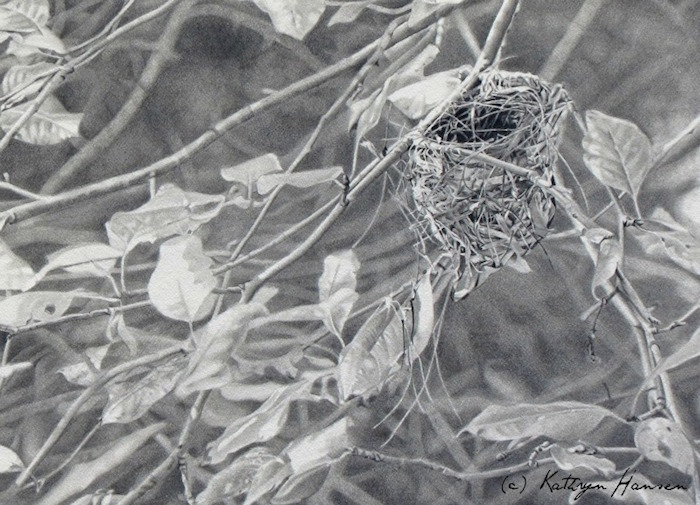
©Kathryn Hansen
©Kathryn Hansen, For Lease. Graphite pencil on paper, 7.5 x 9 inches.

Notice this criterion is that you are willing to devote the time and energy, not that you have the time and energy.

You will never have time. And there will never be the right time. To add another complication, we always overestimate how much energy we think we have and underestimate how much time a task will take.

You have to know, based on your decision-making process, that you are willing to make this project a priority.

By example, at the time of this writing, I am preparing for the first member mixer of my new Art Biz Accelerator coaching group and community.

I’m absolutely thrilled with the group we have together so far, and I also know that there are others who will be joining in the future. They had major life commitments that would have prevented them from fully participating as an Accelerator member right now. They’re going to take advantage of the fact that they can sign up at any time and join us later.

They weren’t willing to devote the time and energy to this program.

It takes some higher level thinking for artists to get to this point. To understand the kind of control you must exert over your life and schedule. And to not give into a fear of missing out but, instead, to trust your decision filter.

I can’t be upset that they didn’t join me now because this is exactly what I’m looking for in members of the Art Biz Accelerator. Members who are accepting responsibility for their lives and art careers. They’re curious, open to new possibilities, and thinking strategically about their next steps.

Quick aside … If you feel like you are just taking the same business courses over and over again, take a look at the Art Biz Accelerator and see if this coaching group is something that could be helpful and is something you’re willing to devote time and energy to.

Acrylic painting Carlos Schmitt | on Art Biz Success
©Carlos Schmitt, Intermit. Acrylic on canvas, 48 x 48 inches.

3. You enjoy it or are excited about starting.

The right plan should inspire you to jump out of bed and get to work.

You can’t enjoy every task on your plan. Hopefully you will enjoy most of the process or at least appreciate the potential benefit from doing the work.

Enthusiasm, while it may wane over time, can give you a hefty dose of momentum toward progress.

4. You have the systems in place to support it.

Or, you can make the creation of the support systems part of your plan.

You want to make sure you’re setting yourself up for success. That you have processes and technology and people in place to help you implement your plan.

For example, if one of the projects you’ve defined for yourself is to create an online course, but you don’t have a social media following or email list, you’d be wise to have a different focus project for the foreseeable future. Work on becoming a credible expert on your topic and building a following so that you have people to sign up for your course when it’s ready.

Then you need to consider what is required of teaching an online program of any kind. Technology! So much of it. There’s the teaching platform itself, but then the components for delivering it: the student outcomes, lesson writing, and video production.

And don’t forget the customer service required. What kind of payment processing will you use? How do you follow up with new students to make sure they feel welcome and confident with the lessons? Are you going to be the one to respond to technology problems from students?

By all means, start creating that course, but maybe your current project is something different—a system or part of a system that will support the success of it.

©Deanna Krueger
©Deanna Krueger, Oceanus. Acrylic monotypes on recycled medical diagnostic film (X-Ray/MRI film), staples, 45 x 63 inches.

5. You are already doing it and are seeing results.

Or, you’ve done something similar in the recent past and it worked well.

After you have implemented a project, consistently over time, are you benefiting from it? I talked previously about enjoying the project, which might be considered a benefit. But what I’m talking about here are measurable benefits.

Are you selling more art or enrolling more students?
Are more people visiting your website or signing up for your email list?
Are you attracting more followers?

All of these are benefits that can be measured. Dig into the numbers to see what’s working.

When we get results, we are more likely to enjoy the task and improve at it, which is why it’s so important to track progress and results. 

6. It plays to your strengths.

I don’t want you to only take on projects that are easy for you. There’s no fulfillment in sticking to what comes easily or seems less scary.

But I do want you to recognize your strengths and use them. Don’t jump on what everyone else is doing. It might not suit your personality, talents, or ultimate goals.

Here are some examples of playing to your strengths (or not).

If you are good in person and enjoy meeting new people, think about spending more time at live events like art openings. Working behind the computer screen is necessary, but, in this instance, you could really move the needle if you’re there in person.

If you love to write, consider starting a blog or publishing articles.

If you love to collaborate, bring artists together for a group exhibition, open studio tour, or holiday sale. On the other hand, if you are absolutely hopeless at staying organized and have no intention of getting help to keep you on track, then don’t initiate collaborations that have many moving parts. With a disorganized person at the helm, the logistics required will lead to frustration for all involved. Especially you.

If you don’t mind being in front of a camera, take advantage of the power of video and think beyond YouTube or Instagram. Maybe send personal videos to collectors or students.

Priscilla Stadler cheesecloth | on Art Biz Success
©Priscilla Stadler, Fragile City: Sandstone and Brick. Hand-dyed cheesecloth, 64 x 96 inches.

7. It has potential for the biggest long-term payoff.

You are pretty sure that if you commit to this and stick with it, you’ll eventually see results.

Nurturing relationships with galleries, collectors, consultants, and curators falls into this category. It will always pay off to give a little love and attention to the people who can buy from you or connect you with others to do the same. You don’t want to allow those relationships to grow cold.

Likewise, if you want to put a lot of energy into teaching, you would be well advised to spend more time developing videos for YouTube than posting to Instagram. Why? Because people go to YouTube to learn and YouTube is second only to Google in the search engine game.

I’m not saying you have to choose between YouTube and Instagram. I just want you to think of the long-term payoff and YouTube’s powerful search engine wins this round.

On the other hand, you might need to consider …

8. It has potential for the biggest immediate payoff.

You really need fast results and can sense promise in a particular direction.

The great pivot of the 2020 pandemic was an example of this. A lot of artists lost income and needed to replace it fast. They looked for projects that had a higher opportunity for an immediate payoff. Or just projects that satisfied them while in lockdown.

There is nothing wrong with needing to speed up potential results. Life happens and we need money. Fortunately, we’re our own bosses and can make these decisions.

That’s it. My 8 criteria for taking on a new project.

You can apply these criteria to both the project and the associated tasks that need to be done to complete the project—deciding for yourself which ones have more weight for you at the moment.

Remember: You will never have something that meets all 8 criteria.

©David Paul Bayles
©David Paul Bayles, Falling Tree #15. Photograph.

How much weight you give each of these is up to you. As much as you might be uncomfortable in the role, you are the decision-maker in your art business. You must be able to discern what is right for you rather than relying on someone else to choose for you.

One criterion is not necessarily more important than the rest, although I believe you always need to have the first one (your Why) before going forward. Other than that, you get to assign the level of importance to each one.

I have a little share here about bringing all of this together in order to make a final decision.

I have dipped my toes into studying the Human Design system. From my Human Design reading, I have learned that I make decisions by writing or talking. To myself or to others.

[ Listen: Every Artist is Designed Differently and What That Means with Jahje Ives ]

It made so much sense when I saw this on my Human Design chart. I can look back on key moments and situations in the past when the clarity came through writing or speaking.

Now I know I need to write in my journal or talk with someone else: a colleague, client, team member, or my husband. Weirdly, the other person doesn’t have to say a thing. I only need to articulate it.

I can’t tell you how helpful it was to see this tendency of mine confirmed.

According to Human Design, there aren’t a lot of people who make their best decisions the same way I do. The majority of people make decisions by trusting their gut. Others sit with the question and feel into it over time.

Fascinating stuff. It’s been so helpful to know my design, how I find my way through the world, how others, including clients, are wired, and how I relate to others. I know it’s not for everyone, but if you’re curious, you can go down the Human Design rabbit hole by visiting JovianArchive.com. If it’s your first encounter with Human Design, I encourage you to get a professional reading of your chart.

As an aside, I am a Projector for those of you who know about Human Design.

And even if you know how you best make decisions, there is still much to consider when you’re faced with a new opportunity. You have to have the facts even before you can call upon your gut, trust in how you feel over time, or, like me, discover through writing or speaking. You have to have the input, and that’s why you use the 8 considerations for taking on a new project.

This article was first published January 31, 2018. It has been updated significantly, with a podcast episode added, Original comments have been left intact.

The post Your decision filter for marketing and other projects (139) appeared first on Art Biz Success.

]]>

https://dy-online.com/your-marketing-mix/feed/ 48
When You Don’t Feel Like Doing Art Business Tasks https://dy-online.com/dont-feel-like-it/ https://dy-online.com/dont-feel-like-it/#comments Thu, 19 May 2022 11:00:00 +0000 http://artbizsuccess.com/?p=14534 Are you avoiding art business tasks because you “don’t feel like it?” Hey, I get it.

I have a long list of things I'd rather not do. But If you are trying to make money from your art, you are responsible for certain tasks that you may not feel like doing.

If you are trying to make money from your art, you are responsible for certain tasks that you may not feel like doing.

Perhaps considering a few questions might help you get past the struggle.

The post When You Don’t Feel Like Doing Art Business Tasks appeared first on Art Biz Success.

]]>
Are you avoiding art business tasks because you “don’t feel like it?”

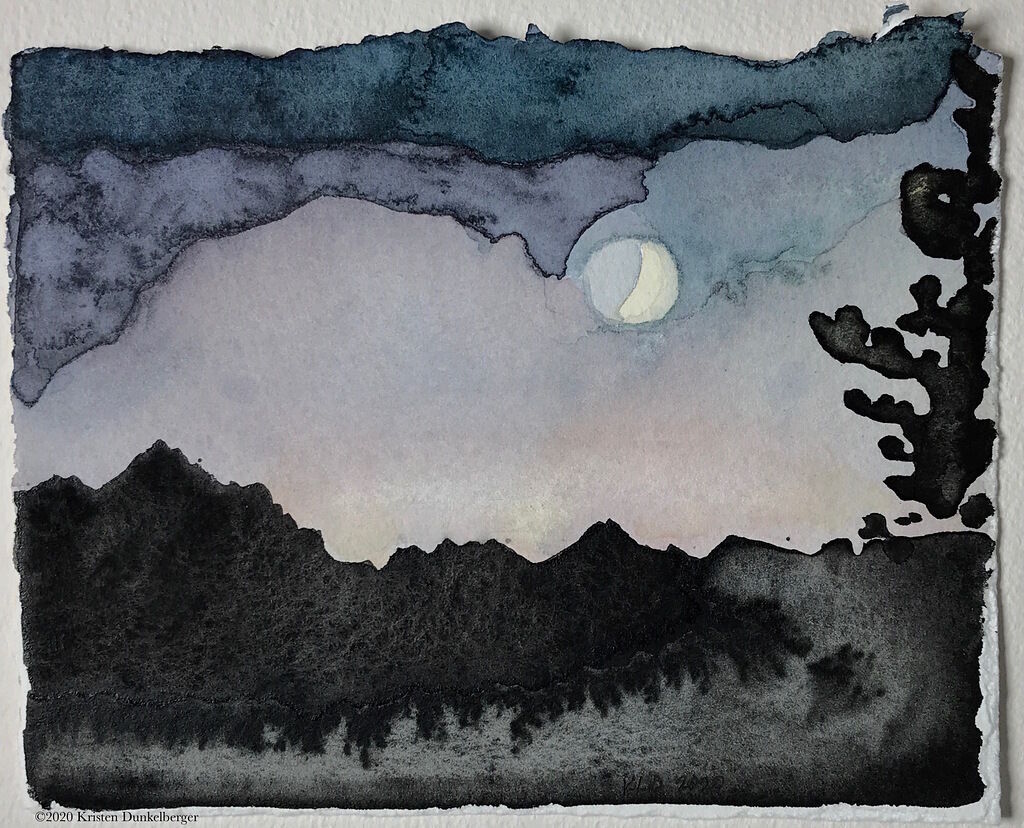
watercolor painting in blues purples and grays of the moon over a mountain range clouds above | on Art Biz Success
©Kristen Dunkelberger, Sawtooth Moonlight. Watercolor on cotton paper, 6.5 x 8.25 inches.

If you are trying to make money from your art, you are responsible for certain tasks that you may not feel like doing.

You might not feel like:

If you’re like me, you never feel like doing your bookkeeping.

I get it that not all of these, or perhaps any of them, might be fun. 

And, yet, you need to do them to make progress. And to be smart about how you run your art business.

There’s no sense bellyaching about the things you don’t enjoy. And no sense wishing that you’d rather be doing something else.

Pining for different circumstances is wasted energy. If you want to make progress, hold your nose, roll up your sleeves, and get to work.

And do it joyfully, dammit! 😉, because you’re darn lucky. You’re lucky to be an artist in the free world and to have the freedom and resources to build your own business.

My top trick for getting difficult things done is to find support and accountability. And that’s why those 2 things are the cornerstone of all my programs. 

You can find answers anywhere. Thank you, Google. But artists need community to thrive.

If you are doing this alone without the support of a coach or community, perhaps considering a few questions might help get you past the struggle.

Examine Your Resistance

square oil and acrylic painting of a young skateboarder going up an incline in yellow orange and purple artist Jessica Cook | on Art Biz Success
©Jessica Cook, Reverse. Oil and acrylic on cradled panel, 20 x 20 inches.

Why are you procrastinating?

Is there a mental block and, if so, what is it related to?

Is it a fear of success? A fear of failure?

Do you have everything you need to do the task?

I have discovered that some of my clients procrastinate because they have a project on their lists rather than a task. A project requires multiple steps (tasks) to complete.

If you need to send a newsletter, but you haven’t even researched or written the content, of course you’re going to delay.

Always identify the next action for your task and make it an actionable, single step.

Appeal to Your Sense of Accomplishment

How will it feel to get this done?

Take a moment to soak it in. How will your life be better when you finish this?

Imagine crossing through that task with a fat black pen and getting on with other tasks or to the work back in your studio.

Why are you doing this?

Why is this on your list in the first place? What’s it going to get you? Again, how will your life be better when it’s done?

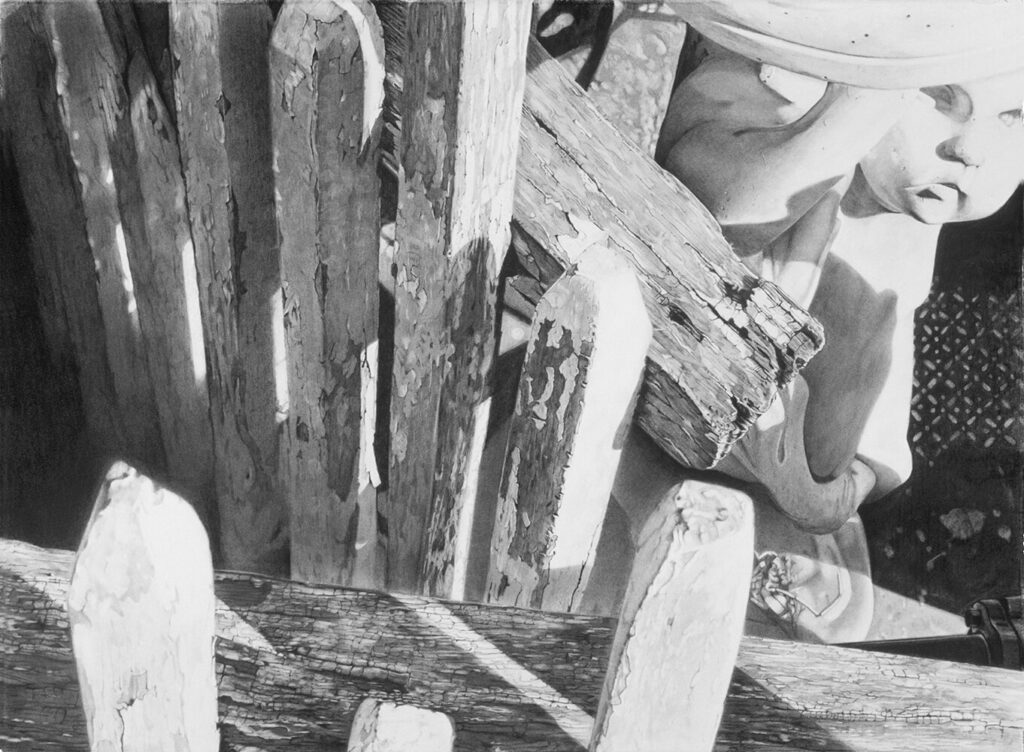
black and white graphite drawing of fence pickets and baby angel statue | on Art Biz Success
©Nick Long, Heaven’s Gate. Graphite on paper, 22 x 30 inches.

Invoke Your Vision

Is this other thing you’d rather be doing more important than what you’re procrastinating?

There might be something on your art business agenda that is more important than the task you don’t feel like doing. But I’ll bet it’s not checking your email or scrolling through Instagram.

If you’re wasting time on trivial matters, this question should bring you back into line: Is this the best use of your time right now?

Sometimes we add things to our lists that we don’t really have to do. Maybe the world will keep turning on its axis if you decide against completing that particularly disagreeable task.

What will happen if you don’t do this?

Then there are times when the ramifications of avoiding a task are enormous. People won’t hear about your work, fans will be the last to be invited to a special event, or you won’t make the sale because you waited too long to act.

Are you willing to find out?

Consider Your Future

One week/month/year from now, how will it feel to have completed the task?

One week/month/year from now, how will it feel to have neglected the task?

The Art Biz podcast cover

Listen to this related episode of The Art Biz …

Getting the Difficult Things Done

This post was originally published January 23, 2013 and has been updated with original comments intact.

The post When You Don’t Feel Like Doing Art Business Tasks appeared first on Art Biz Success.

]]>

https://dy-online.com/dont-feel-like-it/feed/ 19
The Art Biz ep. 46: Structure Your Days to Be in Control of Your Art Business Now https://dy-online.com/control-structure-podcast/ https://dy-online.com/control-structure-podcast/#comments Wed, 25 Mar 2020 15:56:47 +0000 https://dy-online.com/?p=29293 So much of what is happening right now is beyond your control. You can’t control how many people get sick. You can’t control how fast the virus spreads. You can’t control what our leaders do (though you can vote and I strongly urge you to do that).

But you can control how you react. It’s critical for your well being that you pay attention to what is in your control. This is going to make you feel much more optimistic about the future, and give you fuel to carry on.

For the foreseeable future, I’m dedicating the Art Biz Podcast and this blog to discussing what you can do now to stay in control of your art business.

I want to begin this series by discussing how you spend your time every day, hour, and minute—even if you have kids at home.

In a recent interview with Colorado Matters, Craig Knippenberg, a licensed social worker in Denver, discussed the importance of structure at this very strange moment. Adults do better when they have structure, but kids absolutely need it, so having a schedule is even more important if you have kids at home right now.

1. Go to bed and wake up at the same time.

This helps you better plan your day and know when you need to start winding down for a restful night.

2. Make time for inspiration.

We all have different environments. If you're homebound in a small high-rise apartment, you might look for inspiration online or out the window. But find it somewhere.

And I'm not talking about inspirational quotes. You're a visual artist, so I encourage you to look for visual inspiration in clouds, the landscape, or online art exhibitions.

3. Continue learning.

During this period when you aren't in the throes of writing exhibition proposals or planning your next event, study a subject that has piqued your interest. Maybe indulge in an online art history course. Or enroll in lessons on embroidery, mosaic, or illustration. You can bet that anything you want to learn can be found from the safety of your home. You can also be assured that you will grow as an artist with any knowledge you gain.

Yes, you can schedule these things. Devote, say, Thursday afternoons or Tuesday mornings to learning.

The post The Art Biz ep. 46: Structure Your Days to Be in Control of Your Art Business Now appeared first on Art Biz Success.

]]>

About this Special Podcast Series for Artists

For the foreseeable future, I’m dedicating the Art Biz Podcast and this blog to discussing what you can do now to stay in control of your art business.

It’s just going to be me talking. Episodes will be shorter and more frequent. There will be no music. No bells and whistles. My goal is respond to the situation quickly and to keep you going at the expense of a fancy, professionally engineered audio program. I hope you understand.

I need you to be part of the conversation. I need to hear from you! Please join me on Instagram using #ArtBizNow and bookmark ArtBizNow.com as a hub for art business resources during this crisis.

So, staying in control of your art business. It sounds like a simple theme, but it’s profound.

So much of what is happening right now is beyond your control. You can’t control how many people get sick. You can’t control how fast the virus spreads. You can’t control what our leaders do (though you can vote and I strongly urge you to do that).

But you can control how you react. It’s critical for your well being that you pay attention to what is in your control. This is going to make you feel much more optimistic about the future, and give you fuel to carry on.

Listen to Episode #46 Now

This post is a complete transcript of the audio.

Structuring Your Days

I want to begin this series by discussing how you spend your time every day, hour, and minute—even if you have kids at home.

Structure Your Days to Be in Control of Your Art Business Now

In a recent interview with Colorado Matters, Craig Knippenberg, a licensed social worker in Denver, discussed the importance of structure at this very strange moment. Adults do better when they have structure, but kids absolutely need it, so having a schedule is even more important if you have kids at home right now.

Here are some suggestions for what to add to a structured schedule if you’re new to the process.

1. Go to bed and wake up at the same time.

This helps you better plan your day and know when you need to start winding down for a restful night.

2. Make time for inspiration.

We all have different environments. If you’re homebound in a small high-rise apartment, you might look for inspiration online or out the window. But find it somewhere.

And I’m not talking about inspirational quotes. You’re a visual artist, so I encourage you to look for visual inspiration in clouds, the landscape, or online art exhibitions.

Oil painting by Blanche Guernsey
©Blanche Guernsey, The Next Adventure. Oil, 20 x 16 inches. Used with permission.

3. Continue learning.

During this period when you aren’t in the throes of writing exhibition proposals or planning your next event, study a subject that has piqued your interest. Maybe indulge in an online art history course. Or enroll in lessons on embroidery, mosaic, or illustration. You can bet that anything you want to learn can be found from the safety of your home. You can also be assured that you will grow as an artist with any knowledge you gain.

Yes, you can schedule these things. Devote, say, Thursday afternoons or Tuesday mornings to learning. Be deliberate and seek out something you’ve always wanted to know about rather than reacting to the latest MasterClass ad you see on Instagram. If you want to learn more about building an art business, I do hope you’ll look at the Art Career Success System, a program and community I have been perfecting for years.

4. This is not a suggestion, but an imperative. You must continue making art.

I know a number of my students and clients are excited for the opportunity to focus on their studio practice right now. Others are despondent because they have lost access to their off-site studios. That is heartbreaking. But you can still keep making. You just might be making something different than if you were at the studio.

You might be drawing or building cardboard sculpture instead of painting 6-foot canvases. The important thing is to keep being creative. It’s in your blood and your well-being depends on it. If you have kids at home, make sure they know your studio hours and when you’ll be available for them. The structure they need can work with the structure you need as well.

Batik Lollipops by artist Cara Young
©Cara Young, the toothflyer, Sweets Rot Your Teeth lollipop pillow tops. Rozome batik and silk, 7 inches diameter. Used with permission. 

5. Keep marketing.

Marketing is going to look a little different right now. It’s all about maintaining personal relationships, which is something I’ve been stressing forever. And it’s the focus of an entire course I teach at Art Biz Success titled Collector Relationship Essentials. Your art, your kindness, and the beautiful touches you add to the world can be a balm right now.

Focus on sending personal emails, direct messages, and postcards. If you haven’t been doing much with video, now is a great time to start! Define your marketing time in terms of dedicated hours or days per week.

6. Mix in the housekeeping and cooking.

For the first time in, well, I don’t think it’s ever happened before, my husband and I have a meal planner on the refrigerator door—taking turns being responsible for dinners. Furthermore, I’ve decided to add more cookies and treats because they make me happy. Last weekend we delivered cookies to the doorsteps of good friends in the area, and then texted to tell them they were there. Just because it made us happy.

We have also divided up the housekeeping chores because, out of an abundance of caution, we’ve asked our housekeeper to remain at home (with pay). But we have a boundary: no cooking or cleaning during office hours. We’re spending more time than ever in the house and we want to enjoy our limited surroundings.

painting by Gaurangi Mehta
©2020 Gaurangi Mehta, Momentarily Cynical. Acrylic on watercolor paper, 16.5 x 11.7 inches. Used with permission.

Yes, there are more than 6 things that you’re juggling right now (exercise, anyone?), but let’s start with these. What will your new structured schedule look like?

I suggest you map it out. I like to do these things on paper rather than digitally, and I prefer Michael Hyatt’s Full Focus Planner for this process. But you don’t need a fancy planner. You’re an artist! Make something that works for you, post it, and follow it as best you can.

In that interview I spoke of earlier, Craig Knippenberg gave listeners the permission NOT to be perfect. If you have children, he says that it’s great if you can adhere to a scheduled plan with your children 80% of the time during normal times. Right now, he suggested that you’ll be great if you hit 65% or 50% if you have pre-schoolers.

If you don’t have children, the point isn’t to follow a structured schedule militantly. We’re in uncharted waters, so give yourself a break. Be kind to yourself, for Pete’s sake.

I’m reminded of one of my favorite quotes—from motivational speaker Les Brown:

Shoot for the moon. Even if you miss, you’ll land among the stars.

Create a structure for your family or only yourself and follow it as best you can. Then forgive yourself when (not if) you don’t execute it flawlessly … when you miss the moon and land among the stars.

Hopefully this first tip for staying in control of your art business during these uncertain times has been helpful. Structure your time as much as possible.

On upcoming episodes for this special series, I’m going to discuss everything from refreshing your marketing materials, to writing, to spiffing up your office or home space.

I also plan to share videos and interviews with friends and artists to expand on these topics.

Painting of Carmel Coast by Carol Cottone-Kolthoff
©Carol Cottone-Kolthoff, Carmel Diptych. Watercolor, 10 x 22 inches. Used with permission.

If you dive into your trusted (!) news source, you could quickly convince yourself that the world is ending. It’s true that the world is going to look very different on the other side of this and you want to be strong—mentally, emotionally, physically, creatively, and financially. It’s that last thing—financially—that I know we’re all worried about.

I can’t promise that listening to this podcast series is going to stabilize your financial situation. I can’t promise that I can help you sell more art (or any art) right now.

What I can promise is that if you stay tuned and implement my suggestions, you’ll be in a better place than if you get caught up in a quagmire of tweets and breaking news.

You are a critical part of this conversation. I need to hear from you! Please join me on Instagram using #ArtBizNow. Post a photo as you normally would (hopefully, of your art) and, in the description, share how you’re structuring your days.

You can also follow along on my Facebook page @Art Biz Success.

Remember to visit ArtBizNow.com for updates for your art business during Covid-19. We threw together this site very quickly, so it’s quite imperfect. It will evolve as we continue to add to it as a hub for staying in control of your art business in this new economy.

Thank you for listening. I am grateful for your trust.


The post The Art Biz ep. 46: Structure Your Days to Be in Control of Your Art Business Now appeared first on Art Biz Success.

]]>

https://dy-online.com/control-structure-podcast/feed/ 16
Are These 4 Time-Stealers Robbing You of a Successful Art Career? https://dy-online.com/time-stealers/ https://dy-online.com/time-stealers/#comments Wed, 12 Mar 2014 10:25:14 +0000 http://artbizsuccess.com/?p=17304 A student in my class asked last week on a coaching call, “Where do you find the time?”

After I gave him my answers and we hung up from the call, I thought: There’s no such thing as finding time. We have time. It’s up to us how we choose to use it.

Then I thought about time bandits. I came up with four big things that rob us of that time.

The post Are These 4 Time-Stealers Robbing You of a Successful Art Career? appeared first on Art Biz Success.

]]>
A student in my class asked last week on a coaching call, “Where do you find the time?”

After I gave him my answers and we hung up from the call, I thought: There’s no such thing as finding time. We have time. It’s up to us how we choose to use it. 

Then I thought about time bandits. I came up with four big things that rob us of that time. Do any of these sound familiar?

©July Cady Ryan, The Time Stealer. Acrylic, 12 x 12 inches. Used with permission.
©Juli Cady Ryan, The Time Stealer. Acrylic, 12 x 12 inches. Used with permission.

1. Disappearing Thoughts and Ideas

Writing everything down saves you energy because you don’t have to try to remember everything later. It gets these thoughts out of your head and frees up that space for creativity.

It also helps to focus on your priorities, which brings me to the rest of the time-stealers.

I live and die by the task list. If I don’t capture a thought or to-do item immediately, it’s often gone forever.

This means that my lists are really messy at first. Later, I take time to gather them and put them into Asana, the task list app I use.

2. Squishy Priorities

You know what’s important. You know what’s pressing. You know when you have a deadline.

Those are your priorities.
The problems arise when you don’t have deadlines, a situation that occurs regularly when you own your own business. No one asks you to turn in assignments or reports.

You must give yourself deadlines.

Studio is priority #1. After that, I’d place building your mailing list, connecting with other artists, and researching opportunities at near the top of most artists’ to-dos.

3. Attention Splatter

My Pomodoro app ticks away as I wrote this post.

You could easily waste an entire day flitting from email to Twitter to Facebook to Google+ and around again. And then where will you be?

You know that your priorities require focused attention.
I’ve been using the Pomodoro Technique (thanks for the tweet about it, Claudine Hellmuth!) to help me stay focused on one task at a time. I don’t recommend it for studio work, but I’m using it right now to write this article.

4. No Boundaries

You can’t run a successful business while trying to please everyone. And, as #2 and #3 above show, you have to be disciplined enough to focus on your priorities.

You need boundaries around whatever or whoever is stealing your time away from your goals. Examples of boundaries:

  • I don’t answer the phone, email, or door during studio hours.
  • I don’t check email after 7:00 p.m. That’s family and wind-down time.
  • I politely decline opportunities that take me far from my goals.
  • I don’t do housework during work hours.

There are many other time bandits these days.

What’s stealing your time?


The post Are These 4 Time-Stealers Robbing You of a Successful Art Career? appeared first on Art Biz Success.

]]>
https://dy-online.com/time-stealers/feed/ 66
DIY Rescue for Artists https://dy-online.com/diy-rescue/ https://dy-online.com/diy-rescue/#comments Wed, 12 Dec 2012 12:30:52 +0000 http://artbizsuccess.com/?p=14360 Your art is your present to the world, but it isn’t a gift until someone has received it. That means you have to make the work and market it (get it out of the studio!). To do this effectively and sanely, you must first acknowledge you need help whenever and wherever you can get it.

The post DIY Rescue for Artists appeared first on Art Biz Success.

]]>

Your art is your present to the world, but it isn’t a gift until someone has received it. That means you have to make the work and market it (get it out of the studio!).
To do this effectively and sanely, you must first acknowledge you need help whenever and wherever you can get it. You must understand that the DIY mentality is severely limiting when you’re trying to make money.

Keep the DIY Mentality for Your Art Only

Most artists are overwhelmed with the work that must be done to build a business, but they resist turning over tasks to professionals who can assist.
When you seek support for your business from consultants, assistants, and other professionals, you:

  1. Gain valuable time to focus on your genius work (making and marketing). This is what makes you money!
  2. Allow other people, who are probably better trained than you, to use their strengths for your benefit.

This is why you must lose the DIY mentality for every aspect of your business. You must learn to delegate.

Where Others Can Help

What is taking up your precious time?
What are you doing that someone else (who is more gifted in that area) could do better?
Keep a list of all the tasks you are currently performing that someone else could do. You don’t yet have to do anything with this list, but you must begin it if you want to experience future growth.
Here are some examples to get you started:

  • Home: cleaning, cooking, shopping, mowing, weeding, fixing, car washing
  • Studio: stretching canvas, finishing work, preparing work for installation
  • Venues: hanging art, mounting wall labels
  • Marketing: addressing and stamping postcards, certain social media tasks, preparing blog posts, website and email template design
  • Business: bookkeeping
  • Events & openings: catering, sales, host duties

What tasks do you need to be rescued from in order to make more money from your art business?

The post DIY Rescue for Artists appeared first on Art Biz Success.

]]>

https://dy-online.com/diy-rescue/feed/ 26
15 Minutes a day for social networking https://dy-online.com/15min-socialnetworking/ https://dy-online.com/15min-socialnetworking/#comments Tue, 26 Jan 2010 10:00:06 +0000 http://artbizsuccess.com/?p=5289 Set your alarm and take care of your social media tasks in 15 minutes a day. Or perhaps you prefer 30 minutes two or three times a week. That’s great!Make sure that you are spending quality time online and not allowing it to become a time-waster.

The post 15 Minutes a day for social networking appeared first on Art Biz Success.

]]>

Here’s another look at what you can do in just 15 minutes a day.
Like you, I know that Facebook, LinkedIn, blogging, and Twitter can be time suckers. This is where my recent experiment comes in.
I’ve been trying to prove that you can take care of social media tasks in just 15 minutes a day. Scoff at me all you like, but you gotta give me points for determination.
Elizabeth Bryan
Elizabeth Bryan, Santa Monica Portal. Mixed media, 96 x 60 x 2 inches. ©The Artist

Here’s how it’s going. (Keep in mind that social media is a big big part of my online presence. It is probably not of equal weight for you.)
I’ve been setting my alarm and trying to get through Facebook chores in 15 minutes a day. These means updating my status, responding to comments on my wall, checking my FB inbox, sending birthday greetings, and tending to my fan page as well. Some days it works, but on other days my 15 minutes are more like an NFL quarter: sidetracked by injuries, flags, and timeouts. The 15 minutes morphs into 30 and then 45 minutes and then . . .
This extra time spent on Facebook doesn’t help me prove my thesis, but I stick to tasks that must be done. And I know I’m doing them as quickly as possible without getting caught up in games, applications, and quizzes. (This latter part is key. I have a strict policy against participating in any of these time-sucking activities. I have other ways of having fun, which usually involve the real world outside of Facebook.)
The timer is key! I love racing against the clock for stuff like this. My husband and I sometimes do the same thing when we go to the supermarket and don’t feel like being at the supermarket. It’s kind of fun to see how fast you can get through the crowded aisles without hurting yourself, knocking over displays, or mowing down unsuspecting shoppers.

You can do this, too.

Set your alarm and take care of your social media tasks in 15 minutes a day. If you need more, as I do on some days, that’s fine, too.
Or perhaps you prefer 30 minutes two or three times a week. That’s great!
Make sure that you are spending quality time online and not allowing it to become a time-waster.*
How do you monitor your social media time?
*Sometimes you need to waste time. You’re fried and you want to do brainless stuff. As long as this doesn’t happen every day, embrace the moment. Go on Facebook and take all the quizzes you like. Just don’t get upset if someone (me!) blocks your application or doesn’t respond.

The post 15 Minutes a day for social networking appeared first on Art Biz Success.

]]>

https://dy-online.com/15min-socialnetworking/feed/ 18