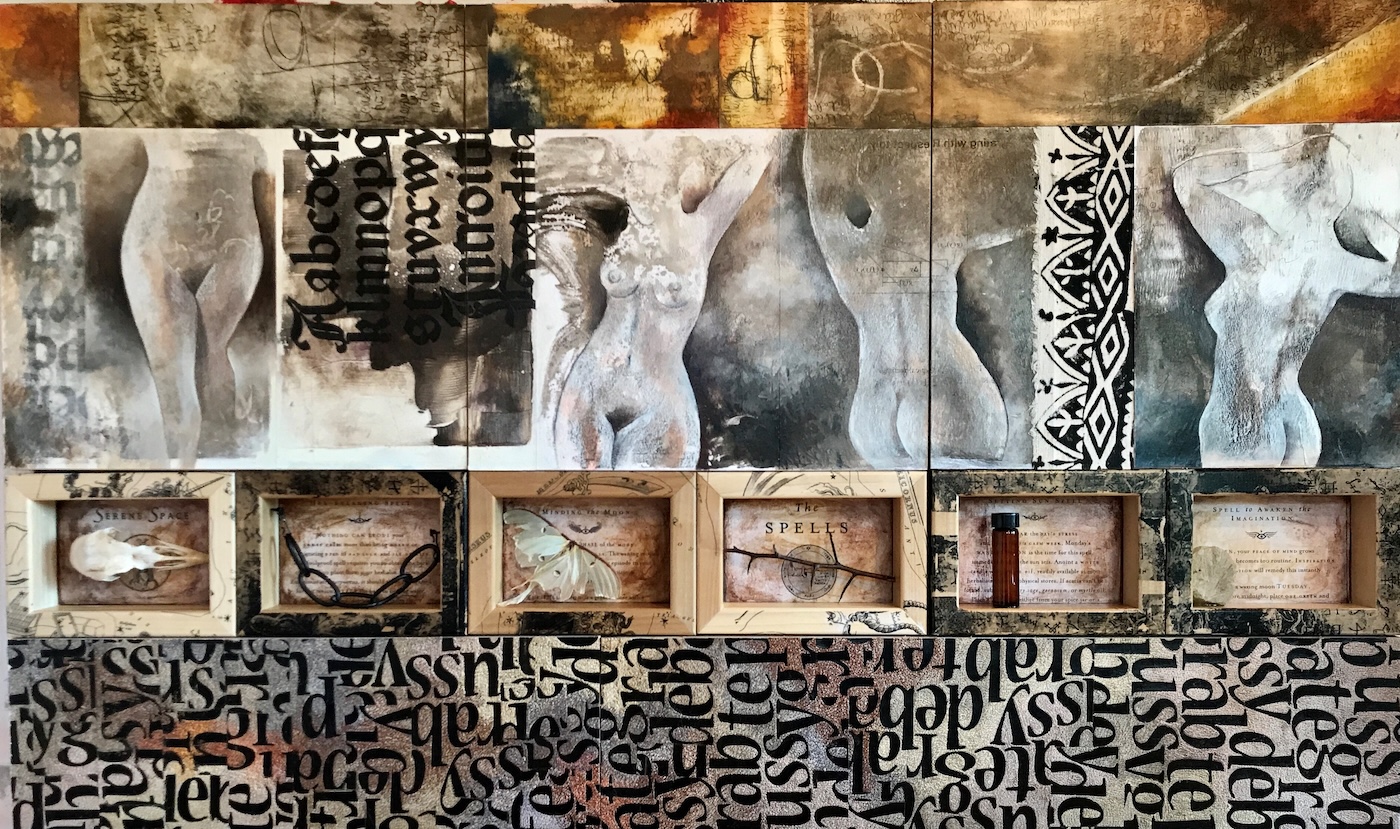
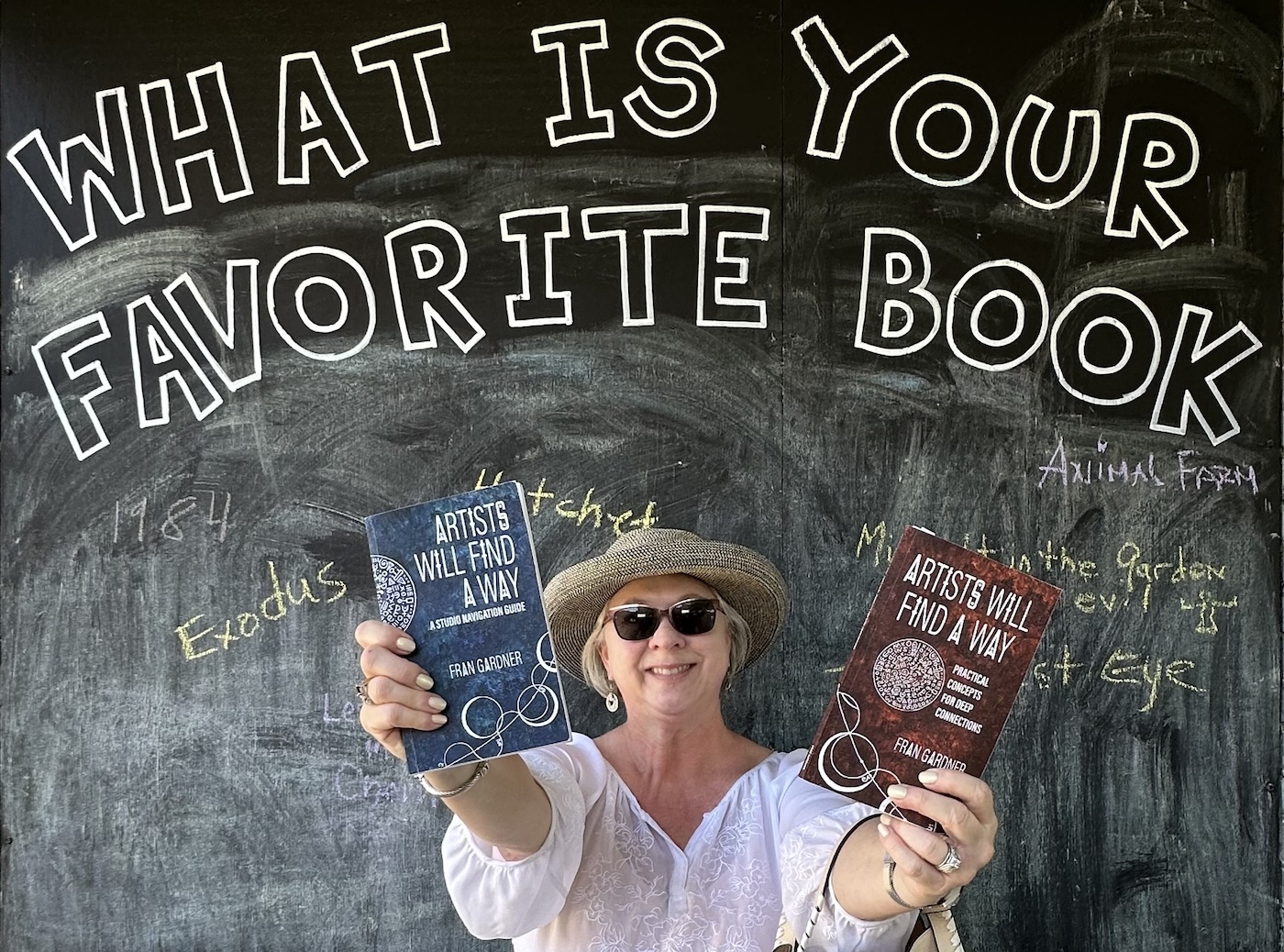
Discover why titling matters, what it can teach you about your work, and how to approach it with intention and care. A thoughtful conversation every artist should hear.
The post The Awesome Responsibility of Titling Your Art with Fran Gardner (229) appeared first on Art Biz Success.
]]>

The post The Awesome Responsibility of Titling Your Art with Fran Gardner (229) appeared first on Art Biz Success.
]]>You’ll get writing prompts, editing advice, and ideas for how to actually use your artist statement once it’s done. Let’s make it easier—and way less intimidating.
The post Comprehensive guide for writing an effective artist statement (221) appeared first on Art Biz Success.
]]>
What’s important to you? What do you want viewers to get about your art?
Is it …
- your labor?
- a special material?
- an emotion?
- color? line? texture?
Once you pinpoint the answer, write about how you handle this aspect of your work.
Think about what you emphasize, why it matters, and what, specifically, you do to bring this out.
The words you choose for your statement should serve as clues that lead viewers to these discoveries.
For example, saying “I love color” is weak—who doesn’t love color? Instead, describe how you respond to color and how you use it to transfer meaning from your head and heart to the viewer.
Now that you’ve gathered your thoughts through journaling, it’s time to start shaping them into a statement.
But before you dive into writing a draft, keep these guidelines in mind. They’ll help you focus your message and avoid common pitfalls.
1. Write in the first person.
It’s a statement, after all—something only you can say.
But be mindful of overusing personal pronouns (I, me, my). You’ll trim many of them during editing.
2. Stick to the body of work you’re trying to define.
Focus your statement on a single, cohesive body of work. (And, yes, you have the flexibility to write multiple statements.)
If you try to describe different styles or directions in one statement, your language will become too general—and you’ll lose the specificity that makes a statement effective.
If you work in distinct series or have more than one visual direction, write a separate statement for each. It’s more work, yes—but it honors the integrity of each body of work and gives your viewers a clearer experience.
3. Avoid discussing influences.
Don’t include teachers or historical figures who influenced you.
As soon as you name someone else, readers start comparing. You want them to stay focused on your art.
4. Don’t use quotes from other sources.
We’re not in English class anymore.
You may have been taught to begin an essay with a quote, but your artist statement should rely on your own voice. Quoting others distracts from your message.
5. Keep your biography separate.
Your bio is written in the third person.
Your artist statement is in the first person and about the art—not about you. These are two distinct documents.
6. Let your statement evolve.
This document isn’t your life’s treatise. You won’t be defined by the words you choose forever.
It should grow and mature alongside your work. Don’t cast it in bronze and consider it done.
Avoid treating it like a finished product you never revisit. A good statement can—and should—change over time.
7. Keep it short. Really short.
Most artist statements don’t need to be longer than a paragraph or two, although I understand that there is a place for longer statements that enlighten.
Always aim for brevity. If you go longer, be sure every word adds to your message. If not, cut it. (We’ll get to that.)
These guidelines will keep you grounded as you begin shaping your raw thoughts into a meaningful artist statement.
But how will you know if what you’ve written is working?
There’s one simple test your statement needs to pass—and it has nothing to do with perfect grammar or flowery language. I want to make sure you understand this before you begin writing.
Once you’ve written a draft, don’t hit publish or send just yet.
Take a break. Give yourself a little distance from your words—at least a day or two. When you come back, you’ll be better equipped to spot what needs refining. This is where the editing begins.
In particular, watch out for these five common offenders that weaken artist statements. Cutting them will instantly sharpen your message and make your writing more effective.
1. The word “unique”
Just … don’t.
The word “unique” has been so overused that it’s become meaningless. And let’s be honest—your work probably isn’t unique in the truest sense of the word. All art is informed by what came before.
Instead of claiming uniqueness, describe your work in a way that makes the reader feel it’s one-of-a-kind. Focus on your distinguishing characteristics. Let your specificity speak for itself.
2. Cliché phrases
You’ve seen these (and maybe even used them):
- I am excited by …
- I’ve always been an artist …
- I have to make art …
- My work is about the human condition …
These clichés flatten your voice. The phrases that follow them are usually vague and unmemorable. Dig deeper and say something only you would say.
3. Redundant sentences, adjectives, or thoughts
Say it once. Say it clearly. And then move on.
If you find yourself repeating ideas using slightly different words, you’re not adding meaning—you’re adding clutter. Tighten it up so each sentence earns its place.
This brings me to …
4. Adjective overload
A string of descriptive words separated by commas doesn’t make your work sound more interesting—it makes your reader have to do extra work.
If your statement has more than three or four commas in a single sentence, take a closer look. Trim the excess. Choose one or two carefully selected adjectives that actually add value.
Then read through your entire statement and check for what I call “strings of three adjectives.” You’re allowed one per statement.
5. Excessive personal pronouns
Yes, your statement is written in the first person, but that doesn’t mean every sentence needs “I,” “me,” or “my.”
Try removing them in the editing phase. You’ll be surprised how much more concise and powerful your writing becomes.
The post Comprehensive guide for writing an effective artist statement (221) appeared first on Art Biz Success.
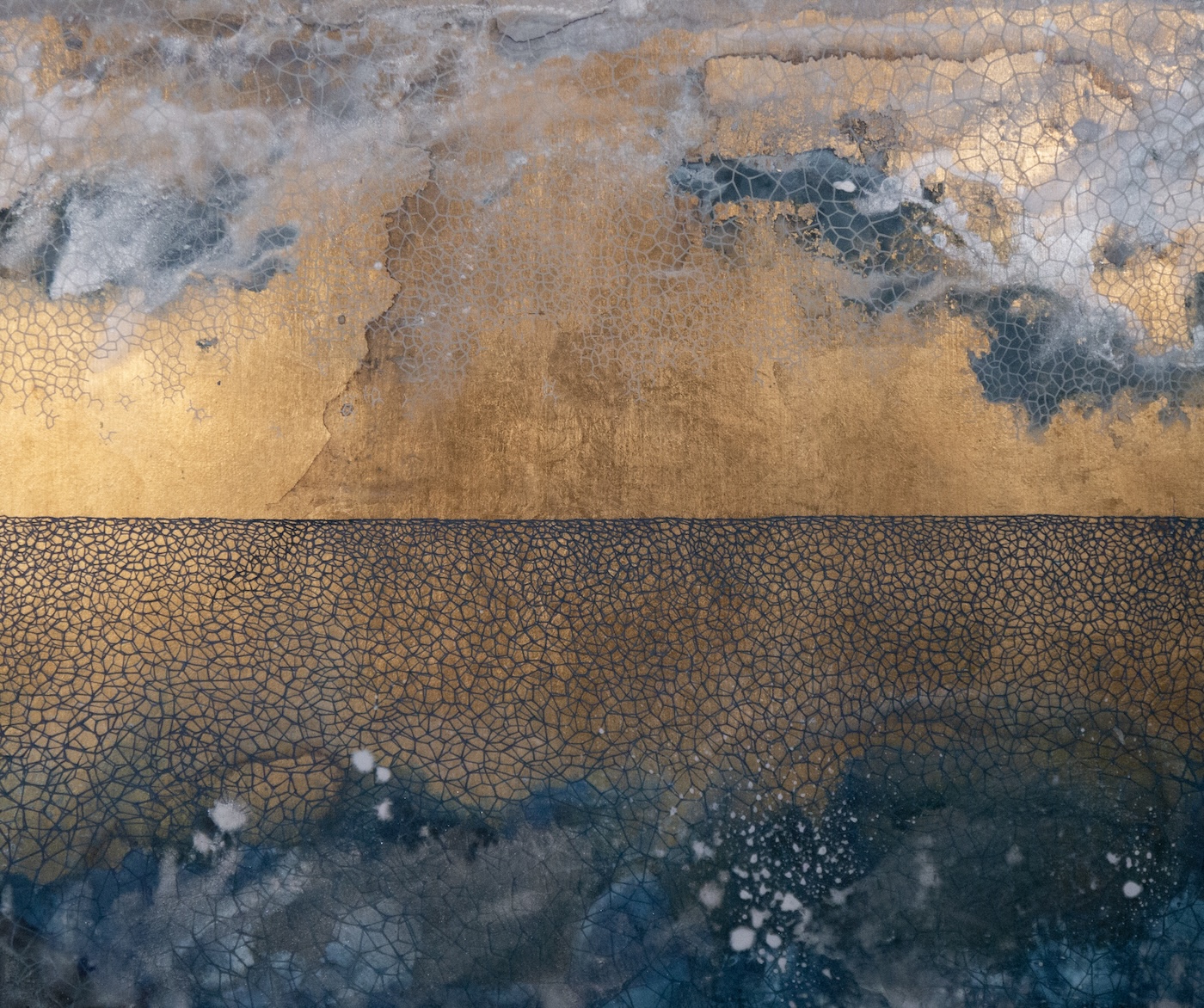
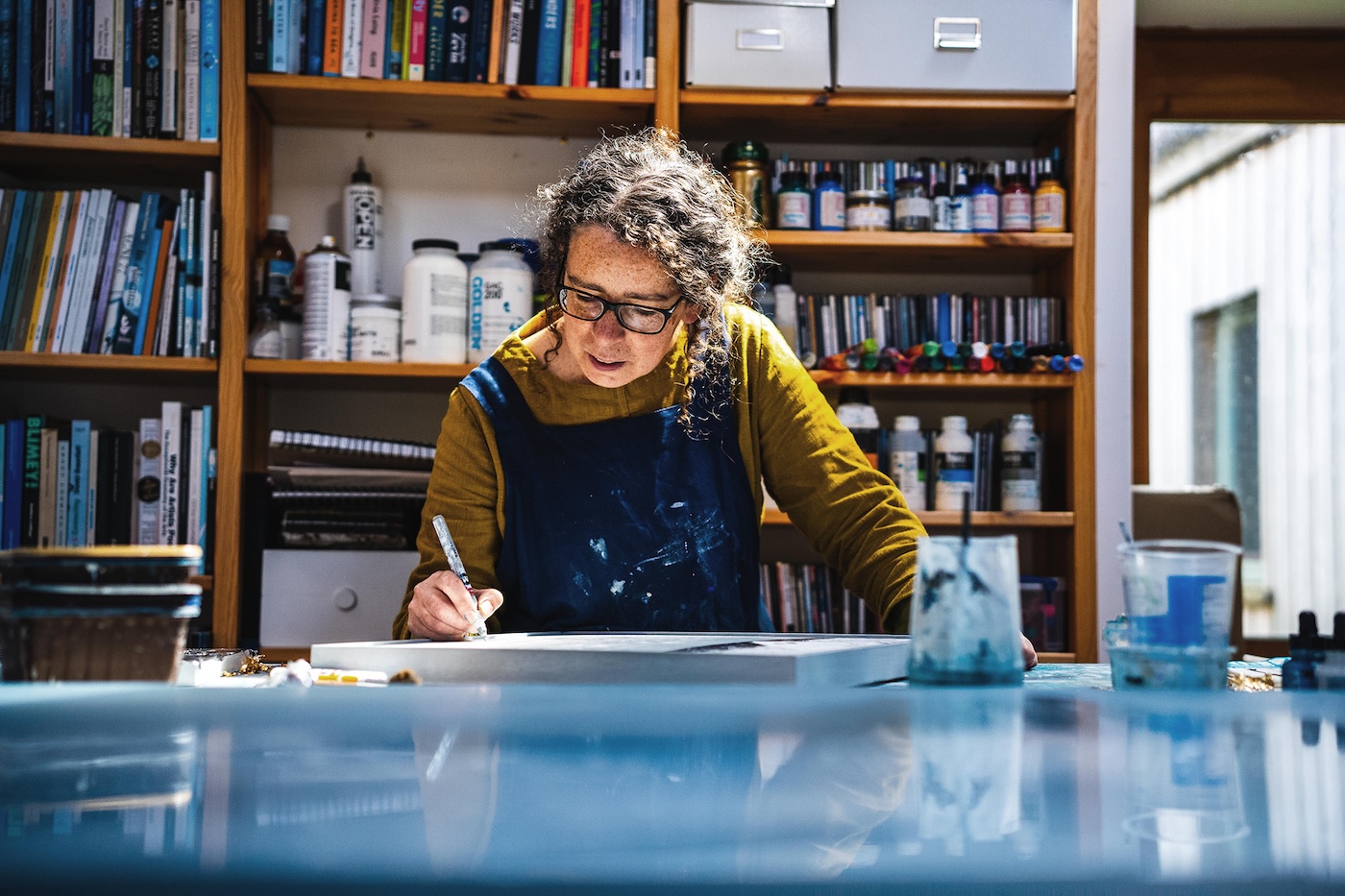
]]>We discuss how writing can deepen one's creative practice, the value of opening conversations, and how Samantha maintains a writing schedule alongside her work in the studio.
The post Fostering Clarity and Confidence Through Writing with Samantha Clark (211) appeared first on Art Biz Success.
]]>
The post Fostering Clarity and Confidence Through Writing with Samantha Clark (211) appeared first on Art Biz Success.
]]>Substack has become integral to her process, helping her manage projects, organize thoughts, and extend her teaching. By offering free content to build community and exploring paid options, Ann balances creativity with income generation.
The post Writing on Substack Can Be Integral to Your Creative Process with Ann Balaam Miller (210) appeared first on Art Biz Success.
]]>
The post Writing on Substack Can Be Integral to Your Creative Process with Ann Balaam Miller (210) appeared first on Art Biz Success.
]]>The illustrations that often punctuate artists' journals are a bonus that can't be found in the journals of those less visual.
But don't keep a journal to satisfy my whims. Keep one for yourself. Write things down in order to remember and reflect. And keep writing because it contributes to your art marketing.
The post Imperfect journaling for artists with Cynthia Morris (51) appeared first on Art Biz Success.
]]>Peeking at artists’ journals is my definition of heaven. I love to see how ideas develop and change—how creative thought processes evolve.
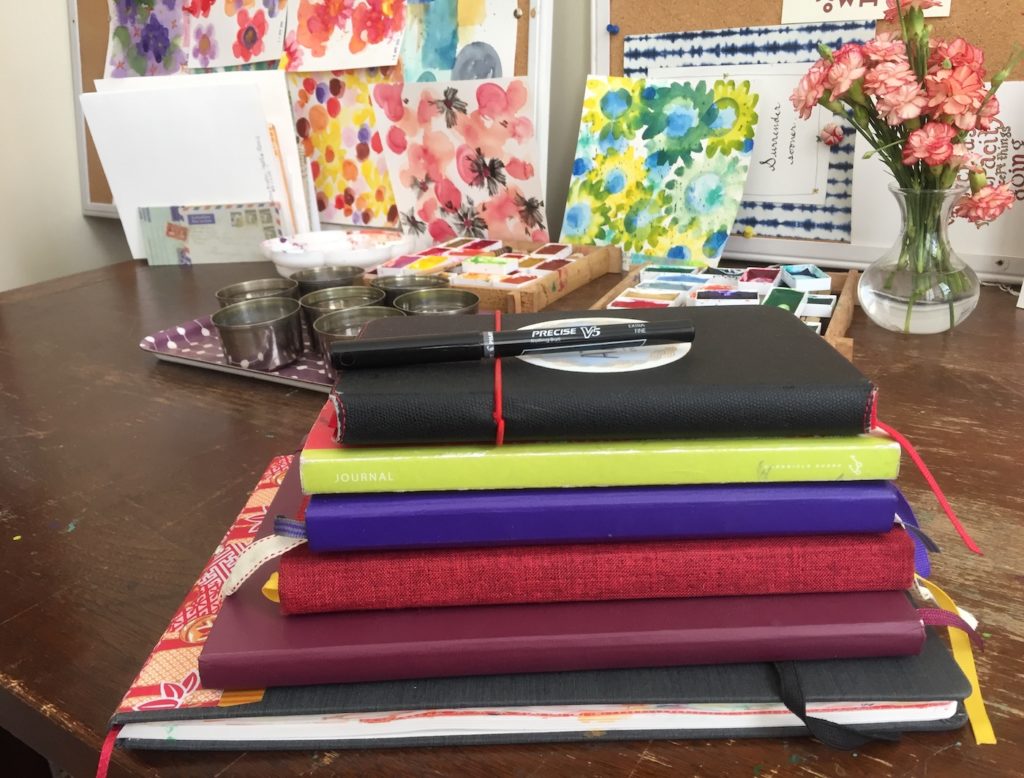
The illustrations that often punctuate artists’ journals are a bonus that can’t be found in the journals of those less visual.
But don’t keep a journal to satisfy my whims. Keep one for yourself. Write things down in order to remember and reflect. And keep writing because it contributes to your art marketing. It builds your confidence so that you have no problem introducing yourself as an artist.
I mentioned journaling last week as a vital part of writing your artist statement. In this latest episode of the podcast, I talk with author/coach/artist Cynthia Morris about journaling. It was recorded over Facebook Live.
Cynthia and I give you a framework to help you commit to a journaling practice and discuss how we use journals for our businesses.
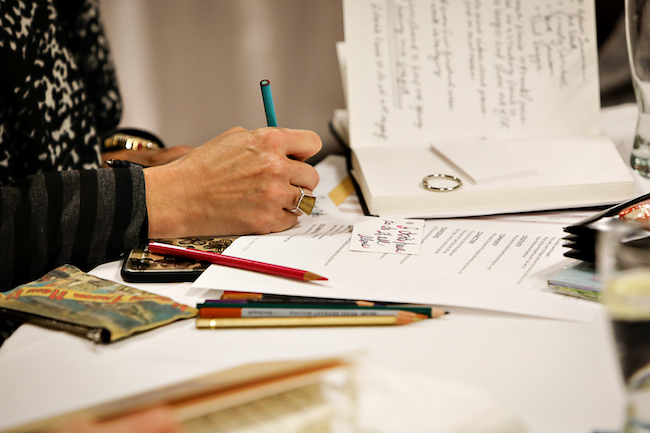
We discuss the types of journals we think are best for this process, why it’s important to write by hand before moving to the computer, a structure for your journaling process, and how to use prompts to get your ideas down.
Remember that we recorded this as a video conversation with one another. Some things might not translate. For example, we did show and tell about our journals. That’s why I’m sharing the video here as well.
Here it is … my conversation with Cynthia Morris about an imperfect journaling practice for artists.
Music by Wildermiss.
Highlights
4:45 How I met Cynthia 15 years ago.
6:15 Why it’s not a good idea to write important documents under pressure.
8:00 Writing is about having a relationship with yourself and making sense of your world.
8:51 Brainstorm 50 ideas instead of 10.
9:39 How I rebooted my journaling practice.
11:15 “The answers are in your ink.”
11:50 Why we call it, and why it must be, an imperfect practice.
14:02 The specific journals we prefer and why.
17:09 Your journal has to fit into your life.
17:40 The notebook from artist Mary Martin that I use for a very special purpose.
18:00 How I use a notebook with magnetic pages.
19:31 The various notebooks Cynthia keeps at all times.
20:35 Why we refer to precious or leather-covered journals as dust collectors.
23:17 The difference between writing by hand and typing on the computer.
25:45 Using “free writing” and writing prompts to collect words.
29:08 Get daily prompts and write for 3 months in Cynthia’s Devoted Writer course.
30:00 How my Magnetic You program complements Cynthia’s Devoted Writer course.
34:09 A writing prompt for you to start with.
37:10 I dreamed I had a Chihuahua.
38:35 You have our permission to be imperfectly messy with your practice.
Mentioned
The Artist’s Way by Julia Cameron
Writing Down the Bones by Natalie Goldberg
Journals mentioned and that we like:
- Moleskine: Classic Notebook that Cynthia uses for business and the Cahier Journal
- Leuchtturm1917 Medium A5 Dotted Hardcover Notebook
- Sea Flowers Eco-Journal by Jill Bliss
- Go-To Notebook with Mohawk Paper, Mulberry Wine Dotted
- Rekonect Magnetic Notebook
About Cynthia Morris
Cynthia Morris helps writers, artists and entrepreneurs make their big dreams a powerful reality. Cynthia is a certified coach, teacher, author and artist. In 1999, she founded Original Impulse, a boutique coaching company that empowers creative people to focus, follow through and finish projects that matter.
The author of The Busy Woman’s Guide to Writing a World-Changing Book, Cynthia has published seven e-books on writing and creative travel as well as the Paris historical novel, Chasing Sylvia Beach. She is a watercolor artist and visual journal keeper who uses art as a way to express joy and consistently access inspiration.
Music by Wildermiss
The post Imperfect journaling for artists with Cynthia Morris (51) appeared first on Art Biz Success.
]]>The post Guidelines for Your Artist Statement (50) appeared first on Art Biz Success.
]]>In this episode I want to talk about a document you can revisit (or perhaps face for the first time) that gives you power (control) over how your art is perceived.
Yes, I’m talking about your artist statement.
[ A thorough treatment of this topic is in episode 221: Comprehensive guide for writing an effective artist statement ]
Don’t be scared! This is important. And if you don’t want to listen, you can read every word at YourArtistStatement.com.
This pandemic has caused so many people to be introspective. If you’re one of them, you might want to put this time to good use and work on your statement, regardless of whether you’re updating it, rewriting it, or facing it for the first time.
There’s no way around it if you want to show your art at a high level. When you want to become part of the critical discourse—to have others consider your work for venues, grants, residencies, and articles—you can’t neglect writing your artist statement.
Listen Now
Music by Wildermiss.
Highlights
- My definition of an artist statement (3:00)
- Why you need a statement (3:40)
- Collecting words that contribute to your artist statement (6:40)
- Journaling prompts for your statement (8:00)
- Guidelines for artist statements and what tense to use (11:30)
- The ultimate test for a successful artist statement (15:00)
- How to write your first draft (16:55)
- What to look for (and delete) in the editing process (17:50)
- How and where to use your statement (22:10)
- What to do when instructions don’t match what you’ve heard here (24:44)
Mentioned
- Anne Lamott’s shitty first draft
- Artist statement makeovers (2 videos in this post)
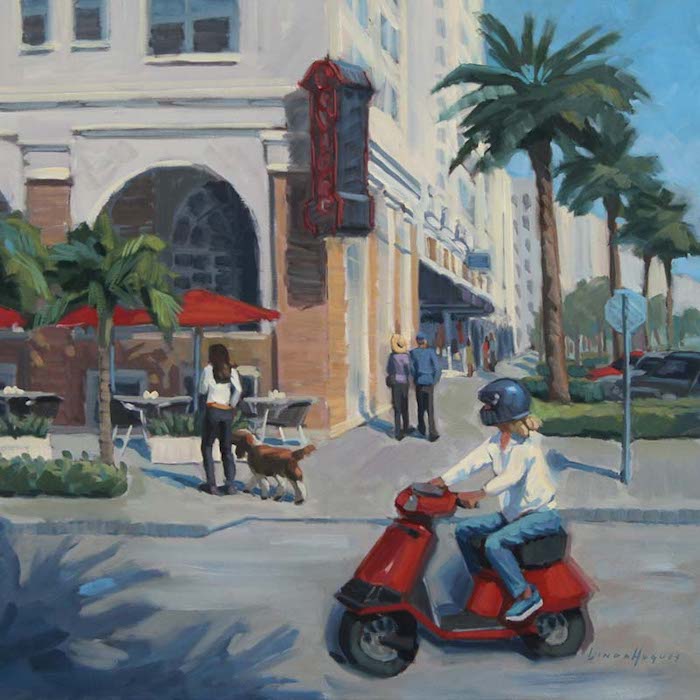
- A good example of an artist statement by Linda Hugues (in this post)
Music by Wildermiss.
The post Guidelines for Your Artist Statement (50) appeared first on Art Biz Success.
]]>Why not do it?!
Writing a book could increase your credibility, contribute to your legacy, and impact many lives.
A lot of people think that writing a book is the hard part of getting your book published. Not to take anything away from the difficult work that goes into the writing, but it is only a small portion of the entire book publishing process.
I learned about the process when the first edition of my book, I’d Rather Be in the Studio, was published in 2008 and was reminded of the long book-publishing journey when the 4th edition was released earlier this year. There are so many moving parts and, like many businesses today, book publishing is a fast-moving industry.
Those moving parts come, of course, with an expense line in your budget, which means it’s very helpful to know what you’re getting into before you start down the book production path.
You really want to know 1) that you will be able to pay for the cost to publish and 2) at what point you’ll begin to make a profit. In order to accomplish that second thing (the profit thing), you also need a marketing plan specifically for your book.
I confess I didn't talk to enough people.
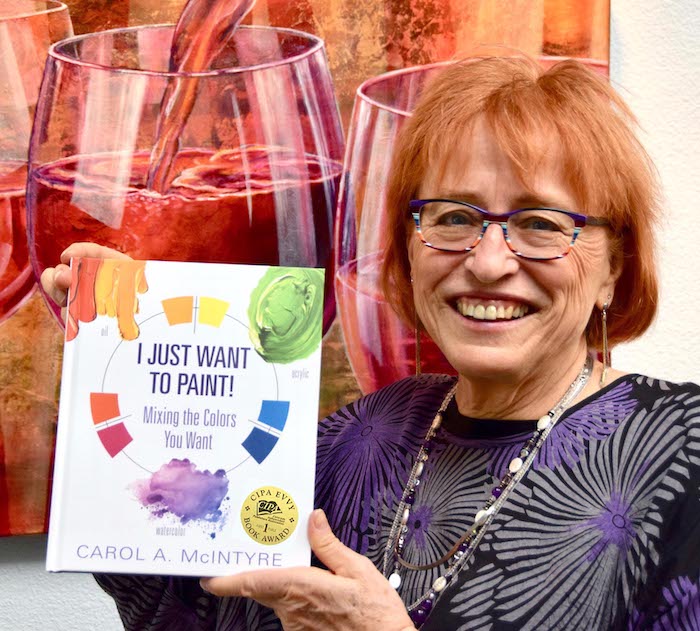
My guest for this episode of the Art Biz Podcast is artist Carol McIntyre, the author of I Just Want to Paint: Mixing the Colors You Want. In the book, Carol teaches a step-by-step color mixing method for frustrated painters of all media who want to stop making mud and start mixing the colors they want with ease.
Listen now to hear Carol's process and advice so you can avoid the sticker shock of publishing your own book.
The post The Art Biz ep. 37: Publishing a How To Book for Artists with Carol McIntyre appeared first on Art Biz Success.
]]>Why not do it?!
Writing a book could increase your credibility, contribute to your legacy, and impact many lives.
A lot of people think that writing a book is the hard part of getting your book published. Not to take anything away from the difficult work that goes into the writing, but it is only a small portion of the entire book publishing process.
I learned about the process when the first edition of my book, I’d Rather Be in the Studio, was published in 2008 and was reminded of the long book-publishing journey when the 4th edition was released earlier this year. There are so many moving parts and, like many businesses today, book publishing is a fast-moving industry.
Those moving parts come, of course, with an expense line in your budget, which means it’s very helpful to know what you’re getting into before you start down the book production path.
You really want to know 1) that you will be able to pay for the cost to publish and 2) at what point you’ll begin to make a profit. In order to accomplish that second thing (the profit thing), you also need a marketing plan specifically for your book.
I confess I didn’t talk to enough people.
My guest for this episode of the Art Biz Podcast is artist Carol McIntyre, the author of I Just Want to Paint: Mixing the Colors You Want. In the book, Carol teaches a step-by-step color mixing method for frustrated painters of all media who want to stop making mud and start mixing the colors they want with ease.
Listen now to hear Carol’s process and advice so you can avoid the sticker shock of publishing your own book.
Music by Wildermiss
Highlights
You will hear Carol and I talk about the following.
- Where the idea for the book came from and how she got encouragement to make it happen.
- How the book fits into Carol’s vision for her art business.
- The difference between print-on-demand books and self-publishing larger quantities.
- The must-have book specs that led Carol to work with a Chinese printing company.
- An account of all of the people Carol hired to help her in the publishing process, and the role of each person.
- What it costs to publish a book.
- What Carol’s profit is per book depending on whether she sells at a local bookstore, from her website, or on Amazon. Spoiler: Support an artist and buy direct from her!
- What Carol wishes she had known in advance.
- When and how Carol began pre-selling the book and the brilliant thing she did to keep early buyers happy when the book was delayed.
- The additional marketing she is doing to promote the book.
- Why it’s critical to have people around who support you during the long process.
- Carol’s very honest disclosure of experiencing burnout and how she got back on track.
Mentioned
- Colorado Independent Publishers Association
- My podcast with Helen Hiebert, Carol’s accountability partner, about multiple income streams
- Carol’s color-mixing course on BluPrint (formerly Craftsy)
- Carol’s book, I Just Want to Paint: Mixing the Colors You Want
About My Guest
Carol A. McIntyre’s first run-in with the “color police” happened when she was in kindergarten. Her teacher asked the class to choose two favorite colors that went well together. Carol spoke up. “Red and orange,” she said, whereupon the teacher declared, “No, these two colors don’t go together!” She grew up and proved her teacher wrong.
Early in her painting career, she was surprised by the lack of easy-to-understand color theory classes. This motivated her to develop a simpler way to mix color which, in turn, would empower artists.
Carol has helped over 3,500 painters see and mix color differently. She is an award-winning artist who is a signature member of the Transparent Watercolor Society of America and holds associate memberships with the Oil Painters of America and the American Women Artists.
Follow Carol on Instagram.
Music by Wildermiss
This episode is sponsored my signature business-building program, the Art Career Success System, a program I have perfected for more than 17 years working with artists.
All of the lessons you learn in the Art Career Success System are tasks you will do over and over again throughout your art business and career. That’s why it’s a SYSTEM.
In the ACSS you will build a strong foundation using my video and audio lessons, worksheets, and transcripts. And you will be part of a community of artists who are forward-thinking and forward-moving.
Join us now and get your business in shape.
The post The Art Biz ep. 37: Publishing a How To Book for Artists with Carol McIntyre appeared first on Art Biz Success.
]]>Guest posts broaden your audience instantly. You not only receive recognition on the other blog, but you'll hopefully get a bit of traffic to your own. It's free advertising and it's more effective than paid advertising.
Think about it. If you paid for an ad, you'd get a small bit of space. With a guest blog post, you get about 500 words--a much larger virtual space + your images and credit. With a guest blog post, you're being helpful to a community and generating good karma. Not so with an ad.
Write For This Blog
Please note: I no longer publish guest posts on this blog, but I've kept this here for 3 reasons:
- It might help you pitch your story to other blogs.
- I might write your story myself if it meets the criteria below.
- I might want to interview you on the Art Biz Podcast.
From time to time, I feature guest bloggers who share their stories of success (or utter failure). Do you have one to share?
The post Writing A Guest Post for Someone Else’s Blog appeared first on Art Biz Success.
]]>Guest posts broaden your audience instantly. You not only receive recognition on the other blog, but you’ll hopefully get a bit of traffic to your own. It’s free advertising and it’s more effective than paid advertising.
Think about it. If you paid for an ad, you’d get a small bit of space. With a guest blog post, you get about 500 words–a much larger virtual space + your images and credit. With a guest blog post, you’re being helpful to a community and generating good karma. Not so with an ad.
Write For This Blog
Please note: I no longer publish guest posts on this blog, but I’ve kept this here for 3 reasons:
- It might help you pitch your story to other blogs.
- I might write your story myself if it meets the criteria below.
- I might want to interview you on the Art Biz Podcast.
From time to time, I feature guest bloggers who share their stories of success (or utter failure). Do you have one to share?

What has worked for you?
Since this is the Art Biz Blog, I’d like to hear your successful business tips and stories – but only one at a time please.
What–exactly–did you do to get 150 people to your art opening?
How–exactly–did you go from selling $1000 worth of art in your booth to averaging $5000 in sales?
How–exactly–did you get 1,000 people to sign up for your newsletter?
How–exactly–did you get 100 new Facebook likes in one week?
How–exactly–did you sell 25 pieces of art through Twitter in 3 months?
What is your favorite piece of software that you haven’t heard other artists using and how does it help you?
What hasn’t worked?
I’d also be interested in hearing about your failures. They say we learn more from failures.
Where did you waste some money, how did you learn from it and what will you do differently next time?
Why did no one show up at your open studio and what would you do differently next time?
Steps For Guest-Blogging Here
FIRST, pitch me your story.
You must be an authority on the subject, which means that you experienced/lived it or studied it in detail. I do not accept guest posts from professional guest bloggers who are unrelated to the art world.
Tell me what you want to write about in 2 sentence. You have to sell me on the idea.
Email me and tell me what you want to write about and why it would be good for my readers. Don’t start writing until you pitch your idea.
** Publishing etiquette: pitch your idea to only one blog at a time. **
Send me a very clear thought that is straight to the point. I don’t have time to help you formulate your post. I’m looking for a very (very!) specific story. It should be one thing you have done that has worked (or not worked) for you. There should be a clearly articulated lesson in it for my readers. We shouldn’t have to figure out the lesson for ourselves.
Your story must be original. You might have been formulating the content in other posts or articles, but the entire article must not appear anywhere else online.
Your story should not be media specific. It needs to be applicable to most artists. My readership varies from jewelers to painters to sculptors to photographers and beyond.
Your first assignment is to do the above – following directions. If I like your story and want to use it, I’ll ask for the following. Again, please follow directions.
- If you have a story, write it up! I’m looking for 400-800ish words. If you don’t think you can write, don’t fret too much. I serve as your editor and will run any major changes by you at your request. Write your story to my readers. If it contains too many personal pronouns (I, me, my, mine, myself), I can’t publish it. You’re writing for someone else, not for yourself.
- A 1-2 sentence bio that includes what you want to link to.
- A headshot no wider than 125-150 pixels.
- At least 3 outbound links for your article to other sites (not just your own).
- A link to an image of yours to use. Neither it nor the images on your side should have watermarks across the center of the image. I need complete credit line as follows: ©Date, Artist name, Title of work. Media, dimensions (HxWxD). Please send it in this format.
Note: It could take up to 8 weeks or longer to publish accepted posts.
In Return
In return for your guest post, I will:
- Credit you by name and link to your name at the top of the post.
- Credit you again with your headshot and über-brief bio at the bottom of the post, with another link.
- Link wherever you like (within reason!). Your links can go to your blog or website, but they could also go to any offer or promotion you have. Links to specific pages (funneling traffic) are more effective than entire sites.
- Feature your art on the blog post.
- Share it on social media.
- Be eternally grateful that you have helped my readers build their art businesses.
Sample Guest Blogger posts: Maren Bargreen, Lisa McShane, Michael Lynn Adams, Liz Crain
This post was originally published July 5, 2013, and has been updated with original comments intact.
The post Writing A Guest Post for Someone Else’s Blog appeared first on Art Biz Success.
]]>The post Searching for Content for Your Artist Blog appeared first on Art Biz Success.
]]>What I didn’t say is that it’s only a gold mine if you are consistently committed to blogging and to improving with each post. You can only fulfill this commitment with rich content.
But what do you write about and where do you find it? It’s probably not under the wood boards of the deck, but you never know.

On pages 143-44 of I’d Rather Be in the Studio, I lay out 32 specific ideas for newsletter or blog post content. But before you can make that list useful to you, you must know your purpose.
Who Are You Writing For?
What you write about will depend on your goals as an artist.
How do you want to position yourself? Who do you want to read your blog?
The answers to these questions are necessary before you trust the resources for content that I share below.
Listening to Find Content
The most important tip I can give for finding good content is to listen up. Listen – depending on your goals – to what the following people are saying in conversation:
- Your collectors
- Your students
- Your artist-friends
- People commenting on your blog
- Your Facebook friends and fans
- People you follow on Twitter
How could you help them solve their problems with a blog post?
How could you piggyback on a trending topic?
How could you enlighten them about your work?
Out-of-Network Sources
While you always want to be responsive to your community, you also want to be part of a bigger dialogue around art.
Think like a journalist looking for her next assignment. Be present for conversations and capture everything you think has potential.
You’ll uncover infinite possibilities in the following situations:
- Artist talks and art lectures
- Art films and documentaries
- Lectures, films, and books related to your niche market
- Books about art and artists
- Newspapers
- RSS feeds from other blogs
Not to spoil the party, but don’t be alarmed if you later toss out 95% of your potential ideas. It’s part of the process.
What’s most crucial is that you don’t let the 5% of ideas disappear into the ethers.
My Favorite Places for Finding Content
Most of my blog posts and social media updates come from these sources:
- Your comments on my blog posts
- Your questions
- Conversations with artists at openings and studios or over coffee
- Zite or Flipboard (personal “magazine” apps for my iPad)
- Artist talks and lectures
If you’re soaking up the potential around you, you’ll collect content that will keep your blog well fed for years.
The post Searching for Content for Your Artist Blog appeared first on Art Biz Success.
]]>The post 6 Tips for Recovering Your Focus appeared first on Art Biz Success.
]]>It’s not that I’ve never written about focus, but it seems more critical than ever to remove ourselves from the chatter of social media, family squabbles, and needy pets. We have to give ourselves space to focus on a project.
This effort to do something about my lack of focus was precipitated by the realization that my writing wasn’t living up to its potential. I had gotten lazy and was sending newsletter drafts to my team at the last minute.
I was slacking off on research and on listening to what artists share with me in my inbox, on my blog, and through social media.
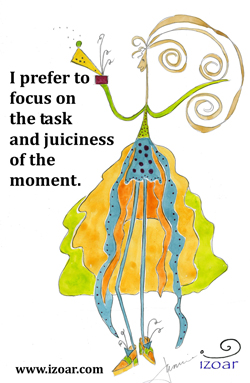
My lack of focus means that I wasn’t fully committed to my work and wasn’t performing my best for readers and members.
It was due to my inability to tune out the noise and apply myself to what is most important in the present moment. Sometimes this is work, sometimes it’s play, sometimes it’s just being lazy.
The point is that I want to be in the moment and to give the moment all of my attention. [tweet this]
Here are some tricks I have been using to help me recover focus when I write. You can adapt them to your studio practice, marketing time, or business calendar.
Admit You Have a Problem
1. Admit that lack of focus is a problem, and that you want to do something about it.
The understanding that attention splatter isn’t helping you reach your goals is the first step to recovering your focus. As soon as you realize this, you will begin to recognize the moments when you’re not present.
As you go through the day, be aware of how you spend your time. This says a lot about what you value throughout your day. [tweet this]
Turn Off
2. Turn off automatic downloads of email.
This was a big Aha! moment for me. I’ve always preached against email notifications, but my automatic downloads continued until the recent session of Organize Your Art Biz.
When I was rewriting the “empty your inbox” lesson, it occurred to me that I was still allowing email to interrupt my workflow.
I now download messages manually when I am ready to process them. Try it!
3. Turn off the extra computer screen.
I have an extra screen that comes in handy for additional workspace, but it’s distracting when I want to focus.
Ink It
4. Keep paper nearby.
I follow Mark Victor Hansen’s advice: “As soon as you think it, ink it.”
When a task unrelated to what I’m working on crosses my mind, I jot it down quickly and get back to work.
Leave
5. Take the office to the coffee shop.
When I walk into Higher Grounds Café in Golden, Colorado, I do it with purpose. I am only there to write. (I should say I’m only here to write because that’s where I am right now.)
You don’t have to go to a coffee shop to do this, although I contend it’s helpful.
You can make a mental shift with a few deep breaths and some self-talk, and a physical shift by clearing out your space or moving to a different room.
Create a Buffer Zone
6. Unplug.
I give myself at least two hours of an email-free, social-media-free buffer zone before I go to bed.
Let’s face it. Lots of things in your inbox or on Facebook can stir emotions or give you ideas about things you should be doing.
This leads to restless sleep, which contributes to lack of focus.
What are your biggest challenges around focus? What changes can you make to recover your focus?
The post 6 Tips for Recovering Your Focus appeared first on Art Biz Success.
]]>